Starting a business is exciting, but figuring out the right legal setup can feel like a maze. Two common paths for new entrepreneurs are the sole proprietorship and the Limited Liability Company, or LLC. It’s a big decision, and honestly, it’s not always super clear-cut. We’re looking at the LLC vs Sole Proprietorship choice for 2026, and it really boils down to what you need now and what you see for the future of your venture. Let’s break down the basics so you can make a choice that works for you.
Understanding the Basics: Sole Proprietorship vs. LLC
When you’re starting out with a new business idea, one of the first big decisions you’ll face is how to structure it legally. It might seem a bit overwhelming at first, but understanding the core differences between a sole proprietorship and a Limited Liability Company (LLC) is key to making the right choice for your venture. This decision impacts everything from your personal risk to how you handle taxes. Let’s break down what each of these common business entities actually means.
What is a Sole Proprietorship?
A sole proprietorship is pretty much the default setting for many entrepreneurs. If you’re working for yourself, selling products, or offering services without formally setting up a separate business entity, you’re likely operating as a sole proprietor. It’s the simplest way to go – there’s no special paperwork to file with the state to create it. You are the business, and the business is you. This means you have complete control, which is a big plus. However, this direct connection also has some significant downsides, especially when it comes to your personal assets. The sole proprietorship advantages and disadvantages are pretty clear-cut here.
What is a Limited Liability Company (LLC)?
An LLC, on the other hand, is a more formal business structure. When you form an LLC, you’re creating a separate legal entity distinct from yourself. Think of it like building a protective wall between your personal finances and your business operations. This separation is a major reason why many entrepreneurs opt for an LLC. It requires filing specific documents with your state and usually involves some fees, making the setup a bit more involved than a sole proprietorship. The process of choosing a business entity can feel complex, but understanding these basic structures is the first step.
The choice between an LLC or sole proprietor structure isn’t just about paperwork; it’s about defining your business’s legal identity and the level of personal risk you’re willing to take on. It’s a foundational decision that shapes your business’s future.
Here’s a quick look at how they stack up:
- Sole Proprietorship:
- Automatic formation – no state filing needed.
- No legal distinction between owner and business.
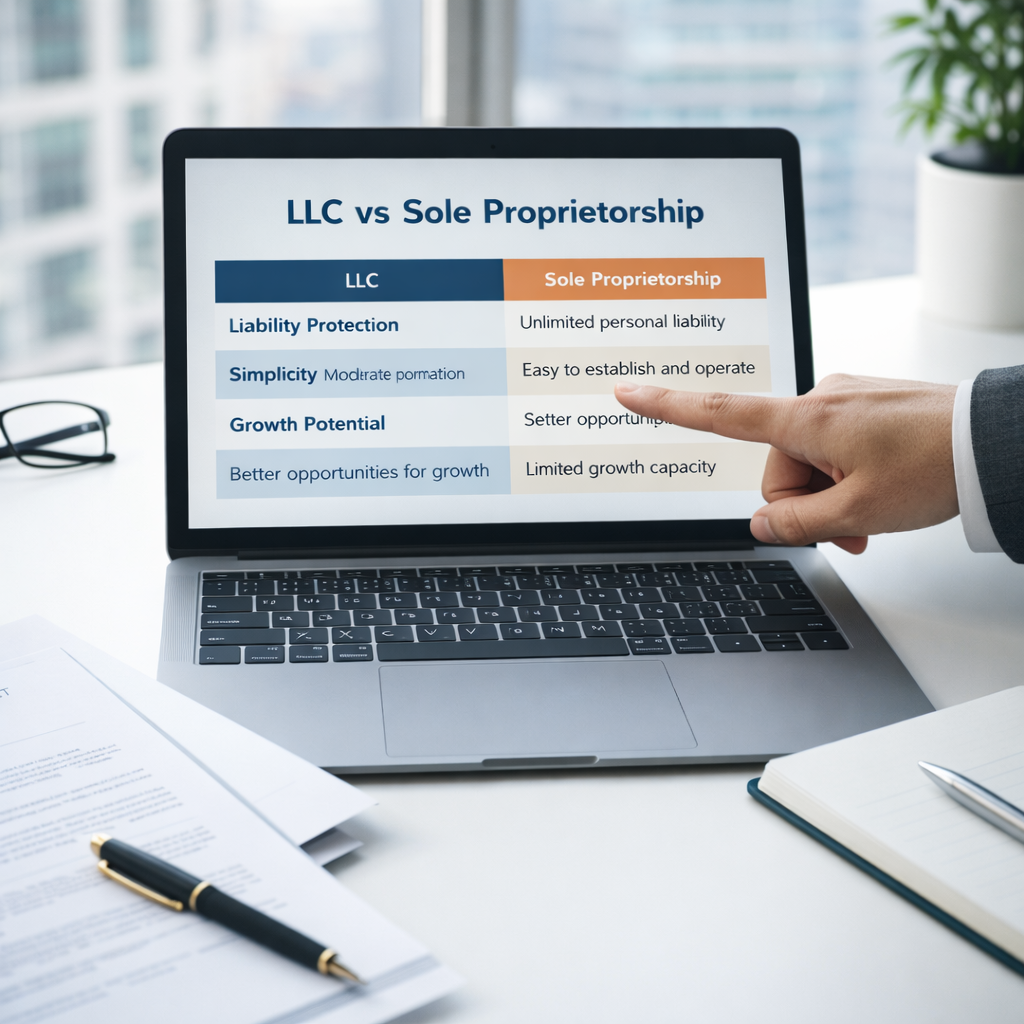
- The owner is personally liable for all business debts and lawsuits.
- LLC:
- Requires state filing (Articles of Organization).
- Creates a separate legal entity.
- Offers liability protection, shielding personal assets from business debts.
Deciding between these two is a significant step in choosing a business entity. It’s worth taking the time to understand the implications before you commit.
Key Differences: Liability Protection
When you’re starting out, the idea of a sole proprietorship seems pretty straightforward. You’re the business, the business is you. Simple, right? Well, that simplicity comes with a pretty big catch: unlimited personal liability. This means if your business gets sued or racks up debt it can’t pay, creditors can come after your personal stuff – your house, your car, your savings. It’s like having no shield between your business life and your personal life.
Sole Proprietorship: Unlimited Personal Liability
Imagine you run a small consulting firm as a sole proprietor. A client claims your advice cost them a lot of money and decides to sue. Because you and the business are legally the same, that lawsuit isn’t just against your business name; it’s against you. If the court rules against you, they can go after your personal assets to cover the damages. This can be pretty scary stuff, especially if you’ve built up a good amount of personal wealth.
LLC: Shielding Personal Assets
This is where the limited liability company benefits really shine. An LLC creates a legal separation between you and your business. Think of it like building a wall. When that wall is intact (meaning you’ve followed the rules), lawsuits against the business generally stay with the business. Your personal assets are typically protected from business debts and legal claims. This is one of the biggest reasons people choose an LLC over a sole proprietorship.
To keep this protection strong, you need to be diligent:
- Keep finances separate: Don’t mix your personal bank account with the business account. Ever.
- Maintain proper insurance: Have business insurance that fits your industry.
- Follow state rules: File annual reports and pay any required fees on time.
If you’re not careful and start treating the LLC like your personal piggy bank, a court might decide to “pierce the corporate veil,” and you could lose that liability protection. It’s not a magic shield, but when maintained correctly, it offers significant peace of mind.
Formation and Administrative Requirements

Getting your business off the ground involves setting up the right legal structure, and this is where sole proprietorships and LLCs really start to show their differences. It’s not just about paperwork; it’s about how much time and money you’ll invest upfront and on an ongoing basis.
Sole Proprietorship: Simple and Inexpensive
Starting a sole proprietorship is pretty straightforward. Honestly, in many cases, you don’t need much more than a business license or permit if your industry requires one. If you plan to operate under a name that isn’t your own legal name, you’ll need to register a DBA, or “doing business as” name. That’s usually it. The beauty of this structure is its low barrier to entry; you can often be up and running with minimal fuss and cost. Think of it as the quickest way to get your idea out into the world.
- Initial Setup: Minimal to no state filing fees. You might pay for local licenses or permits.
- Ongoing Compliance: Generally, very little. You’ll renew licenses as needed.
- Record Keeping: While not legally mandated to be separate, keeping good records is vital for tax purposes.
LLC: More Complex and Costly Setup
Forming an LLC involves a bit more effort and expense. You’ll need to file official documents, typically called Articles of Organization, with your state. This process usually comes with a filing fee, which can vary quite a bit depending on where you are. Beyond that, many states recommend or even require an operating agreement, which is a document that lays out how the LLC will be run, including ownership stakes and profit distribution. While it adds complexity, this agreement is key to maintaining the separation between your personal and business affairs, which is the whole point of an LLC.
- Initial Setup: State filing fees for Articles of Organization (can range from $35 to $500+), plus potential costs for an operating agreement and registered agent services.
- Ongoing Compliance: Most states require an annual report and fee. You’ll also need to maintain separate business bank accounts and potentially renew licenses.
- Administrative Tasks: Holding member meetings (even if you’re the only member) and keeping detailed minutes can help preserve your liability protection.
Setting up an LLC might seem like a bigger hurdle initially, but it’s an investment in protecting your personal assets. The costs associated with formation are often minor compared to the potential risks of operating without that legal shield, especially as your business grows or enters riskier territory. It’s wise to research your specific state’s requirements, as they can differ significantly. For instance, some states have lower filing fees than others, and some might have additional annual compliance obligations. Understanding these nuances early on can save you headaches and money down the line. You can find more information on business structures in places like Dubai’s business options.
While the initial setup for an LLC is more involved, it lays a stronger foundation for growth and protection. The added administrative requirements, like maintaining separate finances and filing annual reports, are part of what gives the LLC its legal standing and shields its owners. For many entrepreneurs, this structured approach is well worth the effort.
Taxation: How Each Structure is Taxed
When you’re figuring out the best business structure, taxes are a big piece of the puzzle. Both sole proprietorships and LLCs generally share a similar tax treatment, which is good news for many small business owners. They are both considered pass-through entities. This means the business itself doesn’t pay income taxes. Instead, the profits and losses are passed directly to the owner’s personal tax return.
Pass-Through Taxation for Both
For a sole proprietorship, this is pretty straightforward. You report all your business income and expenses on Schedule C of your Form 1040. Whatever profit is left is what you pay personal income tax on. You’ll also be responsible for self-employment taxes, which cover your Social Security and Medicare contributions.
An LLC, by default, is taxed the same way, especially if it’s a single-member LLC. It’s treated as a “disregarded entity” for tax purposes, meaning it files the same Schedule C. The key difference here is that even though the taxes flow through, the LLC still maintains its separate legal identity, which is important for liability protection.

LLC Flexibility: Single-Member vs. Multi-Member
This is where LLCs offer a bit more wiggle room. While single-member LLCs are taxed like sole proprietorships, multi-member LLCs have a slightly different process. They still operate on a pass-through basis, but they must file an informational tax return, Form 1065, with the IRS. Each member then receives a Schedule K-1, detailing their share of the business’s income, deductions, and credits, which they then report on their personal tax returns.
A significant advantage for LLCs is the option to elect to be taxed as a corporation (either an S-corp or a C-corp). This can sometimes lead to tax savings, particularly for businesses with substantial profits. For instance, electing S-corp status can help owners reduce self-employment taxes by treating themselves as employees who receive a salary and then take remaining profits as distributions. This is a complex decision, and it’s wise to consult with a tax professional to see if this flexibility benefits your specific situation.
Here’s a quick look at how taxes generally work:
- Sole Proprietorship: Income reported on owner’s personal tax return (Schedule C). The owner pays income tax and self-employment tax.
- Single-Member LLC: By default, taxed like a sole proprietorship (Schedule C). The owner pays income tax and self-employment tax.
- Multi-Member LLC: Files an informational return (Form 1065). Each member reports their share of income/loss on their personal return and pays income tax and self-employment tax on their share.
- LLC (Elective): Can elect to be taxed as an S-corp or C-corp, which changes how profits and taxes are handled. This is a key aspect of business structure comparison.
Remember, regardless of your structure, you’ll likely have other tax obligations like sales tax if you sell goods or services, and payroll taxes if you have employees. Understanding these nuances is vital for making the right choice for your business’s financial health. For more on choosing the right legal structure, you might find information on UAE businesses helpful.
Understanding how different business structures are taxed is super important. Each type of company has its own rules for taxes, and knowing these can save you a lot of trouble and money. We break down the tax rules for each structure so you can make the best choice for your business. Want to learn more about how taxes work for your specific business setup? Visit our website today for a clear and simple guide!
Wrapping Things Up
So, we’ve gone over the main points about LLCs and sole proprietorships. It’s not a one-size-fits-all situation, you know? A sole proprietorship is super simple to get started with, especially if you’re just testing the waters or your business doesn’t carry much risk. But if you’ve got assets you want to keep safe, or if your business could potentially get sued, an LLC really offers that extra layer of protection. Think about where you want your business to go long-term. If you’re planning to grow, an LLC might make more sense down the road. It’s always a good idea to chat with someone who knows this stuff, like an accountant or a lawyer, before you make the final call. They can look at your specific situation and help you pick the best path forward for your business in 2026 and beyond.
Why Choose Ripple Business Setup for Your Company Formation in 2026
Ripple Business Setup helps entrepreneurs and investors choose the right legal structure based on risk, cost, and long-term plans, not guesses. Whether you’re deciding between an LLC or a Sole Proprietorship in the UAE, our team handles licensing, approvals, documentation, and compliance from start to finish. You get straight answers, clear timelines, and no hidden steps. To get expert guidance, contact Ripple Business Setup at +971 50 593 8101, email info@ripplellc.ae, or WhatsApp +971 4 250 0833.
Frequently Asked Questions
What’s the main difference between a sole proprietorship and an LLC?
The biggest difference is protection! With a sole proprietorship, you and your business are basically the same thing. This means if your business gets into debt or gets sued, your personal stuff (like your house or savings) could be at risk. An LLC creates a separate legal bubble for your business, so your personal assets are usually safe from business problems.
Is it easier to start a sole proprietorship or an LLC?
Starting a sole proprietorship is usually much simpler and cheaper. You don’t need to file a lot of official paperwork with the state. It’s pretty much automatic if you’re running a business by yourself. An LLC requires more steps, like filing special papers with your state and often paying fees.
Do LLCs pay fewer taxes than sole proprietorships?
Not necessarily. Both are usually ‘pass-through’ entities, meaning the business itself doesn’t pay income tax, but the owners do on their personal tax returns. However, LLCs have more options for how they get taxed, which *could* lead to savings in some situations, especially if you choose to be taxed like a corporation.
When should I consider forming an LLC instead of staying a sole proprietor?
Think about an LLC if you have valuable personal assets you want to protect, if your business involves risks (like working with dangerous tools or products), or if you want your business to look more official to clients, banks, or investors. It’s also good if you plan to grow your business significantly.
Can I start as a sole proprietor and then become an LLC later?
Absolutely! Many business owners begin as sole proprietors because it’s easy to get started. As their business grows and they want more protection or have more assets, they can then go through the process of forming an LLC. It’s like upgrading your business structure.
What does ‘unlimited personal liability’ mean for a sole proprietor?
It means there’s no legal wall between you and your business’s debts. If your business owes money or gets sued, creditors or the person suing can go after your personal belongings, like your car, your savings account, or even your house, to pay off those business obligations.
Disclaimer: This article is for general informational purposes only and does not constitute legal, tax, or financial advice. Business regulations may change. Always consult a licensed business setup advisor or authority before making decisions.