

So, you’re looking to open a business bank account in the UAE. Smart move. It’s pretty much a must-do if you’re serious about operating here. Think of it as the official way to handle your company’s money, keeping things legit and organised. This guide will walk you through why you need one, what types are out there, what the banks will want from you, and how to actually get approved. We’ll also touch on those pesky fees and how to pick the right bank for your specific needs. It’s not always a walk in the park, but with the right info, you can make it happen.
Why You Need a Business Bank Account in the UAE
So, you’re thinking about setting up a business in Abu Dhabi or maybe opening a company account in Dubai? That’s great! But before you get too far, let’s talk about something really important: a business bank account. It might seem like just another piece of paperwork, but honestly, it’s a big deal here in the UAE.
First off, using your personal account for business is a no-go. The UAE Central Bank is pretty clear that business transactions need their own dedicated account. Trying to mix them can lead to your personal account getting flagged, and trust me, nobody wants that kind of attention. It’s not just about following rules; it’s about keeping things clean and professional.
Having a separate business account helps keep your finances organised. It makes tracking income and expenses way easier, which is a lifesaver when tax season rolls around or if you ever need to show your financial health. Plus, it makes your business look more legitimate to suppliers, clients, and potential investors. Think of it as part of your business’s professional image.
Here’s a quick rundown of why it’s so necessary:
- Legal Compliance: It’s a requirement by law in the UAE. Mixing personal and business funds can lead to penalties.
- Financial Clarity: Easily track business income, expenses, and cash flow. This is vital for budgeting and financial planning.
- Professionalism: It signals to clients and partners that you’re a serious, established business.
- Access to Services: Many business services, like applying for things related to how to get a business loan UAE, require a dedicated business account.
When you’re looking into the requirements for business accounts in UAE, you’ll find that banks have specific criteria. They need to see your company registration documents, proof of identity for shareholders and directors, and often a business plan. This is all part of the UAE corporate banking requirements and their Know Your Customer (KYC) process. It might seem like a lot, but it’s designed to protect everyone involved.
Opening a company account in Dubai or elsewhere in the UAE isn’t just a formality; it’s a foundational step for operating legally and efficiently. It separates your personal finances from your business dealings, making everything from accounting to securing funding much more straightforward. Without it, you’re making things harder for yourself down the line.
So, while the requirements for business bank account UAE might seem a bit daunting at first, getting one sorted is a smart move. It sets you up for success and avoids a lot of potential headaches later on.
Types of Business Bank Accounts in the UAE
When you’re setting up shop in the UAE, you’ll find a few main types of business bank accounts available. Each serves a different purpose, so it’s good to know what you’re getting into before you start looking for the best business bank accounts Dubai has to offer.
Current Accounts
This is the most common type of account for day-to-day business operations. Think of it as your business’s checking account. You’ll use it for making and receiving payments, paying suppliers, and managing your cash flow. Opening a company account in Dubai usually means getting a current account. These accounts typically come with features like debit cards, online banking, and chequebooks. Some banks might have minimum balance requirements, and falling below that can lead to fees. It’s important to check these details when comparing the best business bank accounts Emirates has available.
Savings Accounts
While less common for daily transactions, business savings accounts are useful for setting aside funds for future investments, emergencies, or long-term goals. They usually offer a small amount of interest on the balance. These accounts are not meant for frequent transactions, and there might be limits on how many withdrawals you can make per month. They’re more about growing your business’s reserves.
Foreign Currency Accounts
If your business deals with international clients or suppliers regularly, a foreign currency account can be a lifesaver. These accounts allow you to hold and transact in different currencies, like USD, EUR, or GBP, without the hassle and potential costs of currency conversion for every transaction. This is particularly helpful when looking at corporate banking services in UAE for businesses with a global reach. It can simplify international payments and reduce exchange rate risks. Some fintech providers also offer multi-currency accounts, which can be a good option for freelancers or smaller businesses looking for a UAE bank account for freelancers.
Key Requirements for Opening a Business Bank Account
Getting a business bank account set up in the UAE involves a few important steps and documents. Banks here are pretty thorough, and they need to make sure everything is in order before they can open an account for you. It’s not usually a super quick process, so being prepared is key.
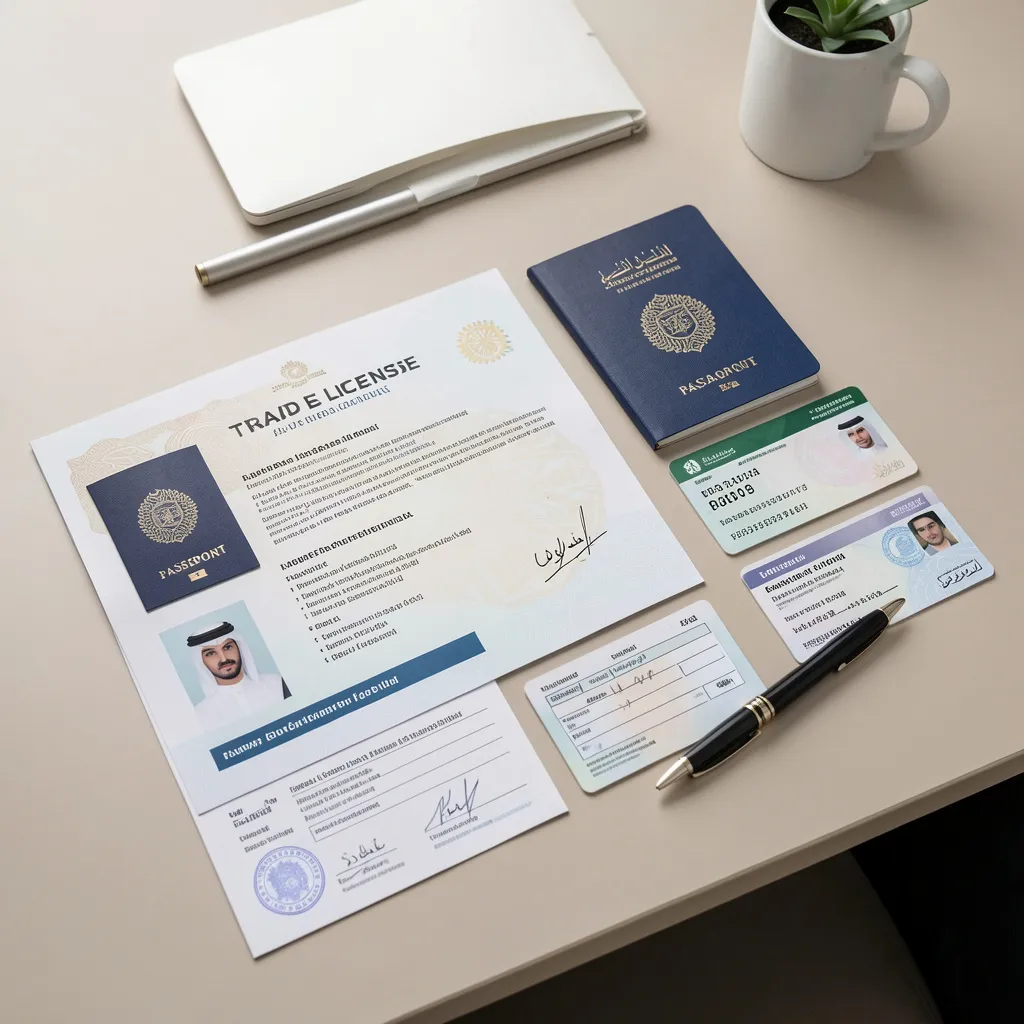
Company Registration Documents
First off, you’ll need proof that your business is legit and registered here. This usually means:
- A valid Trade License: This is issued by the relevant UAE authorities and shows your business is officially registered to operate. Without this, you can’t really get started.
- Certificate of Incorporation: If your business is a company, this document confirms its establishment.
- Memorandum of Association (MOA) / Articles of Association (AOA): These documents outline how your company is structured and governed. Banks want to see the internal rules of your business.
Shareholder and Director Identification
Banks need to know who is behind the business. This means providing identification for everyone involved, especially shareholders and directors.
- Passports: Copies of valid passports for all shareholders, directors, and authorised signatories are a must.
- UAE Residency Proof: For directors and shareholders who are UAE residents, you’ll need to show your Emirates ID and visa page. Some banks might require at least one director or shareholder to have a UAE residency visa.
- Board Resolution: A formal resolution from your company’s board of directors authorising the opening of the bank account and naming the individuals who will operate it.
Business Plan and Source of Funds
This is where you explain what your business does and where the money comes from. Banks need to understand your business model and ensure funds are legitimate.
- Business Plan: A clear outline of your business activities, target markets, expected transaction volumes, and key partners. This helps the bank understand your operations.
- Source of Funds Declaration: You’ll need to explain where the initial capital and ongoing funds for your business originate. This is part of the bank’s Know Your Customer (KYC) and anti-money laundering checks.
- Six Months’ Bank Statement: If your company is already operating, you’ll need to provide a bank statement for the last six months. For new companies, you might need to provide a personal bank statement of the partner or owner.
Banks in the UAE take compliance very seriously. They have to follow strict rules to prevent financial crime. This means they’ll look closely at your documents and business activities. Being upfront and providing clear, organized information from the start can save you a lot of time and potential headaches down the line. Any inconsistencies or missing information can lead to significant delays or even rejection of your application.
It’s a good idea to check with the specific bank you’re interested in, as their exact requirements can vary slightly. Having all your paperwork ready and organised before you apply will make the whole process much smoother.
Understanding Bank Fees and Charges
When you’re setting up a business bank account in the UAE, it’s not just about the initial setup. You’ve got to think about the ongoing costs, too. Banks charge for a bunch of different things, and these can really add up if you’re not paying attention. It’s super important to get a clear picture of all potential fees before you commit.
Most banks will have a fee for opening the account itself. This can range from nothing at all to a few thousand dirhams, depending on the bank and the type of account. Then there are monthly maintenance fees. Some accounts might have no monthly fee, especially if you keep a certain amount of money in them, but others can charge a pretty penny each month. For example, some packages might waive the monthly fee if you maintain an average balance of AED 50,000, but if you drop below that, you could be looking at AED 150 or more per month.
Here’s a quick look at some common charges:
- Account Opening Fees: Some banks charge a one-time fee for setting up your account and doing the necessary checks. This can be anywhere from AED 0 to over AED 5,000.
- Monthly Maintenance Fees: These vary widely, from AED 50 to AED 1,500 or more, depending on the bank and the services included.
- Minimum Balance Requirements: Many accounts require you to keep a certain amount in your account. For traditional banks, this can be quite high, sometimes reaching AED 500,000. Falling below this can result in penalty fees.
- Transaction Fees: Every time you send money, receive money, or make a foreign exchange transaction, there might be a fee. These can be per transaction or based on the volume.
- Foreign Exchange (FX) Costs: If you deal with different currencies, watch out for the mark-ups and conversion costs. These can sometimes be hidden within the exchange rate.
Banks often have different tiers of business accounts, each with its own set of fees and minimum balance requirements. Higher tiers, which usually come with more benefits like dedicated relationship managers or preferential rates, naturally require larger average balances. It’s a trade-off between cost and service level.
Don’t forget about potential charges for things like extra signatories, high-risk industry compliance, or even just inactivity on the account. It pays to read the fine print and ask questions. Understanding these potential fees upfront will help you budget better and avoid any nasty surprises down the line.

The Approval Process: What to Expect
So, you’ve gathered all your documents and are ready to apply for a business bank account in the UAE. What happens next? Well, it’s not exactly a walk in the park, but knowing the steps can make it less daunting. Banks here take their due diligence seriously, and that means a thorough review of your business.
First off, the bank will look at your company registration papers, your shareholders, and directors. They want to see a clear picture of who owns and runs the business. This is where having your company documents perfectly in order really pays off. They’ll also want to understand your business plan, what you do, how you make money, and who your customers and suppliers are. Don’t be surprised if they ask for details about your expected transaction volumes and where that money is coming from (source of funds) and how you’ve built your wealth (source of wealth).
Here’s a general idea of the timeline, though it can vary:
- Low-risk UAE businesses (simple structure): Typically 2–4 weeks.
- Non-resident founders and UBOs: Usually 4–8+ weeks due to extra checks.
- High-risk industries: Often 6–12+ weeks, or sometimes a rejection.
During this review, the bank’s compliance team might come back with questions. They could ask for more clarification on your business activities, transaction patterns, or ownership structure. It’s really important to respond to these queries promptly and clearly. A slow or unclear response can cause significant delays or even lead to your application being put on hold.
Banks are essentially assessing the risk associated with your business. They want to be confident that your operations are legitimate and compliant with all regulations. Providing clear, consistent information upfront helps them make that assessment more easily and speeds things up considerably.
Once everything checks out, you’ll get the green light. The final step is activating the account, which usually involves setting up online banking access and depositing the minimum required balance. After that, your account is ready to go!
Choosing the Right Bank for Your Business
Picking the right bank for your business in the UAE isn’t just about picking a name; it’s about finding a partner that fits how you work. Different banks have different strengths, and what works for a big trading company might not be the best fit for a small tech startup. You’ll want to look at a few things before you commit.
First off, check out the fees. Some banks are pretty upfront, while others have a lot of hidden charges. Look at monthly maintenance fees, transaction fees, international transfer costs, and any charges for using ATMs or specific services. It adds up, so knowing this upfront saves headaches later.
Here are some common services to compare:
- Transaction Services: How easy is it to make and receive payments? Do they offer online banking that actually works well?
- Lending Options: If you might need a loan down the line, what kind of credit lines do they offer? Are they competitive?
- Cash Management: For businesses with lots of money moving around, good cash management tools are a lifesaver. This includes things like managing daily payments and keeping track of your money.
- Foreign Exchange: If you do business internationally, look for banks with good foreign exchange rates and easy international transfer options.
Some banks might require a higher minimum balance to avoid fees, while others are more flexible. For example, a bank that requires you to keep AED 500,000 in your account might be too much for a new business, but fine for an established one.
Don’t just go with the first bank you think of. Take some time to compare at least three different institutions. Look at their online reviews, ask other business owners for recommendations, and see if they have specific packages for businesses like yours. The time spent now can save you a lot of hassle and money in the long run.
Finally, consider the bank’s digital tools. In today’s world, a solid online banking platform and mobile app are pretty important. Can you manage your account, make payments, and check balances easily from anywhere? This convenience can make a big difference in your day-to-day operations.
Picking the right bank is a big step for any business. It’s like choosing a partner to help your money grow. Think about what you need most: easy online tools, good customer service, or special business accounts. Making the right choice now can save you a lot of headaches later. Ready to learn more about making smart business decisions? Visit our website for expert tips and guidance.

Why Choose Ripple Business Setup for a UAE Business Bank Account
Opening a business bank account in the UAE is not as easy as people think. Banks reject files all the time due to weak documentation, unclear business activity, or compliance gaps. Ripple Business Setup handles this process end-to-end. We prepare your bank profile, align your license with banking rules, and deal directly with UAE banks to improve approval chances. This saves time and avoids repeated rejections that can hurt your company’s profile.
For expert help, contact Ripple Business Setup at +971 50 593 8101, email info@ripplellc.ae, or WhatsApp +971 4 250 0833. Our team assists with bank selection, document preparation, compliance checks, and follow-ups until the account is active.
Wrapping Up Your UAE Business Banking Journey
So, opening a business bank account in the UAE isn’t always a walk in the park. There are fees, rules, and sometimes, a bit of a waiting game. For non-residents, especially, the costs can add up, and you’ve got to be super careful with your paperwork and understanding what each bank needs. Remember, using a personal account for business is a big no-no here. It’s really about doing your homework, comparing your options – whether that’s a traditional bank or a fintech provider – and making sure you’ve got all your documents in order. Getting this right from the start can save you a lot of headaches down the road.
Frequently Asked Questions
Can I use my personal bank account for my business in the UAE?
No, it’s against the law to use a personal bank account for business in the UAE. The country’s Central Bank requires all business money matters to go through a company bank account. If a personal account looks like it’s being used for business, the bank might stop it and look into it closely.
What are the main documents needed to open a business account?
You’ll generally need papers that prove your company is real, like your trade license. You also need to show identification for everyone who owns or runs the company, like passports. Sometimes, banks want to see your business plan and proof of where your money comes from.
Is it harder for non-residents to open a business account?
Yes, opening an account as a non-resident can be trickier and sometimes more costly. Some banks have higher minimum balance rules or need extra proof. However, many banks and financial tech companies are set up to help non-residents, especially if you have your company registered in the UAE.
What are common mistakes people make when opening a business account?
People often pick the wrong bank for their business type, submit incomplete paperwork, or don’t understand the bank’s rules about minimum balances and fees. Not being clear about your business activities or ignoring the bank’s ‘Know Your Customer’ rules can also cause problems.
How much money do I need to keep in my business account?
Most business accounts in the UAE have a minimum balance requirement. This can range from AED 10,000 to AED 50,000 or even more, depending on the bank. If your balance drops below this, you might have to pay a penalty fee.
How long does it usually take to get a business account approved?
The time it takes can vary a lot. Some accounts might be ready in a few days, while others can take several weeks or even a couple of months. This depends on the bank, how complete your documents are, and if you meet all their requirements. Non-residents might sometimes experience longer waits.
Disclaimer: This article is for general information only. Banking rules, fees, and approval criteria vary by bank and may change without notice. Always confirm current requirements with the bank or a licensed business consultant before applying.