
So, you’re thinking about starting a business in Dubai for 2026? It’s a pretty popular spot for entrepreneurs, and for good reason. But before you jump in, you’ve gotta figure out where to set up shop on the mainland or in a free zone. It’s not a simple decision, and honestly, the costs can add up. We’re going to break down what you can expect to pay, whether you go the mainland route or choose a free zone. Understanding these costs is a big part of getting your business setup in Dubai right.
Understanding Business Setup Options in Dubai
So, you’re thinking about starting a company in the UAE, huh? Dubai is a pretty popular spot for that, and for good reason. It’s got this whole vibe of being a global business hub, and honestly, it’s not just hype. But when you’re looking into Dubai company formation, you’ve got a couple of main paths to consider: Mainland and Freezone. Each one has its own set of rules, costs, and benefits, and picking the right one is kind of a big deal for how your business will actually run.
Mainland Company Setup: Pros, Cons, and Costs
Setting up a mainland company in Dubai means you can pretty much do business anywhere in the UAE. You can deal directly with local customers, set up shop anywhere, and generally have a lot of freedom. It’s great if you’re planning to tap into the local market or work with government entities. You’ll likely be setting up an LLC (Limited Liability Company) for this. The downside? You usually need a local sponsor or agent, and the costs can be a bit higher, especially when it comes to office space. Plus, there are specific regulations you have to follow.
- Pros: Full access to the UAE market, ability to trade directly with local customers, no restrictions on office location within Dubai.
- Cons: Often requires a local sponsor or agent (though this is changing for some business types), potentially higher setup and operational costs, more complex regulatory requirements.
- Best for: Businesses targeting the local UAE market, companies needing a physical presence across the Emirates, service providers.
Freezone Company Setup: Pros, Cons, and Costs
Dubai has a bunch of free zones, and they’re designed to attract foreign investment. Think of them as special economic zones with their own rules. The big draw here is usually 100% foreign ownership – no local sponsor needed. Free zones often come with tax exemptions and can be more cost-effective, especially if you’re looking at bundled packages for licenses and visas. However, your business activities are generally limited to operating within the free zone or internationally. You can’t usually trade directly in the UAE mainland market without a distributor or agent. It’s a popular choice for starting a business in UAE, especially for freelancers or those focused on international trade. If you’re considering setting up offshore company Dubai, free zones offer a different kind of flexibility.
- Pros: 100% foreign ownership, potential tax exemptions (corporate and income), often faster setup process, bundled packages available.
- Cons: Limited ability to trade directly in the UAE mainland market, operations typically confined to the free zone or international markets.
- Best for: International trading companies, startups, SMEs, freelancers, businesses focused on specific industries (like tech, media, or finance) that have dedicated free zones.
Choosing between a mainland and a free zone setup is a big decision. It really boils down to where you plan to do business and what kind of ownership structure you’re looking for. It’s not a one-size-fits-all situation, and understanding these differences is key to a successful Dubai company formation.
When you’re planning your Dubai company setup cost, remember that each option has its own financial landscape. For a detailed look at how your business can operate, understanding the geographic and operational scope is important. This is a core part of any good guide to opening business in Dubai.

Key Cost Components for Business Setup in Dubai
Setting up a business in Dubai involves several costs that you need to factor into your budget. It’s not just about the license; there are other bits and pieces that add up. Understanding these Dubai business registration fees and other expenses is pretty important if you want to avoid surprises down the line. The cost of opening a business in Dubai can really vary depending on what you’re doing and where you’re doing it.
Licensing and Registration Fees
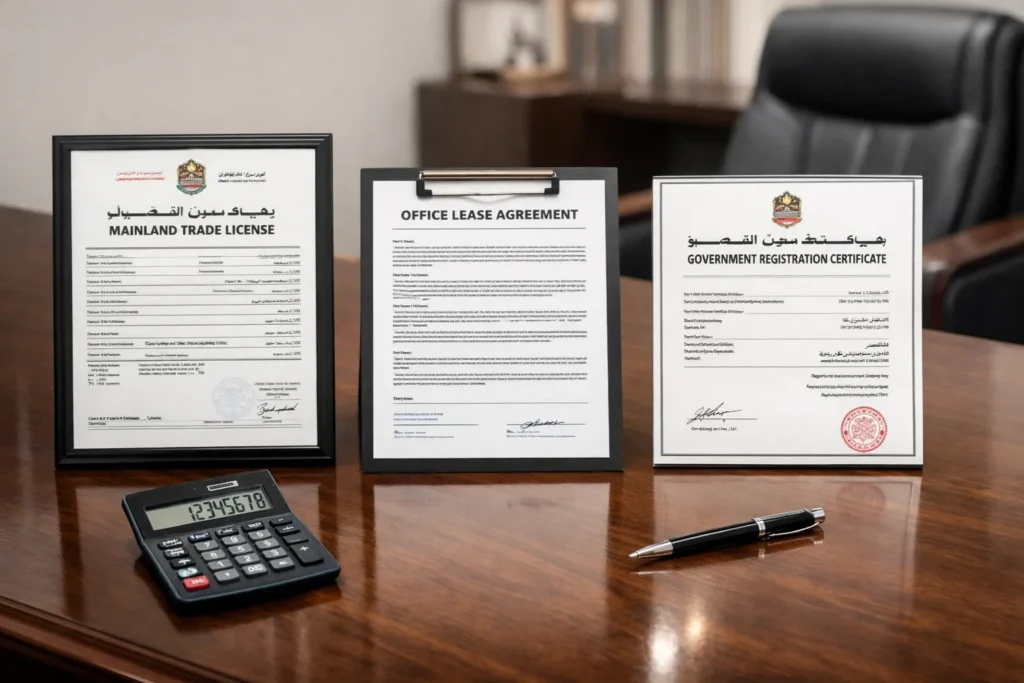
This is usually the first big chunk of change. The type of license you need depends entirely on your business activity. For example, a trading license will cost differently than a professional services license. Mainland companies often have higher initial registration fees compared to some free zones. These fees cover the government’s approval and the issuance of your trade license. Remember, these aren’t one-time payments; licenses need to be renewed annually, and renewal fees can be a significant part of your ongoing expenses. The cost of an LLC in Dubai, for instance, will include these licensing fees.
Here’s a general idea of what you might expect:
- Mainland Trade License: AED 10,000 – AED 25,000+ annually.
- Freezone Trade License: AED 5,000 – AED 15,000+ annually.
- Professional License (Mainland/Freezone): AED 7,000 – AED 12,000+ annually.
Office Space Rental Costs
Unless you’re going for a very specific type of freezone setup that allows for virtual offices or flexi-desks, you’ll likely need physical space. For mainland companies, leasing a physical office is mandatory and often a significant expense. The size and location of your office will heavily influence the rent. Free zones offer more flexibility, with options ranging from shared desks to dedicated office spaces, which can be more budget-friendly, especially for startups. Prices can fluctuate a lot based on the free zone and the amenities provided.
- Flexi-Desk/Shared Office (Freezone): AED 5,000 – AED 20,000 annually.
- Small Private Office (Freezone): AED 20,000 – AED 50,000+ annually.
- Mainland Office: AED 30,000 – AED 100,000+ annually (highly dependent on size and location).
Visa and Sponsorship Costs
If you plan to hire staff or need residency visas for yourself and your partners, this is another area where costs add up. Each visa comes with government fees, medical tests, and Emirates ID processing. For mainland companies, you might also need a local service agent or sponsor, which involves an annual fee. Free zones often have more streamlined visa processes, sometimes bundled with license packages, but there are still associated costs per visa.
- Visa Processing Fee (per visa): AED 3,000 – AED 7,000 (includes medical, Emirates ID, etc.).
- Local Service Agent Fee (Mainland): AED 5,000 – AED 10,000 annually.
The number of visas you require directly impacts your setup and renewal costs, so planning your team size carefully from the start is a smart move.
Legal and Professional Fees
Sometimes, you’ll need help with the paperwork and legalities. This could include fees for drafting Memorandum of Association (MOA), getting documents attested, or hiring a PRO (Public Relations Officer) service to handle government interactions. While not always mandatory, using professional services can save you time and prevent costly mistakes, especially if you’re new to the Dubai business setup process. These fees can vary widely depending on the complexity of your business structure and the service provider you choose.
- PRO Services: AED 2,000 – AED 5,000 annually.
- Legal Translation/Notarization: AED 500 – AED 2,000 per document.
- Company Formation Consultancy: Varies greatly, from a few thousand dirhams to much more for complex setups.
Note: All fees and costs mentioned are estimated and may vary depending on business activity, approvals, documentation, and government charges. Always confirm the final price before starting the process.
Other Potential Expenses
Don’t forget about the smaller things that can creep into your budget. This might include bank account opening fees, initial setup for utilities if you have a physical office, or specific approvals needed for certain industries. Translation of documents into Arabic, if required, also adds to the cost. It’s wise to set aside a buffer for these miscellaneous expenses to ensure your Dubai business registration fees and overall setup costs stay within your planned budget.
Comparing the Costs: Mainland vs. Freezone in 2026
So, you’re trying to figure out the money side of setting up shop in Dubai for 2026, right? It really boils down to whether you go the mainland route or pick a free zone. They’re pretty different when it comes to what you’ll spend upfront and year after year.
Estimated Total Investment for Mainland Setup
Setting up a mainland company in Dubai generally means a higher initial investment. You’ve got mandatory office space requirements, which can be a big chunk of change depending on where you are and how much space you need. Plus, there are government fees for licensing and registration that tend to be a bit more than in free zones. Think of it as paying for the freedom to operate anywhere in the UAE and deal directly with local clients. It’s not uncommon to see starting costs for a mainland setup, including office and basic licenses, kicking off around AED 18,500 and going up from there. This figure doesn’t even include visa costs for your staff, which can add several thousand dirhams per person.
Estimated Total Investment for Freezone Setup
Free zones often present a more budget-friendly entry point. Many offer package deals that bundle your license, office space (often a flexi-desk or shared workspace), and a set number of visas. This can bring the initial outlay down significantly, sometimes starting as low as AED 5,500 for a basic setup. However, it’s important to remember that these lower costs come with limitations. You can’t typically trade directly within the UAE mainland market without a distributor, and your operations are usually confined to the free zone itself or international markets. While the upfront costs are lower, you still need to factor in annual renewal fees, which can range from AED 5,000 to AED 15,000 or more, depending on the specific free zone and your business activities. For a detailed look at the process, our Business Setup Dubai Guide can help clarify things.
The choice between mainland and free zone isn’t just about the initial price tag; it’s about the long-term operational flexibility and market access you need. A mainland setup offers broader reach within the UAE, while a free zone might be more cost-effective for businesses focused internationally or operating primarily online.
Here’s a quick look at how the costs stack up:
- Mainland: Higher initial investment (AED 18,500+), mandatory office lease, full UAE market access.
- Free Zone: Lower initial investment (AED 5,500+), optional office space (flexi-desk), limited mainland access, often bundled packages.
When comparing mainland vs free zone company Dubai, remember that while free zones might seem cheaper initially, the total cost of ownership over several years, considering renewals and potential need for mainland partners, should be part of your calculation. It’s a balancing act between immediate savings and future growth potential.
Thinking about starting a business in 2026? It’s smart to compare the costs between setting up on the mainland versus in a free zone. Each option has its own set of expenses and benefits that can really change your budget. Want to see which one fits your business plan best? Visit our website to learn more and get started!
Wrapping It Up
So, after looking at all the numbers and options for setting up shop in Dubai for 2026, it’s pretty clear there’s no one-size-fits-all answer. Mainland setups generally come with a higher price tag, especially if you need a physical office and want to tap into the whole UAE market. Free zones, on the other hand, often present a more budget-friendly starting point, particularly for businesses focused on international trade or online services. The best choice really boils down to what you plan to do, where you want to do it, and how much you’re looking to spend upfront. It’s worth taking the time to figure out which path makes the most sense for your specific business goals before you jump in.
How Ripple Business Setup Helps You Compare Mainland and Free Zone Business Setup Costs
Our team helps entrepreneurs understand the full cost structure of setting up a business in Dubai, whether choosing mainland or free zone. We guide you through license fees, registration expenses, visa costs, and ongoing compliance requirements so you can make a clear financial decision. We also handle documentation and setup procedures to ensure everything is completed accurately and efficiently. For assistance with business setup cost planning in 2026, contact us at +971 50 593 8101, email info@ripplellc.ae, or WhatsApp +971 4 250 0833.
Frequently Asked Questions
What’s the main difference between setting up a business on the mainland versus in a free zone in Dubai?
Think of it like this: a mainland business can sell its products and services anywhere in the United Arab Emirates, just like a shop on the main street. A free zone business is like a shop in a special mall; it can operate within that mall (the free zone) or sell to other countries, but selling directly in the main UAE market usually needs a local partner or distributor.
Is it cheaper to set up a business in a free zone?
Generally, yes! Free zones often have lower starting costs. They might offer packages that include your business license and a place to work, sometimes even without needing a big office. Mainland businesses usually need a physical office space, which can add a lot to the cost.
Do I need a local sponsor for a free zone company?
Nope! One of the big perks of free zones is that you can own 100% of your company yourself. For mainland businesses, you used to always need a local sponsor, but recent changes mean you can often own 100% of many types of mainland businesses now too, depending on the activity.
What are the yearly costs for my business after I set it up?
After you get your business started, you’ll have to pay for things every year to keep it running. This includes renewing your business license, which can cost anywhere from about AED 5,000 to AED 15,000 or more, depending on where you are. You’ll also need to renew visas if you have employees.
How much money do I need to start a basic business in Dubai in 2026?
For a simple setup in a free zone, like a basic license without many extras, you might be able to start with around AED 5,500. A mainland business will likely cost more, starting from about AED 18,500, mainly because of office space and other fees.
Can a free zone company sell directly to customers in Dubai’s mainland?
Not usually directly. If your business is in a free zone, you can’t just start selling to customers on the mainland without some extra steps. You might need to work with a local distributor or set up a branch on the mainland, which can add costs and complexity.
Disclaimer: This content is for general informational purposes only and does not constitute legal, financial, or business advice. Business setup costs and regulations may change. Always confirm details with official authorities or a qualified professional before making decisions.