

Dubai has quietly become one of the most attractive short-term rental markets in the world. With millions of tourists arriving each year, a growing base of remote workers and digital nomads, and a post-Expo legacy that keeps global attention firmly on the emirate, the demand for holiday home accommodation is stronger in 2026 than ever before.
If you own or manage property in Dubai, or you’re considering entering the short-term rental space, getting a Holiday Home License in Dubai is the legal first step. It is not optional. The Dubai Tourism and Commerce Marketing authority (DTCM) regulates all holiday home operations, and listing an unlicensed property on platforms like Airbnb or Booking.com can lead to fines and delisting. The good news? The process is more accessible than most people expect, and the returns can be significantly higher than traditional long-term rentals.
What is a Holiday Home License in Dubai?
A holiday home license is a short-term rental permit issued by DTCM that allows property owners or professional operators to legally rent out furnished residential units to tourists and visitors for periods of less than 30 days. Think of it as the official green light to run a legitimate Airbnb-style rental business in Dubai.
Unlike long-term rental agreements, which are governed by landlord-tenant law and registered with Ejari, holiday homes operate under a tourism framework. This distinction matters because it affects pricing flexibility, guest registration obligations, and the type of fees you collect. With a holiday home permit in Dubai, you can charge nightly rates, adjust pricing seasonally, and list across multiple platforms simultaneously.
The DTCM classifies holiday homes separately from hotels and serviced apartments, which gives private operators a well-defined legal pathway without requiring a full hospitality licence.
Why Start a Holiday Home Business in Dubai in 2026?
The market timing in 2026 is genuinely compelling. Dubai’s tourism numbers continue to climb, international flight connectivity is at an all-time high, and the appetite for “home-like” accommodation, especially among families and long-stay visitors, has pushed occupancy rates in well-managed holiday homes well above 70% in prime locations.
- Higher ROI than long-term rentals: A one-bedroom apartment in Dubai Marina that earns AED 70,000–80,000 annually on a long-term lease can generate AED 120,000–150,000 or more as a managed holiday home, depending on occupancy and pricing strategy.
- Flexible pricing model: You control nightly rates and can capitalise on peak seasons, New Year, DSF, Eid holidays, and major international events when demand spikes sharply.
- Tax-free rental income: The UAE imposes no income tax on rental earnings. Every dirham of profit stays with you, which makes Dubai holiday rental business models particularly attractive for overseas investors.
- Sustained tourism growth: Dubai welcomed over 17 million international visitors in 2023, and targets continue to grow. A city planning for 40 million tourists by 2040 is not a market that is slowing down.
- High occupancy in prime areas: Areas like JBR, Palm Jumeirah, and Downtown consistently see strong demand year-round not just in peak winter months.
Types of Holiday Home Licenses in Dubai
- Individual License (Property Owner): This license is designed for individuals who own one or more residential units and want to rent them out directly. You manage the listing, guest communication, and maintenance yourself. It is the most common starting point for first-time operators.
- Professional Operator License (Management Companies): This license is intended for companies that manage multiple units on behalf of different property owners. If you plan to run a property management business or expand beyond a handful of units, this is the appropriate route. It allows you to operate at scale under a structured commercial framework.
Key Requirements for a Holiday Home License in Dubai
DTCM approval Dubai requires a standard set of documents and property conditions before issuing a license. Meeting these from the outset saves significant time.
- Valid Emirates ID or Passport: All applicants must provide a valid identification. Non-residents can apply using a passport copy.
- Title deed or tenancy contract: You need proof of ownership (title deed) or, if you are renting the property, a valid lease agreement.
- NOC from landlord: If the property is rented rather than owned, you must obtain a No Objection Certificate from your landlord before listing the unit as a holiday home.
- Safety and quality standards compliance: The property must meet DTCM’s minimum standards — functional smoke detectors, fire extinguishers, first-aid kits, and proper ventilation are among the requirements.
- Furnishing requirements: Units must be furnished to a basic liveable standard. DTCM inspects for kitchen equipment, bedding, towels, and essential appliances. Bare or partially furnished units will not pass inspection.
Step-by-Step Process to Get a Holiday Home License in Dubai
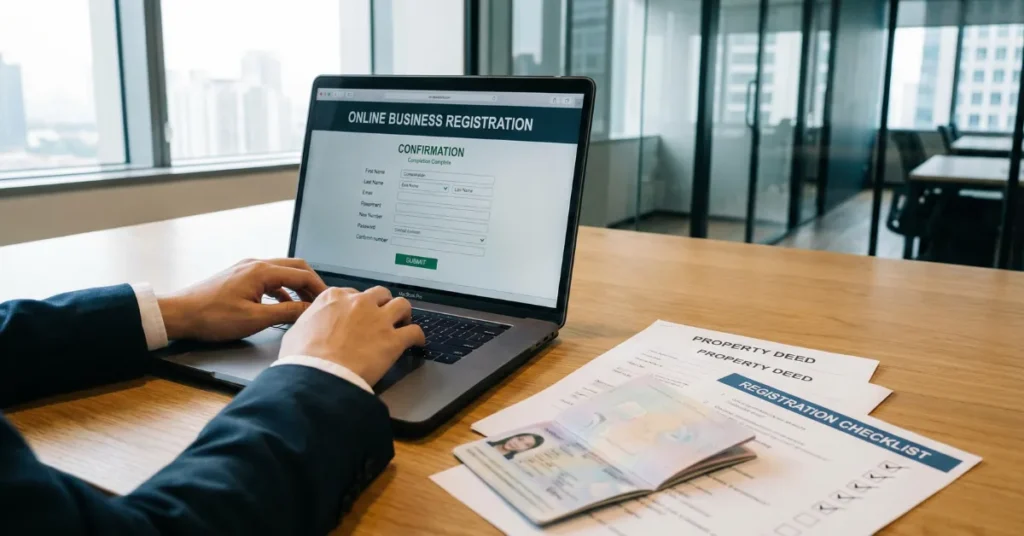
- Register on the DTCM Holiday Homes portal: Visit the official DTCM portal and create an account. Select “Holiday Home” as your business type and fill in your personal and property details accurately.
- Submit required documents: Upload your Emirates ID or passport, title deed or lease agreement, NOC (if applicable), and any other supporting documents DTCM requests. Ensure all documents are clear, current, and in PDF or JPEG format.
- Property inspection and approval: DTCM will schedule an on-site inspection to verify that your property meets their quality and safety standards. Prepare the unit fully before the visit, inspectors check furnishing levels, safety equipment, and general cleanliness.
- Pay registration fees: Once your property clears inspection, you receive a fee notice. Pay the applicable registration and licensing fees online through the portal.
- Receive your license and start listing: Your holiday home licence is issued digitally. Display the licence number on all your listings as required by DTCM regulations. You are now legally authorised to operate.
Cost of Holiday Home License in Dubai (2026 Updated)
Understanding the full cost picture prevents surprises. The holiday home license cost Dubai operators pay varies depending on property size, type, and setup. Here is a realistic cost breakdown for 2026:
- DTCM registration fee: AED 1,520–3,800 depending on property type and number of rooms. Paid annually.
- Tourism Dirham fee: AED 10–15 per room per night, collected from guests and remitted to DTCM. This is a pass-through cost, not a loss to you.
- Service and management charges: If you use a third-party operator or property management company, their fee typically runs 15–25% of gross rental income.
- Furnishing and setup cost: For a bare unit, budget AED 25,000–60,000 for a one-bedroom and AED 50,000–100,000+ for larger units to meet DTCM standards and deliver a guest-ready space. Well-furnished properties command significantly higher nightly rates and better reviews.
Rules and Regulations for Holiday Homes in Dubai
- Guest registration: All guests must be registered with DTCM. Their passport or Emirates ID details are required at check-in and must be submitted through the official system.
- Maximum occupancy rules: DTCM sets occupancy limits per property. Exceeding them even for a single night is a compliance violation that can result in fines.
- Maintenance standards: The property must remain in a clean, well-maintained condition at all times. DTCM can conduct unannounced re-inspections, particularly after complaints.
- Tourism Dirham collection: Operators must collect the Tourism Dirham fee from guests and remit it to DTCM on a monthly basis, along with a detailed occupancy report.
- Ongoing DTCM compliance: Your licence must be renewed annually. Letting it lapse while continuing to operate is treated as unlicensed activity.
Best Areas to Start a Holiday Home Business in Dubai
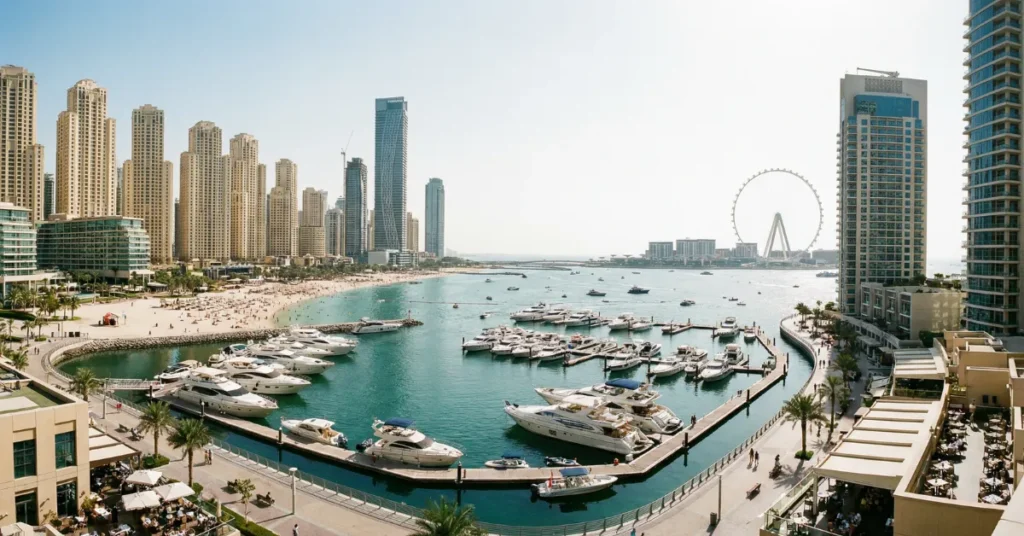
Location drives occupancy. These are the strongest-performing zones for Airbnb Dubai income and vacation rental UAE returns:
- Downtown Dubai: Home to the Burj Khalifa and Dubai Mall, Downtown attracts high-spending tourists year-round. Nightly rates for well-managed units regularly exceed AED 600–900 for a one-bedroom. Rental yield in Dubai Downtown averages 6–8% gross annually.
- Dubai Marina: One of the most searched areas by international visitors. The combination of waterfront views, walkability, and nightlife makes it consistently popular. Strong occupancy even in shoulder seasons.
- Palm Jumeirah: The premium tier. Villas and apartments here can command AED 1,500–5,000+ per night for well-presented units. Lower volume but high per-night value.
- JBR (Jumeirah Beach Residence): Beachfront location with strong family appeal. High occupancy in summer for domestic GCC visitors, and winter for European tourists. One of the best areas for Airbnb in Dubai in terms of year-round balance.
- Business Bay: Increasingly popular with corporate and bleisure travellers. Canal-facing apartments offer strong midweek occupancy driven by business visitors.
Holiday Home License vs Long-Term Rental in Dubai
| Factor | Holiday Home | Long-Term Rental |
|---|---|---|
| Income potential | Higher typically 30–80% more annually | Lower but predictable |
| Flexibility | Full control; adjust pricing, availability | Fixed for contract duration |
| Management effort | Higher, typically 30–80% more annually | Lower once tenant is placed |
| Legal requirements | DTCM licence, guest registration, Tourism Dirham | Ejari registration, tenancy contract |
| Cash flow consistency | Lower once the tenant is placed | Stable monthly income |
| Vacancy risk | Higher in off-peak periods | Lower once occupied |
The right choice depends on your risk appetite, time availability, and whether you prefer to self-manage or use a professional operator.
Common Challenges and How to Overcome Them
- Seasonal demand fluctuations: Dubai’s summer months (June–August) tend to see lower tourist volumes due to the heat. Solution target GCC domestic travellers and corporate guests in summer; adjust pricing accordingly rather than keeping rates static.
- Property management complexity: Managing guest check-ins, cleaning schedules, and maintenance remotely is demanding. Solution partner with a DTCM-registered property management company that handles operations on your behalf.
- Guest handling and reviews: One poor guest experience can damage your listing’s ranking. Solution: invest in a professional welcome kit, clear house rules, and responsive communication. Automated messaging tools help significantly.
- Regulatory compliance: DTCM rules evolve, and staying current is the operator’s responsibility. Solution: Subscribe to DTCM updates and work with a business setup consultant who monitors regulatory changes.
Our Expert Support for Holiday Home License in Dubai
We simplify the process of getting a Holiday Home License in Dubai so you can start earning faster. Our team handles documentation, DTCM approvals, property compliance checks, and registration from start to finish. We guide you at every step, whether you are an individual owner or planning to manage multiple properties. For assistance, contact Ripple Business Setup at +971 50 593 8101, email info@ripplellc.ae, or WhatsApp +971 4 250 0833.
FAQs
Do I need a company to get a holiday home license?
No. Individual property owners can apply for a personal holiday home licence without setting up a company. However, if you plan to manage multiple units belonging to different owners, a professional operator licence (which typically requires a trade licence) is necessary.
Can tenants apply for a holiday home permit?
Yes, tenants can apply but they must obtain a No Objection Certificate (NOC) from their landlord as part of the application. Without the NOC, DTCM will not process the application.
How long does approval take?
Typically 7–21 working days from submission, provided all documents are complete and the property passes inspection on the first visit. Complex cases or re-inspections can extend the timeline.
Is Airbnb legal in Dubai?
Yes, absolutely. Airbnb operates legally in Dubai and has an established relationship with DTCM. You must hold a valid DTCM holiday home licence and display your licence number on any Airbnb listing. Unlicensed listings are removed by the platform and can result in fines.
What is the renewal process?
Licences are renewed annually through the DTCM portal. You will need to resubmit updated documents (if any have changed), confirm the property still meets standards, and pay the renewal fee. DTCM typically sends reminders 30–45 days before expiry.
Conclusion
Dubai’s short-term rental market in 2026 offers a rare combination of regulatory clarity, strong demand, and genuinely attractive returns. Getting a Holiday Home License in Dubai is the essential first step and it is more accessible than many investors initially assume.
Disclaimer: This content is for informational purposes only and does not constitute legal or financial advice. Regulations for holiday home licenses in Dubai may change based on government updates. Always consult with official authorities or professional advisors before making business decisions.