
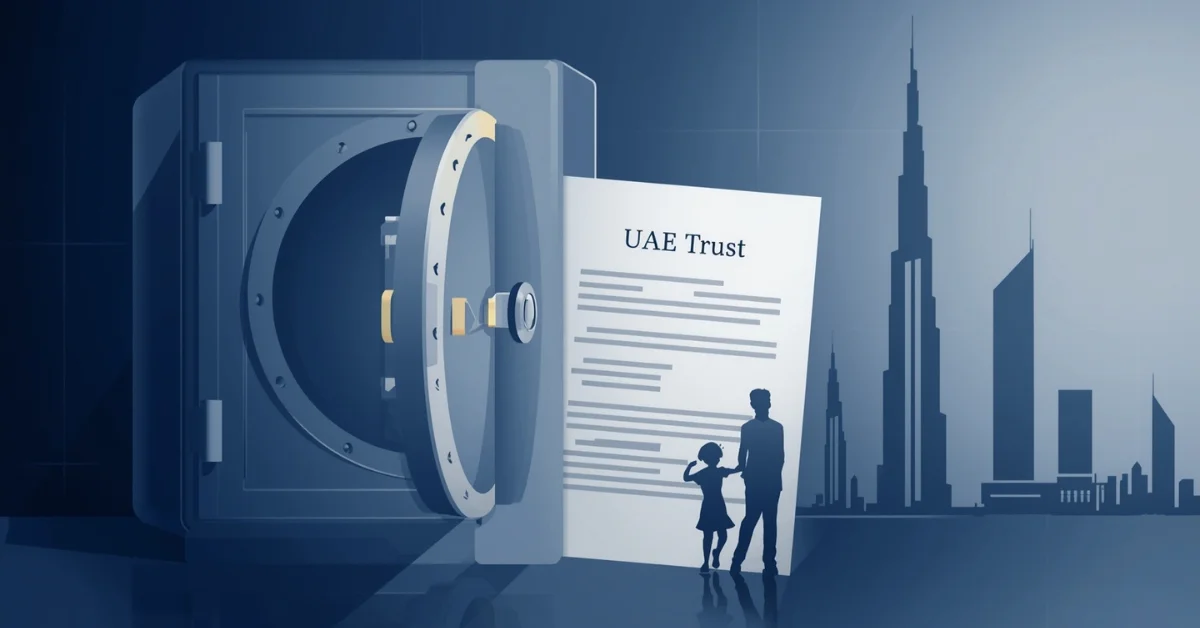
Setting up a trust is now one of the strongest ways to protect wealth in the UAE. When you Set Up a Trust in UAE, you create a legal structure that separates your personal assets from potential risks, gives long-term control over your wealth, and prepares your family for the future.
Why Set Up a Trust in UAE for Asset Protection
1. What does “asset protection” mean in simple terms
Asset protection means keeping your wealth safe from risks such as lawsuits, creditor claims, business failures, and family disputes. Instead of holding everything in your personal name, you move the assets into a trust. The trust legally owns them, but you still control how and when they are used.
This separation creates an extra layer of security. If someone files a claim against you personally, the assets inside the trust are normally protected because they are no longer part of your personal estate.
2. Typical situations where a trust helps
A trust is useful for many scenarios, including:
- Passing wealth to your children without complications
- Protecting profit from a business sale
- Keeping family assets safe during disputes
- Securing investment portfolios
- Creating long-term wealth preservation plans
- Shielding assets from creditor pressure
- Ensuring vulnerable family members are cared for
For high-net-worth families and entrepreneurs, a trust provides confidence that their wealth will remain safe regardless of changes in life or business.
How Trusts Work in the UAE
Understanding how UAE trusts operate makes it easier to choose the right structure. UAE trust rules follow global best practices and offer strong clarity on asset ownership and trustee duties.
1. Roles explained: settlor, trustee, beneficiaries, protector
Here are the four key roles in a trust:
- Settlor: The person who creates the trust and transfers assets into it.
- Trustee: The individual or company that manages the trust assets according to the deed.
- Beneficiaries: The people who benefit from the trust (family members, children, spouse, etc.).
- Protector: A person who supervises the trustee and approves major decisions.
Together, these roles create a controlled structure that protects and manages wealth.
2. Trust property vs personal property: Why separation matters
The moment you place assets into a trust, they become trust property. They no longer belong to you personally. This legal separation is the key reason many people set up a trust. It helps:
- Reduce risk from personal liabilities
- Prevent disputes over inheritance
- Keep assets private and confidential
- Shield wealth across generations
This simple structural change can protect a lifetime of savings.
Types of Trusts Available in the UAE
The UAE offers several trust structures to match different goals. Each type comes with its own advantages and governance rules.
1. Onshore federal trusts
Onshore UAE trusts follow federal-level regulations. These trusts may be used for family succession, wealth management, and asset protection. They offer flexibility and confidentiality and are suitable for individuals living in any emirate.
2. Financial free zone trusts (DIFC / ADGM)
Many investors prefer setting up trusts in DIFC (Dubai International Financial Centre) or ADGM (Abu Dhabi Global Market). These free zones follow international trust laws and offer strong legal protection. They are especially popular for:
- Holding international assets
- Managing global investment portfolios
- Creating complex inheritance structures
- Business succession planning
- Protecting shares in UAE and foreign companies
These trusts allow more advanced planning for families with cross-border wealth.
3. Charitable and purpose trusts
A charitable trust is ideal for contributions to social causes, family foundations, or philanthropic activities. A purpose trust is used when the goal is not tied to a person but to a specific objective, such as maintaining a property or managing a family business.
These structures help preserve a legacy beyond personal wealth.
Benefits: Asset Protection, Privacy and Succession
A trust offers several long-term advantages that go beyond basic asset protection. Some of the main benefits include:
- Strong creditor protection for assets held inside the trust
- Improved succession planning, especially for blended or large families
- Full confidentiality, as trust documents are private
- Business continuity after the owner’s death or incapacity
- Control after death, because the settlor decides how assets are distributed
- Protection from family disputes by setting clear rules
These benefits make trusts a preferred choice for multi-generational wealth planning.
Step-by-Step Process to Set Up a Trust in UAE
Setting up a trust involves careful planning. Below is a clear step-by-step process to help you understand how everything works from beginning to end.
Step 1 – Decide the trust purpose and beneficiaries
Start with the reason for creating a trust. Do you want to protect assets, plan for inheritance, or secure a business?
Next, decide who the beneficiaries will be. These may include your spouse, children, parents, or even charitable organisations.
Step 2 – Choose the type and the governing law
You must decide whether an onshore trust or a free zone trust (DIFC/ADGM) fits your needs.
The choice depends on your asset type, location, and long-term goals. Free zone trusts usually offer more flexible governance.
Step 3 – Draft the trust deed
The trust deed is the main legal document. It outlines:
- Purpose of the trust
- Roles and duties of the trustee
- Rights of beneficiaries
- Rules for asset distribution
- Powers of the protector
- Trustee replacement process
- Conditions for adding or removing beneficiaries
A well-written trust deed ensures smooth administration and avoids future disputes.
Step 4 – Appoint trustee(s) and protector
Choose a trustee who is reliable and financially stable. You may appoint:
- A trusted individual
- A corporate trustee
- A licensed trust service provider
The protector oversees major decisions. This adds an extra layer of safety and control.
Step 5 – Transfer assets and register the trust
After drafting the deed, transfer assets into the trust. These may include:
- Real estate
- Shares in companies
- Cash or bank accounts
- Investment portfolios
- Valuable personal items
- Intellectual property
Depending on the type of trust, registration may be required in DIFC or ADGM. Your adviser will assist with paperwork and approvals.
Step 6 – Ongoing administration and record-keeping
A trust needs proper management. Trustees must:
- Keep accurate financial records
- Manage investments responsibly
- Follow the trust deed rules
- Update beneficiary information
- Prepare annual reports
Good administration keeps the trust compliant and effective.
Choosing the Right Trustee and Governance Model
The trustee plays a central role in how the trust operates. Choosing the right one ensures long-term protection.
1. Individual vs corporate trustee – pros & cons
Individual trustee advantages:
- Personal trust
- Lower cost
Disadvantages:
- Limited skill or experience
- Risk of bias
- Challenges if the person becomes unavailable
Corporate trustee advantages:
- Professional management
- Strong governance
- Less risk of mismanagement
Disadvantages:
- Higher fees
- Less personal relationships
Most high-value trusts prefer corporate trustees for long-term stability.
2. Governance documents: deed, letter of wishes, trustee protocols
Key governance papers include:
- Trust deed: the main rulebook
- Letter of wishes: guidance for the trustee
- Protocols: internal instructions for operations
These documents ensure the trust runs as intended.
3. Trustee fees and service levels: what to negotiate
Before finalizing a trustee, discuss:
- Annual management fees
- Reporting standards
- Investment policies
- Meeting frequency
- Replacement process
Clear agreements prevent misunderstandings.
What Assets Can Be Put Into a UAE Trust
A UAE trust can hold many types of assets, depending on the purpose and governing law.
1. How to transfer each asset type
- Real estate: Transfer ownership through a registered transfer or share transfer for property-holding companies.
- Movable assets: Such as vehicles or boats, can be assigned with legal documents.
- Shares: Business shares can be moved into the trust through shareholder resolutions.
- Bank accounts: Cash and deposits can be placed in trust-controlled accounts.
- Intellectual property: Patents, trademarks, or royalties can be transferred with assignment contracts.
2. Limits and practical considerations
Some assets may require regulatory approvals or specific procedures. For example, certain real estate transfers may follow emirate-specific property rules. Always confirm local requirements before transferring assets.
Trust vs Foundation vs. Company: Which Is Best for Protection?
Trusts, foundations, and companies all offer protection, but each works differently.
1. When to choose a trust
Choose a trust when you want:
- Flexible asset distribution
- Confidential wealth protection
- Easy succession planning
- Strong separation between personal and trust assets
A trust works best for families and individuals looking for long-term control.
2. When a foundation or corporate vehicle fits better
Foundations are ideal when you want a legal entity that acts like a corporate body. Companies are suitable for commercial operations, but they do not offer the same asset protection as trusts.
3. Short decision checklist for readers
Choose a trust for privacy, control, and flexible distribution.
Choose a foundation for long-term governance under a single legal entity.
Choose a company for trading or operational business activities.
Risks, Limitations and Common Pitfalls to Avoid
Even though trusts offer strong protection, you must avoid common mistakes.
1. Timing risks – transferring assets too late
If assets are transferred when legal action is already expected, protection may be weakened. Early planning is essential.
2. Trustee breaches and how beneficiaries are protected
If a trustee mismanages assets, beneficiaries can remove them and request audits. Strong trust documents reduce this risk.
3. Regulatory and compliance risks (KYC, AML)
Trusts must comply with KYC (Know Your Customer) and AML (Anti-Money Laundering) rules. Trustees verify the identity, source of funds, and origin of assets to ensure compliance.
Costs, Timeline and Typical Service Providers
Knowing the cost and timeline helps you plan properly.
1. Typical cost components
Cost usually includes:
- Trust deed drafting
- Legal consultation
- Trustee appointment fees
- Annual trustee management fees
- Registration charges for DIFC or ADGM
2. Realistic timeline
Setting up a trust normally takes 2 to 6 weeks, depending on complexity, documentation, and asset transfer steps.
3. How to compare service providers
Check for:
- Experience in UAE trust law
- Transparent pricing
- Strong governance procedures
- Positive reputation
- Clear communication standards
Choosing the right provider increases protection and confidence.
Compliance, Reporting and Tax Considerations
UAE trusts offer significant privacy and tax simplicity, but compliance is still required.
1. AML/KYC expectations for trustees and settlors
Trustees must verify:
- Identity of all parties
- Source of wealth
- Purpose of the trust
- Beneficiary details
These checks protect both parties and ensure regulatory compliance.
2. UAE tax position – general guidance
The UAE offers a tax-neutral environment for most trust structures. However, tax rules may apply in the home countries of beneficiaries. Always consult a qualified tax adviser for specific guidance.
3. Cross-border reporting considerations
Some trusts may need to comply with international reporting systems such as beneficial ownership requirements. Proper reporting prevents legal complications.
FAQ
1. How long does a trust last in the UAE?
Most trusts are long-term and can continue for many decades, depending on the deed.
2. Can a trust be revoked?
Yes, if it is a revocable trust. Irrevocable trusts cannot be changed unless allowed in the deed.
3. Are trusts confidential in the UAE?
Yes, Trust documents are private and not publicly disclosed.
4. Can I be a beneficiary of my own trust?
Yes, you may remain a beneficiary in many trust structures.
5. Do I lose control after creating a trust?
No. You can guide the trustee through the deed and a letter of wishes.
Conclusion
Setting up a trust in the UAE is one of the most effective ways to protect wealth, secure your family’s future, and ensure smooth succession. When you Set Up a Trust in UAE, you gain long-term control over how your assets are used and passed on.
Disclaimer: This article provides general information only and does not constitute legal or financial advice. For personalized guidance, consult a qualified UAE legal or business advisor.