

So, you’re looking to set up a business in the UAE and need a Corporate Bank Account. Smart move. Having a dedicated business account is pretty much a must-have for managing your company’s money, from paying salaries to handling all those bills. The whole process might seem a bit daunting, especially with all the paperwork involved. But honestly, if you get your documents sorted beforehand, it can go a lot smoother than you might think. Banks here are pretty thorough because of rules about money laundering and knowing who’s who, so having everything ready is key. This guide will walk you through what you generally need to have on hand.
Why Open a Corporate Bank Account in the UAE?
So, you’re thinking about setting up a business in the UAE, huh? That’s a big step, and one of the first things you’ll need to sort out is a corporate bank account. It’s not just a suggestion; it’s pretty much a requirement for running any kind of official business here. Think of it as the central hub for all your company’s money matters. Without one, handling payments, receiving funds, and generally keeping your business finances organised becomes a real headache.
Opening a business account in the UAE means you’ll have a dedicated place for all your transactions. This separation is super important for keeping your personal finances and your business finances miles apart. It makes tracking income and expenses way easier, which is a lifesaver when tax season rolls around or if you ever need to show your financial records to anyone.
Plus, having a UAE company bank account setup really adds a layer of legitimacy to your operation. It shows that you’re serious about doing business here and that you’re following the local regulations. This can make a big difference when you’re trying to build trust with suppliers, clients, and partners. It’s also a key part of the UAE business banking setup, making sure everything runs smoothly.
Here’s a quick rundown of why it’s so important:
- Financial Management: Keep all your business income and expenses in one place.
- Credibility: A local bank account boosts your business’s reputation.
- Compliance: Meet regulatory requirements for transactions.
- Operational Efficiency: Facilitate payments, salaries, and international transfers.
Setting up a business bank account abroad, especially in a dynamic market like the UAE, requires careful preparation. It’s about more than just having a place to put money; it’s about integrating your business into the local financial ecosystem and complying with stringent regulations. This step is vital for any serious venture looking to establish a solid presence.
When you’re looking into opening a business bank account UAE, remember that banks have specific UAE company bank account requirements. Getting these documents sorted beforehand is half the battle. It’s a necessary part of the corporate account opening guide UAE, and while it might seem like a lot, it’s designed to protect both you and the financial system. For those looking at setting up a business account in Emirates, especially UAE bank account for foreign companies, understanding these initial steps is key to a smooth start. You can find more information on UAE corporate bank accounts to get a clearer picture.
Types of Corporate Bank Accounts in the UAE
When you’re setting up shop in the UAE, you’ll find a few different kinds of bank accounts designed for businesses. It’s not just a one-size-fits-all situation, and picking the right one can make a difference in how smoothly your business runs.
Current Accounts
These are pretty standard and probably what most businesses think of first. A current account is for your day-to-day transactions. Think of it as the main hub for all your incoming and outgoing money, paying suppliers, receiving payments from clients, and managing payroll. Banks usually have specific requirements for company account Dubai applications, and these accounts often come with transaction limits or require a minimum balance to avoid fees. You’ll need to provide a good chunk of documentation, like your trade license and proof of business activity, to get one of these set up.
Savings Accounts
While less common for daily operations, some businesses might open a savings account to set aside funds. It’s more for holding money you don’t need immediate access to, maybe for future investments or as an emergency fund. Interest rates might be a factor here, but the primary purpose isn’t for frequent transactions. The documents for a UAE business account will still be needed, but the bank might look at your business’s financial stability a bit differently.
Business Accounts for Free Zones
If your company is registered in one of the UAE’s many free zones, you’ll likely be looking at specific business accounts tailored for these entities. The requirements can sometimes differ slightly from mainland companies. For instance, proof of address might be a lease agreement for your free zone office space rather than a local tenancy contract. Banks are familiar with free zone structures, but they’ll still want to see all the standard documents for a UAE business account to understand your operations and comply with regulations. These accounts are designed to work within the framework of free zone regulations, facilitating international trade and investment.
It’s important to remember that while the types of accounts might seem straightforward, the actual application process and the specific documents for a UAE business account can vary quite a bit between banks. Always check directly with the bank you’re interested in to get the most accurate list of requirements for your specific business setup and chosen account type. This helps avoid delays and ensures you have everything ready.
Essential Documents for Opening a Corporate Bank Account
Getting a corporate bank account set up in the UAE is a big step, and having the right paperwork ready makes a world of difference. Banks here are pretty thorough because of strict rules about money laundering and knowing who their customers are. So, before you even think about walking into a bank or filling out an online form, get your documents organised. It’s not just about ticking boxes; it’s about showing the bank your business is legitimate and well-managed.
Company Incorporation Documents
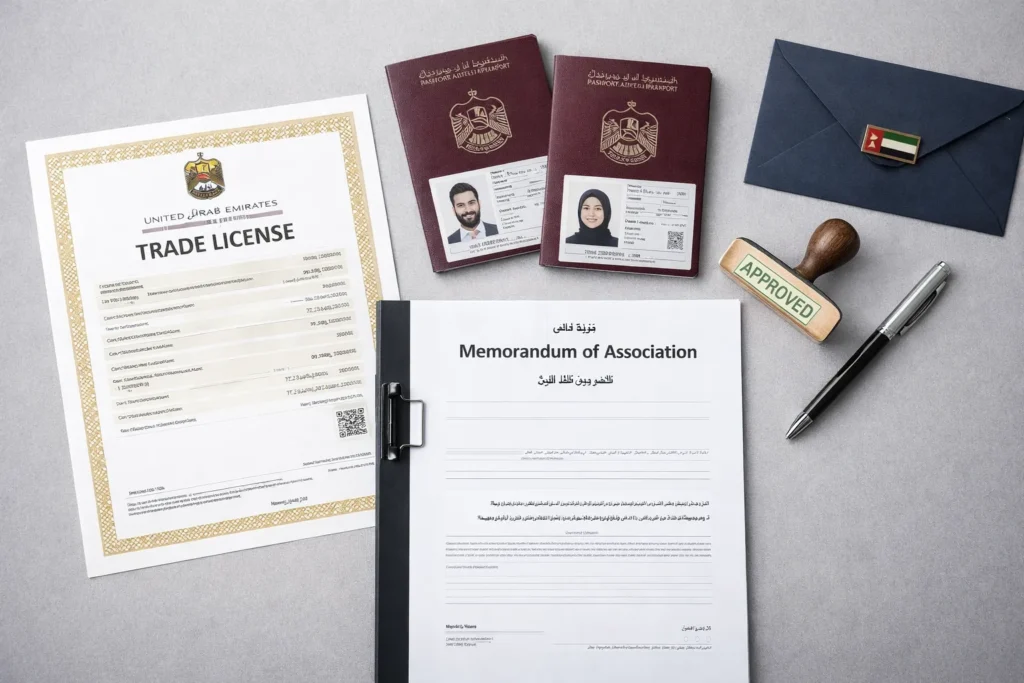
These are the foundational papers that prove your business is legally set up. You’ll definitely need:
- Valid Trade License or Commercial Registration: This is your business’s official permission slip to operate in the UAE. Without it, you’re not really in business, at least not officially.
- Memorandum of Association (MOA) and Articles of Association (AOA): These documents lay out how your company is structured, who owns what, and how it’s run. Banks use them to understand your company’s governance.
- Certificate of Incorporation: Especially important if you have an offshore company, this confirms your company’s existence.
- Share Certificates and Shareholder Register: These show who owns the company and how much.
Shareholder and Director Identification
Banks need to know who is behind the company. This is part of the Know Your Customer (KYC) process.
- Passport Copies: For all shareholders, directors, and anyone authorised to operate the account. If you’re a resident, include your Emirates ID too.
- Proof of Address: A recent utility bill or tenancy contract for all key individuals helps confirm where they live.
- Curriculum Vitae (CV) or Business Profile: For directors and major shareholders, this gives the bank a sense of their background and experience. It helps them assess the people running the show.
Banks are very particular about verifying identities. Make sure all personal documents are current and clearly legible. Any discrepancies can cause significant delays.
Business Plan and Activity Proof
This section shows the bank what your business actually does and how it plans to make money. It’s not just about the past; it’s about the future too.
- Business Plan: This should outline your business model, target market, and how you plan to grow. Include financial projections if possible.
- Proof of Business Activity: This could be things like recent invoices, client contracts, or a company profile that clearly explains your industry and operations. It helps the bank understand your cash flow and transaction patterns.
Other Supporting Documents
Depending on your business structure and the bank’s specific policies, you might need a few more things. This is where the requirements for corporate banking can get a bit more detailed.
- Board Resolution or Power of Attorney: This document officially authorises someone to open and manage the company’s bank account on its behalf.
- Bank Reference Letter: Some banks may request a letter from your previous bank, especially if you have an existing banking relationship. This can be a good indicator of your financial standing.
- Ultimate Beneficial Owner (UBO) Declaration: You’ll likely need to declare who ultimately owns or controls the company, especially if there are complex ownership structures. This is a key part of the list of documents for business banking in the UAE.
Gathering all these documents upfront will make the application process much smoother. It shows you’re prepared and serious about setting up your business banking in the UAE.
Choosing the Right Bank for Your Business
So, you’ve got all your paperwork sorted for opening a corporate bank account in the UAE. That’s a big step! Now comes the part where you pick the bank that actually fits your business. It’s not just about walking into the first branch you see; there’s a bit more to it than that.
Think about what your business actually does. Are you a tech startup that needs easy online transfers and maybe a lower minimum balance? Or are you a larger trading company that needs more complex international banking services? Different banks are better suited for different industries and business sizes. Some banks are really keen on working with free zone companies, while others might be more geared towards mainland businesses. It pays to do a little digging here.
Here are a few things to consider:
- Industry Alignment: Does the bank have experience with businesses like yours? Some banks might be hesitant to work with certain sectors, so check this early.
- Account Features: Look at the specifics. What are the transaction limits? What kind of online banking tools do they offer? Do they have multi-currency accounts if you deal internationally?
- Fees and Charges: Banks have different fee structures. Some have higher monthly fees but lower transaction costs, while others are the opposite. You’ll also want to know about minimum balance requirements – falling below this can cost you extra.
- Customer Service: How accessible is their business banking support? Will you have a dedicated relationship manager, or will you be stuck in a general call centre queue?
It’s a good idea to compare a few options before you commit. Don’t just pick the biggest name; pick the one that makes the most sense for your day-to-day operations and your future growth plans. A mismatch here can lead to a lot of headaches down the line, even if you have all the correct company incorporation documents.
Some banks might require you to have a physical office space in the UAE, or perhaps a local director. Others are more flexible, especially with the rise of digital banks that cater to remote businesses. You’ll also want to check their stance on things like international transfers and foreign exchange services if that’s part of your business model. Getting this right from the start can save you a lot of time and hassle later on.
The Application Process: Step-by-Step
So, you’ve gathered all your company incorporation documents, shareholder IDs, and that all-important business plan. What’s next for opening that UAE corporate bank account? It’s not just about handing over papers; it’s a structured process designed to make sure everything is above board.
First off, you’ll typically start by choosing a bank that fits your business needs. Not all banks are the same, and some might be more geared towards certain industries or company sizes. Once you’ve made your selection, you’ll submit your application along with all the required documentation. This is where accuracy really matters any little mismatch can cause delays.
After submission, the bank’s compliance team gets to work. They’ll review everything, cross-referencing your documents and verifying your business activities. This stage often involves a meeting with a bank representative, where you’ll discuss your business model and financial projections. Be ready to answer questions clearly.

Here’s a general rundown of what to expect:
- Initial Application Submission: You’ll fill out the bank’s application forms and provide your prepared documents. This can often be done online or in person.
- Document Verification: The bank meticulously checks all submitted paperwork for authenticity and consistency.
- Due Diligence and Compliance Checks: This is the bank’s internal review process, including Know Your Customer (KYC) and Anti-Money Laundering (AML) checks.
- Bank Interview/Meeting: A meeting with a relationship manager or compliance officer to discuss your business in detail.
- Account Approval: If all checks are satisfactory, the bank will approve your account opening.
- Account Activation: Once approved, you’ll finalise any remaining steps, like signing agreements, and your account will be activated. You can then start using your new corporate account.
Remember, patience is key. While some banks are faster than others, the entire process can take anywhere from a few days to several weeks, depending on the complexity of your business and the bank’s internal procedures. Being prepared and responsive to any queries speeds things up considerably.
If you’re looking for a financial hub with a strong regulatory framework, consider exploring options like Abu Dhabi’s financial centre. Having your paperwork in order and understanding each step will make the journey much smoother.
Getting started with us is simple! We’ve laid out each step of the application process so you can easily follow along. Ready to begin your journey? Visit our website today to learn more and start your application!
Wrapping Things Up
So, getting a business bank account in the UAE might seem like a lot with all the paperwork. But honestly, if you take the time to get everything ready beforehand, it makes the whole process way smoother. Just make sure your trade license is current, you’ve got your company’s official papers sorted, and you know who the key people are and have their IDs. Banks need to see you’re legit and know what you’re doing. It’s all about being prepared. Having a clear business plan and showing where your money comes from helps a ton, too. Don’t forget about proof of address, whether it’s a lease or a flexi-desk. It might take a bit of effort, but having the right account set up is a big step for running your business here.
Get Help Preparing Your UAE Corporate Bank Account Documents
Ripple Business Setup is a UAE-based consultancy that helps entrepreneurs and companies manage business formation, licensing, and banking procedures. Our team guides documentation, compliance, and approvals so businesses can operate without delays.
For companies opening a corporate bank account, they offer practical support with document preparation, bank selection, and application coordination. Our structured process helps businesses meet banking requirements and improve approval timelines.
If you want expert support preparing your corporate bank account documents and completing the application smoothly, contact Ripple Business Setup at +971 50 593 8101, email info@ripplellc.ae, or WhatsApp +971 4 250 0833. Our team will guide you through document requirements, bank communication, and account approval from start to finish.
Frequently Asked Questions
What’s the main reason to get a business bank account in the UAE?
Opening a business bank account in the UAE is super important for handling all your company’s money stuff. It helps you pay salaries, manage bills, and keep your business finances organised and separate from your personal money. It’s like having a dedicated wallet just for your company’s operations.
What are the most common papers needed to open a business account?
You’ll generally need papers that prove your company is real and legal, like a trade license and official company documents (like the Memorandum of Association). You’ll also need identification for everyone who owns or runs the company, like passport copies and Emirates IDs. Sometimes, they might ask for a business plan too.
Do I need a physical office in the UAE to open a business bank account?
It often depends on the bank and your company type. Some banks might require proof of a physical office, like a lease agreement. However, many banks now accept other forms of proof of presence, such as a flexi-desk agreement or a virtual office setup, especially for free zone companies.
Can foreigners open a business bank account in the UAE?
Yes, absolutely! If your company is legally set up in the UAE, even if the owners live elsewhere, you can open an account. Banks just have extra checks for non-residents to make sure everything is legitimate and follows the rules.
How long does it usually take to open a business bank account?
It can vary a lot. For traditional banks, it might take a few weeks to a couple of months because they do a thorough check of your documents and business. Some newer digital banks can open accounts much faster, sometimes in just a few days, if all your paperwork is perfect.
What happens if my documents aren’t exactly right?
If your papers have mistakes, are missing information, or don’t match up (like your business activity on the license being different from what’s on your invoices), the bank might delay your application or even reject it. It’s really important to double-check everything and make sure it’s all consistent and correct.
Disclaimer: This content is for general informational purposes only and does not constitute legal, financial, or banking advice. Bank requirements and approval policies may change. Always confirm document requirements directly with your bank or a qualified consultant before applying.