

Choosing the right business license is one of the most important steps when setting up a company in Dubai. The license you select defines what activities you can legally perform, where you can operate, and how your business is regulated. Dubai offers a flexible system designed to support startups, SMEs, and large enterprises across many industries.
There are different types of business licenses in Dubai, each linked to specific activities and legal requirements. These licenses apply across mainland, free zone, and offshore jurisdictions, with rules that vary based on location and business model. Understanding these options early helps you avoid delays, extra costs, and compliance issues later.
Why Business Licenses Matter in Dubai
A business license is a legal requirement under UAE law. No company can operate in Dubai without holding a valid license issued by the relevant authority. This applies to mainland companies regulated by the Department of Economy and Tourism, as well as free zone and offshore entities.
Your business license directly affects daily operations. It determines your eligibility to open a corporate bank account, apply for residence visas, sign contracts, and comply with tax regulations. Banks and government departments check your license activity before approving services.
Choosing the wrong license can lead to serious problems. These include fines, rejected visa applications, banking issues, or even suspension of business activity. Following Dubai business regulations from the start helps ensure long-term stability and full business compliance in the UAE.

Main Types of Business Licenses in Dubai
Dubai issues business licenses based on the nature of the activity rather than the company size. Below are the main license categories used across the emirate.
1. Commercial License in Dubai
A commercial license is used for businesses involved in trading activities. This includes buying, selling, importing, exporting, and distributing goods within the UAE or internationally. Common examples include general trading companies, retail shops, e-commerce businesses, and import/export firms. Commercial licenses are available in both mainland and free zone jurisdictions, with activity lists varying by authority.
This is one of the most widely issued license types in Dubai and is often referred to as a trading license in the UAE. Businesses must select exact activities approved under their license to remain compliant.
2. Professional License in Dubai
A professional license is designed for service-based businesses that rely on skill, expertise, or intellectual ability rather than physical goods. It is commonly used by consultants, freelancers, and specialists. Typical activities include management consultancy, IT services, marketing agencies, accounting services, and design studios. In many cases, professional licenses allow 100 percent foreign ownership, especially in free zones and under updated mainland regulations.
This license type suits individuals and firms offering services directly to clients and is a popular choice for service businesses in the UAE.
3. Industrial License in Dubai
An industrial license is required for businesses involved in the manufacturing, production, or processing of goods. This includes factories, assembly units, and industrial plants. Companies with an industrial license often need warehouse or factory space and must comply with environmental, safety, and planning regulations. External approvals may be required from authorities such as the Ministry of Industry or Dubai Municipality.
Industrial licenses are commonly issued in designated industrial zones and selected free zones that support manufacturing business activities in the UAE.
4. Tourism License in Dubai
A tourism license is issued to businesses operating in the travel and hospitality sector. This includes travel agencies, tour operators, inbound tourism companies, and destination management firms. Approval from Dubai’s tourism authority is required, along with compliance with sector-specific regulations. Dubai’s strong tourism market makes this a growing business segment, especially for companies focused on leisure, events, and travel services.
A tourism license in Dubai ensures that businesses meet quality and consumer protection standards set by regulators.
5. Freelance License in Dubai
A freelance license is ideal for solo professionals who want to work independently without setting up a full company. It allows individuals to offer services under their own name or a registered trade name. This license is commonly issued by free zones and is popular among writers, designers, developers, consultants, and media professionals. It offers lower setup costs and simplified visa options.
A freelance license in Dubai provides flexibility, legal status, and access to freelancer visa options, making it attractive for independent professionals.
Mainland vs Free Zone Business Licenses
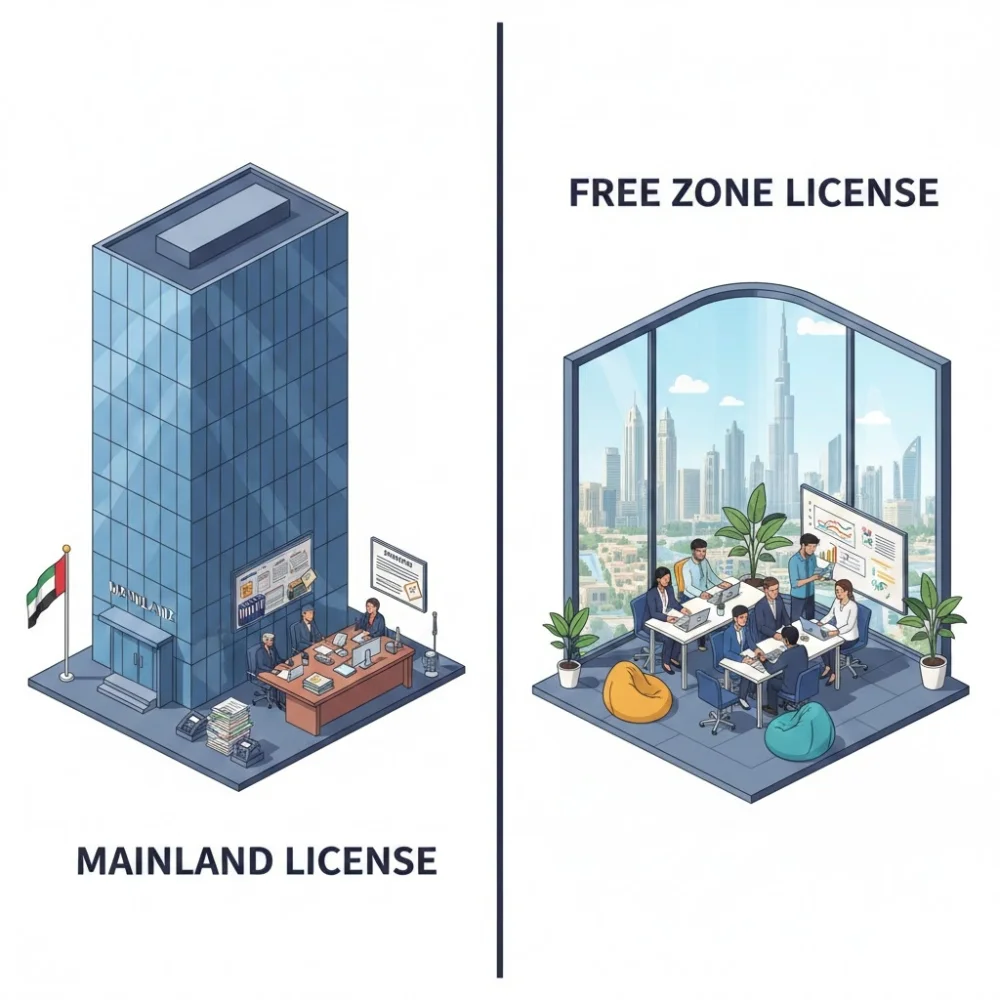
Choosing between a mainland and free zone license depends on how and where you want to operate. A mainland license allows you to trade directly within the UAE market and work with government entities. It may require a physical office space depending on the activity. A free zone business license is issued by a specific free zone authority. It often allows full foreign ownership, simplified setup, and tax benefits. However, direct trading within the UAE mainland may require additional approvals or a local distributor. Businesses targeting the local UAE market often choose a mainland license. Companies focused on international trade, digital services, or niche sectors may prefer a free zone setup.
How to Choose the Right Business License in Dubai
Selecting the correct license requires clarity on your business goals and structure. Consider the following factors before applying:
- Nature of your business activity and services
- Target market, local UAE clients or international customers
- Initial setup budget and ongoing costs
- Number of visas you will need for staff or partners
- Long-term plans for expansion or diversification
Making the right business setup decision in the UAE at the start helps avoid restructuring later.
Common Mistakes When Selecting a Business License
Many new business owners face issues due to avoidable mistakes.
Common ones include:
- Selecting an activity that does not fully match actual operations
- Ignoring external approvals required for regulated activities
- Underestimating visa limits linked to office size or license type
- Choosing the cheapest option without considering compliance needs
Avoiding these errors improves approval speed and long-term compliance.
Real Example from UAE Business Setup
An IT consultant planning to offer software advisory services initially applied for a commercial license. During review, it became clear that the activity involved professional services rather than trading. The application was revised to a professional license.
As a result, the consultant secured the correct approvals, opened a bank account smoothly, and obtained a residence visa without delays. This example highlights how choosing the right license type saves time and prevents future operational issues.
Costs Involved for Different Types of Business Licenses
The cost of a business license in Dubai varies based on license type, jurisdiction, and added services such as visas and office space. Mainland licenses generally involve higher office-related costs, while free zones often offer bundled packages. Commercial and industrial licenses may cost more due to the activity scope and approvals. Freelance and professional licenses are usually more affordable. Renewal fees apply annually and should be planned as part of ongoing expenses. Understanding Dubai business license costs early helps with accurate budgeting and financial planning.

Required Documents for Business License in Dubai
While requirements vary slightly by authority, most applications need the following:
- Passport copies of owners or shareholders
- Visa or entry stamp copy, if available
- Clear description of business activities
- Trade name reservation approval
Additional documents may be requested for regulated or industrial activities.
How Professional Support Can Help
Navigating licensing rules in Dubai can be complex, especially for first-time investors. Professional advisors help interpret regulations, select the correct license, and manage approvals efficiently. This reduces delays and ensures compliance from day one.
Ripple Business Setup supports entrepreneurs across mainland and free zone jurisdictions with clear guidance and end-to-end assistance. For expert help, you can contact Ripple Business Setup at +971 50 593 8101, email info@ripplellc.ae, or WhatsApp +971 4 250 0833. The approach remains advisory and focused on helping you make informed decisions.
Conclusion
Dubai offers a well-structured licensing system designed to support different business models. From commercial and professional licenses to industrial, tourism, and freelance options, each license serves a specific purpose. Choosing the right one impacts legal compliance, costs, visas, and daily operations. Understanding the available types of business licenses allows you to plan with confidence and avoid unnecessary changes later. Before applying, review your activity, target market, and long-term goals carefully. If needed, consult experienced professionals to ensure your business starts on the right legal footing.
Similar Topic:
Types of Business Licenses in Dubai: 2025 Guide
Disclaimer: This article is for general information only and does not replace legal or professional advice. Business license rules in Dubai may change based on the authority and activity.