
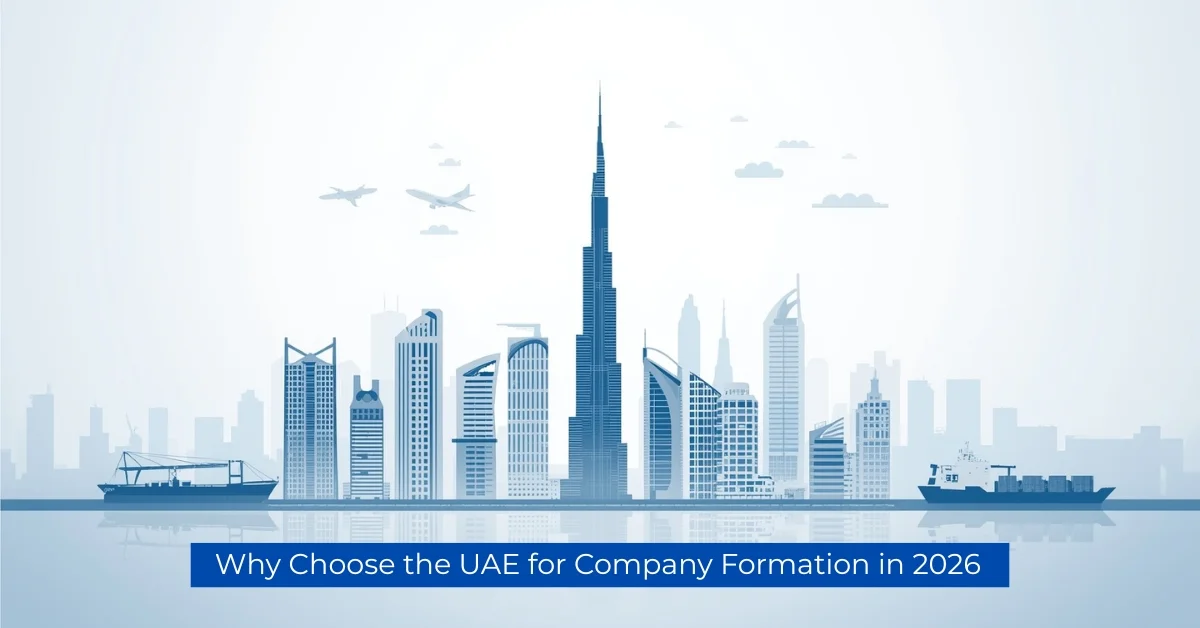
Choosing where to set up a business in 2026 is not a casual decision. Regulations are tighter, taxes are clearer, and governments expect compliance from day one. This is exactly why company formation in 2026 demands a location that offers stability, clarity, and long-term value.
The UAE continues to stand out as a serious option. Not because it is trendy, but because it has built a system that works for foreign entrepreneurs, startups, and expanding businesses. With a stable economy, clear legal framework, digital processes, and defined tax rules, the UAE offers predictability at a time when many markets do not.
UAE Business Environment in 2026
The UAE business environment in 2026 looks more mature than it did a few years ago. The country has moved past experimental reforms and now operates with structured, tested systems. Economic diversification remains a priority. Oil is no longer the main driver. Trade, logistics, fintech, tourism, manufacturing, and professional services continue to grow. This matters because it reduces dependency on one sector and creates safer ground for long-term businesses. Digital government services have improved further. Company registration, license renewals, visa applications, and tax filings now happen through unified online platforms. This reduces delays and human error. Trade relationships with Asia, Europe, and Africa remain strong. The UAE’s economic outlook for 2026 reflects consistency rather than sudden change. For business owners, that stability is more valuable than short-term incentives.
Strategic Location and Global Market Access
The UAE’s location is not a marketing slogan. It solves real operational problems. From the UAE, businesses can reach Europe, Asia, and Africa within reasonable working hours. This time zone advantage allows smoother communication with suppliers, clients, and teams across regions. The country’s ports and airports support global trade at scale. Jebel Ali Port and major international airports connect businesses to key shipping and logistics routes. For trading, logistics, and e-commerce companies, this reduces delivery times and operational costs. Access to GCC markets, South Asia, and parts of Africa makes the UAE a practical base for regional expansion, not just a registered address.
Tax Advantages That Still Matter in 2026
The UAE is no longer described as completely tax-free, and that honesty matters. As of now, the UAE applies a 9 percent corporate tax on taxable profits above the defined threshold. This rate remains competitive compared to many global jurisdictions. Free zone companies may still benefit from tax incentives on qualifying income, provided they meet regulatory requirements. This is not automatic. Compliance matters. There is no personal income tax on salaries. This continues to attract skilled professionals and business owners. The UAE has signed multiple double taxation treaties, which help businesses avoid paying tax twice on the same income. For international companies, this structure supports cleaner financial planning. In 2026, tax clarity is an advantage. Uncertainty costs more than tax itself.
100 Percent Foreign Ownership and Business Control
Foreign ownership rules are no longer confusing if you understand the structure. Mainland company formation allows 100 percent foreign ownership for most activities. This means you can operate within the local UAE market without a local partner holding shares. Free zone company setup also allows full foreign ownership and offers defined operational benefits. However, free zone companies face limitations when dealing directly with the mainland unless structured correctly.
In both cases, business owners retain control over operations, profits, and decision-making. The key is choosing the right jurisdiction based on how and where you plan to operate. Many competitors oversimplify this. The reality is simple if explained correctly.
Multiple Business Setup Options in the UAE
The UAE offers three main company formation structures. Each serves a different purpose.
1. Mainland Company Formation
Mainland companies suit businesses that want direct access to the UAE market.
They can:
- Trade locally without restrictions
- Bid for government contracts
- Choose office locations flexibly
This structure works well for service providers, retail businesses, and companies with on-ground operations.
2. Free Zone Company Formation
Free zones are designed for efficiency and cost control.
They offer:
- Faster setup timelines
- Industry-focused zones
- Predictable licensing packages
This option suits startups, consultants, tech firms, and international traders who do not need daily mainland operations.
3. Offshore Company Setup
Offshore companies serve specific needs.
They are used for:
- Asset holding
- International structuring
- Intellectual property ownership
They cannot conduct local business activities within the UAE.
Simple and Fast Company Formation Process
The company formation process in the UAE follows a clear structure.
Most businesses go through these steps:
- Choose the business activity
- Select the right jurisdiction
- Get trade name approval
- Obtain the business license
- Apply for visas and open a bank account
The process is efficient when handled correctly. Delays usually come from choosing the wrong activity or incomplete documentation. Speed should never replace accuracy.
Visa Options That Support Long-Term Business Growth
Business visas in the UAE support stability, not short visits. Investor and partner visas allow business owners to live and work in the country legally. These visas link directly to the company structure. The Golden Visa remains relevant in 2026 for eligible entrepreneurs, investors, and professionals. It offers long-term residency without frequent renewals. These visa options help business owners plan for growth, relocation, and team building. They are tools for continuity, not lifestyle perks.
Strong Banking, Funding, and Financial Ecosystem
The UAE banking system is strict, and that is not a disadvantage. Opening a corporate bank account requires clear documentation, verified business activity, and compliance with KYC and AML rules. Once approved, the system remains reliable. Local and international banks operate across the UAE. Fintech solutions continue to grow, offering digital payment and financial management options. Funding opportunities exist through private investors, family offices, and regional venture capital firms. Serious businesses with clear structures find support.
Legal Protection and Business-Friendly Regulations
The UAE legal framework prioritizes clarity and enforcement. Contracts are enforceable. Courts operate under defined commercial laws. Arbitration centers handle disputes efficiently. Intellectual property protection exists for trademarks, patents, and copyrights. Businesses can register and defend their assets legally. This regulatory framework supports investor confidence. It also penalizes non-compliance. The system works if you respect it.
Cost of Company Formation in UAE in 2026
The cost of company formation in the UAE depends on structure, location, and activity. License costs vary between the mainland and the free zones. Free zones often bundle services, while mainland costs depend on activity and office requirements. Visa costs, office space, and compliance expenses add to the total. There is no universally cheapest option. There is only the most suitable option. Businesses that chase the lowest cost often pay more later in corrections.
Who Should Consider Company Formation in the UAE in 2026
The UAE suits businesses that value structure and scalability.
This includes:
- Startups planning regional growth
- Consultants and freelancers serving international clients
- Trading and logistics companies
- Firms expanding from Europe, Asia, or Africa
It is not ideal for businesses seeking zero compliance or informal operations.
Common Mistakes to Avoid When Setting Up a Company
Some mistakes repeat every year. Choosing the wrong license causes operational limits. Ignoring tax registration leads to penalties. Trying to handle everything without understanding regulations creates delays. These errors cost more than professional guidance ever will.
Is the UAE the Right Choice for Your Business in 2026?
The UAE makes sense if you want a regulated, stable, and globally connected base to build your business. It works best for founders who are ready to operate within clear laws, tax rules, and compliance frameworks. It may not suit businesses that prefer informal structures or want to avoid regulatory oversight.
The right decision depends on your goals, budget, and how you plan to operate. There is no universal answer, only informed choices. If you need clarity before committing, Ripple Business Setup helps founders and investors assess the right jurisdiction, license, and structure based on real business needs, not assumptions. You can reach the team directly at +971 50 593 8101, email info@ripplellc.ae
, or contact them on WhatsApp at +971 4 250 0833 for practical guidance before moving forward.
Conclusion
Company formation in 2026 requires clarity, not assumptions. The UAE offers structure, access, and long-term predictability for businesses that plan properly. If you want clarity before deciding, a short consultation can prevent months of correction later. No pressure. Just informed decisions that hold up over time.
Disclaimer: This content is for general informational purposes only and does not constitute legal, tax, or financial advice. Regulations may change.