Introduction
Opening a restaurant in Dubai has become one of the most attractive business opportunities Dubai Department of Economy and Tourism for both local and foreign investors. The city’s hospitality and tourism sector is thriving, fueled by a diverse population, high tourist traffic, and a strong appetite for new culinary experiences. From casual cafes to fine dining, the restaurant market in Dubai offers plenty of potential for profitable ventures.
However, success in this sector is not just about offering great food. Understanding the licensing requirements, legal regulations, and operational standards is critical. Without the proper trade licenses and approvals, starting a restaurant can become time-consuming and costly.
Why Dubai is a Top Choice for Restaurants
Dubai has established itself as a global culinary hub. The city attracts millions of tourists each year and has a large expatriate population that craves international cuisines. This diverse demographic creates a huge demand for unique restaurant concepts, ranging from street food to high-end dining experiences.
For example, restaurants like Zuma and Ravi Restaurant have successfully capitalized on Dubai’s dynamic food market by blending quality, authenticity, and strong brand presence.
The city’s openness to international cuisines, combined with a supportive business environment, makes it a favorable destination for restaurant entrepreneurs. Investors can identify gaps in the market, from vegan cafes to ethnic cuisine, and establish businesses that cater to specific customer segments.
Understanding Restaurant Licenses in Dubai

Before opening a restaurant, understanding the licensing framework is crucial. Dubai enforces strict rules to ensure food safety, consumer protection, and legal compliance.
Restaurants typically require three types of approvals:
- Commercial License: Needed for any business operating in Dubai. This license allows legal operation, banking, and contractual activities.
- Food & Beverage License: Specific to restaurants and cafes, this license ensures compliance with Dubai Municipality food safety standards.
- Health & Safety Approvals: Municipality inspections verify hygiene, kitchen standards, and staff safety certifications.
Obtaining these licenses ensures that your restaurant operates legally and avoids fines or closure.
Step 1 – Choose the Right Business Structure
Choosing the right business structure impacts ownership, licensing, and operational flexibility. In Dubai, restaurants can operate either in the mainland or in a free zone.
Mainland vs Free Zone – Pros and Cons:
- Mainland:
- Can operate anywhere in Dubai
- Permits local trade
- May require a local partner for foreign investors
- Free Zone:
- Allows 100% foreign ownership
- Simplified company setup
- Business activities restricted to the free zone area
Costs, visa eligibility, and ownership rules vary between these options. For example, free zone setups often have lower initial costs but limited market access compared to mainland businesses. Selecting the right structure ensures long-term flexibility and compliance.
Step 2 – Select a Prime Location
Location is one of the most critical factors for a restaurant’s success in Dubai. High visibility, easy accessibility, and consistent foot traffic can directly influence profitability.
- Tourist-heavy areas like Downtown Dubai, Marina, and Jumeirah Beach attract visitors regularly.
- Local neighborhoods with residential communities can generate repeat customers.
- Mall-based locations offer captive audiences but come with higher rents.
- Street-side restaurants provide more branding flexibility at moderate costs.
Choosing the right location aligns your restaurant with the target customer base and affects rent, marketing strategies, and overall operations.
Step 3 – Apply for the Trade License
Once the business structure and location are finalized, the next step is obtaining a trade license. This process involves submitting documents to the Department of Economic Development (DED) and Dubai Municipality.
Essential Documents Checklist:
- Passport copies of owners
- Business plan detailing concept and operations
- Lease agreement or proof of premises ownership
- Menu details for food approval
The approval timeline can vary from 2 to 6 weeks depending on the type of license and completeness of documentation. Obtaining a trade license is mandatory before starting operations or hiring staff.
Step 4 – Comply with Health & Safety Regulations
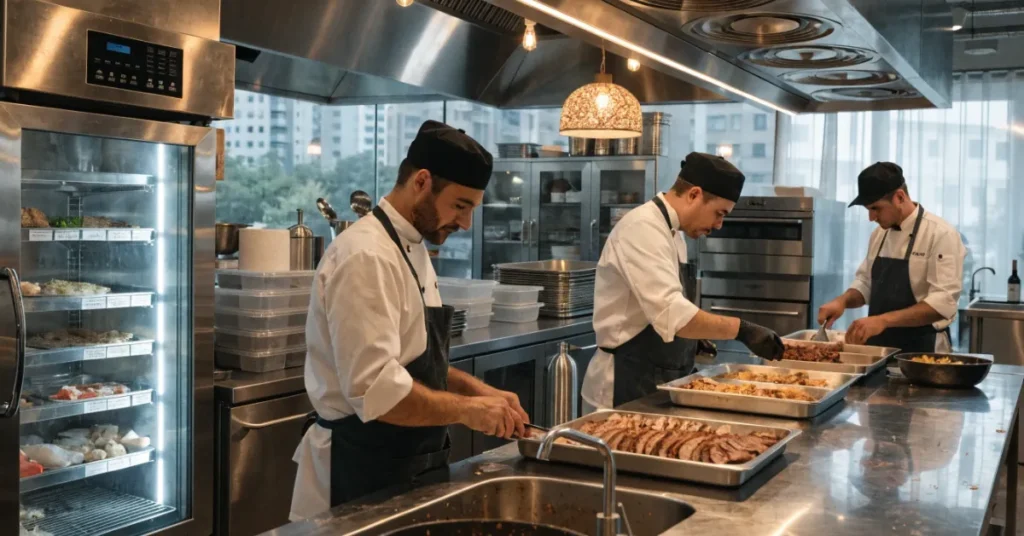
Dubai Municipality enforces strict food safety and hygiene regulations. Restaurants must pass inspections before opening and maintain standards continuously.
Key Compliance Areas:
- Proper food handling and storage to prevent contamination
- Kitchen safety standards, including fire safety and ventilation
- Staff training and certifications in food safety and hygiene
Compliance ensures customer safety, builds trust, and prevents legal penalties. Regular audits and staff training should be part of your operational plan.
Step 5 – Hire Staff and Obtain Visas
Staffing is essential for smooth restaurant operations. Dubai requires work permits and visas for all employees, including chefs, waiters, and managers.
Steps to Hire Legally:
- Apply for labor cards and work permits for all staff
- Conduct health checkups and mandatory training
- Ensure payroll and employment contracts comply with UAE labor laws
Following legal requirements helps avoid fines, work stoppages, and reputational damage. Properly trained staff also improves service quality and customer satisfaction.
Cost Overview for Opening a Restaurant in Dubai
Setting up a restaurant involves multiple cost components, including licensing, premises, equipment, and staffing. Approximate ranges for planning:
Typical Costs:
- Trade license: AED 15,000 – AED 25,000
- Rent: AED 80,000 – AED 300,000 per year, depending on location
- Fit-out & equipment: AED 150,000 – AED 500,000
- Staff salaries: AED 10,000 – AED 50,000 per month, depending on team size
Understanding costs upfront helps plan budgets accurately and secure funding if needed.
Tips for Restaurant Success in Dubai
Launching a restaurant is just the first step; growing it sustainably is equally important. Consider these strategies:
- Menu Planning: Offer variety while maintaining quality and consistency.
- Social Media Marketing: Leverage Instagram, TikTok, and Facebook to attract customers.
- Delivery Apps: Platforms like Deliveroo and Talabat increase reach and convenience.
- Customer Engagement: Loyalty programs, promotions, and feedback systems improve retention.
For example, many small restaurants in Dubai saw growth by partnering with delivery apps and running targeted social media campaigns during tourist seasons.
Ripple Business Setup Assistance
For entrepreneurs seeking guidance, professional consultancy can simplify the setup process. For a seamless setup, contact Ripple Business Setup at +971 50 593 8101, email info@ripplellc.ae, or WhatsApp +971 4 250 0833. Our team guides restaurant owners through licensing, approvals, and compliance to open quickly in Dubai.
FAQ
Q1: How long does it take to get a restaurant license in Dubai?
Typically 2 to 6 weeks, depending on document readiness and license type.
Q2: Can I open a restaurant in a free zone?
Yes, but free zone restaurants can operate only within the zone unless additional approvals are obtained.
Q3: What is the minimum investment required for a restaurant in Dubai?
Around AED 200,000 – AED 500,000 including rent, license, and equipment.
Q4: Are foreign investors allowed 100% ownership?
Yes, in free zones. Mainland ownership may require a local partner unless new foreign ownership laws apply.
Q5: How to renew restaurant licenses in Dubai?
Renew annually through DED and Dubai Municipality, ensuring all fees and compliance requirements are met.
Conclusion
Opening a restaurant in Dubai is an exciting opportunity, but it requires careful planning and adherence to regulations. Following the five steps, choosing the right business structure, selecting a prime location, obtaining trade licenses, complying with health regulations, and hiring staff, ensures a smooth launch and long-term success.
Planning strategically, budgeting carefully, and seeking expert guidance can save time and avoid common pitfalls. Start your restaurant journey today with the right license and professional support, and tap into Dubai’s thriving food market.
Disclaimer: The information provided in this article is for general informational purposes only and should not be considered legal, financial, or business advice. Restaurant licensing requirements, approvals, government fees, municipality regulations, food safety standards, and business setup procedures in Dubai and the UAE may change at any time based on updates from relevant authorities. Costs, timelines, and documentation requirements may vary depending on the business activity, location, legal structure, and approvals from authorities such as the Department of Economy and Tourism (DET), Dubai Municipality, and other regulatory bodies. We recommend consulting a qualified business setup consultant or legal advisor before making any business decisions.