

The food and beverage industry in the UAE continues to grow rapidly, especially in cities like Dubai, Sharjah, and Abu Dhabi. Many entrepreneurs are now exploring the Cafeteria Business in UAE because it requires lower investment compared to large restaurants while offering strong daily customer demand. From office workers and tourists to students and delivery customers, cafeterias attract a wide audience across the Emirates.
Starting a cafeteria legally in the UAE involves more than renting a shop and selling food. Business owners must secure the correct cafeteria license UAE authorities require, follow municipality food safety regulations, and choose a suitable business location. Proper planning helps avoid delays, penalties, and operational issues later.
The rise of food delivery apps, growing tourism, and demand for affordable quick-service meals have made cafeterias one of the most profitable food business opportunities in Dubai and other Emirates. Whether you plan to open a traditional tea cafeteria, fast-food outlet, or cloud kitchen model, understanding the legal process is essential before launching your business.
Why Cafeteria Business in UAE Is a Profitable Opportunity
The UAE offers a strong environment for food businesses due to its multicultural population, busy lifestyle, and expanding tourism industry. Affordable dining options remain in high demand, especially in commercial zones, residential communities, and industrial areas. This makes cafeteria setup in UAE an attractive option for first-time entrepreneurs and investors looking for stable daily sales.
Unlike large restaurants, cafeterias usually operate with smaller spaces, limited staff, and lower operational costs. Many cafeteria owners also benefit from online delivery platforms such as Talabat, Deliveroo, and Noon Food, which increase customer reach without requiring large dining areas.
Areas such as Deira, Al Nahda, Dubai Marina, Sharjah Industrial Area, and Ajman residential zones often show strong demand for quick-service food businesses due to high population density and worker traffic.
Benefits of Starting a Cafeteria
- Lower startup investment compared to restaurants
- High repeat customer potential
- Easier menu management
- Strong food delivery opportunities
- Flexible business expansion options
- Faster business setup process
Types of Cafeteria Businesses You Can Start in UAE
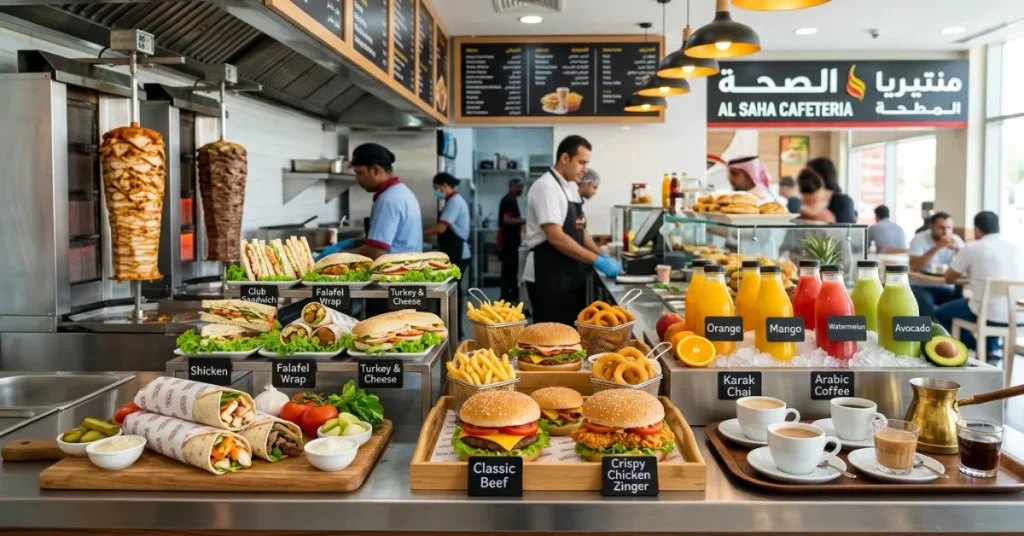
Entrepreneurs can choose from several cafeteria concepts depending on their budget, location, and target customers. Selecting the right concept plays a major role in long-term profitability and operational success.
Traditional Cafeteria
Traditional cafeterias are common across the UAE and usually serve karak tea, sandwiches, fresh juices, snacks, and simple fast-moving meals. These businesses often perform well near offices, labor accommodations, and residential areas.
Fast Food Cafeteria
Fast-food cafeterias focus on burgers, shawarma, fries, wraps, and combo meals. This model attracts younger customers and delivery app users looking for affordable and fast meals.
Healthy Cafeteria Concept
Health-focused cafeterias are growing in popularity in Dubai and Abu Dhabi. These businesses offer smoothies, salads, protein meals, and healthy snacks for fitness-conscious customers.
Delivery-Only Cafeteria
Some entrepreneurs now prefer cloud kitchen models because they reduce rental costs and focus entirely on online food delivery. This option works well for startup businesses with limited capital.
Specialty Beverage Cafeteria
This concept focuses mainly on coffee, tea, desserts, mocktails, and beverages. These cafeterias often target malls, tourist locations, and high-footfall commercial areas.
Legal Requirements to Start Cafeteria Business in UAE

Starting a cafeteria legally requires approval from several UAE authorities. Business owners must complete licensing, food safety, tenancy, and municipality procedures before opening operations.
In most cases, mainland business setup is preferred because it allows cafeterias to operate freely across the UAE market. Free zones may have restrictions for food businesses that require physical retail operations.
The process usually starts with selecting the correct business activity under the Department of Economic Development (DED). Entrepreneurs then reserve a trade name, obtain initial approval, secure a shop location, and complete municipality inspections.
Main Legal Steps
- Select cafeteria business activity
- Reserve trade name
- Apply for initial approval
- Finalize shop location
- Obtain Ejari or tenancy contract
- Secure municipality food approvals
- Complete Civil Defense inspection
- Receive cafeteria trade license UAE authorities issue
Business owners should also ensure the shop meets UAE commercial kitchen rules before applying for final approvals.
Licenses and Approvals Required for Cafeteria Business in UAE
Several approvals are necessary before legally operating a cafeteria in Dubai or other Emirates. These approvals help ensure food safety, customer protection, and business compliance.
| Approval | Purpose |
|---|---|
| Trade License | Legal permission to operate business |
| Food License | Approval for food preparation and serving |
| Dubai Municipality Approval | Food safety compliance |
| Civil Defense Approval | Fire and safety inspection |
| Signboard Permit | Outdoor branding permission |
The Department of Economic Development (DED) usually handles trade licensing, while Dubai Municipality reviews kitchen layouts, hygiene systems, storage standards, and food handling procedures.
Civil Defense authorities inspect ventilation systems, emergency exits, and fire safety equipment before granting final approval.
Cost to Start Cafeteria Business in UAE
The cafeteria business cost in UAE depends on factors such as location, shop size, kitchen equipment, and interior setup. Businesses located in premium Dubai areas generally require higher investment than cafeterias in Sharjah or Ajman.
| Expense | Estimated Cost |
|---|---|
| Trade License | AED 10,000 – 18,000 |
| Shop Rent | AED 25,000 – 120,000 |
| Kitchen Equipment | AED 20,000 – 80,000 |
| Municipality Approval | AED 5,000 – 15,000 |
| Staff Visa Costs | AED 3,000 – 7,000 per employee |
Entrepreneurs should also budget for additional operational expenses including:
- Utility deposits
- POS systems
- Branding and signage
- Menu printing
- Delivery app registration fees
- Initial inventory and packaging
Delivery-focused cafeterias or cloud kitchens may reduce setup costs because they require smaller spaces and limited dining facilities.
Disclaimer: Business setup costs in the UAE may vary depending on Emirate, business activity, approvals, office/shop size, and government fee updates.
Best Locations to Open a Cafeteria in UAE
Location plays a major role in cafeteria profitability. Areas with high foot traffic and strong delivery demand usually generate better sales and repeat customers.
Popular locations for cafeteria businesses include:
- Deira
- Al Nahda
- Dubai Marina
- Sharjah Industrial Area
- Ajman residential communities
- Business Bay
- International City
Before finalizing a shop location, entrepreneurs should evaluate:
- Nearby competition
- Rental affordability
- Parking availability
- Office and school proximity
- Delivery demand in surrounding areas
- Population density
Many successful cafeterias in Dubai generate significant revenue from nearby offices, labor accommodations, and residential communities.
Food Safety Rules and Municipality Regulations in UAE
Food safety compliance is one of the most important requirements for operating a cafeteria legally in the UAE. Dubai Municipality and food safety authorities regularly inspect food businesses to ensure hygiene standards are maintained.
Business owners must follow regulations related to:
- Food storage temperatures
- Kitchen cleanliness
- Staff hygiene
- Refrigeration systems
- Ventilation setup
- Waste disposal procedures
Staff members involved in food preparation may also require medical fitness certificates and food handling training.
Many cafeterias fail municipality inspections because of poor kitchen layout planning, improper food storage, or weak sanitation practices. Following UAE food safety regulations from the beginning helps businesses avoid penalties and operational disruptions.
Equipment Needed for Cafeteria Business in UAE
Commercial kitchen equipment selection depends on the cafeteria concept and menu offerings. Business owners should prioritize durable and energy-efficient equipment to reduce long-term maintenance costs.
Essential Cafeteria Equipment
- Refrigerators
- Freezers
- Tea and coffee machines
- Shawarma machines
- Grill machines
- Exhaust and ventilation systems
- Food preparation counters
- POS systems
- Storage shelving
Some startups reduce costs by purchasing quality used equipment from restaurant liquidation suppliers in Dubai and Sharjah.
Staffing Requirements for a Cafeteria in UAE
A cafeteria business usually requires cooks, kitchen helpers, cashiers, cleaners, and delivery staff depending on business size and operations. Business owners must comply with UAE labor laws, visa regulations, and employee accommodation requirements. Hiring trained staff improves food quality, customer service, and operational efficiency.
Important staffing considerations include:
- Food handling certificates
- Employee visas
- Medical fitness tests
- Shift scheduling
- Customer service training
Well-trained staff can significantly improve customer retention and online reviews.
Marketing Strategies for Cafeteria Business in UAE
Marketing plays an important role in attracting new customers and increasing repeat orders. Many successful cafeterias in the UAE rely heavily on digital marketing and food delivery platforms.
Online Marketing Strategies
- Create Google Business Profile
- Run Instagram food promotions
- Upload short TikTok food videos
- Register on food delivery apps
- Offer WhatsApp ordering options
Offline Marketing Strategies
- Distribute flyers nearby
- Offer office lunch deals
- Provide loyalty discounts
- Use attractive outdoor signage
Positive Google reviews and food delivery ratings also help cafeterias build trust and attract more customers.
Common Mistakes to Avoid When Starting Cafeteria Business in UAE
Many food startups struggle because they underestimate operational and legal challenges. Avoiding common mistakes can improve business stability and profitability.
Common Mistakes
- Choosing the wrong location
- Ignoring municipality regulations
- Overspending on interiors
- Poor menu planning
- Weak delivery management
- No digital marketing strategy
- Hiring untrained staff
Business owners should focus on operational efficiency and customer experience rather than expensive decoration during the early stages.
Cafeteria vs Restaurant Business in UAE – Which Is Better?
Many entrepreneurs compare cafeterias with full-service restaurants before investing in the food industry.
Feature Cafeteria Restaurant Investment Lower Higher Staff Required Fewer More Setup Time Faster Longer Menu Complexity Simple Extensive Operational Cost Lower Higher Cafeterias are often better for first-time investors because they require lower capital and simpler operations. Restaurants may offer higher revenue potential but involve greater operational complexity and investment.
How Ripple Business Setup Can Help
Starting a Cafeteria Business in UAE involves multiple legal procedures, approvals, and compliance requirements that can become time-consuming for new entrepreneurs. Ripple Business Setup helps simplify the entire process by assisting with cafeteria trade license applications, business activity selection, municipality approvals, documentation, visa support, and shop setup guidance. Whether you plan to open a traditional cafeteria, fast-food outlet, or delivery-focused food business, professional support can help reduce delays and avoid costly mistakes. For expert assistance with your UAE cafeteria setup, contact Ripple Business Setup at +971 50 593 8101, email info@ripplellc.ae, or WhatsApp +971 4 250 0833.
Frequently Asked Questions
How much does it cost to open a cafeteria in UAE?
The average cafeteria setup cost in UAE may range between AED 60,000 and AED 250,000, depending on shop size, location, equipment, and approvals.
Do I need Dubai Municipality approval for a cafeteria?
Yes, Food businesses in Dubai require municipality approval to ensure compliance with hygiene and food safety regulations.
Can foreigners start a cafeteria business in UAE?
Yes, Foreign investors can legally open cafeterias in the UAE through mainland or eligible business setup structures.
How long does cafeteria license approval take?
The process may take several weeks, depending on documentation, inspections, and municipality approvals.
Is the cafeteria business profitable in Dubai?
Yes. Cafeterias can be profitable in high-demand areas with strong foot traffic and delivery potential.
What is the difference between a cafeteria and a restaurant license in UAE?
A cafeteria license generally covers quick-service and limited-menu food businesses, while restaurant licenses usually apply to larger dine-in operations with broader services.
Conclusion
The Cafeteria Business in UAE offers strong growth potential for entrepreneurs looking to enter the food and beverage sector. Rising demand for affordable dining, food delivery services, and quick-service meals continues to create profitable opportunities across Dubai and other Emirates.
Disclaimer: The information provided in this article is for general informational purposes only and may change based on UAE government regulations, municipality rules, licensing updates, and business activity requirements. Business setup costs, approvals, and legal procedures may vary depending on the Emirate, location, and business model. It is recommended to consult professional UAE business setup advisors or relevant government authorities before making any business decisions.