Yes, a Free Zone company can sell products online to customers in the UAE, but the way it enters the mainland market matters. A Free Zone licence can support e-commerce activities, yet businesses must still follow the licensing, product, customs, VAT, fulfilment, and mainland requirements that apply to their specific operations. For entrepreneurs searching for how to sell online UAE customers, the key question is not simply whether a website or marketplace can accept orders. The real issue is whether the company’s licensed activity, sales model, inventory arrangements, delivery structure, and tax position support those transactions.
This is particularly important for businesses using Amazon, their own website, social media, or other marketplaces. Understanding the rules before launching can help a business avoid licensing problems, unexpected costs, and compliance issues.
Can a Free Zone Company Sell Online in the UAE?
A Free Zone company can conduct online business, subject to the activities and permissions included in its licence and the rules that apply to selling into the UAE mainland. The UAE Government confirms that Free Zones offer specialised licences for businesses selling products and services online. At the same time, access to the UAE mainland market is regulated. Direct mainland sales may require a local distributor, mainland branch, company, or other applicable approvals or arrangements depending on the activity and emirate.
This means a Free Zone company should not assume that its licence automatically permits every form of mainland commercial activity.
For example, a company may operate an online store from its Free Zone, receive orders through a website, and arrange delivery to UAE customers. However, if it opens a physical retail outlet or establishes other mainland operations, additional licensing requirements may apply.
What Does “Selling Across the UAE” Actually Mean?
Online selling can take several forms:
- Selling through your own website
- Selling through an online marketplace
- Taking orders through social media
- Using a third-party fulfilment company
- Delivering products directly to customers
- Importing products and maintaining inventory
- Using a payment gateway to collect online payments
Each model can create different legal, tax, customs, and operational considerations.
Therefore, the phrase Free Zone Company Sell Online, UAE should be understood as a business structure rather than a blanket permission for every type of mainland activity.
Does a Free Zone Company Need an E-commerce Licence in the UAE?
An ecommerce licence UAE businesses use should match the nature of their actual online activity. The UAE Government states that businesses conducting e-commerce activities need the appropriate licence and approvals. Free Zones offer different licence options for online businesses, and the exact activity available depends on the relevant Free Zone authority.
An entrepreneur selling physical consumer products should therefore check whether the selected licence permits the intended trading activity.
The licence should align with factors such as:
- Type of products being sold
- Online selling model
- Importing activities
- Marketplace operations
- Storage and fulfilment
- Any regulated products
- Intended customer market
A company selling ordinary consumer products may have different requirements from a company selling cosmetics, food, medical products, electronics, or other regulated goods.
Is an Online Seller Licence Different From a Trade Licence?
The term online seller licence can describe a licensing arrangement that permits a business to conduct commercial activity through online channels. However, entrepreneurs should not focus only on the name of the licence. The more important question is whether the licence and business activity legally cover what the company actually intends to sell.
A website does not replace a business licence. Similarly, opening an account on a marketplace does not automatically authorise an activity that is outside the company’s licensed scope.
Before launching, confirm the activity with the relevant licensing authority and check whether additional approvals apply to the products.
How Can a Free Zone Company Sell Online Across the UAE?
A practical setup can follow these steps:
- Select the correct business activity based on the products or services.
- Obtain the appropriate Free Zone licence for the intended business model.
- Set up the online store through a website, marketplace, or social platform.
- Arrange a corporate bank account and suitable payment gateway.
- Plan inventory and fulfilment before accepting large volumes of orders.
- Review customs requirements if products are imported.
- Check product-specific approvals where applicable.
- Review VAT obligations as sales and imports increase.
- Maintain proper invoices and accounting records.
- Review mainland requirements if the business develops physical operations in the UAE.
This approach helps an entrepreneur build the online business around the correct legal and operational structure instead of trying to fix compliance problems after sales begin.
Can a Free Zone Company Sell Products Through Amazon and Other Marketplaces?
Yes, a Free Zone company can potentially use online marketplaces, provided its business activity, marketplace account, products, and supporting documents meet the relevant requirements. An Amazon seller setup, for example, may require business information, licensing documents, banking details, identity verification, product information, and other documentation. Marketplace approval and government licensing are not the same thing.
A marketplace may approve a seller account, but the business remains responsible for complying with UAE laws and the conditions of its licence.
Amazon Seller Setup for a Free Zone Company
Before starting an Amazon seller operation, review:
- Free Zone business activity
- Trade licence
- Product category
- Marketplace account requirements
- Corporate bank account
- Payment arrangements
- Inventory location
- Fulfilment model
- Customs requirements
- VAT position
A business selling a small number of products may start with a simple fulfilment model, while a growing e-commerce operation may require dedicated warehousing, inventory management, and professional fulfilment.
Can a Free Zone Company Sell Through Instagram and Social Media?
Social media can be an important sales channel for a Free Zone company. Businesses may promote products through Instagram, Facebook, TikTok, WhatsApp, and other digital platforms. However, creating a social media business account does not replace the underlying commercial licence.An Instagram business licence is therefore better understood as part of the broader licensing question: does the business have the appropriate legal activity to sell the products it promotes?
The UAE’s modern technology-based trade framework covers online sales through websites, applications, social media platforms, and digital marketplaces.
Does an Instagram Business Account Need a Separate Licence?
The social media account itself is not the main issue. The important consideration is whether the underlying business has the required licence and approvals for its commercial activity.
For example, a company selling clothing online should ensure that its licensed activity covers the relevant trading activity. A business selling regulated products may need additional approvals before advertising or selling them online.
Can a Free Zone Company Deliver Products to Mainland UAE Customers?
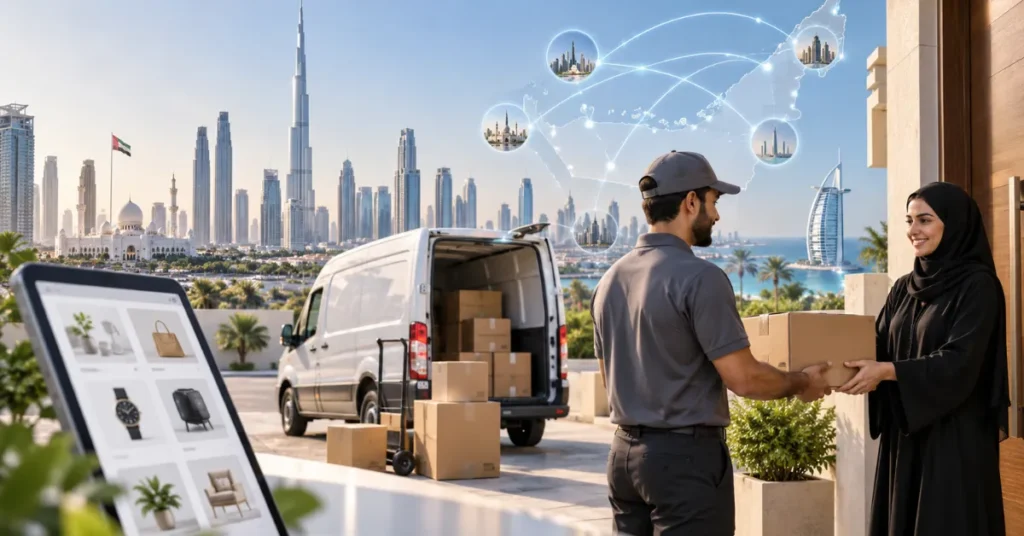
Delivering products to customers in Dubai, Abu Dhabi, Sharjah, Ajman, or other emirates does not automatically mean the company has established a physical mainland shop.
A Free Zone e-commerce business can structure its operations around online ordering and delivery, but the specific mainland sales arrangement should be reviewed against the applicable requirements.
The distinction becomes especially important when the business starts operating physical facilities outside its Free Zone.
What If the Company Stores Inventory in the UAE Mainland?
Inventory location deserves careful attention.
A business might keep products in:
- Its Free Zone warehouse
- A third-party logistics facility
- A fulfilment centre
- Another authorised storage facility
- A mainland warehouse under an appropriate arrangement
Using a third-party logistics provider can simplify fulfilment, but the company should still understand who owns the inventory, who imports the goods, how customs are handled, and which entity issues the customer invoice.
The physical movement of goods should match the company’s documented supply chain.
What About Customs When a Free Zone Company Imports Products?
Customs becomes important when an online business imports products into the UAE.
A business should identify:
- Where the products enter the UAE
- Who acts as importer
- Where inventory is stored
- Whether customs duties apply
- What documents are required
- Whether the products have special import restrictions
- How goods move from the Free Zone into the mainland market
The treatment of goods can also depend on whether the Free Zone qualifies as a Designated Zone for VAT purposes. Not every Free Zone receives the same VAT treatment, and Designated Zone rules apply only when the relevant conditions are met.
This is why an online seller should not treat every Free Zone as identical from a VAT and customs perspective.
Does VAT Apply to Online Sales by a Free Zone Company?
Yes, a Free Zone company may have UAE VAT obligations. Free Zone status does not automatically remove a business from UAE VAT requirements. The Federal Tax Authority states that UAE-resident businesses must generally register when taxable supplies and imports exceed the mandatory threshold of AED 375,000 over the previous 12 months or are expected to exceed it in the next 30 days.
Voluntary VAT registration may be available when taxable supplies, imports, or qualifying taxable expenses exceed AED 187,500, subject to the applicable rules.
The VAT treatment of transactions involving Designated Zones can be more specific, particularly for goods and their movement. Businesses should therefore review their actual supply chain rather than assume that all Free Zone sales are outside VAT.
VAT Example for a Small Online Trading Company
Consider a small trading company established in a UAE Free Zone. The company sells home accessories through its website and an online marketplace. Customers place orders from different emirates, while the company maintains inventory through a fulfilment provider. As sales increase, the company should monitor taxable supplies and imports, maintain proper sales invoices, and determine whether VAT registration becomes mandatory or whether voluntary registration is available.
The important point is that online selling does not remove the company’s responsibility to monitor its tax position.
Free Zone Online Selling vs Mainland Business Setup
Free Zone Online Business
A Free Zone structure can be suitable for businesses that want to:
- Establish an e-commerce operation
- Sell through digital channels
- Access international markets
- Use marketplace platforms
- Work with third-party fulfilment providers
- Import and manage products under an appropriate structure
However, mainland access remains regulated. The UAE Government states that Free Zone companies generally need an applicable mainland arrangement, such as a licensed distributor or mainland branch/company, for local mainland business activities.
Mainland Business
A mainland structure may be more appropriate where the business intends to establish a direct physical presence or conduct activities requiring mainland licensing.
This may include:
- Physical retail
- Mainland premises
- Certain local trading arrangements
- Specific regulated activities
- Operations requiring mainland approvals
The best structure depends on the business model rather than simply choosing the lowest setup cost.
What Licence Does a Small Trading Company Need to Sell Online?
A small trading company should select its business activity based on the products it intends to sell and the way it plans to operate. For example, an online company selling clothing may need a different activity structure from one selling food, cosmetics, electronics, or specialised equipment.
Before choosing a licence, consider:
- Product type
- Sales channels
- Import requirements
- Inventory location
- Marketplace requirements
- Payment gateway
- Delivery model
- VAT position
- Product approvals
- Future expansion plans
Choosing the Right Business Activity
Do not select an activity only because it appears inexpensive.
A mismatch between the licensed activity and the actual business model can create problems when opening a bank account, applying for marketplace verification, arranging imports, processing payments, or expanding operations.
A practical approach is to define the products and sales model first, then select the licence that supports those activities.
Payment Gateways, Bank Accounts and Online Payments
A professional e-commerce operation also needs a reliable payment structure.
A payment gateway allows customers to pay online, while the corporate bank account provides the business with a formal account for receiving and managing funds.
The setup should connect:
Customer → Website/Marketplace → Payment Gateway → Corporate Bank Account → Accounting Records
Businesses should reconcile online transactions with invoices, refunds, fees, shipping charges, and inventory records.
Keeping these records organised becomes increasingly important as sales volume grows and VAT or other tax obligations become relevant.
Common Mistakes Free Zone Companies Make When Selling Online in the UAE
Avoid these common mistakes:
- Choosing the wrong business activity
- Assuming a website automatically authorises trading
- Treating marketplace approval as a substitute for licensing
- Selling regulated products without required approvals
- Ignoring customs procedures
- Assuming every Free Zone has the same VAT treatment
- Failing to monitor VAT registration thresholds
- Storing inventory without reviewing the arrangement
- Mixing personal and business payments
- Failing to maintain accurate invoices
- Expanding into physical mainland operations without checking licensing requirements
These mistakes are often preventable when the business reviews its structure before launching.
Free Zone Online Selling Checklist for UAE Businesses

Before starting to sell online UAE customers, review the following:
- Correct Free Zone business activity
- Appropriate e-commerce or trading licence
- Permitted products
- Product-specific approvals
- Marketplace requirements
- Website and social media sales setup
- Payment gateway
- Corporate bank account
- Import and customs requirements
- Inventory location
- Fulfilment arrangements
- VAT position
- Digital invoices
- Accounting records
- Mainland operating requirements
This checklist can help a business identify gaps before it starts processing significant online orders.
Can a Free Zone Company Sell Online Across the UAE? Final Answer
Yes, a Free Zone company can operate an online business and sell products through digital channels, but Free Zone status does not automatically give unlimited access to every form of mainland commercial activity. The correct approach is to match the company’s licence with its products and sales model, then review marketplace requirements, payment arrangements, inventory, customs, VAT, fulfilment, and any mainland approvals that may apply.
For a small online seller, getting the structure right at the beginning can be much easier than changing the business model after sales have already started.
How Ripple Business Setup Can Help With UAE Online Business Setup
Starting an online business in the UAE involves more than creating a website and listing products. At Ripple Business Setup, we can help you assess the appropriate Free Zone structure, business activity, e-commerce or trading licence, and practical setup requirements for your planned online model.
Our team can also help you understand marketplace setup, business licensing, VAT considerations, and the compliance points that may affect your online operations. If you are planning an Amazon seller setup, Instagram-based business, or another e-commerce model, we can help you review the structure before you launch.
Phone: +971 50 593 8101
WhatsApp: +971 4 250 0833
Email: info@ripplellc.ae
Website: www.ripplellc.ae
Frequently Asked Questions
Can a Free Zone company sell products online in the UAE?
Yes, a Free Zone company can conduct e-commerce activities when it holds the appropriate licence and approvals. However, direct mainland commercial activity can involve additional requirements, so the business should review its specific sales and fulfilment model before launching.
Can a Free Zone company sell to mainland UAE customers?
A Free Zone company can operate online and serve UAE customers, but mainland access is regulated. Depending on the business model, a company may need a mainland distributor, branch, company, or other applicable arrangement for direct mainland activities.
Does a Free Zone company need an e-commerce licence in the UAE?
The company needs an appropriate licence and approvals for its actual online activity. Some Free Zones offer specialised e-commerce licences, while other structures may use a commercial or trading activity that permits the intended business model.
Can a Free Zone company sell on Amazon UAE?
A Free Zone company may use Amazon or another marketplace if its business activity, products, licensing documents, and marketplace requirements are satisfied. Amazon seller setup should be treated separately from the company’s government licensing obligations.
Can I sell products through Instagram from a Free Zone company?
Yes, social media can be used as an online sales channel when the business has the appropriate underlying licence and approvals. An Instagram account itself does not replace the legal requirements for selling products.
Does VAT apply to Free Zone online businesses?
VAT may apply. UAE-resident businesses generally must register when taxable supplies and imports exceed the mandatory threshold of AED 375,000, while voluntary registration may be available above AED 187,500, subject to the applicable rules.
Can a Free Zone company import products into the UAE?
Yes, subject to applicable customs, import, product, and licensing requirements. The business should identify who imports the products, where goods are stored, and how they move from the Free Zone into the UAE market.
Can a small trading company sell online without a physical shop?
An online business does not necessarily need a traditional retail shop, but it still needs the appropriate business licence and approvals for its activities. The absence of a physical shop does not remove licensing, tax, product, or consumer obligations.
Can a Free Zone company use a payment gateway?
A Free Zone company can potentially use an online payment gateway if it meets the provider’s business verification and documentation requirements. The payment setup should be connected to the company’s legitimate business and corporate banking structure.
Can a Free Zone company keep inventory in mainland UAE?
Inventory arrangements should be reviewed carefully. A company may use authorised third-party logistics or warehousing solutions, but it should confirm the licensing, customs, ownership, and tax implications of where and how its inventory is stored.
Disclaimer: This article provides general information about UAE e-commerce, Free Zone, VAT, customs, and business licensing considerations as of 2026. Requirements can vary by emirate, Free Zone, business activity, product, and operating model, so professional advice should be obtained before making business decisions.