The Reverse Charge Mechanism in UAE VAT changes who accounts for VAT on certain qualifying transactions. Instead of the supplier charging and accounting for VAT in the usual way, the recipient accounts for the VAT when the reverse-charge rules apply. This treatment is not used for every purchase or every overseas transaction. It applies only where UAE VAT legislation provides for it and where the required conditions are satisfied.
The UAE VAT framework has continued to develop through legislative amendments, new sector-specific rules and Federal Tax Authority (FTA) clarifications. As of September 2026, the FTA lists a new Executive Regulation issued on 1 September 2026 and published on 10 September 2026. The FTA also lists specific reverse-charge developments covering areas such as metal scrap, precious metals and electronic devices.
What Is the Reverse Charge Mechanism in UAE VAT?
The Reverse Charge Mechanism transfers the responsibility for accounting for VAT from the supplier to the recipient for qualifying transactions. Under the normal VAT process, a supplier makes a taxable supply, charges VAT to the customer and accounts for that output VAT to the FTA. Under reverse charge, the qualifying recipient calculates the VAT itself and reports the relevant tax through its VAT return.
A simple transaction flow looks like this:
Qualifying transaction → Recipient identifies reverse charge → Recipient calculates VAT → Output VAT is reported → Eligible input VAT may be recovered
The mechanism therefore does not mean that VAT disappears. Instead, it changes who accounts for the VAT.
How Does Reverse Charge Work?
Suppose a UAE VAT-registered business receives a qualifying service from a supplier outside the UAE. The business should first determine whether the service falls within the UAE place-of-supply and reverse-charge rules. If reverse charge applies, the UAE recipient accounts for the VAT instead of treating the foreign supplier as a UAE VAT-collecting supplier.
The recipient then considers whether it can recover the corresponding input VAT under the normal input-tax recovery rules.
Why Does the UAE Use Reverse Charge?
Reverse charge can help the VAT system deal with transactions where the supplier is not the person who should collect UAE VAT.
The mechanism is particularly relevant for:
- Certain imported goods and services
- Specified domestic transactions
- Certain electronic devices
- Qualifying precious metals and precious stones
- Qualifying metal-scrap transactions
- Other transactions specifically covered by UAE VAT legislation
The exact conditions differ between transaction types, so businesses should not assume that one reverse-charge rule applies to every category.
What Changed in UAE Reverse Charge VAT Rules?
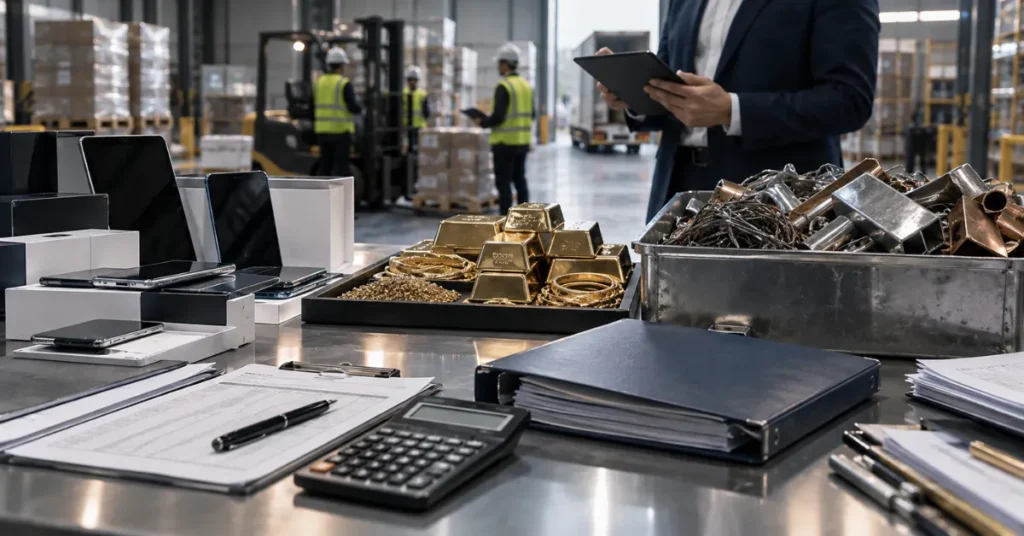
One of the biggest points businesses need to understand is that there has not been one single 2026 replacement of the entire UAE reverse-charge system. Instead, the VAT framework has continued to evolve through amendments, new Cabinet Decisions, Executive Regulation updates and FTA clarifications.
The FTA’s current VAT legislation page lists a new Executive Regulation of Federal Decree-Law No. 8 of 2017 and its amendments, issued on 1 September 2026 and published on 10 September 2026. The same page lists Cabinet Decision No. 153 of 2025 concerning the Reverse Charge Mechanism on Metal Scrap.
The FTA also maintains a current amendments resource covering Federal Decree-Law No. 16 of 2024 and Federal Decree-Law No. 16 of 2025.
This means businesses should review the current legislative position, rather than rely on an old VAT article or accounting setup created several years ago.
Key Reverse Charge Developments Businesses Should Know
Important developments include:
- Electronic devices: The reverse charge applies to qualifying supplies between VAT registrants where the required conditions are met. The FTA states that the electronic-device mechanism took effect from 30 October 2023.
- Precious metals and precious stones: Cabinet Decision No. 127 of 2024 expanded the domestic reverse-charge scope beyond the earlier gold and diamond rules. The FTA states that the decision became effective on 26 February 2025.
- Metal scrap: Cabinet Decision No. 153 of 2025 introduced specific reverse-charge rules for qualifying metal-scrap transactions, and the decision is now listed in the FTA’s VAT legislation resources.
- VAT legislation: The FTA continues to update the wider VAT framework, including the new Executive Regulation published in September 2026.
What Is New Versus What Remains the Same?
This distinction matters. The principle of reverse charge remains familiar: where the legislation requires it, the recipient accounts for VAT. What has changed over time is the scope and detailed conditions for specific transactions, together with legislative and administrative updates.
Therefore, businesses should avoid statements such as “all reverse-charge rules have changed.”
Instead, ask:
- What type of transaction is involved?
- Which reverse-charge provision applies?
- What conditions must the supplier and recipient satisfy?
- What documentation is required?
- How should the transaction be recorded and reported?
When Does Reverse Charge Apply in UAE VAT?
Reverse charge can apply to specific transactions, but the conditions depend on the transaction category. A business should not automatically use reverse charge simply because it buys something from another country or because the supplier has not charged VAT.
Common Situations Where Reverse Charge May Apply
Depending on the applicable UAE VAT provisions, businesses may encounter reverse charge in areas such as:
- Certain imported services
- Certain imported goods
- Qualifying electronic devices
- Qualifying precious metals and precious stones
- Qualifying metal scrap
- Other specifically legislated domestic or cross-border transactions
The FTA confirms, for example, that electronic-device reverse charge applies to qualifying supplies to registered recipients for resale or manufacturing purposes. It does not automatically apply when a business buys electronic devices for its own ordinary business use.
Conditions to Check Before Applying Reverse Charge
Before posting a reverse-charge transaction, check:
- Is the recipient VAT registered?
- Does the transaction fall within a specific reverse-charge provision?
- Does the supplier meet the relevant conditions?
- Does the goods or service category qualify?
- What is the recipient’s intended use?
- Is supporting documentation available?
- Has the transaction been recorded using the correct VAT treatment?
This transaction-by-transaction approach helps prevent incorrect VAT reporting.
Reverse Charge UAE VAT: Domestic vs Imported Transactions
The phrase reverse charge UAE VAT covers more than one type of transaction.
Reverse Charge on Imported Services
A UAE business can purchase qualifying services from a supplier outside the UAE. The business should determine the place of supply and whether the imported service falls under the reverse-charge provisions. Where reverse charge applies, the UAE recipient accounts for the VAT and considers input-tax recovery separately.
Reverse Charge on Imported Goods
Imported goods have their own VAT and customs considerations. A VAT-registered importer may account for import VAT through the VAT return under the applicable rules rather than paying VAT in the same way as an ordinary domestic purchase. The business should reconcile customs records, import documentation, accounting records and VAT-return information.
Domestic Reverse Charge
Domestic reverse charge applies to specific UAE transactions where legislation provides for it.
Examples include qualifying transactions involving:
- Electronic devices
- Precious metals and precious stones
- Metal scrap
The conditions differ between these categories.
For example, the FTA’s guidance on precious metals and precious stones explains that the 2024 Cabinet Decision expanded the scope of goods covered by domestic reverse charge.
How to Record Reverse Charge VAT in Your Accounts
Knowing how to record reverse charge VAT is just as important as identifying when it applies. The accounting system should reflect both sides of the VAT treatment where applicable.
For a qualifying transaction, the business generally needs to:
- Record the purchase or taxable transaction value.
- Determine the VAT amount.
- Recognise the relevant output VAT.
- Determine whether input VAT is recoverable.
- Record the recoverable input VAT where the legal conditions are met.
- Include the transaction correctly in the VAT return.
Example: Reverse Charge VAT Calculation
Assume a UAE VAT-registered business has a qualifying transaction valued at د.إ100,000.
At a 5% VAT rate:
Taxable value: د.إ100,000
VAT: د.إ5,000
If the business is entitled to full input-tax recovery and all applicable conditions are satisfied, the accounting treatment may recognise:
- Output VAT: د.إ5,000
- Recoverable input VAT: د.إ5,000
The transaction can therefore have a limited net VAT cash impact, but it still needs to be correctly calculated and reported.
The accounting treatment should not be used as a substitute for checking whether the transaction actually qualifies for reverse charge.
What If Input VAT Is Not Fully Recoverable?
This is an important distinction. Reverse charge creates an obligation to account for the relevant output VAT. It does not automatically create an unrestricted right to recover the same amount as input VAT. Input-tax recovery depends on the applicable UAE VAT rules and the use of the goods or services.
Businesses with exempt activities, mixed-use expenses or other recovery restrictions should review the input-tax position separately.
Reverse Charge Invoice and Return Treatment UAE
The invoice and return treatment UAE businesses use should match the underlying VAT legislation. A common mistake is to look only at whether the supplier’s invoice contains VAT. Instead, the recipient should determine the correct tax treatment first.
How Should the Invoice Be Handled?
For a potentially qualifying reverse-charge transaction:
- Keep the supplier invoice.
- Verify supplier and recipient details.
- Confirm the nature of the goods or services.
- Check whether reverse charge applies.
- Maintain declarations or supporting documents where the specific rule requires them.
- Use the appropriate VAT code in the accounting system.
- Reconcile the invoice to the VAT return.
For certain domestic reverse-charge categories, additional declarations or conditions can be important.
For example, the FTA’s electronic-device clarification states that the recipient must provide required declarations regarding VAT registration and intended use before the date of supply. If the required compliance conditions are not met, the normal VAT treatment may apply instead.
How Is Reverse Charge Reported in the VAT Return?
Reverse-charge transactions generally need to be reflected through the appropriate output-tax reporting, with input-tax recovery considered separately where permitted.
The key is to ensure that:
Invoice → accounting entry → VAT calculation → VAT return
all tell the same story.
Do not post only the input VAT and ignore the output-tax side.
Similarly, do not assume that a reverse-charge transaction automatically produces a fully recoverable input-tax amount.
Reverse Charge Filing: What Businesses Need to Check
A good reverse charge filing process starts before the VAT return is prepared.
Use this checklist:
- Review purchases for reverse-charge transactions.
- Identify imported goods and services.
- Review domestic transactions covered by sector-specific reverse charge.
- Verify VAT registration status where required.
- Check taxable values.
- Confirm the applicable VAT rate.
- Calculate output VAT correctly.
- Check input-tax recovery.
- Verify supplier invoices and supporting documents.
- Reconcile accounting records with the VAT return.
- Review unusual or high-value transactions separately.
- Check current FTA guidance before filing.
The FTA continues to publish VAT legislation, public clarifications and other references. Its current guidance library includes updates published during 2026, so businesses should avoid relying on outdated tax manuals without checking whether the underlying rule has changed.
Reverse Charge VAT Examples for UAE Businesses
Example 1: Qualifying Imported Service
A UAE VAT-registered company receives a qualifying service from an overseas supplier for د.إ50,000.
If the transaction falls under the UAE reverse-charge rules:
- Taxable value: د.إ50,000
- VAT at 5%: د.إ2,500
- Recipient accounts for the applicable output VAT.
- The recipient separately determines whether the د.إ2,500 is recoverable as input VAT.
The company should retain the supplier invoice and supporting documentation and ensure the accounting software reports the transaction correctly.
Example 2: Electronic Devices
A VAT-registered UAE distributor purchases qualifying electronic devices for resale. The FTA explains that the electronic-device reverse charge applies to qualifying supplies to registered recipients where the devices are intended for resale or use in manufacturing. The mechanism does not apply merely because the goods are electronic devices.
For example, buying smartphones for resale can fall within the relevant rules, while buying smartphones to distribute to employees for their business use does not meet the resale condition described by the FTA.
Example 3: Precious Metals and Precious Stones
A VAT-registered business purchases qualifying precious metals or precious stones from another VAT-registered business. The business should check the requirements under Cabinet Decision No. 127 of 2024 and the relevant FTA clarification. The FTA states that the decision expanded the scope of domestic reverse charge to specified precious metals, precious stones and jewellery, with the decision effective from 26 February 2025.
Example 4: Metal Scrap
A business operating in the metal-scrap sector should review whether its transaction falls within Cabinet Decision No. 153 of 2025. The FTA currently lists this decision specifically under UAE VAT legislation, so businesses in this sector should not rely on generic reverse-charge treatment developed before the metal-scrap rules were introduced.
Common Reverse Charge VAT Mistakes to Avoid
Applying Reverse Charge to Every Overseas Purchase
An overseas supplier does not automatically mean that every purchase should be posted using the same VAT code. The business must first determine the applicable VAT treatment.
Recording Only Input VAT
Reverse charge can involve an output-tax obligation as well. Recording only the recoverable input VAT can create an incomplete VAT record.
Assuming Full Input VAT Recovery
Output VAT and input VAT recovery are separate considerations. A business should assess whether the purchase supports taxable activities and whether any restriction applies.
Ignoring Transaction-Specific Conditions
Some domestic reverse-charge rules have specific requirements involving VAT registration, intended use, declarations or the nature of the goods. For electronic devices, the FTA specifically highlights compliance requirements and intended-use declarations.
Using Outdated VAT Rules
This is particularly important in 2026. The FTA’s VAT legislation page now lists the September 2026 Executive Regulation alongside multiple 2026 VAT decisions and directives.
Businesses should therefore review their VAT procedures when relevant legislation or FTA clarification changes.
Reverse Charge VAT Compliance Checklist for UAE Companies

Before submitting a VAT return, businesses can use this quick review:
- Identify: Find all potentially reverse-charge transactions.
- Classify: Determine the specific rule that applies.
- Verify: Check VAT registration and transaction conditions.
- Calculate: Apply the correct VAT treatment.
- Record: Post output and input VAT correctly.
- Document: Keep invoices, declarations and supporting records.
- Reconcile: Match accounting records with the VAT return.
- Review: Investigate unusual or high-value transactions.
- Update: Check the latest FTA legislation and guidance.
A consistent review process reduces the risk of carrying incorrect VAT codes forward from one filing period to the next.
FAQ
What is the Reverse Charge Mechanism in UAE VAT?
The Reverse Charge Mechanism requires the recipient, rather than the supplier, to account for VAT on certain qualifying transactions. It applies only where the UAE VAT legislation provides for it and the relevant conditions are satisfied.
When does reverse charge apply in the UAE?
It can apply to certain imported goods and services and specified domestic transactions. Examples of domestic sectors with specific reverse-charge rules include qualifying electronic devices, precious metals and precious stones, and metal scrap. The exact conditions depend on the applicable legislation.
What changed in UAE reverse charge VAT rules?
The UAE has introduced and updated specific reverse-charge rules over time. Recent developments include the expanded precious-metals framework, metal-scrap reverse charge and continuing VAT legislative updates. The FTA also published a new VAT Executive Regulation in September 2026.
How do I record reverse charge VAT?
First determine the taxable value and applicable VAT. Then record the relevant output VAT and assess whether the corresponding input VAT is recoverable. Finally, ensure the transaction appears correctly in the VAT return and reconciles with the accounting records.
Does reverse charge apply to imported services?
Certain imported services can fall under reverse charge. The business must assess the place-of-supply rules and whether the transaction is one for which the recipient must account for UAE VAT.
Does reverse charge apply to electronic devices?
It can apply to qualifying supplies of electronic devices between VAT-registered businesses where the required conditions are met, including the relevant resale or manufacturing purpose. It does not automatically apply to every purchase of an electronic device.
How is reverse charge shown in a UAE VAT return?
The recipient accounts for the applicable output VAT and separately determines any recoverable input VAT. The exact VAT-return treatment depends on the transaction and applicable rules, so the accounting records should be reconciled with the VAT return before filing.
Can I recover reverse-charge input VAT?
Potentially, yes, but recovery is not automatic. The business must satisfy the normal input-tax recovery requirements. The intended use of the purchase and any applicable restrictions can affect the amount that can be recovered.
Does the supplier charge VAT under reverse charge?
Where a qualifying reverse-charge rule applies, the supplier generally does not account for the relevant VAT in the ordinary manner. Instead, the recipient accounts for the tax according to the applicable reverse-charge provisions.
What documents should I keep?
Businesses should retain supplier invoices, contracts, customs or import records where relevant, VAT registration evidence, declarations required by specific reverse-charge rules and accounting records supporting the VAT calculation.
What UAE Businesses Should Do Now
The most useful response to ongoing VAT changes is not to change every VAT code automatically. Instead, review the transactions that actually create reverse-charge exposure. Start by identifying imported goods and services and domestic transactions covered by specific reverse-charge rules. Then check whether your accounting software applies the correct VAT treatment. Businesses in sectors such as electronics, precious metals, precious stones and metal scrap should pay particular attention to the transaction-specific requirements.
It is also worth reviewing old VAT procedures against the latest FTA legislation and public clarifications. The FTA’s VAT resources continue to be updated, including the September 2026 Executive Regulation and 2026 VAT guidance.
For complex or high-value transactions, obtain professional VAT advice before filing rather than correcting the treatment after submission.
About Ripple Business Setup
Ripple Business Setup supports UAE businesses with practical accounting, VAT and tax compliance requirements. Our team can assist with VAT registration, VAT return preparation, bookkeeping, accounting and review of reverse-charge transactions. If your business has imported services, qualifying domestic transactions or sector-specific VAT requirements, we can help you review the treatment and maintain appropriate records.
Phone: +971 50 593 8101
Email: info@ripplellc.ae
WhatsApp: +971 4 250 0833
Website: www.ripplellc.ae
A review of your VAT process can help ensure that reverse-charge transactions are recorded consistently and reported using the applicable UAE VAT requirements.
Conclusion
The Reverse Charge Mechanism in UAE VAT is not a single rule that applies to every purchase. Its application depends on the type of transaction, the parties involved and the specific conditions established under UAE VAT legislation. The UAE VAT framework has continued to evolve, with important developments covering electronic devices, precious metals and precious stones, metal scrap and wider VAT legislative amendments. The FTA’s September 2026 legislation update reinforces the need to work from current rules rather than outdated accounting procedures.
For businesses, the practical approach is straightforward: identify the transaction, confirm whether reverse charge applies, calculate the VAT correctly, record both sides where applicable, check input-tax recovery and reconcile the accounting records with the VAT return.
Disclaimer: This article provides general information about the Reverse Charge Mechanism under UAE VAT and is not a substitute for professional tax advice. VAT treatment can depend on the specific transaction, documentation and applicable legislation; businesses should verify the current FTA requirements before filing.