

Starting an online store in the UAE involves more than choosing a website platform and listing products. Before you begin selling, you need to consider the right business structure, licensing activity, payment options, inventory, customs, VAT, and marketplace requirements. For many entrepreneurs, the first major decision is Free Zone vs Mainland, Online Store. A free zone can suit certain online businesses that want a structured startup environment, while a mainland setup can fit businesses focused on the UAE domestic market or planning broader local operations. However, there is no single structure that fits every ecommerce business.
The right choice depends on what you sell, where your customers are, how you store inventory, whether you import products, and how you plan to grow.
Free Zone vs Mainland for an Online Store: What Is the Difference?
A UAE online store needs an appropriate business activity and licence that matches its actual operations. Simply selling through a website, social media account, or marketplace does not remove the need to consider licensing requirements.
What Is a Free Zone Ecommerce Business?
A free zone ecommerce business operates under the authority of a specific UAE free zone. Depending on the jurisdiction and selected activity, entrepreneurs can establish businesses for ecommerce, trading, services, or other permitted activities.
A free zone structure may be relevant for an entrepreneur who wants to:
- Sell products through a website or marketplace
- Build an online-first business
- Keep a relatively small initial operation
- Use a third-party fulfilment provider
- Operate with a defined product and inventory model
- Expand the business as sales increase
However, entrepreneurs should check the exact activity and operating permissions offered by the selected free zone before applying for an ecommerce licence UAE.
What Is a Mainland Online Business?
A mainland company is licensed through the relevant emirate’s licensing authority. The appropriate activity depends on what the company actually does and the products or services it provides. For an online retailer, a mainland structure can be relevant when the business intends to build a strong UAE domestic presence, combine ecommerce with physical operations, work with local suppliers, or expand into a showroom or retail location.
The important point is that “online store” describes the sales channel, not necessarily the complete business activity.
Free Zone vs Mainland for a Small Online Store
The practical difference becomes clearer when you compare how each structure fits the business model.
| Factor | Free Zone | Mainland |
|---|---|---|
| Online selling | Possible with the appropriate activity | Possible with the appropriate activity |
| Marketplace selling | Depends on licence and marketplace requirements | Depends on licence and marketplace requirements |
| UAE customers | Requires consideration of the applicable operating model | Suitable for a mainland-focused domestic model |
| Inventory | Depends on the selected facilities and fulfilment arrangement | Depends on premises, storage and fulfilment model |
| Imports | Customs requirements may apply | Customs requirements may apply |
| Payment gateway | Provider requirements apply | Provider requirements apply |
| VAT | Depends on taxable supplies and applicable rules | Depends on taxable supplies and applicable rules |
| Physical expansion | May require reviewing the structure and activity | Can suit businesses planning broader mainland operations |
| Setup considerations | Free zone-specific rules and package | Emirate and activity-specific requirements |
This comparison shows why the licence price alone should not determine your decision.
For example, an entrepreneur selling 20 products through Instagram may have very different requirements from a business importing hundreds of products, storing stock locally, and supplying customers throughout the UAE.
When a Free Zone May Suit a Small Online Store
A free zone structure may fit an online seller whose business model is relatively lean and digital.
It may be worth considering when:
- You primarily sell through your website or marketplace.
- You are starting with a limited range of products.
- You use third-party logistics or fulfilment.
- You want to test the market before expanding.
- Your chosen free zone offers an activity suitable for your products.
- You do not initially need a physical retail location.
For example, imagine an entrepreneur launching a small accessories brand. The business sells through Instagram, its own website, and a marketplace. It maintains limited inventory and uses a fulfilment company for deliveries.
In this situation, the entrepreneur should examine the free zone’s permitted activities, marketplace requirements, inventory arrangements, payment gateway requirements, and import process before selecting the setup.
The important question is not simply, “Is a free zone cheaper?” It is, “Does this free zone support the way my online store actually operates?”
Ecommerce Licence UAE: What Should You Check Before Applying?
Choosing an ecommerce licence UAE setup requires more than comparing advertisements showing different package prices.
Before applying, review the following:
- Exact business activity
- Products you intend to sell
- Free zone or mainland jurisdiction
- Ecommerce or trading activity requirements
- Import and customs requirements
- Inventory location
- Warehouse or storage requirements
- Marketplace requirements
- Payment gateway requirements
- Business bank account requirements
- Visa requirements
- Renewal and ongoing compliance costs
Why the Business Activity Matters
An online store can sell very different types of products. Clothing, electronics, cosmetics, food products, accessories, and other goods may involve different regulatory or operational considerations. Therefore, selecting the correct activity is an important part of setting up an online seller licence. Before submitting an application, describe your actual business model clearly. Explain what you sell, where you source the products, where you store them, and how customers place orders.
This creates a more reliable basis for determining the appropriate licence structure.
Online Seller Licence and Marketplace Requirements
Many UAE entrepreneurs do not sell exclusively through their own websites. They use marketplaces alongside social media and other sales channels.
A marketplace may require business information and supporting documentation before allowing a seller to operate.
An online seller should be prepared to review:
- Valid business licence
- Company information
- Bank account details
- Product information
- Supplier information where relevant
- Import documentation where applicable
- Fulfilment arrangements
- Returns and customer-service processes
If you are planning an Amazon seller setup, for example, do not select a company structure solely around the marketplace name. First understand the marketplace’s current seller requirements and then make sure the proposed business setup can support your wider operations.
The same principle applies if you plan to sell through Instagram. An Instagram business licence should reflect the underlying commercial activity rather than treating the social media account itself as the business structure.
VAT, Customs and Inventory: What Online Sellers Should Know
Tax and logistics can affect an online store regardless of whether the company operates from a free zone or mainland.
VAT for Online Stores
For UAE-resident businesses, VAT registration becomes mandatory when the value of taxable supplies and imports exceeds د.إ375,000 over the previous 12 months or is expected to exceed that threshold in the next 30 days. Voluntary registration is generally available when the applicable taxable supplies, imports, or taxable expenses exceed د.إ187,500, subject to the relevant rules.
The Federal Tax Authority also states that VAT registration can apply whether a business is based in a free zone or mainland when the relevant registration conditions are met.
Therefore, do not assume that choosing a free zone automatically removes VAT obligations.
Online sellers should monitor turnover regularly and maintain accurate records of sales, purchases, imports, expenses, and tax invoices.
Customs and Imported Products
If your online store imports products into the UAE, customs becomes part of the operating process.
Before ordering large quantities, consider:
- Where products originate
- How goods enter the UAE
- Import documentation
- Product classification
- Customs procedures
- Storage location
- Delivery arrangements
The customs process can also affect your product costs and delivery timelines.
Inventory Planning
Inventory is another factor that can change the practical suitability of a business structure. A small seller with 30 products may use a third-party fulfilment provider, while a growing retailer may need dedicated storage or warehouse facilities. Your inventory plan should therefore form part of the company setup decision rather than becoming an issue after the licence is issued.
Free Zone vs Mainland: Which Costs Should You Compare?
Do not compare structures using only the initial licence price.
For a realistic ecommerce budget, consider:
- Business licence and registration
- Office or workspace requirements
- Visa-related costs
- Warehouse or storage
- Inventory handling
- Customs and import costs
- Payment gateway charges
- Business banking costs
- Accounting and bookkeeping
- VAT compliance
- Licence renewal
- Website and ecommerce platform
- Marketplace fees
- Delivery and fulfilment
A structure with a lower initial licence cost may not necessarily produce a lower overall operating cost if the business later needs additional facilities, logistics arrangements, or licensing changes.
Free Zone vs Mainland Decision Checklist for Online Sellers
Before choosing your UAE business structure, answer these questions:
- Who are your main customers?
- What products will you sell?
- Where will you source your products?
- Where will you keep inventory?
- Will you import products?
- Will you sell through Amazon or another marketplace?
- Will you sell through Instagram?
- Do you need a payment gateway?
- Will you open a physical store or showroom later?
- How quickly do you expect the business to grow?
- What licence activity matches your products?
- What are your ongoing tax, accounting, and compliance requirements?
These questions help turn the Free Zone vs Mainland, Online Store decision into a practical business-planning exercise.
Common Mistakes When Choosing a UAE Ecommerce Licence
Small online sellers often focus on the initial setup and overlook how the business will operate after launch.
Common mistakes include:
- Choosing only on the basis of the cheapest licence
- Selecting an activity without checking the actual products
- Ignoring inventory and warehouse requirements
- Assuming a free zone means no VAT
- Forgetting customs requirements for imported goods
- Not checking marketplace documentation
- Overlooking payment gateway requirements
- Ignoring business banking requirements
- Failing to consider future physical expansion
- Treating an Instagram account as a replacement for a proper business licence
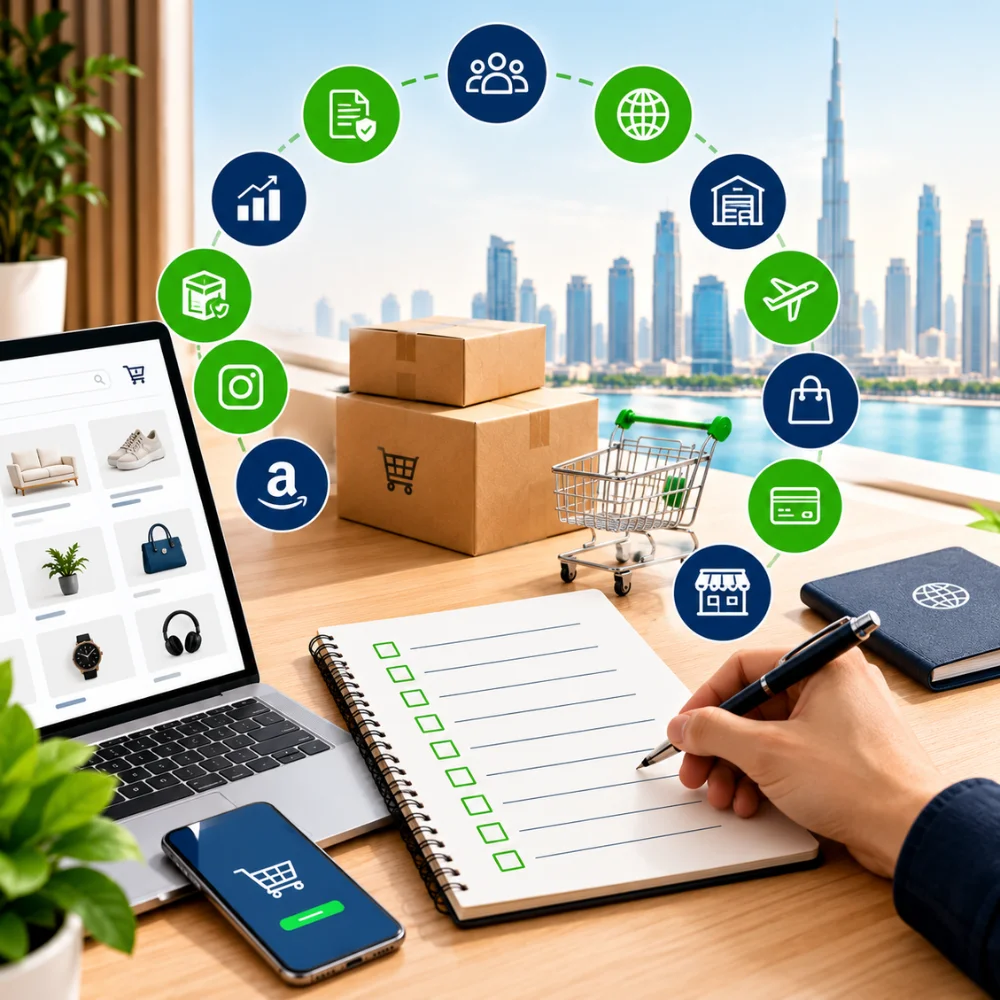
A better approach is to map the complete customer journey: supplier → import/customs → inventory → website/marketplace → payment → delivery → accounting → tax compliance.
Free Zone vs Mainland for a Small Online Store: Key Takeaways
There is no universal structure for every UAE online store. A free zone may fit an entrepreneur whose ecommerce model aligns with the selected free zone’s activities, facilities, and operating requirements. A mainland structure may be relevant for businesses focused on domestic UAE operations, local suppliers, physical expansion, or a broader trading model.
Your decision should consider more than the licence fee. Products, customers, inventory, customs, VAT, marketplace requirements, payment gateways, banking, and future expansion can all influence the right setup.
For online sellers, the best starting point is to define the actual business model and then match the licensing structure to it.
How Ripple Business Setup Can Help!
Ripple Business Setup helps UAE businesses navigate company formation, government procedures, licensing, banking preparation, and ongoing compliance requirements. Our team can assist with reviewing your business activity, setup structure, licensing requirements, documentation, and amendments before you proceed.
Phone: +971 50 593 8101
Email: info@ripplellc.ae
WhatsApp: +971 4 250 0833
Website: www.ripplellc.ae
Frequently Asked Questions
Is a free zone or mainland better for a small online store in the UAE?
The appropriate choice depends on the business model. Consider your customers, products, inventory, imports, marketplace activity, payment requirements, and future expansion before selecting a structure.
Do I need an ecommerce licence to sell online in the UAE?
Online selling should operate under an appropriate business activity and licence based on the nature of the business. The exact requirements can vary according to the products, jurisdiction, and business model.
Can I sell products through Amazon with a UAE company?
You can explore an Amazon seller setup using a UAE business, but marketplace requirements should be checked before choosing your company structure. Your licence, business details, banking information, and other documentation may need to meet the marketplace’s requirements.
Can I sell products through Instagram with a UAE business licence?
Instagram can be used as a sales and marketing channel, but the underlying commercial activity still needs to comply with applicable UAE licensing requirements. The appropriate activity depends on what you sell and how the business operates.
Does a free zone online store need VAT registration?
Potentially. VAT obligations depend on the applicable taxable supplies, imports, and registration thresholds rather than simply whether the company is located in a free zone. UAE-resident businesses generally face mandatory registration at the د.إ375,000 threshold, subject to the applicable rules.
Do online stores need to consider customs?
If the business imports products, customs and import procedures can become relevant. The business should consider sourcing, product classification, documentation, import arrangements, and inventory location before launching.
Can an online store become a physical retail business later?
Yes, but the business should review its licence activity, premises, and other requirements before expanding into physical retail. Planning for future growth during the initial setup can help avoid unnecessary restructuring.
Conclusion
Choosing between a free zone and mainland structure is an important decision for a small UAE online store, but the answer should come from the business model rather than the headline licence price. Start by identifying your products, customers, inventory model, import requirements, marketplace plans, payment gateway needs, and future expansion goals. Then compare the licensing and operating requirements of suitable structures.
For entrepreneurs who want to sell online in the UAE, a clear setup plan can make the transition from an idea to a compliant ecommerce business much more straightforward.
Disclaimer: Business licensing, tax, customs, and ecommerce requirements can vary according to the business activity, jurisdiction, products, and operating model. Always verify current requirements with the relevant UAE authority before making setup decisions.