
Starting a Small Import Business UAE entrepreneurs can build around imported products, online sales, marketplaces, wholesale distribution, or a combination of these channels. But choosing the right licence requires more than simply deciding to “sell online.” Your products, sales channel, inventory location, import process, payment gateway, customs requirements, and VAT position can all affect the setup. The UAE also offers specialised ecommerce licences in some free zones for businesses selling products and services online.
The practical approach is to define how the business will operate first and then select a licence that matches that model. This guide explains the main ecommerce licence UAE, trading, online selling, customs, marketplace, and tax considerations for a small importer.
What Licence Does a Small Import Business Need in the UAE?
There is no single licence that suits every small importer. The appropriate activity depends on what the business does with the products after importing them. For example, a business that imports consumer products and sells them to UAE customers may have different requirements from a company that imports goods for wholesale distribution or exports most of its inventory outside the UAE.
The first step is therefore to define your commercial activity.
Start With Your Actual Business Activity
Before applying for a licence, identify:
- What products will you import?
- Will you sell wholesale or retail?
- Will you sell through your own website?
- Will you use Amazon or another marketplace?
- Will you sell through Instagram or other social channels?
- Will you keep inventory in the UAE?
- Will you sell directly to UAE customers?
- Will you distribute products to other businesses?
This matters because the business licence should reflect the activities you actually intend to conduct.
The UAE Government provides online routes for applying for business licences, including the Basher service and relevant economic authority platforms.
Ecommerce Licence UAE vs Trading Licence: What Is the Difference?
An ecommerce licence UAE setup can be relevant when online selling forms a central part of the business model. UAE free zones offer specialised licences for online businesses, including digital companies, startups and ecommerce operations. However, an importer should not choose an ecommerce activity simply because customers place orders online.
The underlying commercial activity remains important.
When an Ecommerce Licence May Fit
An ecommerce-focused setup may be worth considering when the business mainly:
- Sells products through an online store
- Receives orders digitally
- Uses online marketing and social commerce
- Operates a digital storefront
- Serves customers through online sales channels
For example, an entrepreneur may import a limited range of home accessories, maintain inventory in the UAE and sell those products through a dedicated website.
The licensing authority should confirm which activity is appropriate for the specific products and operating model.
When a Small Trading Company May Be More Relevant
A small trading company may need a broader trading structure when its activities include:
- Importing and reselling physical goods
- Wholesale distribution
- Supplying retailers
- Selling to business customers
- Maintaining product inventory
- Using multiple sales channels
Consider a company that imports 10 product categories and sells them to both retailers and online customers. Its needs may differ from those of a business that only operates a digital storefront.
The key question is not simply “Do I sell online?” It is “What exactly does my business do?”
Why the Licence Activity Matters More Than the Word “Online”
An online storefront is a sales channel. It does not, by itself, describe every commercial activity involved in importing, storing and distributing physical products. This distinction can prevent a common setup mistake: choosing an activity based on the website or marketplace while overlooking the import and trading side of the business.

Do You Need an Online Seller Licence to Sell Imported Products?
The phrase online seller licence is commonly used by entrepreneurs searching for a way to legally sell products through digital channels. The important point is that your website, Instagram page or marketplace account does not replace the underlying business licensing requirements.
If you plan to sell online UAE customers, consider the entire transaction process:
- Source the products.
- Import them into the UAE where applicable.
- Store the inventory.
- Advertise the products.
- Accept orders.
- Process payments.
- Deliver the products.
- Handle returns and customer service.
- Maintain appropriate financial and tax records.
The UAE Government recognises ecommerce as a specific business environment and lists specialised online business licensing options in free zones.
Selling Through Your Own Website
A website-based importer should consider more than the licence.
The business may also need to plan for:
- Product pages
- Terms and conditions
- Delivery policies
- Return policies
- Payment gateway integration
- Inventory management
- Customer records
- Accounting
- VAT treatment where applicable
The FTA also has specific rules for identifying supplies made through an electronic commerce medium for VAT record-keeping purposes.
Selling Through Social Media
Many small businesses begin with Instagram, WhatsApp or other social channels. That can be commercially useful, but the sales channel does not remove the need to establish the appropriate business activity. If your business imports products specifically to sell them through social media, clarify the licensing position before purchasing significant inventory.
This is particularly important when an entrepreneur searches for an Instagram business licence but actually needs to consider a broader trading or ecommerce activity.
Mainland or Free Zone for a Small Import Business UAE?
Mainland and free-zone setups can serve different operating models. The right question is not simply which option has the lowest starting price. Instead, consider where you will sell, where you will keep inventory, how goods will enter the UAE and how you expect the business to grow.
Consider Mainland When Your Model Requires
A mainland structure may be relevant when your plans involve:
- Direct sales within the UAE
- Local distribution
- Retail operations
- UAE-based business customers
- Physical premises
- Wider local commercial activity
The exact licence activity and approvals should be confirmed with the relevant authority.
Consider a Free Zone When Your Model Fits
A free zone may be relevant for businesses focused on:
- Import and export
- International trading
- Online sales
- Specific ecommerce activities
- Warehousing or logistics
- Cross-border operations
Free zones can offer specialised online business licences, but the specific authority’s permitted activities and rules matter. A business should therefore compare the full operating model, rather than selecting a jurisdiction based only on the initial licence fee.
Importing Products Into the UAE: Customs and Licence Considerations
Importing physical products adds another layer to the business setup. Your business licence is only one part of the process. You also need to understand customs procedures, import documentation and the classification of your products.
The UAE’s official imports and exports guidance highlights requirements such as commercial licensing, importer codes, invoices, packing lists and appropriate customs documentation. Restricted goods can also require approval from the relevant authorities.
Documents Small Importers Should Plan For
Depending on the transaction and goods, your import file may involve:
- Commercial invoice
- Packing list
- Shipping documents
- Customs declaration
- Importer/customs registration details
- Correct HS code classification
- Product certificates where required
- Approvals for restricted or regulated products
Do not wait until the first shipment arrives to investigate these requirements.
Product classification can affect customs treatment, while some categories may have additional regulatory requirements.
What About Import VAT?
Import VAT needs to be considered as part of the business’s landed-cost calculation. The FTA provides procedures for VAT on imports, including processes for non-VAT-registered importers. This means an importer should understand the relationship between customs clearance, import VAT and its own VAT position before placing substantial orders.
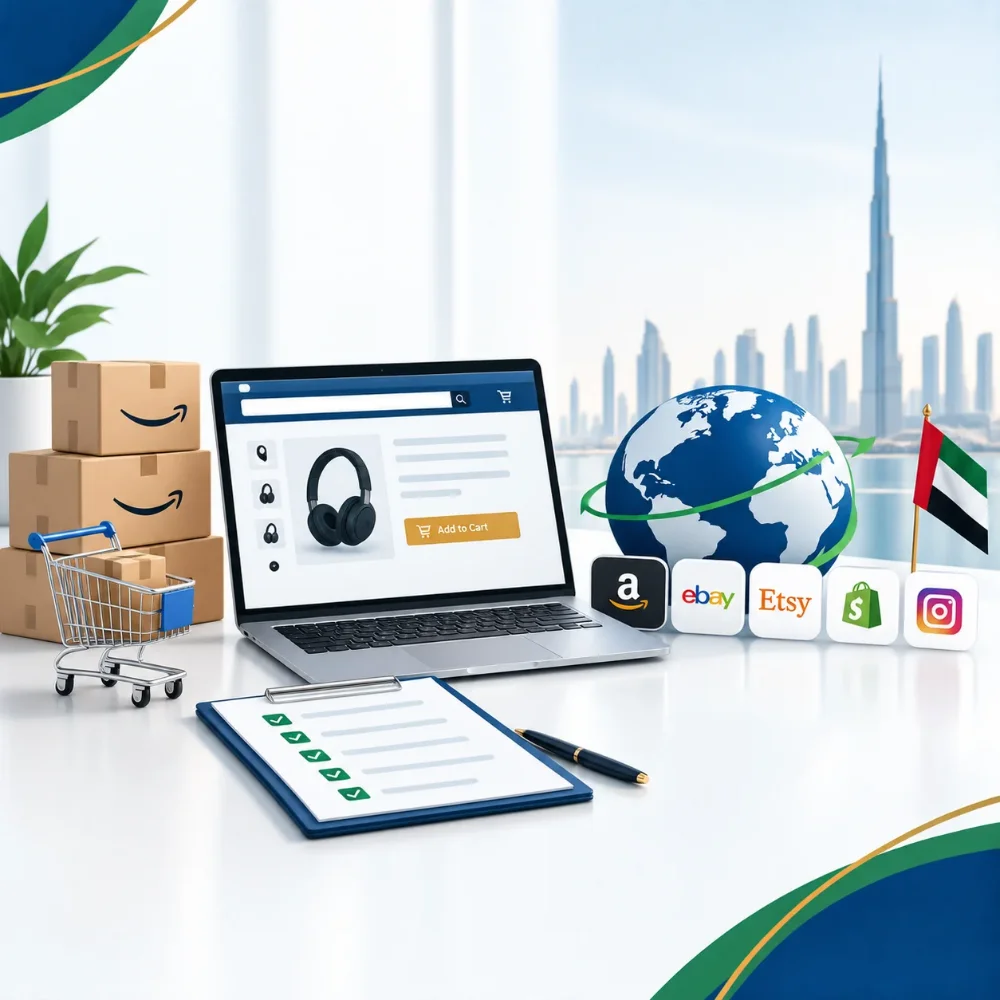
Marketplace Selling: Amazon Seller Setup and Other Channels
An Amazon seller setup introduces another layer to the business model. A marketplace account and a UAE business licence serve different purposes. Your marketplace account allows you to operate on the platform under its requirements, while your business setup establishes the legal commercial activity.
If You Sell Through a Marketplace
Before importing inventory, check:
- Marketplace seller requirements
- Product-category restrictions
- Brand or product documentation
- Business information requirements
- Inventory storage arrangements
- Fulfilment method
- Returns process
- Payment arrangements
- Import and customs requirements
This is especially important when importing products specifically for marketplace sales.
For example, importing 1,000 units before confirming that the product can be listed and sold through your chosen marketplace can create unnecessary inventory risk.
If You Sell Through Multiple Marketplaces
Your licence decision should consider your complete sales strategy. An entrepreneur may start with Amazon, then add a website, Instagram and B2B wholesale customers. A setup that reflects only the first sales channel may not necessarily be suitable for the business’s future activities.
Payment Gateway, VAT and Inventory: The Decisions After Licensing
Getting the licence is not the end of the setup process. Three practical areas deserve attention: payment gateway, VAT and inventory.
Payment Gateway Readiness
If you sell through your own website, customers may need to pay online.
A payment provider may review information such as:
- Business licence
- Business activity
- Website
- Products
- Terms and conditions
- Refund policy
- Bank details
- Transaction model
This is why entrepreneurs should avoid treating the payment gateway as an afterthought.
Your commercial activity, website and actual products should tell a consistent business story.
VAT for Small Import Businesses
VAT obligations depend on the business’s taxable activities and applicable thresholds. For UAE-resident businesses, mandatory VAT registration generally applies when taxable supplies and imports exceed $375,000 over the relevant period or are expected to exceed that threshold within the specified period. Voluntary registration may be available at $187,500, subject to the applicable rules.
A small importer should therefore monitor:
- Sales
- Taxable supplies
- Imports
- Taxable expenses
- VAT charged
- Import VAT
- VAT records
The FTA notes that VAT registration depends on the nature of activities and applicable mandatory or voluntary registration requirements.
Inventory Planning
Inventory is often where a small import business can underestimate its actual costs.
Do not calculate your margin using only the supplier’s invoice price.
Consider:
- Product purchase price
- International shipping
- Insurance where applicable
- Customs-related costs
- Import VAT where applicable
- Storage
- Packaging
- Marketplace fees
- Payment processing costs
- Delivery
- Returns
- Damaged or unsold inventory
Your landed cost gives you a more realistic view of the profit available from each product.
3 Small Import Business UAE Examples
Example 1 — Instagram Product Seller
Imagine a founder imports a small collection of fashion accessories and sells them through Instagram and WhatsApp. The founder should first confirm the appropriate commercial activity, then review import requirements, inventory arrangements, payment options and applicable tax obligations.
Simply creating an Instagram page does not answer those licensing questions.
Example 2 — Amazon-Focused Importer
Another entrepreneur imports private-label household products and intends to sell them primarily through Amazon.
The business needs to consider its licensing activity alongside:
- Import procedures
- Product requirements
- Marketplace approval
- Inventory
- Fulfilment
- Payment arrangements
- VAT
This is a good example of why Amazon seller setup should be treated as part of a wider business model.
Example 3 — Small B2B Trading Company
A third entrepreneur imports electronic accessories in bulk and supplies UAE retailers. This business has a different operating model from a social-media seller. Wholesale trading, inventory, distribution and local customer relationships may be central to the operation.
The licence should therefore reflect the actual trading activity rather than simply describing the business as an online seller.
Common Licence Mistakes Small Importers Should Avoid
Before committing to a setup, avoid these common mistakes:
- Choosing a licence before defining the products.
- Assuming every ecommerce activity covers every product.
- Ignoring customs until the first shipment arrives.
- Selecting activities that do not match actual operations.
- Importing large quantities before confirming demand.
- Confusing marketplace approval with business licensing.
- Selecting a setup only because the initial package appears inexpensive.
- Ignoring payment gateway requirements.
- Forgetting to calculate import-related costs into product margins.
- Waiting too long to review VAT obligations.
A small business can reduce unnecessary changes later by designing the setup around its actual operating model from the beginning.
Small Import Business UAE Licence Decision Checklist
Use this checklist before choosing your setup:
- Products: What exactly will you import?
- Activity: Will you retail, wholesale, distribute or operate ecommerce?
- Sales channel: Website, marketplace, Instagram, physical store or B2B?
- Customers: UAE consumers, businesses or overseas buyers?
- Inventory: Where will you store your products?
- Customs: How will your goods enter the UAE?
- Payments: Will customers pay through a payment gateway?
- VAT: Could your taxable supplies and imports trigger registration?
- Location: Does mainland or free zone infrastructure fit your model?
- Growth: Will you add products or sales channels later?
This checklist can help you identify gaps before you spend money on inventory or commit to a particular structure.
How to Choose the Right Licence for Your Small Import Business
There is no universal licence decision for every importer.
Instead, start with four questions:
1. What Are You Importing?
Product type can affect licensing, customs classification and additional approvals.
2. Where Will You Sell?
Your model may involve:
- UAE customers
- International customers
- Marketplaces
- Your own website
- Social commerce
- Wholesale customers
3. Where Will You Store the Products?
Determine whether you will use:
- Your own premises
- A warehouse
- Third-party fulfilment
- Marketplace fulfilment
- Other logistics arrangements
4. How Will Customers Pay?
Consider bank transfers, card payments, payment gateways and marketplace payment systems. Once these questions are clear, you can assess whether an ecommerce-focused activity, trading activity or another structure better matches your business.
The important principle is simple: choose the licence around the business you intend to operate, not just the platform where customers place orders.
FAQs
Can I start a small import business in the UAE?
Yes, but the appropriate business activity, licensing, customs and tax requirements depend on what you import and how you sell the products.
Do I need a trading licence to import and sell products?
The appropriate activity depends on the business model. A company importing and reselling physical products should confirm the relevant trading or ecommerce activity with the licensing authority before proceeding.
Is an ecommerce licence UAE suitable for imported products?
It can be relevant to online product businesses, but suitability depends on the specific activity, products, sales channels and licensing authority requirements. UAE free zones offer specialised online business licences.
What is an online seller licence in the UAE?
“Online seller licence” is commonly used to describe licensing for businesses selling through digital channels. The exact licence activity depends on the nature of the business and products.
Can I sell imported products on Amazon UAE?
An Amazon seller account and a UAE business setup are separate considerations. Before importing inventory, confirm the marketplace’s seller and product requirements as well as your own licensing and customs obligations.
Do Instagram sellers need a business licence?
If you operate a commercial business selling products, you should assess the appropriate business licensing requirements rather than assuming a social media account itself is sufficient.
Does a small import business need VAT registration?
Not necessarily from day one. UAE VAT registration depends on the applicable taxable-supply and import thresholds and other rules. The FTA currently states a mandatory registration threshold of $375,000 and a voluntary threshold of $187,500 for the relevant UAE-resident businesses.
Do I need customs registration to import products?
Importers need to follow the applicable customs procedures and requirements, which can include an importer code and customs declaration. The exact process depends on the customs authority and transaction.
Can a free-zone company sell products in the UAE?
A free-zone company can conduct activities permitted by its licence, but the route for selling or moving goods into the UAE mainland can involve specific customs and regulatory considerations. Review the exact structure before importing inventory for local sales.
How Ripple Business Setup Can Help!
Ripple Business Setup helps UAE businesses navigate company formation, government procedures, licensing, banking preparation, and ongoing compliance requirements. We can review your planned products, business activity, setup structure and documentation before you proceed.
For a small import business, we can help you understand the key setup considerations around licensing, business activities, documentation and related requirements so you can make decisions based on your actual operating model.
Phone: +971 50 593 8101
Email: info@ripplellc.ae
WhatsApp: +971 4 250 0833
Website: www.ripplellc.ae
Conclusion
Starting a Small Import Business UAE requires more planning than simply obtaining an online seller licence. Your products, trading activity, sales channels, inventory, customs process, payment gateway and VAT position all form part of the same business model. If you plan to sell through a website, Amazon, Instagram or a combination of channels, define the complete operating structure before importing significant inventory. That approach can help you select an activity that better reflects your business and avoid unnecessary changes as the company grows.
Disclaimer: Licensing, customs and tax requirements can vary according to the business activity, product category, jurisdiction and transaction structure. Confirm the applicable requirements with the relevant UAE authority before making business or tax decisions.