

A JAFZA General Trading Licence allows businesses to trade physical goods through Jebel Ali Free Zone in Dubai. It can suit companies that need flexibility across multiple product categories, particularly importers, exporters, distributors, wholesalers, and businesses that rely on warehousing and logistics. JAFZA, officially known as Jebel Ali Free Zone, provides a strong location for businesses connected to international trade because of its proximity to Jebel Ali Port and Dubai’s wider logistics network. However, choosing the right licence requires more than looking at the licence fee. Businesses should consider their activities, premises, product approvals, visas, banking requirements, customs arrangements, and ongoing compliance.
What Is a JAFZA General Trading Licence?
A JAFZA General Trading Licence is designed for businesses that want to trade physical products across multiple activity groups. JAFZA describes its trading licence as covering the buying and selling of products, while its general trading category allows businesses to select activities across three or more groups. This makes general trading particularly relevant for businesses that do not want to restrict their operations to a narrow product group.
For example, an international trading company may source different categories of goods from overseas suppliers, store them in the UAE, and distribute or re-export them to customers in different markets.
The exact activities still matter. A general trading licence does not automatically mean that every type of product can be traded without additional approvals. Businesses dealing with regulated, controlled, food, medical, chemical, or other specialised products may need additional permissions.
General Trading vs Commercial Trading Licence
JAFZA structures trading licences according to the number of activity groups and activities selected. Its published guidance identifies Type 1 and Type 2 trading licences, while a licence covering three or more groups is classified as general trading. A standard trading licence may therefore work well for a company with a relatively focused product range. A general trading licence can be more appropriate when the business needs broader activity coverage.
Before applying, prepare a clear list of the products you expect to buy, sell, import, export, or distribute. This helps determine whether general trading is actually necessary.
Why Choose JAFZA for General Trading?
JAFZA has become an important business location for companies involved in international trade, logistics, distribution, and warehousing.
Strategic Location for Import and Export
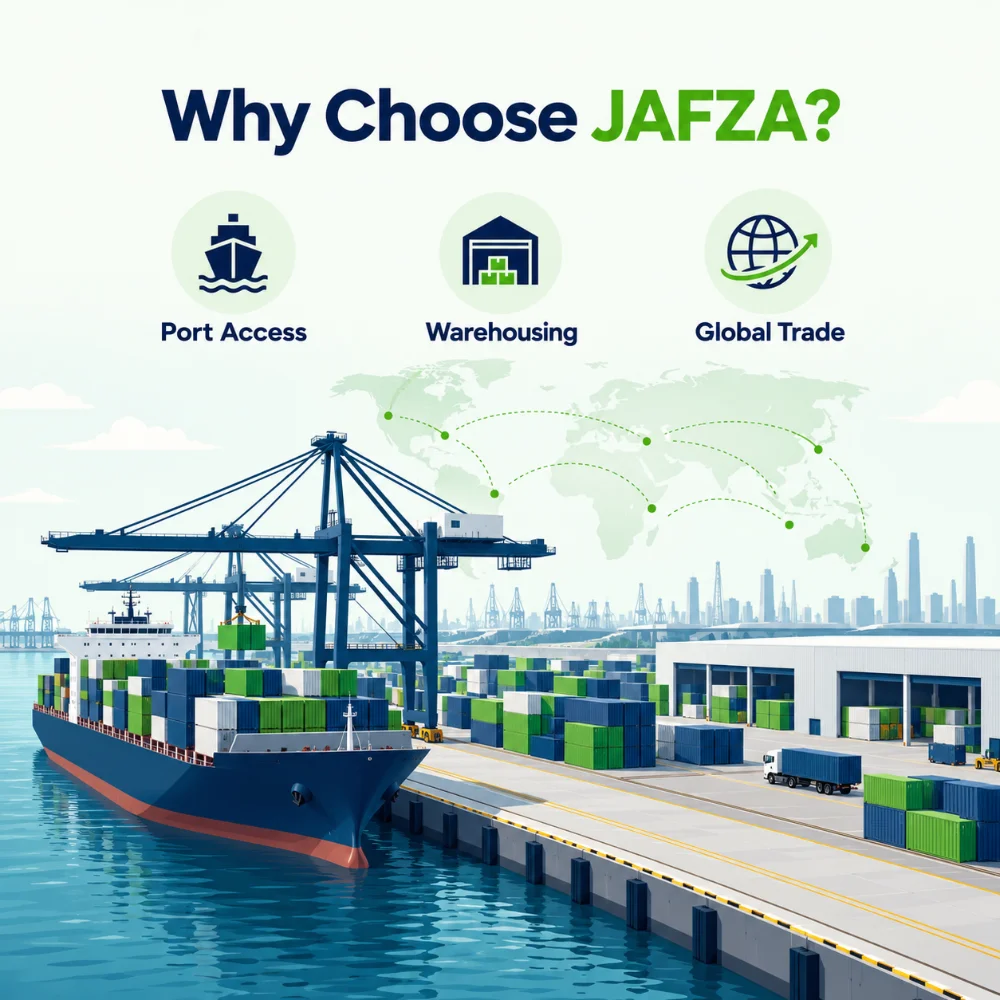
JAFZA’s location near Jebel Ali Port can benefit businesses that regularly move goods internationally. Companies can build their supply chains around importing products, storing inventory, distributing goods, and re-exporting to regional markets. This makes the location particularly relevant for businesses that operate across the UAE, GCC, Africa, Asia, and other international markets.
Warehousing and Logistics Infrastructure
A major consideration for a trading company is where it will store inventory. Businesses can evaluate JAFZA warehouse for rent options and other facility solutions based on their stock volume, operational model, and business activity. JAFZA also offers logistics-focused licensing for companies whose primary operations involve logistics and supply-chain services.
A business that simply buys and sells physical products should distinguish between a trading activity and a logistics service activity when selecting its licence.
Suitable for International Trading Businesses
JAFZA can be particularly attractive for:
- Import and export companies
- Wholesale distributors
- Regional trading companies
- Inventory-based businesses
- International suppliers establishing a UAE presence
- Companies requiring warehousing
- Businesses using the UAE as a re-export hub
The right structure ultimately depends on what the company will actually do rather than simply choosing the most flexible licence available.
JAFZA General Trading Licence Requirements
The exact JAFZA business setup requirements depend on the company formation type, shareholders, activities, and facility selected. JAFZA’s published company formation guidance identifies documents such as KYC and UBO forms, valid passport copies, and, where applicable, sponsor-related documentation for UAE residents. Additional corporate documents can apply when a shareholder is another company.
Common requirements can include:
- Proposed business activities
- Shareholder and manager information
- Valid passport copies
- KYC and UBO documentation
- Company formation documents
- Board or shareholder resolutions where applicable
- Business plan or project summary for certain facilities
- EHS documentation for relevant premises
- Lease or facility documentation
- Additional approvals for regulated activities
JAFZA may request additional documents depending on the proposed structure and activity.
Share Capital Requirements in JAFZA
Share capital requirements should be assessed according to the selected company formation structure and current JAFZA rules. For example, an FZCO is a multiple-shareholder free zone company, while an FZE can have a different ownership structure. JAFZA’s formation guidance also requires corporate resolutions and share-capital details in applicable FZCO structures.
Rather than relying on a generic share-capital figure from an old article, applicants should confirm the applicable requirement for their exact formation type before incorporation.
How to Apply for a General Trading Licence in Jebel Ali Free Zone
The JAFZA company setup process can be approached in several stages.
Step 1: Define Your Business Activities
Start by identifying the products you intend to trade. Check the relevant activity groups and determine whether a general trading licence is necessary.
Step 2: Select the Company Formation
Choose the appropriate legal structure based on the number and type of shareholders and the nature of the business.
Step 3: Prepare the Documents
Prepare passports, KYC and UBO information, corporate documents, resolutions, business information, and any facility-specific documents required by JAFZA.
Step 4: Choose the Required Facility
Your operational model may require an office, warehouse, showroom, plot, or another approved facility. JAFZA’s current formation process includes selecting the formation and licence, submitting documents and payment, signing the lease agreement, and moving into the selected premises.
Step 5: Complete Licensing
Once the application, approvals, documents, payments, and facility requirements are completed, JAFZA issues the relevant licence and incorporation documentation.
Step 6: Complete Post-Licensing Setup
Depending on your business, this can include:
- Establishment and immigration procedures
- Employee visas
- Customs-related registration
- Corporate bank account preparation
- Tax registrations where applicable
- Accounting and record-keeping systems
- Product-specific approvals
This is why the licence itself should be viewed as one part of the overall business setup.
JAFZA General Trading Licence Cost
The JAFZA general trading licence cost should be separated from the total company setup cost. JAFZA’s current published investor information lists the annual General Trading licence fee at AED 15,000. It also lists a one-time registration fee of AED 5,000 for an FZE, FZCO, or branch structure.
However, the total cost can be higher because businesses may also need to budget for premises and other operational requirements.
What Affects JAFZA Business Setup Cost?
Your overall JAFZA business setup cost can depend on:
- Company formation type
- Number of shareholders
- Licence type
- Selected business activities
- Office requirements
- Warehouse or other facility requirements
- Visa requirements
- Immigration and establishment costs
- Customs-related requirements
- Additional product approvals
- Professional or administrative services
- Banking and accounting setup
For this reason, businesses should not treat the licence fee as the complete cost of establishing a trading company.
JAFZA also provides a cost calculator that allows applicants to consider licence type, activity groups, shareholders, and formation type when assessing setup costs.
Documents Required for JAFZA General Trading Company Formation
The documentation depends on the selected structure. For a new company, JAFZA’s published requirements include KYC-UBO documentation and valid passport copies, with additional documents depending on whether the applicant establishes an FZE, FZCO, branch, or another structure.
A typical document checklist may include:
- JAFZA application form
- EHS documentation where applicable
- Passport copies
- KYC and UBO forms
- Shareholder information
- Manager/director information
- Corporate resolutions
- Memorandum and Articles of Association where applicable
- Parent-company documents for corporate shareholders
- Business plan or project summary for relevant facilities
- Lease or facility documentation
Foreign corporate shareholders may also need notarised and attested corporate documents.
Can a JAFZA Company Trade Inside the UAE Mainland?
This is one of the most important questions to address before choosing a Dubai free zone licence. A JAFZA company can conduct its authorised free-zone and international trading activities, but a free zone licence should not be treated as automatic permission for unrestricted mainland commercial operations.
The practical route for selling or distributing products into the UAE mainland can depend on the nature of the goods, customs arrangements, distribution model, and applicable mainland requirements.
For example, a JAFZA company may import goods, hold inventory, and re-export products. If it wants to distribute goods directly through a mainland operation, it should assess the appropriate regulatory and commercial structure before starting those sales.
The key point is simple: do not assume that a JAFZA licence alone provides unrestricted mainland trading rights.
Businesses should review their intended customer base and distribution model before incorporation.
JAFZA Visa Costs and Quotas
Visa planning is another important part of the setup process. The number of employees a company can sponsor and the related requirements can depend on factors such as the company structure, facility, and applicable immigration rules.
When planning JAFZA visa costs and quotas, consider:
- Number of shareholders
- Number of employees
- Office or warehouse requirements
- Establishment and immigration procedures
- Visa processing and medical costs
- Emirates ID-related costs
- Facility capacity and applicable requirements
Instead of calculating visas separately from the business setup, prepare a complete staffing plan before choosing your premises.
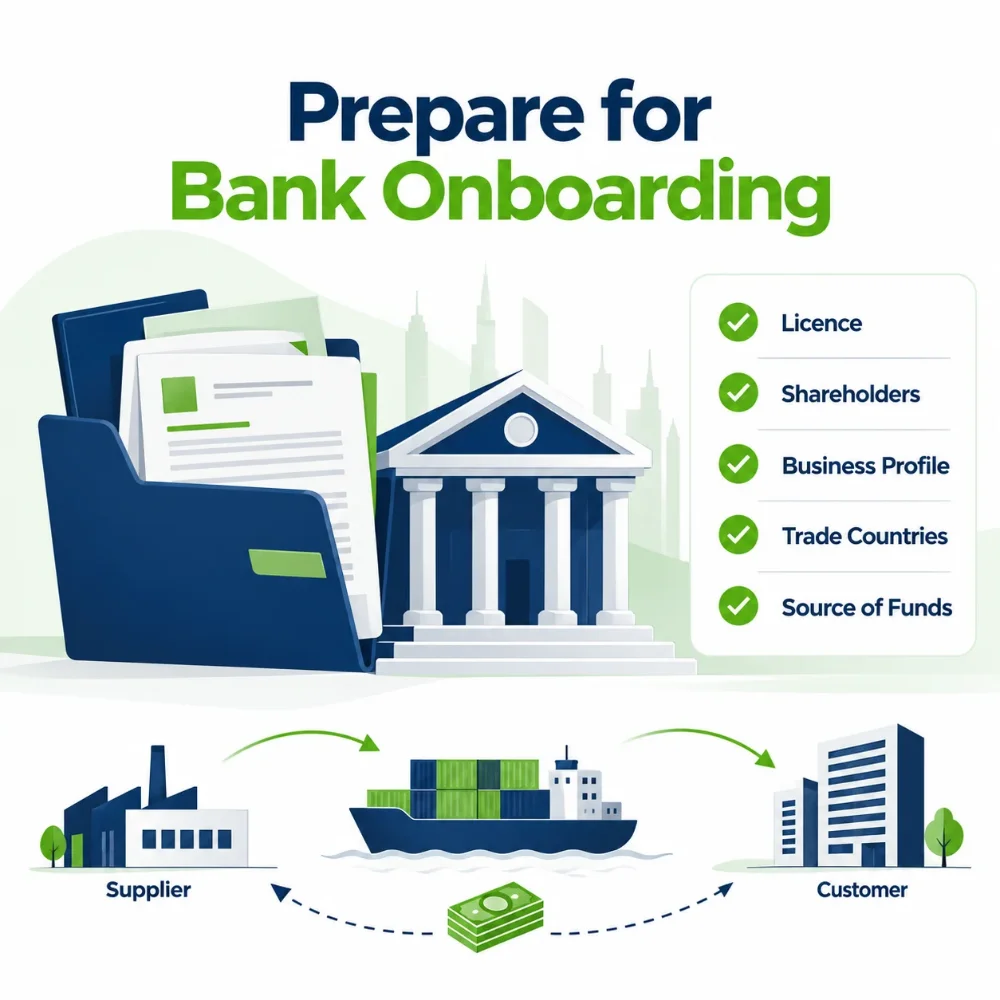
Corporate Bank Account Opening for a JAFZA Company
After receiving the licence, many trading businesses begin preparing for a corporate bank account opening in Dubai. Banks normally assess the company’s business model and expected transactions as part of their onboarding and compliance procedures.
Prepare information such as:
- Trade licence
- Incorporation documents
- Shareholder information
- Business profile
- Expected transaction volumes
- Supplier information
- Customer information
- Contracts or invoices where available
- Source-of-funds information
- Expected countries of trade
How to Improve Banking Readiness
A company can make the process more efficient by ensuring its proposed activities match its actual business model. For example, if the company is licensed for general trading but tells the bank that it only provides consulting services, the mismatch may require further clarification.
Prepare a clear explanation of what the company sells, where products come from, who the expected customers are, and how money will move through the business.
JAFZA General Trading Licence Renewal
A JAFZA licence must be renewed to remain active. JAFZA states that licences are renewed annually, with certain plot-lease customers able to renew for up to three years subject to the applicable conditions. The published JAFZA renewal guidance states that a trade licence can be renewed within three months before expiry. It also identifies an AED 1,000 fine for delayed renewal of an expired licence.
JAFZA Licence Renewal Fees
Current published JAFZA information lists General Trading at AED 15,000 as the licence fee. Renewal costs can also involve other business-specific requirements, including premises and applicable charges. Businesses should therefore review their licence, lease, immigration status, and compliance obligations before the renewal date rather than waiting until the licence expires.
JAFZA General Trading Licence vs Other UAE Setup Options
Choosing JAFZA is not automatically the best option for every trading business.
JAFZA vs Other Dubai Free Zones
JAFZA can make particular sense when a company values:
- Port connectivity
- Warehousing
- Import/export operations
- Regional distribution
- Logistics infrastructure
- Multiple trading activities
Another free zone may be more appropriate if the business has a smaller product range or does not require JAFZA’s infrastructure.
JAFZA vs Dubai Mainland
A mainland structure can be more suitable when the business model depends heavily on direct mainland operations.
The comparison should consider:
- Customer location
- Distribution model
- Premises
- Product approvals
- Import arrangements
- Licensing requirements
- Operating costs
The cheapest licence is not necessarily the most suitable structure.
JAFZA vs Offshore Company Setup Dubai
An offshore company serves a different purpose from an operating trading company. If the business needs to hold inventory, import physical goods, operate from commercial premises, and manage trading activities in the UAE, it should assess an operating free-zone or mainland structure rather than assuming an offshore setup will meet those needs.
Common Mistakes When Setting Up a JAFZA Trading Company
Businesses can avoid unnecessary complications by addressing the following issues early:
- Choosing general trading without reviewing actual activities
- Assuming every product is automatically permitted
- Underestimating warehouse or office costs
- Ignoring additional product approvals
- Planning visas after choosing the premises
- Starting bank preparation too late
- Assuming a free-zone licence gives unrestricted mainland access
- Failing to plan customs requirements
- Treating licence issuance as the end of compliance
- Relying on outdated JAFZA pricing information
The strongest setup decisions come from matching the licence, activities, facility, staffing, banking, and distribution model before incorporation.
JAFZA General Trading Licence Compliance Checklist
After establishing the company, maintain a practical compliance checklist covering:
- Valid trade licence
- Valid lease or facility agreement
- Timely licence renewal
- Corporate records
- UBO information
- Accounting records
- Applicable tax registrations
- Customs obligations
- Employee and visa compliance
- Product-specific approvals
- Bank documentation
- Required government filings
Tax and regulatory obligations depend on the company’s activities, structure, turnover, and other circumstances. Businesses should assess their applicable UAE tax and compliance requirements rather than assuming that free-zone status removes all obligations.
Is a JAFZA General Trading Licence Right for Your Business?
A JAFZA General Trading Licence may be a strong fit when your business needs broad trading activities and relies on importing, exporting, warehousing, or regional distribution.
It may suit you if you:
- Trade multiple product categories
- Import goods into the UAE
- Export or re-export products
- Need inventory storage
- Work with international suppliers
- Plan regional distribution
Another structure may be more appropriate if your business mainly requires mainland operations, has highly specialised products, or does not need JAFZA’s logistics and warehousing infrastructure.
The best decision starts with the business model rather than the licence name.
Why Choose Ripple Business Setup for UAE Business Support
Ripple Business Setup helps UAE businesses navigate company formation, government procedures, licensing, banking preparation, visa requirements, and ongoing compliance. We can help review your planned business activity, setup structure, documentation, visa or quota requirements, and other practical considerations before you proceed.
If you are considering a JAFZA general trading company, our team can help you assess the practical setup requirements and prepare for the relevant stages of the process.
Phone: +971 50 593 8101
Email: info@ripplellc.ae
WhatsApp: +971 4 250 0833
Website: www.ripplellc.ae
FAQs
How much does a JAFZA general trading licence cost?
JAFZA currently lists the annual General Trading licence fee at AED 15,000. The total business setup cost can be higher because registration, premises, visas, facility requirements, and other applicable costs are separate considerations.
What is the difference between a commercial and general trading licence in JAFZA?
A standard trading licence can cover a defined number of activities and activity groups. JAFZA classifies trading across three or more groups as general trading, which provides broader activity coverage.
How do I apply for a general trading licence in Jebel Ali Free Zone?
The process generally involves selecting activities and company formation, preparing the required documents, selecting an appropriate facility, submitting the application, completing payments and approvals, and receiving the licence. JAFZA provides digital setup channels for company formation and licensing.
Can a JAFZA company trade inside the UAE mainland?
A JAFZA company can conduct authorised activities within its free-zone structure, but the free-zone licence should not be assumed to provide unrestricted mainland commercial rights. Businesses planning mainland distribution should assess the applicable customs, licensing, and commercial requirements for their specific model.
What are the benefits of setting up a business in JAFZA?
Key benefits can include access to Jebel Ali’s logistics infrastructure, warehousing options, international trade connectivity, and a licensing structure designed for trading and related business activities. The benefits depend on whether those features match the company’s actual operations.
Can I rent a warehouse in JAFZA for my trading business?
Yes. JAFZA provides facility options for businesses with warehousing and operational requirements. The appropriate facility depends on the company’s activity, inventory, and operational model.
Does a JAFZA general trading company need a corporate bank account?
A trading company will generally need an appropriate business banking arrangement for receiving customer payments and paying suppliers and operating expenses. Banks conduct their own compliance and onboarding assessments, so businesses should prepare clear corporate and commercial documentation.
Final Thoughts
Setting up a JAFZA General Trading Licence can provide a practical structure for businesses that need broad trading activities, import/export capabilities, warehousing, and access to Dubai’s established logistics infrastructure. However, the right setup involves more than obtaining a licence. Businesses should review their proposed activities, product categories, company structure, premises, visa requirements, banking expectations, customs arrangements, and ongoing compliance responsibilities before committing to the setup.
JAFZA’s published fees and requirements can change, so applicants should verify the latest information with the authority before making financial or structural decisions.
Disclaimer: JAFZA fees, licensing requirements, government procedures, and approval conditions may change. Confirm the latest requirements with JAFZA and the relevant UAE authorities before making business or financial decisions.