

The UAE has become one of the most attractive destinations for investors looking to enter the AgroTech and food processing industries. With increasing demand for food products, advanced technology adoption, and government initiatives focused on food security, the country is creating new opportunities for entrepreneurs, startups, and international businesses. The UAE imports a significant portion of its food supply due to limited agricultural land and water resources. To reduce dependency on imports and improve sustainability, the government is encouraging innovation through smart farming, vertical agriculture, food manufacturing, and advanced food production technologies.
Why AgroTech and Food Processing Are Growing Rapidly in the UAE
The UAE’s food and agriculture sector is experiencing rapid transformation due to technology, changing consumer preferences, and national food security goals. Businesses are increasingly adopting innovative solutions to produce food more efficiently while reducing environmental impact.
AgroTech UAE refers to the use of advanced technologies to improve agricultural productivity, resource management, and food supply chains. The sector combines agriculture with technologies such as artificial intelligence, automation, sensors, robotics, and data analytics.
Several factors are driving growth in this industry:
Increasing Focus on Food Security
The UAE has made food security a national priority. Initiatives such as the National Food Security Strategy aim to develop sustainable food systems, improve local production, and strengthen supply chains.
This creates opportunities for businesses involved in:
- Smart farming solutions
- Agricultural technology
- Food manufacturing
- Food storage and logistics
- Sustainable agriculture
Growing Demand for Locally Produced Food
Consumers in the UAE are increasingly interested in fresh, locally produced, and sustainable food products. This demand has encouraged entrepreneurs to explore:
- Organic farming
- Indoor farming
- Hydroponics
- Locally manufactured food products
- Healthy and specialty foods
Technology Adoption in Agriculture
Traditional farming methods face challenges due to climate conditions and limited natural resources. AgroTech solutions help businesses overcome these challenges through:
- Automated irrigation systems
- Climate-controlled farming
- AI-based crop monitoring
- Smart greenhouses
- Precision agriculture
These technologies allow companies to increase production while using fewer resources.
Expansion of Food Manufacturing Industry
The UAE is becoming a regional food processing and distribution hub because of its strategic location between Asia, Europe, and Africa.
Food processing businesses benefit from:
- Strong logistics infrastructure
- International shipping networks
- Growing retail demand
- Export opportunities
What Is AgroTech?
AgroTech UAE refers to the application of technology and innovation in agriculture to improve efficiency, productivity, and sustainability. Unlike traditional farming, AgroTech uses digital tools and automated systems to monitor crops, manage resources, and optimize production.
Key Technologies Used in AgroTech
Smart Farming
Smart farming uses sensors, software, and automated systems to collect information about crops, soil conditions, temperature, and water usage. Farmers can use this data to make better decisions and improve crop quality.
Vertical Farming
Vertical farming allows businesses to grow crops indoors using controlled environments. This method is becoming popular in the UAE because it requires less land and water compared to traditional farming.
Benefits include:
- Year-round production
- Reduced water consumption
- Controlled growing conditions
- Higher productivity
Hydroponics
Hydroponic farming grows plants without soil by using nutrient-rich water solutions. This technology is suitable for UAE conditions because it reduces water usage and supports local food production.
Artificial Intelligence and Automation
AI technology helps farmers analyze data, predict crop performance, identify diseases, and automate farming activities.
Examples include:
- AI crop monitoring systems
- Automated harvesting
- Drone-based agriculture surveys
- Robotic farming equipment
IoT-Based Agriculture
Internet of Things (IoT) devices allow farmers to monitor farms remotely through connected sensors.
Businesses can track:
- Soil moisture
- Temperature
- Humidity levels
- Water consumption
- Plant health
What Is Food Processing?
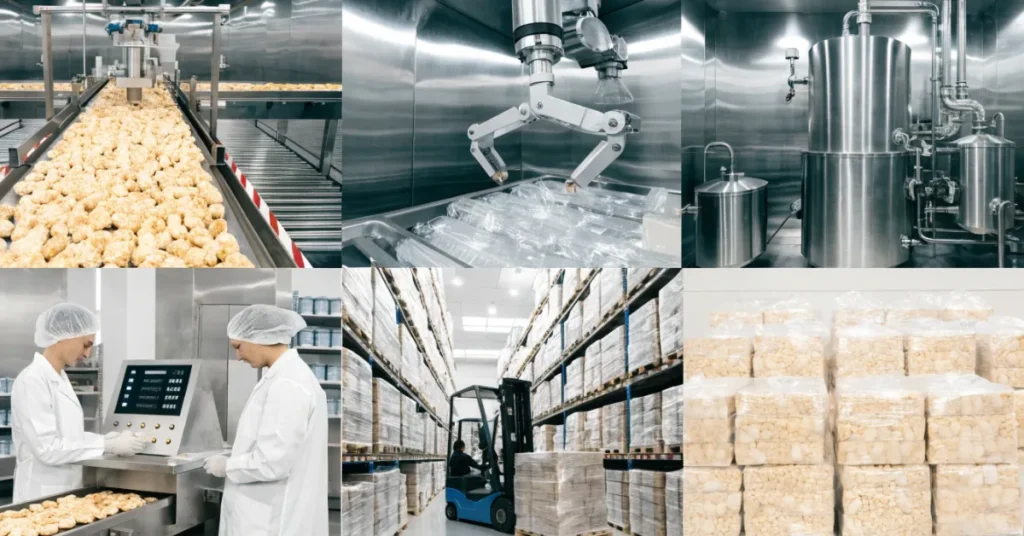
Food Processing UAE refers to converting raw agricultural products into finished or semi-finished food products that are safe, convenient, and ready for consumption. Food processing plays an important role in reducing food waste, increasing shelf life, and supporting the UAE’s food supply chain.
Types of Food Processing Businesses
Primary Food Processing
This involves basic preparation of raw materials.
Examples:
- Cleaning vegetables
- Cutting fruits
- Grain processing
- Meat preparation
- Seafood processing
Secondary Food Processing
Secondary processing transforms ingredients into finished products.
Examples include:
- Bakery products
- Frozen foods
- Beverages
- Dairy products
- Ready-to-eat meals
- Snacks
Food Packaging and Distribution
Modern food businesses also focus on:
- Sustainable packaging
- Cold storage solutions
- Food labeling
- Export packaging
- Supply chain management
The UAE’s advanced logistics infrastructure makes it an attractive location for companies involved in food production and international distribution.
Why UAE Free Zones Are Ideal for AgroTech and Food Processing Businesses
UAE Free Zones provide a business-friendly environment for investors entering agriculture technology and food manufacturing sectors. These zones are designed to support industrial activities, manufacturing, logistics, and international trade.
Key Benefits of Setting Up in UAE Free Zones
100% Foreign Ownership
Many UAE Free Zones allow international investors to own 100% of their businesses without requiring a local partner. This gives entrepreneurs complete control over operations and decision-making.
Tax Advantages
Businesses operating in UAE Free Zones may benefit from competitive tax structures depending on their activities and compliance requirements. Companies should evaluate their eligibility based on UAE Corporate Tax regulations before making decisions.
Advanced Infrastructure
Free Zones provide access to:
- Warehouses
- Manufacturing facilities
- Industrial plots
- Storage solutions
- Transportation networks
This infrastructure is especially valuable for food processing companies that require production and storage facilities.
Import and Export Support
The UAE’s location provides easy access to major global markets.
Food businesses can use Free Zones to:
- Import raw materials
- Process products locally
- Export finished goods
This makes UAE Free Zones attractive for companies targeting GCC, Asian, African, and European markets.
Simplified Business Setup Process
Compared with traditional business setups, Free Zones generally provide streamlined procedures for:
- Company registration
- Licensing
- Visa applications
- Office or warehouse leasing
This allows entrepreneurs to start operations faster.
Best UAE Free Zones for AgroTech and Food Processing Companies
Choosing the right UAE Free Zone is one of the most important decisions for entrepreneurs entering the AgroTech and food processing industry. Different free zones offer specialized facilities, industrial infrastructure, logistics support, and business activities suitable for agriculture technology and food manufacturing companies.
KEZAD Abu Dhabi: A Hub for Food Manufacturing and Industrial Businesses
Khalifa Economic Zones Abu Dhabi (KEZAD) is one of the largest industrial zones in the UAE and provides strong opportunities for food processing companies, manufacturers, and logistics businesses.
KEZAD supports businesses involved in:
- Food production
- Food packaging
- Cold storage
- Warehousing
- Food distribution
- Agricultural processing
Its proximity to ports and transportation networks helps companies efficiently import raw materials and export finished food products.
Dubai Industrial City: Supporting Food Production and Manufacturing
Dubai Industrial City is designed for manufacturing and industrial activities, including food and beverage production.
Businesses benefit from:
- Ready-to-use industrial facilities
- Manufacturing infrastructure
- Storage solutions
- Supply chain connectivity
Food companies can establish operations for producing:
- Packaged foods
- Beverages
- Processed ingredients
- Consumer food products
The location also provides access to Dubai’s large consumer market and international trade network.
Jebel Ali Free Zone (JAFZA): Ideal for Food Import and Export Businesses
Jebel Ali Free Zone (JAFZA) is one of the region’s leading trade and logistics hubs.
It is suitable for businesses involved in:
- Food trading
- Food distribution
- Import and export
- Food storage
- Supply chain operations
Its connection with Jebel Ali Port allows companies to manage international shipments efficiently.
Sharjah Airport International Free Zone (SAIF Zone): Suitable for SMEs and Startups
Sharjah Airport International Free Zone (SAIF Zone) provides opportunities for small and medium-sized businesses looking for cost-effective setup options.
It supports activities such as:
- Food trading
- Packaging
- Storage
- Distribution
- Small-scale manufacturing
Entrepreneurs who are testing new food concepts or launching startups may find this option suitable.
RAKEZ: Affordable Setup for Manufacturing Businesses
Ras Al Khaimah Economic Zone (RAKEZ) offers competitive solutions for industrial and manufacturing companies.
It provides:
- Affordable industrial facilities
- Warehousing options
- Manufacturing support
- Flexible licensing packages
RAKEZ can be a practical choice for businesses looking for lower operational costs while accessing UAE markets.
Types of AgroTech Businesses You Can Start in UAE Free Zones
The UAE’s focus on sustainability and food security has created opportunities for entrepreneurs in various agriculture technology segments.
Smart Farming Solutions
Businesses can provide technology solutions that help farms improve productivity through:
- Automated irrigation systems
- Crop monitoring software
- Smart greenhouse technology
- Agricultural sensors
Vertical Farming and Hydroponics
Due to limited agricultural land and water resources, vertical farming and hydroponics are gaining popularity in the UAE.
Entrepreneurs can establish businesses focused on:
- Indoor farming systems
- Hydroponic equipment
- Controlled environment agriculture
- Fresh produce cultivation
Agricultural Software and Digital Platforms
Technology companies can develop solutions for:
- Farm management
- Supply chain tracking
- Agricultural analytics
- Inventory management
- Crop forecasting
Agricultural Equipment and Technology Trading
Investors can also explore importing and distributing:
- Farming machinery
- Irrigation equipment
- Greenhouse systems
- Agricultural tools
Sustainable Agriculture Solutions
Sustainability-focused businesses can provide:
- Water-saving technologies
- Renewable energy farming solutions
- Waste reduction systems
- Eco-friendly farming methods
Types of Food Processing Businesses in UAE
The UAE food processing sector offers opportunities across multiple categories due to increasing consumer demand and export potential.
Dairy Processing
Businesses can produce and process:
- Milk products
- Cheese
- Yogurt
- Specialty dairy items
Frozen Food Manufacturing
Frozen food continues to grow due to convenience-driven consumer preferences.
Opportunities include:
- Frozen vegetables
- Ready meals
- Frozen seafood
- Frozen snacks
Bakery and Confectionery Production
Entrepreneurs can establish businesses producing:
- Bread products
- Cakes
- Pastries
- Specialty desserts
Beverage Manufacturing
Food processing companies can explore:
- Juice production
- Bottled beverages
- Functional drinks
- Healthy beverages
Dates and Agricultural Product Processing
The UAE has strong demand for processed agricultural products such as:
- Dates
- Dried fruits
- Organic foods
- Packaged agricultural products
Food Packaging Businesses
Packaging plays an important role in food supply chains.
Companies can offer:
- Sustainable packaging
- Food containers
- Labeling solutions
- Export packaging services
Business Activities Allowed for AgroTech and Food Processing Companies
Before establishing a company, investors must select the correct business activity based on their operations.
Common activities include:
- Food manufacturing
- Food processing
- Food packaging
- Food trading
- Agricultural technology services
- Farm equipment trading
- Food storage
- Cold chain logistics
- Food distribution
- Research and development
Selecting the correct activity helps businesses obtain the right approvals and avoid compliance issues.
Licenses Required for AgroTech and Food Processing Businesses in UAE
Setting up a food or agriculture-related business requires obtaining the appropriate licenses and approvals.
Industrial License
An industrial license is generally required for companies involved in manufacturing activities.
It allows businesses to:
- Produce goods
- Operate manufacturing facilities
- Process raw materials
Food Manufacturing License
Companies producing food products usually need approvals related to food production and safety standards.
This includes compliance with:
- Production requirements
- Facility standards
- Hygiene regulations
Commercial License
Businesses involved in trading, importing, or distributing food products may require a commercial license.
Import and Export License
Companies planning international trade activities need approval to import raw materials or export finished products.
Warehouse and Facility Approvals
Food businesses may require approvals for:
- Storage facilities
- Production units
- Temperature-controlled areas
- Manufacturing spaces
Food Safety Regulations Every Business Must Follow
Food safety compliance is a critical requirement for any food processing company in UAE. Businesses must maintain proper standards to protect consumers and meet regulatory requirements.
Important compliance areas include:
HACCP Certification
Hazard Analysis and Critical Control Points (HACCP) helps businesses identify and control food safety risks throughout production.
ISO 22000 Food Safety Management System
ISO 22000 provides a structured approach for managing food safety processes.
Halal Certification
Companies producing food products for UAE and international markets may need halal certification to access wider consumer segments.
Product Registration and Labeling
Food businesses must ensure products comply with UAE labeling requirements, including:
- Ingredients information
- Expiry dates
- Nutritional details
- Storage instructions
Quality Control Procedures
Businesses should implement:
- Regular inspections
- Testing procedures
- Documentation systems
- Traceability processes
How to Start an AgroTech or Food Processing Business in UAE Free Zones

Starting an AgroTech or food processing business in UAE Free Zones requires proper planning, market research, and compliance with regulatory requirements. Entrepreneurs should understand the licensing process, operational needs, and investment requirements before launching their business.
Step 1: Conduct Market Research
Before starting operations, investors should analyze:
- Customer demand
- Competitor offerings
- Target markets
- Product opportunities
- Export potential
Research helps businesses identify profitable segments such as organic food production, smart farming solutions, frozen foods, or sustainable agriculture technologies.
Step 2: Select the Right Business Activity
Choosing the correct business activity is essential because it determines the required license and approvals.
Examples include:
- Food manufacturing
- Food trading
- Agricultural technology services
- Farming solutions
- Food packaging
- Food distribution
A properly selected activity ensures smoother registration and compliance.
Step 3: Choose a Suitable UAE Free Zone
Investors should compare free zones based on:
- Business activity support
- Location advantages
- Warehouse availability
- Infrastructure
- Licensing costs
- Logistics facilities
Manufacturing companies may prefer industrial-focused free zones, while trading businesses may benefit from locations closer to ports and logistics hubs.
Step 4: Apply for the Required License
After selecting the free zone, businesses can apply for the appropriate license.
The process generally includes:
- Trade name registration
- Document submission
- License application
- Facility approval
- Payment of government fees
Step 5: Arrange Production Facilities
Food processing businesses require suitable operational facilities, including:
- Manufacturing units
- Storage areas
- Cold chain facilities
- Quality control laboratories
- Packaging areas
AgroTech companies may require:
- Research facilities
- Greenhouses
- Technology testing areas
- Farming equipment
Step 6: Obtain Food and Safety Approvals
Businesses must complete regulatory approvals before starting production.
These may include:
- Food safety approvals
- Municipality approvals
- Product registration
- Health and safety compliance
- Environmental approvals
Step 7: Open a Corporate Bank Account and Begin Operations
After completing licensing requirements, businesses can establish financial systems, hire employees, purchase equipment, and begin commercial activities.
Investment Costs for AgroTech and Food Processing Businesses in UAE
The investment required for an AgroTech or food processing business in UAE depends on factors such as business size, technology requirements, production capacity, and facility type. Small businesses may require lower investment, while manufacturing facilities with advanced equipment require higher capital.
Main Expenses to Consider
| Expense Category | Description |
|---|---|
| Business License | Free zone registration and licensing fees |
| Facility Rental | Warehouse, factory, or office space |
| Machinery | Food processing equipment or farming technology |
| Packaging Equipment | Production and packaging systems |
| Storage Facilities | Cold storage and inventory management |
| Employee Costs | Salaries, visas, and workforce expenses |
| Compliance Costs | Certifications, inspections, and approvals |
| Marketing | Branding, sales, and market expansion |
Entrepreneurs should prepare a detailed financial plan before investing to understand operational costs and expected returns.
Government Support for AgroTech and Food Processing Businesses in UAE
The UAE government actively supports businesses that contribute to food security, sustainability, and innovation. Several initiatives encourage investment in agriculture technology and food production.
UAE Food Security Initiatives
The UAE focuses on:
- Increasing local food production
- Improving agricultural technology
- Supporting sustainable farming
- Strengthening food supply chains
These efforts create opportunities for companies developing innovative solutions.
Support for Sustainable Agriculture
Businesses working on:
- Water-efficient farming
- Climate-smart agriculture
- Renewable energy solutions
- Sustainable food production
can benefit from growing market demand and government interest.
Innovation and Technology Adoption
The UAE encourages businesses using advanced technologies such as:
- Artificial intelligence
- Robotics
- Automation
- Data analytics
- Smart farming systems
Technology-driven companies can play an important role in improving agricultural efficiency.
Challenges Investors Should Consider Before Starting a Food Business in UAE
Although the UAE provides strong opportunities, entrepreneurs should understand potential challenges.
Climate Conditions
The UAE’s hot climate and limited agricultural resources can make traditional farming challenging.
Solution: Businesses can adopt technologies such as:
- Hydroponics
- Vertical farming
- Controlled environments
- Smart irrigation
Regulatory Compliance
Food businesses must follow strict safety and quality standards.
Challenges include:
- Licensing requirements
- Food approvals
- Product registration
- Safety documentation
Solution: Working with experienced business advisors can help companies manage compliance requirements efficiently.
High Initial Investment
Manufacturing and AgroTech businesses often require significant investment in:
- Equipment
- Technology
- Facilities
- Skilled employees
Proper financial planning helps reduce operational risks.
Supply Chain Management
Food businesses depend on reliable supply chains for:
- Raw materials
- Storage
- Transportation
- Distribution
Businesses should develop strong logistics strategies to maintain efficiency.
Future Trends in UAE AgroTech and Food Processing Industry
The UAE’s agriculture and food sector is expected to continue evolving with advanced technology and sustainability-focused solutions.
Artificial Intelligence in Farming
AI systems will help businesses:
- Predict crop performance
- Monitor plant health
- Improve resource usage
- Automate farming decisions
Robotics and Automation
Automation will support:
- Farming operations
- Food manufacturing
- Packaging processes
- Warehouse management
Sustainable Food Production
Future businesses will focus on:
- Reducing food waste
- Sustainable packaging
- Alternative farming methods
- Energy-efficient production
Smart Supply Chains
Blockchain and digital tracking systems can improve:
- Food traceability
- Inventory management
- Quality control
- Consumer trust
Alternative Protein and Healthy Foods
Growing consumer awareness is increasing demand for:
- Plant-based foods
- Organic products
- Functional beverages
- Health-focused meals
Common Mistakes New Investors Should Avoid
Many new entrepreneurs face challenges because they underestimate planning and compliance requirements.
Avoid these common mistakes:
- Choosing the wrong free zone
- Selecting an incorrect business activity
- Ignoring food safety requirements
- Underestimating operational costs
- Starting without market research
- Poor supply chain planning
- Not investing in quality control
- Delaying required approvals
Proper preparation helps businesses build a strong foundation and operate successfully in the UAE market.
Grow Your AgroTech or Food Processing Business with Ripple Business Setup
Setting up an AgroTech or food processing company in UAE Free Zones requires careful planning, correct licensing, and compliance with business regulations. Choosing the right structure and free zone can help entrepreneurs establish a strong foundation for growth. Ripple Business Setup assists entrepreneurs and investors with UAE company formation, free zone business setup, licensing support, accounting, tax, and compliance solutions. For professional guidance on starting your business in the UAE, contact Ripple Business Setup at +971 50 593 8101, email info@ripplellc.ae, or WhatsApp +971 4 250 0833.
FAQ
Is AgroTech profitable in the UAE?
Yes, AgroTech has strong growth potential because the UAE is investing heavily in food security, smart farming, and sustainable agriculture solutions.
Which UAE Free Zone is best for food processing?
The best free zone depends on business requirements. Industrial zones such as KEZAD, Dubai Industrial City, JAFZA, RAKEZ, and SAIF Zone offer different advantages for manufacturing, logistics, and trading businesses.
How much does it cost to start a food processing company in UAE?
Costs vary depending on the license type, facility size, equipment requirements, and operational scale. Businesses should prepare a detailed budget covering setup and ongoing expenses.
Can foreigners own an AgroTech company in UAE?
Yes, many UAE Free Zones allow 100% foreign ownership for eligible business activities.
What license is required for food manufacturing in UAE?
Food manufacturing businesses generally require an industrial or manufacturing-related license along with food safety approvals.
Is HACCP mandatory for food businesses in UAE?
Food safety certifications such as HACCP are commonly required or strongly recommended depending on the business activity and regulatory requirements.
Can UAE Free Zone companies export food products?
Yes, many free zones support import and export activities, allowing businesses to access international markets.
Why is UAE becoming a hub for food processing?
The UAE’s strategic location, logistics infrastructure, government support, and investment in food security make it an attractive destination for food processing companies.
Conclusion
The UAE offers significant opportunities for entrepreneurs entering the AgroTech and Food Processing industries. With increasing demand for sustainable food solutions, advanced agricultural technologies, and locally produced food products, the sector provides long-term growth potential. UAE Free Zones give businesses access to modern infrastructure, international markets, and investor-friendly regulations. However, success depends on selecting the right business activity, maintaining food safety standards, and developing a strong operational strategy.
Disclaimer: The information provided in this article is for general educational purposes only and does not constitute legal, financial, or business advice. UAE business regulations, licensing requirements, and tax rules may change based on government updates and business activities. Investors should consult qualified professionals before making business decisions.