So, you’re looking to get your business sorted with VAT in the UAE for 2026? It can seem like a lot, but honestly, it’s pretty straightforward once you break it down. We’re talking about a consumption tax that most businesses need to deal with. This guide is here to walk you through everything you need to know about VAT registration in the UAE, from understanding the basics to actually getting it done. No need to stress, we’ll keep it simple.
Understanding VAT in the UAE
Value Added Tax, or VAT, is a form of consumption tax that applies to most goods and services sold within the United Arab Emirates. It’s a key part of the UAE’s economic strategy, designed to create a more stable revenue stream for the government while promoting transparency in business dealings. Think of it as a tax on the ‘value added’ at each stage of production and distribution. The standard rate is 5%, which is quite competitive globally. Getting a tax ID in Dubai, or anywhere in the UAE, is a necessary step for many businesses.
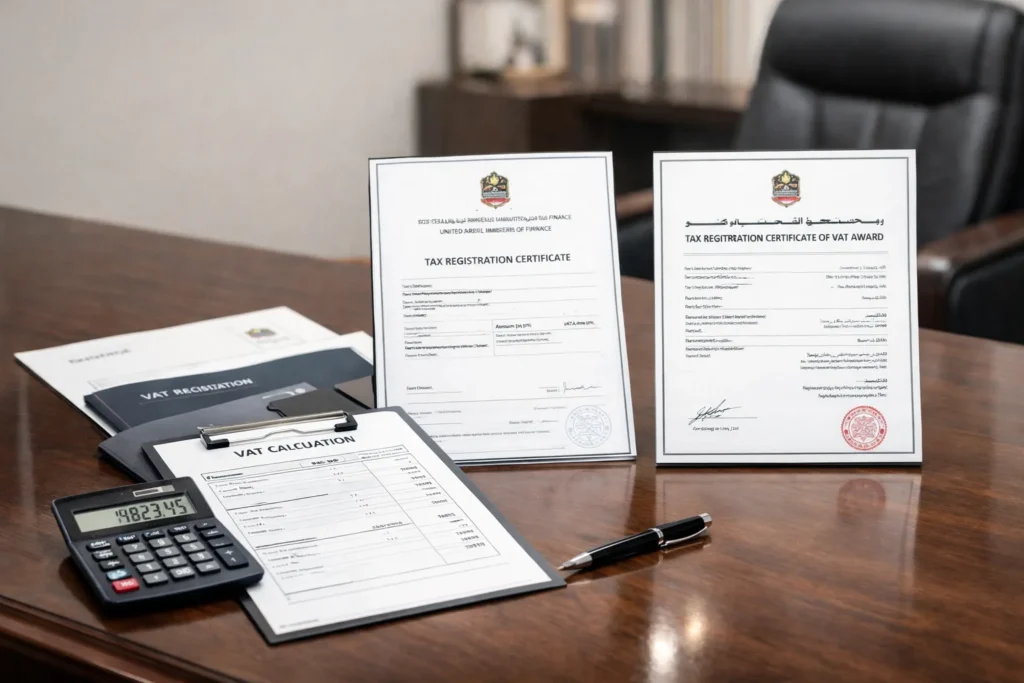
What is VAT and Why is it Important?
VAT is essentially a tax on spending. When a business makes a sale, it collects VAT from the customer. Then, when that business buys goods or services, it can usually reclaim the VAT it paid. The net amount is paid to the Federal Tax Authority (FTA). This system helps ensure that tax is paid on consumption, and it also provides businesses with a way to recover taxes paid on their expenses, which can be a significant benefit. For businesses operating in the Emirates, understanding VAT is a big part of UAE tax compliance.
The VAT system in the UAE is designed to be fair and efficient. It supports government services and infrastructure projects by providing a reliable source of income. For businesses, it offers a structured way to manage tax obligations and can even lead to tax recovery, making it an important consideration for financial planning.
Key VAT Rates and Exemptions
While the standard VAT rate across the UAE is 5%, there are specific categories of goods and services that have different treatments. Some items are subject to a 0% VAT rate, meaning no VAT is charged. This often applies to certain exports of goods and services, international transportation, and some healthcare and education services. Other goods and services might be completely exempt from VAT. These typically include certain financial services and the supply of bare land. It’s important to know these distinctions to correctly apply VAT and avoid issues with your online VAT application UAE.
Here’s a quick look at the main categories:
- Standard Rate (5%): Applies to most goods and services. Businesses need to charge this rate on their taxable supplies.
- Zero-Rated (0%): Applies to specific items like exports, international transport, and some essential services. Businesses still need to account for these supplies but charge no VAT.
- Exempt: Certain supplies, like some financial transactions and residential property rentals, do not have VAT applied and cannot be reclaimed.
Knowing these details is part of the Emirates VAT application steps and ongoing responsibilities. For detailed information, the Federal Tax Authority (FTA) website is the official source.
Who Needs to Register for VAT in the UAE?
So, you’ve got a business humming along in the UAE. That’s great! But now comes the question: do you actually need to get registered for Value Added Tax (VAT)? It’s not a one-size-fits-all situation, and understanding the rules is key to staying on the right side of the Federal Tax Authority (FTA).
Mandatory Registration Thresholds
For most businesses operating in the UAE, there are specific financial triggers that make VAT registration a legal requirement. Think of it as a signal from the FTA that your business activity has reached a certain scale. You absolutely must register if:
- Your total taxable supplies and imports in the past 12 months have exceeded AED 375,000.
- You expect your total taxable supplies and imports to exceed AED 375,000 within the next 30 days.
It’s important to keep track of your financial figures. The UAE tax registration process requires you to look back at the previous 11 months and the current month, plus project forward for the next 30 days. This is a pretty standard part of the requirements for business tax number UAE.
Voluntary Registration Criteria
Even if you don’t hit the mandatory threshold, there’s still a reason to consider registering for VAT. This is where voluntary registration comes in. If your business meets the following condition, you can choose to register:
- The total value of your taxable supplies and imports in the past 12 months, or expected in the next 30 days, is more than AED 187,500.
Why would you do this? Well, registering voluntarily allows you to reclaim VAT paid on your business expenses. If you’re buying a lot of supplies or services for your business and paying VAT on them, getting registered means you can deduct that VAT from the VAT you collect from your customers. It can be a smart move for businesses looking to manage their cash flow better, even if they aren’t legally obligated to register yet. This is a common consideration when looking to apply for a business tax ID Dubai or registering a business for VAT Abu Dhabi.
For non-resident businesses without a physical presence in the UAE, the rules are different. They are generally required to register for VAT regardless of their turnover. It’s always best to check the specific requirements for your situation to avoid any penalties.
Understanding these thresholds is a fundamental part of the UAE tax registration process. Getting it right means you can focus on growing your business, knowing your tax obligations are covered. If you’re unsure about your specific situation, seeking advice on the requirements for a UAE tax number is a good idea. The UAE is a leading global investment hub, and understanding its tax system is part of doing business here.
The VAT Registration Process: Step-by-Step
Getting your business set up for VAT in the UAE involves a few key steps, and it’s all done online through the Federal Tax Authority’s (FTA) portal. It might seem a bit daunting at first, but breaking it down makes it much more manageable. Think of it like assembling furniture, follow the instructions, and you’ll get there.
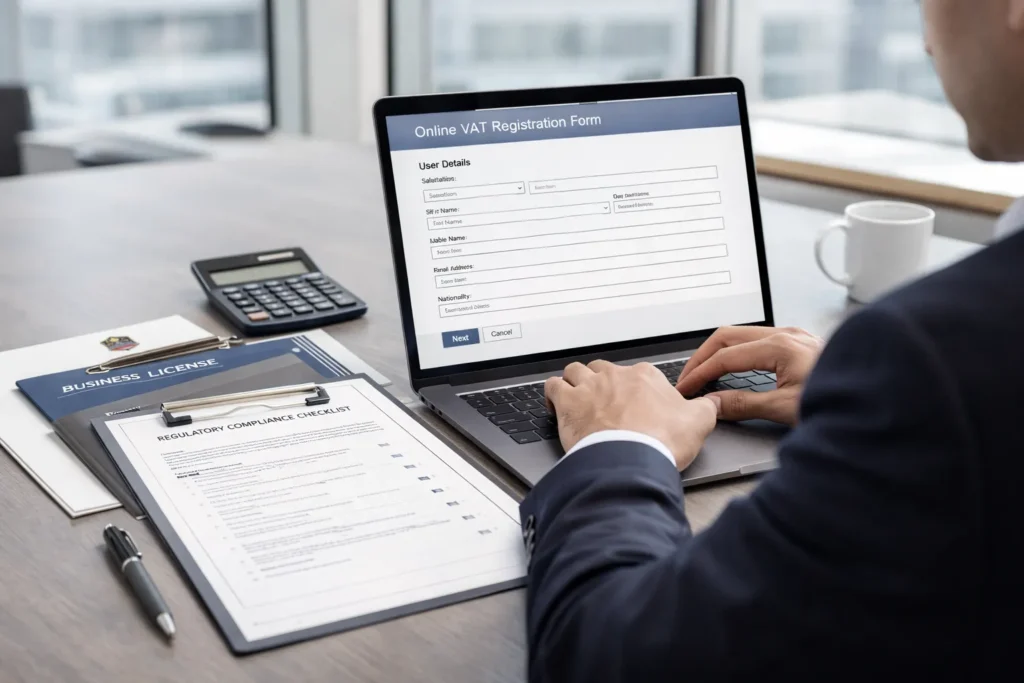
Gathering Required Documents
Before you even log in, make sure you have all your paperwork in order. This will save you a lot of time and prevent headaches later on. You’ll need things like your trade license, certificate of incorporation, and details about your business activities. If you’re an individual, you’ll need your Emirates ID and passport copy. For companies, have your Memorandum of Association or Articles of Association ready. It’s also a good idea to have your bank account details handy, though they’re often optional.
Here’s a quick rundown of what you might need:
- For All Businesses: Trade License, Certificate of Incorporation, Emirates IDs for owners/signatories, Passport copies for owners/signatories.
- For Companies: Memorandum of Association (MoA) / Articles of Association (AoA) or Partnership Agreement.
- For Individuals: Emirates ID and Passport copy.
- Optional but Recommended: Bank letter with account details.
Accuracy is super important here. Double-check all the information you’re about to submit. Mistakes can lead to delays or even rejection of your application, and nobody wants that.
Navigating the FTA Portal
Alright, documents in hand, it’s time to head over to the Federal Tax Authority’s website. You’ll need to create an account on the EmaraTax portal. If you have a UAE Pass, it can make the login process quicker. Once you’re in, you’ll set up your “Taxable Person” profile. This is where you’ll input your business’s basic information, name, type of business, contact details, and so on. Make sure this profile is accurate, as it forms the foundation for your VAT registration. This is a key part of the guide to federal tax authority registration.
Completing the VAT Application Form
With your profile set up, you can now start the actual VAT registration application. You’ll select the option for VAT registration and choose whether it’s mandatory or voluntary. The form itself is multi-sectioned. You’ll fill in details about your business activities, your expected turnover (both past and projected), and any taxable expenses. You’ll also need to upload the documents you gathered earlier. Remember to keep your scanned documents under 15MB and ensure they are clear and readable. After filling everything out, give it one last thorough review before hitting submit. The FTA usually processes applications within about 20 business days, and you can track the status right there on the portal.
After Registration: Your Responsibilities
So, you’ve gone through the whole VAT registration process and got your TRN (Tax Registration Number). Great! But that’s really just the beginning. Now comes the part where you actually have to do things with it. It’s not just a certificate to hang on the wall, you know.
First off, you need to start issuing proper tax invoices for all your sales. These aren’t just any old receipts; they have specific details the Federal Tax Authority (FTA) requires. Think your business name, address, TRN, date, a description of the goods or services, and the amounts. If you’re dealing with exports or intra-GCC supplies, you might need to issue a tax invoice with zero-rated VAT, but you’ll need proof to back that up.
Then there’s keeping records. This is a big one. You’ve got to maintain detailed records of all your sales, purchases, imports, and any other transactions that involve VAT. This includes keeping copies of all those tax invoices you issue and receive. The FTA can ask for these records at any time, and you need to have them ready. Generally, you’ll need to keep them for at least five years from the end of the relevant tax period.
Here’s a quick rundown of what you’ll be dealing with:
- Issuing Tax Invoices: Always use the correct format for your sales.
- Record Keeping: Maintain detailed financial and VAT records for at least five years.
- Filing VAT Returns: You’ll need to submit these returns to the FTA periodically (usually quarterly) and pay any VAT due.
- Reclaiming Input VAT: If you paid VAT on business expenses, you can claim it back on your VAT return, but you need the right documentation.
- Staying Updated: Tax laws can change, so keep an eye on any updates from the FTA.
Getting registered is one hurdle, but staying compliant is an ongoing effort. It’s about making sure your business operations align with the tax regulations consistently.
Finally, and this is super important, you’ll have to file VAT returns. This is where you report all your taxable sales and purchases for a specific period, usually every three months. You’ll calculate the net VAT due (output VAT minus input VAT) and pay it to the FTA. If you’re due a refund, you can claim that too. Missing deadlines or filing incorrectly can lead to penalties, so it’s best to get organized from the start.
Common Mistakes to Avoid During VAT Registration
So, you’re getting ready to register for VAT in the UAE. That’s great! But before you hit submit, let’s chat about some common slip-ups that can really slow things down or even cause your application to get kicked back. Nobody wants that hassle, right?
First off, just throwing your application in without double-checking everything is a big no-no. Think of it like sending a text with a typo; it can change the whole meaning. Make sure all the business details you’re putting in match exactly what’s on your trade license and other official papers. Even small differences can make the Federal Tax Authority (FTA) pause and ask questions, or worse, reject it outright.
Then there’s the document situation. It’s easy to forget a page or upload the wrong file type. Seriously, I’ve seen people try to upload giant video files when they just needed a simple PDF. Always check the FTA’s checklist beforehand and make sure you have everything, and that the files are in the right format and size. It saves so much time later.
Here are a few more things to watch out for:
- Incomplete Paperwork: This is probably the most frequent reason for delays. If you miss even one required document, your application might not even get looked at properly.
- Data Mismatches: If the information you provide doesn’t line up with other government records, the FTA will flag it. This means more back-and-forth and potential rejection.
- Missing Deadlines: There are specific timeframes for registering, especially if your turnover hits the mandatory threshold. Don’t wait until the last minute; mark it on your calendar and get it done.
- Complex Business Structures: If your business has multiple branches, partners, or operates in different sectors, you’ll likely need more detailed documentation. Be prepared for this and gather everything upfront.
Honestly, the biggest takeaway here is to be thorough. Treat this application like you’re applying for something really important because it is. A little extra time spent checking and double-checking now will save you a massive headache down the road. It’s better to be safe than sorry when it comes to tax matters.
Navigating VAT registration can be tricky, and many businesses stumble over common hurdles. Avoiding these pitfalls is key to a smooth start. Want to make sure you’re on the right track? Visit our website for expert guidance and resources to help you register your business without any headaches.
Wrapping Things Up
So, that’s the lowdown on getting your business VAT registered in the UAE for 2026. It might seem like a lot of steps and paperwork, and honestly, it can be. But if you take it one step at a time and have all your documents ready, it’s totally doable. Remember to check the thresholds and deadlines, and don’t be afraid to ask for help if you get stuck. Getting this right means you’re playing by the rules and keeping your business on the straight and narrow. Good luck!
How Ripple Business Setup Supports VAT Registration in the UAE
Our team manages the VAT registration process by handling documentation, application procedures, and compliance requirements in line with UAE regulations. We guide you through eligibility checks, registration steps, and submission procedures to ensure accurate and timely completion. We also support proper record preparation to help meet ongoing VAT obligations. For assistance with VAT registration in 2026, contact us at +971 50 593 8101, email info@ripplellc.ae, or WhatsApp +971 4 250 0833.
Frequently Asked Questions
What exactly is VAT, and why is it a big deal for businesses in the UAE?
VAT stands for Value Added Tax. Think of it like a sales tax that’s added to most things you buy and sell in the UAE. It’s important because it’s a key way the government makes money to pay for public services. For businesses, it means they need to keep track of sales and purchases and pay the difference to the government.
Do all businesses in the UAE have to register for VAT?
Not necessarily! If your business makes less than AED 375,000 in sales and imports over a year, you don’t have to register. However, if you expect to make more than AED 375,000, you must register. There’s also an option to register voluntarily if your sales are between AED 187,500 and AED 375,000, which can be helpful if you pay a lot of VAT on your own business expenses.
What kind of documents will I need to get ready for VAT registration?
You’ll need to have some important papers handy. This usually includes your company’s trade license, proof of incorporation (like a certificate of incorporation or articles of association), and identification for owners and authorized signers (Emirates ID or passport). It’s also good to have details about your business activities and past sales figures.
How long does the whole VAT registration process usually take?
Filling out the application online typically takes about an hour or so. After you submit it, the Federal Tax Authority (FTA) usually takes up to 20 working days to review and approve it. But, things can take longer if your paperwork isn’t quite right or if they need more information from you.
What happens after my business is officially VAT registered?
Once you get your VAT Registration Number (TRN), you’re officially on the hook! You’ll need to start adding VAT to the prices of your goods and services. You also need to keep good records of all your sales and purchases. Plus, you can claim back the VAT you paid on eligible business expenses, which helps reduce your overall VAT bill.
What are some common mistakes people make when applying for VAT?
A big one is not having all the correct documents ready or submitting them in the wrong format. Another common slip-up is putting in wrong or outdated information. It’s also super important to meet the deadlines; missing them can lead to fines! Double-checking everything before you hit submit is key.
Disclaimer: This content is for general informational purposes only and does not constitute legal, financial, or tax advice. VAT regulations and registration requirements may change. Always confirm details with official authorities or a qualified professional before making decisions.