What Is a Building Material License in the UAE?
Explain clearly that a Building Material License allows businesses to trade construction-related products such as cement, steel, tiles, wood, plumbing items, and hardware. Mention that companies can import, export, and distribute materials within the UAE market. Add context about how this license supports contractors, developers, and infrastructure projects across the country.
Why Start a Building Materials Business in 2026?
Explain market demand using UAE context. Talk about ongoing real estate expansion, smart city projects, and infrastructure investments. Mention that Expo legacy developments and new residential communities continue to drive demand for building materials. Highlight strong logistics, tax benefits, and global trade access as key advantages for investors in 2026.
Building Material License Cost in UAE Mainland (2026)
Start with a paragraph explaining that mainland setup offers full UAE market access but comes with higher operational requirements.
Mainland License Cost Breakdown
- Trade license fee charged by DED
- Initial approval and registration charges
- Local sponsor cost (if required depending on structure)
- Office rent with Ejari registration
- Immigration file and visa costs
Estimated Total Cost (Mainland)
Explain realistic cost range (for example AED 15,000 to AED 35,000+ depending on office size and visas). Clarify that costs increase with warehouse space and staffing needs.
Building Material License Cost in UAE Free Zone (2026)
Start with a paragraph explaining that free zones offer cost-effective packages and simplified setup.
Free Zone Cost Breakdown
- License package fee
- Flexi desk or small office cost
- Visa package inclusion
- Registration and admin fees
Estimated Total Cost (Free Zone)
Explain typical range (AED 10,000 to AED 25,000 depending on free zone and visa allocation). Mention that costs vary based on location and facilities.
Mainland vs Free Zone: Cost Comparison Table
| Feature | Mainland | Free Zone |
|---|---|---|
| Setup Cost | Medium to High | Low to Medium |
| Office Requirement | Mandatory physical office | Flexi desk or office |
| Market Access | Full UAE market | Limited to free zone or export |
| Visa Eligibility | Flexible | Limited packages |
| Ownership | 100% foreign ownership allowed | 100% foreign ownership |
Explain that mainland suits businesses targeting local contractors and retail markets, while free zones work better for import-export or online trading models.
Key Factors That Affect Building Material License Cost
These factors directly influence how much you will pay for a Building Material License in the UAE. Understanding them early helps you plan your budget and avoid unnecessary expenses.
- Business activity type: The exact activities you select under your license play a big role in cost. A simple trading activity is usually cheaper, but if you add multiple activities like import, export, or specialized materials (for example, hazardous or heavy construction goods), authorities may charge higher approval fees. Some activities also need extra permits from external departments, which increases the total cost.
- Number of visas: Your visa quota impacts overall expenses. Each visa includes costs for entry permit, medical test, Emirates ID, and visa stamping. If you plan to hire staff or bring partners on board, your costs will rise accordingly. Many startups reduce initial costs by applying for only 1 or 2 visas and expanding later.
- Office size and location: Mainland companies must rent a physical office, and building material businesses often need warehouse space. Rent varies based on location, size, and facility type. A small office in a less expensive area costs much less than a large warehouse in an industrial zone. In free zones, flexi desk options help reduce costs, but storage space still adds to expenses.
- Free zone authority: Each free zone in the UAE has its own pricing model. Some offer low-cost startup packages with limited visas, while others provide premium facilities at higher prices. The choice of free zone affects not only the license fee but also visa costs, office options, and renewal charges.
- Import and export approvals: If your business involves importing or exporting building materials, you will need customs registration and possibly additional approvals. Costs may include customs codes, port handling setup, and logistics arrangements. These are essential for trading businesses but can increase your initial setup budget.
- Warehouse and storage requirements: Building material trading often requires storage for bulky items like cement, steel, or tiles. Renting a warehouse or storage unit adds a significant cost. The size, location, and type of warehouse (open yard vs closed facility) will impact your overall expenses.
- License renewal and ongoing compliance: The initial setup cost is not the only expense. You must renew your license every year and maintain compliance with UAE regulations. Renewal fees, office lease renewal, and visa renewals should be part of your long-term cost planning.
- Local sponsor or service agent (if applicable): While many business activities now allow 100% foreign ownership, some mainland setups may still involve a local service agent. This can add an annual fee, depending on the agreement.
- VAT and accounting setup: If your turnover exceeds the VAT threshold, you must register for VAT. This involves additional costs for registration, accounting services, and regular tax filing. Even if you are below the threshold, many businesses still invest in proper bookkeeping for compliance.
By understanding these cost factors, you can make smarter decisions and choose a setup that fits your budget and business goals.
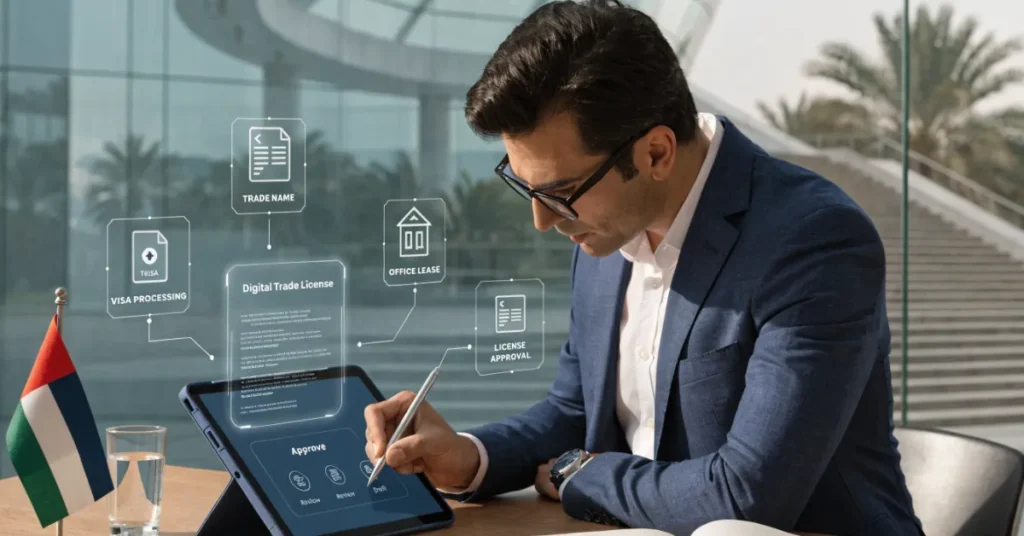
Step-by-Step Process to Get a Building Material License
- Choose your business activity
- Decide between mainland or free zone
- Reserve your trade name
- Apply for initial approval
- Lease office or workspace
- Submit required documents
- Receive your trade license
Documents Required for Building Material License UAE
- Passport copies of shareholders
- UAE visa copies (if applicable)
- Trade name approval certificate
- Initial approval receipt
- Office lease agreement (Ejari or free zone contract)
Mainland vs Free Zone: Which Is Better for Building Material Business?
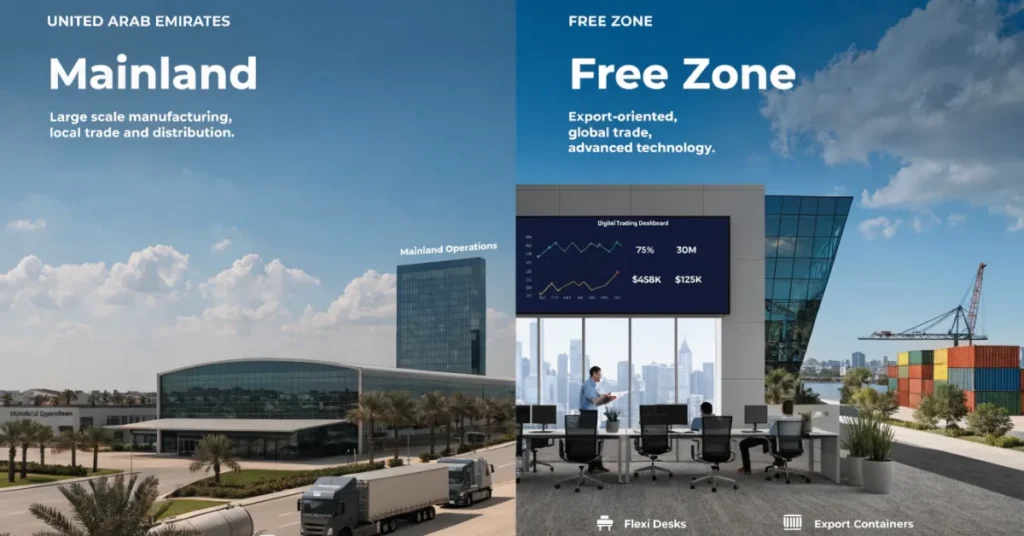
Explain decision-making clearly. If a business wants to sell directly in the UAE market, the mainland is the better option. If the focus is import, export, or cost savings, a free zone setup works well. Add a simple scenario, such as a supplier targeting local construction companies choosing the mainland, while an international trader prefers a free zone.
Hidden Costs to Consider in 2026
- Customs registration for import/export
- VAT registration if revenue exceeds the threshold
- Warehousing or storage costs
- Logistics and transportation setup
- Annual license renewal fees
Tips to Reduce Your Building Material License Cost
- Start with a flexi-desk instead of a full office
- Choose a cost-effective free zone
- Apply for only the required visas initially
- Avoid adding unnecessary business activities
FAQ
How much does a Building Material License cost in 2026?
Costs usually range between AED 10,000 and AED 35,000 depending on location and setup type.
Can I start without an office?
Free zones allow flexi desk options, but mainland businesses must lease a physical office.
Is VAT required for building material trading?
VAT registration is required if annual turnover exceeds the UAE threshold.
Which is cheaper, the mainland or free zone?
Free zones are generally more affordable for startups, while mainland offers broader market access.
How Ripple Business Setup Can Support Your Building Material License in 2026
Setting up a Building Material License in the UAE can feel complex, especially when comparing mainland and free zone options, managing approvals, and understanding cost structures. Ripple Business Setup simplifies the process by guiding you through every step, from choosing the right jurisdiction to handling documentation and approvals. Their team helps you reduce unnecessary costs, avoid delays, and ensure full compliance with UAE regulations. Whether you are a first-time investor or expanding your trading business, they provide practical, tailored advice based on your goals. You can contact Ripple Business Setup at +971 50 593 8101, email info@ripplellc.ae, or WhatsApp +971 4 250 0833 for expert assistance.
Conclusion
Choosing the right Building Material License in 2026 depends on how you plan to operate and grow your business in the UAE. Mainland setup gives you direct access to the local market and more flexibility, while free zones offer lower startup costs and a simpler setup process. Both options have clear advantages, so your decision should align with your budget, target customers, and long-term goals.
Take time to evaluate your business needs before making a final choice. A well-planned setup can help you avoid extra costs and scale smoothly in a competitive market. If you are unsure which option fits best, getting expert guidance can make the process easier and more efficient.
Disclaimer: This guide provides general information based on UAE regulations in 2026. Costs and requirements may vary depending on business activity and authority approvals.