The UAE healthcare sector continues to expand rapidly due to population growth, medical tourism, and increasing demand for specialized healthcare services. Investors and healthcare professionals are opening private clinics across Dubai, Abu Dhabi, and other Emirates to meet the rising need for quality medical care. The country’s modern healthcare infrastructure, business-friendly environment, and strong regulatory framework make it an attractive destination for healthcare investments.
Obtaining a Clinic License UAE is a mandatory step before operating any healthcare facility legally. Healthcare authorities in the UAE regulate clinics to ensure patient safety, medical quality standards, and professional compliance. Depending on the Emirate, approvals are issued by the Dubai Health Authority (DHA), Department of Health Abu Dhabi (DOH), or the Ministry of Health and Prevention (MOHAP).
Understanding the approval process, licensing costs, documentation requirements, and healthcare regulations helps investors avoid delays and manage the clinic setup process more efficiently.
What Is a Clinic License UAE?
A Clinic License UAE is an official permit that allows healthcare professionals and investors to establish and operate a medical clinic legally within the country. The license confirms that the healthcare facility complies with UAE medical regulations, safety standards, and operational requirements.
Healthcare licenses vary depending on the type of medical facility. A clinic license typically applies to outpatient healthcare services, while medical center license covers multiple specialties under one facility. Hospital licenses apply to large healthcare institutions offering inpatient treatment and advanced medical services.
Healthcare authorities regulate clinics strictly to maintain patient safety, ensure qualified medical staffing, and monitor infection control standards. Clinics operating without proper approvals may face penalties, closure, or legal action.
The UAE allows different clinic categories, including general medical clinics, dental centers, dermatology clinics, physiotherapy centers, cosmetic clinics, pediatric clinics, and specialty healthcare facilities.
Types of Clinics You Can Open in the UAE
The UAE healthcare sector supports a wide range of medical specialties and clinic models. Investors can choose clinic types based on market demand, medical expertise, and investment capacity.
Common clinic types include:
- General medical clinic
- Dental clinic
- Dermatology clinic
- Physiotherapy clinic
- Cosmetic clinic
- Pediatric clinic
- Gynecology clinic
- Specialty medical center
- Day surgery center
Dubai has a strong demand for cosmetic, dental, and wellness clinics because of medical tourism and high consumer spending. Abu Dhabi continues to invest heavily in advanced healthcare services and specialty medical facilities. Sharjah and Northern Emirates show growing demand for family clinics and affordable healthcare centers due to population expansion.
Specialty healthcare services such as dermatology, cosmetic treatments, and physiotherapy continue to grow across the UAE healthcare market.
Authorities Responsible for Clinic Licensing in UAE
Healthcare licensing in the UAE depends on the Emirate where the clinic operates. Each healthcare authority has separate approval procedures, inspection standards, and regulatory requirements.
Dubai Health Authority (DHA)
The Dubai Health Authority regulates healthcare facilities and medical professionals operating in Dubai. DHA reviews clinic layouts, verifies medical staff qualifications, and conducts inspections before issuing healthcare approvals. Clinics in Dubai must comply with DHA healthcare facility guidelines and operational standards.
Department of Health Abu Dhabi (DOH)
The Department of Health Abu Dhabi oversees healthcare licensing and regulation within Abu Dhabi. DOH manages medical facility approvals, professional licensing, healthcare compliance monitoring, and patient safety regulations.
Ministry of Health and Prevention (MOHAP)
MOHAP regulates healthcare facilities in Sharjah and Northern Emirates. Clinics operating outside Dubai and Abu Dhabi require MOHAP approvals before beginning operations.
| Authority | Emirate Coverage | Main Approval Required |
|---|---|---|
| DHA | Dubai | Healthcare facility approval |
| DOH | Abu Dhabi | Healthcare licensing |
| MOHAP | Sharjah & Northern Emirates | Medical facility permit |
Step-by-Step Clinic License UAE Approval Process

Opening a clinic in the UAE involves multiple approvals from both economic and healthcare authorities. Proper planning and accurate documentation help reduce delays during the licensing process.
Step 1 – Finalize Your Medical Activity
The first step involves selecting the clinic specialty and defining the healthcare services the facility will provide. The chosen medical activities must match UAE healthcare regulations and authority-approved categories.
Clinic categories may include general practice, cosmetic services, physiotherapy, dental care, pediatrics, or specialty medical treatments. Healthcare authorities review the selected activities carefully before granting approvals.
Step 2 – Reserve Trade Name
Every clinic must register an approved trade name before applying for a healthcare license.
Important trade name guidelines include:
- Follow UAE naming regulations
- Avoid restricted medical terminology
- Ensure the name matches the clinic activity
- Use professional and clear branding
Trade name approvals are usually processed through the Department of Economic Development or the relevant licensing authority.
Step 3 – Obtain Initial Approval
Initial approval confirms that investors can proceed with the clinic setup process. Mainland clinics generally require approval from the Department of Economic Development, while free zone clinics follow separate authority procedures.
The approval process verifies investor eligibility, business activity selection, and licensing compliance requirements.
Step 4 – Select Clinic Location
Healthcare authorities review clinic premises carefully before issuing approvals. The clinic location must comply with healthcare zoning regulations and facility requirements.
Key requirements often include:
- Adequate parking availability
- Accessibility standards
- Proper patient waiting areas
- Minimum room size requirements
- Compliance with healthcare facility layouts
Choosing a suitable location early helps avoid delays during inspections.
Step 5 – Obtain Healthcare Authority Approval
Healthcare authority approval is one of the most important stages in the clinic licensing process. Authorities evaluate clinic layouts, medical equipment, infection control procedures, and facility standards.
The approval process usually includes:
- Submission of clinic floor plans
- Medical equipment approvals
- Infection control compliance review
- Facility design verification
Incomplete submissions or non-compliant layouts may result in approval delays.
Step 6 – Apply for Professional Medical Licenses
All healthcare professionals working in the clinic must hold valid UAE medical licenses. Authorities review educational qualifications, work experience, and professional certifications before issuing approvals.
Medical licensing applies to:
- Doctors
- Nurses
- Specialists
- Lab technicians
- Therapists
Professional licensing procedures vary slightly between DHA, DOH, and MOHAP.
Step 7 – Final Inspection and License Issuance
Before issuing the final clinic license, healthcare authorities conduct facility inspections to verify compliance with approved standards.
The inspection process includes:
- Facility safety checks
- Equipment verification
- Infection control compliance
- Operational readiness review
Once the clinic passes inspection successfully, the final healthcare license is issued.
Documents Required for Clinic License UAE
Accurate documentation plays a major role in obtaining faster healthcare approvals in the UAE. Missing or incorrect documents often cause delays during the licensing process.
Commonly required documents include:
- Passport copies
- Emirates ID
- Visa copy
- Trade name certificate
- Tenancy contract
- Ejari certificate
- Clinic layout plan
- Medical staff qualifications
- Good standing certificates
- Professional medical licenses
Healthcare authorities may request additional documents depending on the clinic type and medical specialty.
Cost of Getting a Clinic License UAE
The cost of opening a clinic in the UAE depends on the clinic size, location, specialty, equipment requirements, and healthcare authority approvals.
| Expense | Estimated Cost |
|---|---|
| Trade License | AED 12,000 – 25,000 |
| Initial Approval | AED 3,000 – 6,000 |
| DHA/DOH Approval | AED 10,000 – 50,000 (depends on clinic size) |
| Clinic Fit-Out | AED 200,000 – 800,000+ |
| Medical Equipment | AED 100,000 – 2,000,000+ |
| Staff Licensing | AED 3,000 – 15,000 |
| Office Rent | AED 70,000 – 300,000+ |
Specialty clinics and advanced medical centers usually require higher investment because of equipment, staffing, and facility requirements. Mainland clinics may involve different operational costs compared to free zone healthcare facilities.
Investors should also budget for annual renewals, staff visa processing, insurance, and regulatory compliance expenses.
Mainland vs Free Zone Clinic Setup in UAE
Both mainland and free zone jurisdictions offer healthcare business opportunities in the UAE. The right option depends on the clinic’s business model, patient target market, and operational goals.
| Feature | Mainland Clinic | Free Zone Clinic |
|---|---|---|
| Market Access | Full UAE market | Limited by zone |
| Government Contracts | Eligible | Limited |
| Ownership | 100% foreign ownership available | 100% foreign ownership |
| Office Requirement | Mandatory | Mandatory |
Mainland clinics are generally more suitable for facilities serving local UAE patients and government-related healthcare contracts. Free zone setups may work better for specialized healthcare services, medical tourism, or international healthcare operations.
Common Challenges in the Clinic Approval Process
Healthcare licensing in the UAE involves strict compliance procedures, which may create delays if requirements are incomplete.
Common challenges include:
- Delayed authority approvals
- Incorrect clinic layout plans
- Incomplete staff documentation
- Non-compliant medical equipment
- Delays in doctor licensing
A dermatology clinic in Dubai experienced a two-month delay because its treatment room dimensions did not meet DHA healthcare facility requirements. Proper planning and professional guidance can help reduce such issues.
How Long Does It Take to Get a Clinic License UAE?
The clinic licensing timeline depends on the clinic type, healthcare authority approvals, and document accuracy.
Typical approval timelines include:
- Trade name approval: 1–3 days
- Initial approval: 3–7 days
- Healthcare authority review: 2–8 weeks
- Final inspection: 1–2 weeks
Specialty clinics, large medical centers, and facilities requiring advanced equipment approvals may take longer.
Delays often occur because of incomplete documentation, facility modification requirements, or pending medical staff licensing approvals.
UAE Healthcare Regulations You Must Follow
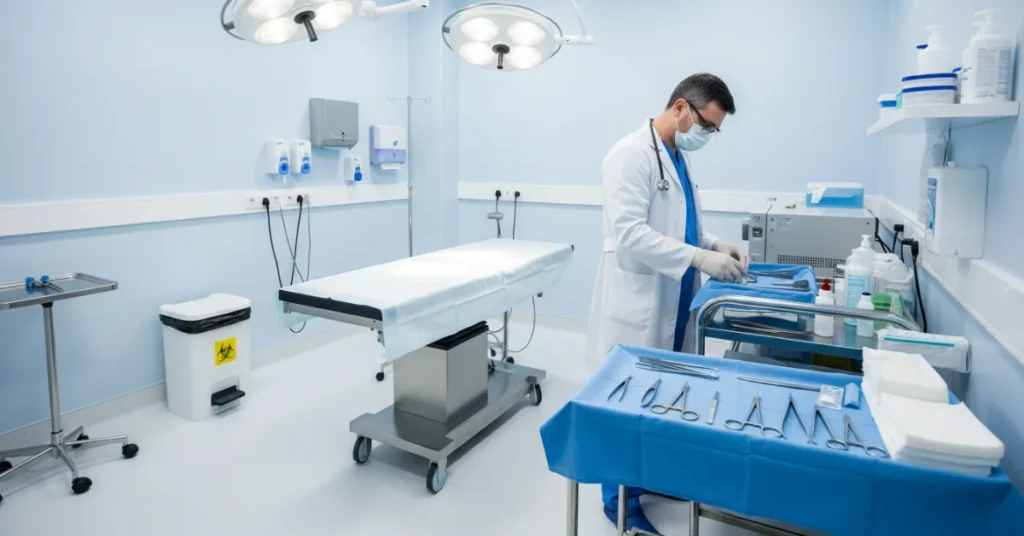
Healthcare facilities in the UAE must comply with strict operational and regulatory standards after obtaining the clinic license.
Important healthcare regulations include infection control standards, patient data protection requirements, medical waste management rules, staff qualification compliance, and annual license renewals.
Clinic owners should also follow these compliance practices:
- Keep staff licenses updated
- Maintain accurate patient records
- Schedule regular facility inspections
- Follow the healthcare authority safety standards
Failure to comply with healthcare regulations may result in penalties, suspension, or license cancellation.
Benefits of Opening a Clinic in UAE
The UAE remains one of the Middle East’s strongest healthcare investment destinations because of its growing population, advanced healthcare infrastructure, and increasing healthcare demand.
Major advantages include:
- Growing healthcare demand
- High-income patient market
- Medical tourism opportunities
- Tax-friendly business environment
- Modern healthcare infrastructure
Demand for specialized healthcare services continues to increase across cosmetic, wellness, dental, and physiotherapy sectors. Dubai’s position as a global medical tourism hub also creates strong opportunities for private healthcare investors.
Why Work with a Business Setup Consultant for Clinic Licensing?
Healthcare licensing involves multiple approvals, technical documentation, facility inspections, and compliance procedures. Professional business setup consultants help investors manage the process more efficiently while reducing paperwork errors and approval delays.
Consultants often assist with:
- Licensing approvals
- DHA and DOH compliance guidance
- Clinic documentation
- Medical staff licensing
- Clinic location selection
- Regulatory coordination
Professional support can simplify the clinic registration process and improve approval timelines.
Why Choose Ripple Business Setup for Clinic License UAE?
Ripple Business Setup assists healthcare entrepreneurs with clinic licensing, healthcare approvals, documentation support, and business registration services across the UAE. Their team helps investors understand healthcare regulations while managing the clinic setup process more efficiently.
Our services include trade license registration, DHA and DOH approval support, clinic documentation assistance, and business setup guidance for healthcare facilities in Dubai and other Emirates.
Contact Ripple Business Setup:
- Phone: +971 50 593 8101
- WhatsApp: +971 4 250 0833
- Email: info@ripplellc.ae
Frequently Asked Questions
How much does a Clinic License UAE cost?
Clinic setup costs vary depending on the clinic size, medical specialty, healthcare authority approvals, equipment requirements, and location.
Can foreigners own a clinic in the UAE?
Yes, Foreign investors can own healthcare businesses in the UAE, subject to healthcare authority approvals and licensing requirements.
Is DHA approval mandatory in Dubai?
Yes. Clinics operating in Dubai must obtain approval from the Dubai Health Authority before starting operations.
How long does clinic approval take in the UAE?
The licensing process may take several weeks depending on clinic type, authority reviews, inspections, and document completion.
Can I open a clinic in a UAE free zone?
Yes, Certain UAE free zones allow healthcare and medical business activities under their licensing regulations.
What is the difference between a clinic and a medical center license?
A clinic license usually covers limited outpatient services, while a medical center license allows multiple specialties and broader healthcare operations.
Conclusion
Opening a clinic in the UAE offers strong business opportunities because of the country’s growing healthcare demand, advanced infrastructure, and supportive investment environment. However, healthcare businesses must follow strict licensing procedures, authority approvals, and compliance standards before beginning operations.
Disclaimer: This article is for informational purposes only and does not constitute legal, financial, or healthcare advice. Clinic licensing regulations in the UAE may change depending on healthcare authority updates and Emirate-specific requirements. Readers should consult DHA, DOH, MOHAP, or a qualified business setup consultant for the latest regulatory guidance.