


Introduction
The UAE healthcare sector continues to grow rapidly due to rising population demand, medical tourism, government investment, and advanced healthcare infrastructure. Cities such as Dubai and Abu Dhabi have become leading destinations for hospitals, clinics, telemedicine services, and specialized medical centers. As a result, many investors and healthcare professionals are exploring opportunities to establish healthcare businesses across the UAE.
Before starting any medical-related activity, businesses must obtain a valid Healthcare License UAE. This license ensures that healthcare facilities meet UAE healthcare regulations, patient safety standards, and operational compliance requirements. Whether you plan to open a medical clinic, pharmacy, diagnostic laboratory, or telemedicine company, understanding the licensing process is essential.
What Is a Healthcare License UAE?
A Healthcare License UAE is an official approval issued by UAE healthcare authorities that allows businesses to provide medical or healthcare-related services legally. This license confirms that the facility complies with healthcare laws, safety standards, staffing regulations, and medical operational guidelines established by UAE authorities.
Healthcare licensing plays an important role in maintaining patient safety and service quality. Medical facilities must meet strict standards related to hygiene, equipment, healthcare staffing, and facility design before they can begin operations. Unlike standard commercial licenses, healthcare licenses require additional technical approvals and inspections from healthcare authorities.
Different healthcare activities require separate approvals and license classifications. Many investors face delays because they choose the wrong healthcare activity during registration. Selecting the correct business activity from the beginning helps avoid compliance issues later in the process.
Businesses That Require a Healthcare License
- Medical clinics
- Dental clinics
- Hospitals
- Diagnostic laboratories
- Physiotherapy centers
- Rehabilitation centers
- Home nursing businesses
- Day surgery centers
- Telemedicine companies
- Pharmacies
Healthcare Authorities Responsible for Medical Licensing in UAE
Multiple government authorities regulate the UAE healthcare sector. Each authority manages healthcare licensing within its own jurisdiction and applies specific operational standards.
Dubai Health Authority (DHA)
Dubai Health Authority regulates healthcare facilities operating in Dubai mainland areas. DHA handles medical facility approvals, healthcare professional licensing, inspections, and healthcare compliance monitoring. Clinics, hospitals, dental centers, and pharmacies operating in Dubai generally require DHA approvals before starting operations.
Healthcare professionals such as doctors, nurses, and specialists must also obtain DHA professional licenses before practicing in Dubai.
Department of Health Abu Dhabi (DOH)
Department of Health – Abu Dhabi manages healthcare licensing in Abu Dhabi. DOH focuses heavily on patient safety standards, facility inspections, and healthcare quality compliance. Healthcare investors planning to open clinics or hospitals in Abu Dhabi must complete DOH approval procedures.
Ministry of Health and Prevention (MOHAP)
Ministry of Health and Prevention oversees healthcare licensing in Northern Emirates, including Sharjah, Ajman, Fujairah, Ras Al Khaimah, and Umm Al Quwain. MOHAP regulates healthcare facilities, pharmacies, and medical professionals in these regions.
Key Differences Between DHA, DOH, and MOHAP
- Different geographical jurisdictions
- Separate approval systems
- Different inspection standards
- Unique staffing requirements
- Different facility compliance rules
- Separate healthcare professional licensing systems
Types of Healthcare Licenses in UAE
The type of Healthcare License UAE depends on the healthcare activity and services offered by the business. Each healthcare activity has specific operational requirements, approvals, and facility standards.
Medical Clinic License
This license allows businesses to operate general or specialized clinics such as dermatology, pediatrics, cardiology, or internal medicine clinics.
Dental Clinic License
Required for businesses offering dental treatments, cosmetic dentistry, orthodontics, and oral healthcare services.
Pharmacy License UAE
Businesses involved in selling medicines, medical products, and pharmaceutical supplies require a pharmacy license and pharmaceutical approvals.
Diagnostic Laboratory License
Required for pathology labs, blood testing centers, imaging centers, and radiology facilities.
Home Healthcare License
This license covers home nursing, elderly care, rehabilitation support, and home medical assistance services.
Telemedicine License UAE
Telemedicine licenses allow healthcare businesses to provide online consultations, virtual healthcare services, and remote patient management.
Hospital License UAE
Hospitals require one of the most detailed licensing structures due to complex healthcare operations and staffing requirements.
Physiotherapy Center License
Physiotherapy clinics and rehabilitation centers must comply with therapy room standards and patient treatment regulations.
Each License Typically Includes
- Approved healthcare activities
- Authority-specific approvals
- Facility size requirements
- Equipment standards
- Medical staffing rules
- Inspection requirements
For example, opening a dermatology clinic in Dubai may require DHA approval, certified dermatologists, approved treatment rooms, and specific cosmetic treatment permissions. Similarly, telemedicine companies in Abu Dhabi may require DOH approval and secure digital healthcare systems.
Requirements to Get a Healthcare License UAE
Obtaining a Healthcare License UAE involves legal, operational, and technical requirements. Healthcare businesses must meet both business registration standards and healthcare compliance regulations.
Business Registration Requirements
Healthcare businesses must first complete the company registration process. This includes reserving a trade name, selecting a legal structure, and obtaining initial business approval from the relevant licensing authority.
Medical Professional Qualification Requirements
Doctors, nurses, therapists, pharmacists, and healthcare specialists must hold valid professional licenses issued by DHA, DOH, or MOHAP. Authorities usually require educational certificates, work experience documents, and professional examinations.
Facility Requirements
Healthcare facilities must meet UAE healthcare design and safety standards. Authorities review clinic layouts, treatment room standards, infection control systems, accessibility features, and medical equipment specifications before approving the facility.
External Approvals
Healthcare facilities may also require:
- Municipality approval
- Civil Defense approval
- Waste disposal approval
- Environmental health approval
Documents Required for Healthcare License UAE
- Passport copies
- Emirates ID copies
- Visa copies
- Trade name reservation certificate
- Business plan
- Lease agreement
- Qualification certificates
- Facility floor plan
- NOC documents if required
Step-by-Step Process to Start a Healthcare Business in UAE

Step 1 – Select Healthcare Activity
Choosing the correct healthcare activity is one of the most important steps. Incorrect activity selection can delay approvals and inspections.
Step 2 – Choose Jurisdiction
Investors must decide whether to establish the business in the mainland UAE or a healthcare-focused free zone, depending on operational goals.
Step 3 – Reserve Trade Name
The business name must comply with UAE naming regulations and avoid restricted medical terminology unless approved.
Step 4 – Apply for Initial Approval
Authorities review the business activity, shareholder details, and proposed healthcare operations.
Step 5 – Secure Clinic or Office Space
Healthcare facilities must meet minimum size, safety, and infrastructure requirements.
Step 6 – Obtain DHA, DOH, or MOHAP Approval
Healthcare authorities review technical documents, staffing plans, and facility compliance details.
Step 7 – Pass Facility Inspection
Authorities inspect the facility before issuing final approval.
Step 8 – Receive Healthcare License
After completing inspections and approvals, the final healthcare license is issued.
Many healthcare businesses face delays due to incomplete documents, incorrect clinic layouts, or delayed professional licensing approvals. Proper planning helps reduce approval timelines significantly.
Healthcare License UAE Cost
The cost of obtaining a Healthcare License UAE depends on the healthcare activity, facility size, medical specialty, staffing requirements, and emirate.
| Expense | Estimated Cost |
|---|---|
| Trade License | AED 10,000 – AED 25,000 |
| Initial Approval | AED 1,000 – AED 5,000 |
| DHA/DOH/MOHAP Approval | AED 5,000 – AED 20,000 |
| Medical Staff Licensing | AED 3,000 – AED 10,000 |
| Clinic Rent | AED 40,000 – AED 250,000+ |
| Interior Fit-Out | AED 100,000+ |
| Inspection Fees | AED 2,000 – AED 8,000 |
Healthcare setup costs increase depending on:
- Clinic size
- Number of specialists
- Medical equipment
- Healthcare specialty
- Mainland or free zone setup
- Location within UAE
Mainland vs Free Zone Healthcare Business Setup UAE
Healthcare investors can choose between mainland UAE and selected free zones depending on business goals.
| Mainland | Free Zone |
|---|---|
| Wider UAE market access | Faster company setup |
| Physical clinics allowed | Limited healthcare activities |
| Eligible for government contracts | Investor-friendly structure |
| More regulatory approvals | Lower setup complexity |
Mainland setups are usually more suitable for physical clinics, hospitals, and patient treatment centers. Free zones may work better for telemedicine businesses, healthcare consultancy firms, or medical technology companies.
Investors should carefully review whether a free zone permits direct patient treatment before finalizing the business structure.
Healthcare Facility Rules and Compliance in UAE
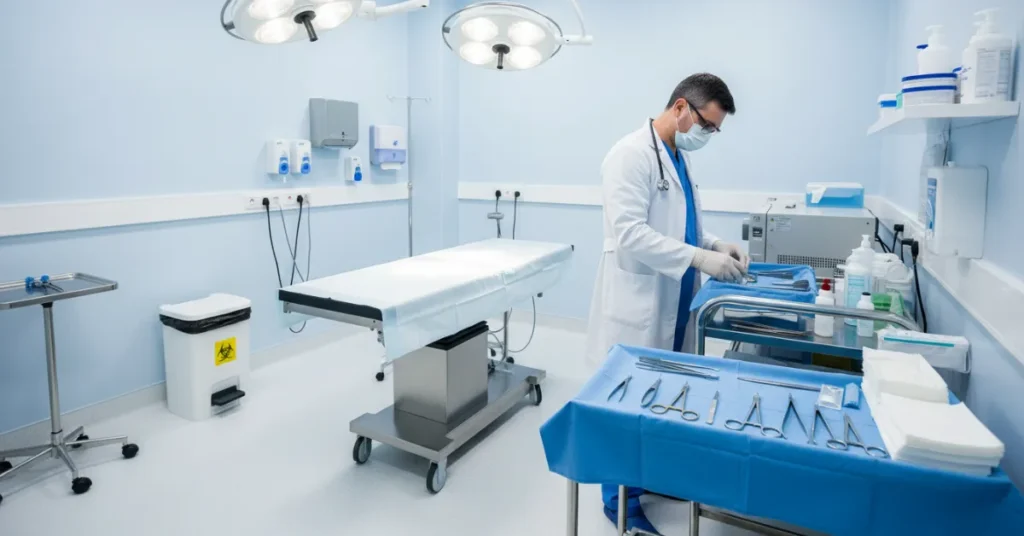
Healthcare facilities in UAE must comply with strict healthcare regulations designed to protect patient safety and service quality.
Patient Safety Standards
Facilities must maintain proper treatment standards, emergency response systems, and patient care procedures.
Medical Waste Disposal Rules
Healthcare businesses must follow approved waste disposal procedures for medical materials and hazardous waste.
Data Privacy and Patient Records
Medical facilities must protect patient confidentiality and maintain secure healthcare records.
Infection Control Standards
Authorities review sanitation systems, sterilization procedures, and hygiene protocols during inspections.
Staff-to-Patient Ratios
Healthcare facilities must maintain approved staffing levels depending on the healthcare activity.
Common Reasons Healthcare Applications Get Rejected
- Incomplete documentation
- Incorrect facility layout
- Unlicensed medical staff
- Non-compliant clinic design
- Wrong business activity selection
Can Foreign Investors Open a Healthcare Business in UAE?
Yes, foreign investors can establish healthcare businesses in UAE under approved ownership structures. Many healthcare activities now allow 100% foreign ownership, depending on the jurisdiction and activity type.
The UAE healthcare sector remains attractive to international investors due to strong healthcare demand, medical tourism growth, and government investment in healthcare infrastructure.
Benefits for Foreign Healthcare Investors
- Growing healthcare demand
- Advanced infrastructure
- Medical tourism opportunities
- Digital healthcare growth
- Investor-friendly policies
- High demand for specialized clinics
Challenges of Starting a Healthcare Business in UAE
Starting a healthcare business in UAE can be highly rewarding, but investors should prepare for operational and regulatory challenges.
Common Challenges
- Strict healthcare compliance
- High facility setup costs
- Professional licensing delays
- Recruitment of qualified staff
- Insurance approval requirements
Healthcare businesses can reduce these challenges by working with experienced healthcare setup consultants and preparing documents carefully before applying.
Tips for Faster Healthcare License Approval in UAE
Useful Tips
- Select the correct healthcare activity
- Hire licensed professionals early
- Use authority-approved clinic layouts
- Complete document attestation properly
- Prepare for inspections in advance
- Follow DHA, DOH, or MOHAP guidelines carefully
Proper preparation can significantly improve approval speed and reduce licensing delays.
Why UAE Is a Growing Hub for Healthcare Businesses
The UAE healthcare sector continues to expand due to rising healthcare demand, medical tourism, digital healthcare innovation, and government investment projects.
Dubai continues to attract healthcare investors through advanced infrastructure and healthcare free zones, while Abu Dhabi invests heavily in specialized medical projects and healthcare technology.
Telemedicine and digital healthcare services have also expanded rapidly in recent years, creating new opportunities for healthcare startups and international investors.
Why Choose Ripple Business Setup for Healthcare License UAE?
Setting up a healthcare business in the UAE involves multiple approvals, regulatory checks, and healthcare authority compliance procedures. From selecting the correct medical activity to obtaining DHA, DOH, or MOHAP approvals, the process can become time-consuming without proper guidance. Ripple Business Setup helps healthcare investors, doctors, and entrepreneurs navigate the licensing process smoothly while ensuring compliance with UAE healthcare regulations.
Our team at Ripple Business Setup assists with healthcare company formation, medical clinic licensing, trade license applications, documentation support, facility approvals, and business setup consultation across the UAE. Whether you are planning to open a clinic, pharmacy, telemedicine business, or diagnostic center, their experts can help simplify the process and reduce delays.
For professional assistance with Healthcare License UAE applications and medical business setup services, contact Ripple Business Setup at +971 50 593 8101, email info@ripplellc.ae, or WhatsApp +971 4 250 0833 to discuss your healthcare business requirements in the UAE.
FAQ
How long does it take to get a Healthcare License UAE?
The process may take several weeks to several months, depending on the activity, approvals, and facility inspections.
Can foreigners own a medical clinic in UAE?
Yes, foreign investors can own healthcare businesses in many UAE jurisdictions.
Is DHA approval mandatory in Dubai?
Yes, most healthcare facilities operating in Dubai mainland require DHA approval.
What is the minimum investment for a clinic setup in UAE?
Investment requirements vary depending on clinic size, specialty, and location.
Can I open a telemedicine business in UAE?
Yes, telemedicine businesses are permitted under approved healthcare regulations.
Which is better for a healthcare setup: mainland or free zone?
Mainland generally suits physical healthcare facilities, while free zones may suit healthcare consultancy or digital healthcare businesses.
What are the renewal requirements for healthcare licenses?
Businesses must renew trade licenses, healthcare approvals, and professional licenses regularly to remain compliant.
Conclusion
Obtaining a Healthcare License UAE is an essential step for any healthcare business operating in the UAE. The licensing process involves multiple approvals, facility inspections, healthcare authority compliance, and professional qualification requirements. Businesses that prepare proper documentation and follow healthcare regulations carefully can avoid delays and operational issues.
Disclaimer: This article is for general informational purposes only and does not constitute legal, financial, or medical licensing advice. Healthcare regulations, costs, and approval requirements in the UAE may change depending on the emirate and healthcare authority. Investors should consult the relevant UAE healthcare authority or a qualified business setup professional before making business decisions.