Thinking about opening a business on the Dubai mainland in 2026? It’s a big step, and honestly, it can feel a bit overwhelming with all the rules and paperwork. You want to make sure you’re doing it right from the start, so you don’t run into problems later.
Why Choose Dubai for Mainland Business Setup?

So, you’re thinking about starting a company in Dubai, specifically on the mainland? That’s a pretty smart move, honestly. Dubai has really put itself on the map as a place where businesses can actually grow and thrive. When you’re looking at company formation Dubai mainland is a solid choice because it gives you direct access to the entire UAE market. Forget about needing special permissions to sell to customers in Abu Dhabi or Sharjah; with a mainland setup, you can operate anywhere within the Emirates. This is a big deal if you’re planning on selling products or services locally.
Plus, setting up a firm in Dubai on the mainland means you’re eligible for government contracts and tenders. That’s a whole other avenue for business that free zones often can’t touch. It’s like having a VIP pass to a huge chunk of the economy. And let’s talk about ownership for most business activities, you can now have 100% foreign ownership. This used to be a major hurdle, but things have changed, making it much more appealing for international investors. It really simplifies the whole Dubai LLC setup guide process when you don’t have to worry about finding a local partner just to own your own business.
Setting up onshore in Dubai offers unparalleled flexibility and market reach within the UAE, making it ideal for businesses focused on local engagement and growth.
Here’s a quick rundown of why the mainland makes sense:
- Full UAE Market Access: Sell directly to customers across all Emirates without restrictions.
- Government Contract Eligibility: Bid on lucrative government projects and tenders.
- 100% Foreign Ownership: Allowed for a vast majority of business activities, simplifying ownership.
- Credibility and Trust: Often perceived as more established for local operations.
- Operational Freedom: Choose your office location anywhere in Dubai.
It’s not just about business, either. Dubai is a safe place to live, with a growing population of skilled professionals and wealthy individuals, which means more opportunities and a vibrant ecosystem for starting a company in Dubai. While there are steps involved in the Dubai company formation guide, getting it right from the start sets you up for long-term success. It’s a strategic decision for anyone serious about building a lasting presence in the region.
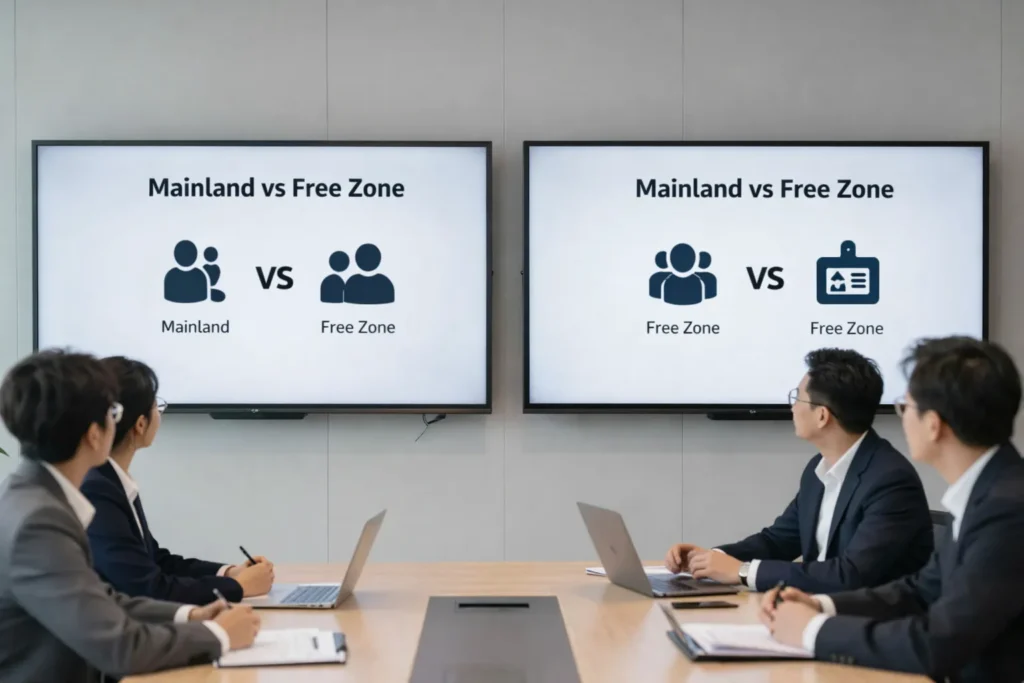
Understanding Mainland vs. Free Zone Companies in Dubai
When you’re looking to set up a business in Dubai, one of the first big decisions you’ll face is whether to go with a mainland company or a free zone entity. They’re pretty different, and what works for one business might not be the best fit for another. It really boils down to where you plan to do most of your business and what kind of activities you’ll be involved in.
Key Differences and Advantages of Mainland Setup
Setting up a mainland company means your business is registered with the Department of Economy and Tourism (DET) in Dubai. This gives you the freedom to operate anywhere within the UAE and even internationally. You can trade directly with local customers, set up physical shops or offices anywhere in Dubai, and even bid on government contracts. This direct access to the local market is a huge plus for many businesses, especially those in retail, food and beverage, or professional services.
Here’s a quick look at some of the main points:
- Market Access: Direct trading within the UAE is permitted without needing a distributor. This is a big deal if your primary customers are in Dubai or the wider Emirates.
- Ownership: While historically a local sponsor was often required, recent changes mean 100% foreign ownership is now allowed for most business activities. However, for certain strategic sectors, a local partner or agent might still be necessary.
- Office Space: You’ll generally need to secure physical office space, which is then registered with Ejari. This requirement is part of establishing a tangible presence.
- Business Scope: Mainland companies have the broadest scope for business activities and can engage in a wider range of operations compared to many free zones.
Free zones, on the other hand, are specific economic zones that offer certain benefits, often including 100% foreign ownership and tax advantages. However, they typically have restrictions on trading directly within the UAE mainland. If you plan to sell products or services directly to customers in the UAE, a mainland setup is usually the way to go. For businesses focused on international trade or specific industries catered to by a free zone, that might be a better option. It’s a trade-off between local market access and the specific benefits offered by a free zone.
The choice between a mainland and a free zone company is a strategic one. While free zones can offer streamlined processes and tax incentives, the mainland provides unparalleled access to the UAE’s domestic market and greater operational flexibility. Consider your long-term business goals and target audience carefully when making this decision.
When it comes to taxes, both mainland and free zone companies in Dubai generally benefit from a low tax environment. Mainland companies are subject to a 9% corporate tax on profits exceeding AED 375,000, while most goods and services incur a 5% VAT. Personal income tax is not levied. Free zones often have 0% corporate tax on qualifying income, but the specifics depend on the zone and the nature of the business. Understanding these tax implications is key to financial planning for your new venture. For more details on business setup options, you can explore Dubai mainland setup.
Types of Mainland Business Licenses in Dubai
When you’re looking into company formation in Dubai for a mainland business, you’ll find there are three main categories of licenses issued by the Department of Economy and Tourism (DET). Picking the right one is pretty important because it dictates what you can actually do with your business. It’s not just a formality; it really shapes your operations and what approvals you might need. The Dubai business registration process hinges on selecting the correct license type from the start.
Commercial License
This license is for businesses involved in trading activities. Think import and export, wholesale and retail, and general commerce. If you plan to distribute products, sell goods directly to consumers, or act as an importer, this is likely the license you’ll need. It covers a wide range of commercial ventures, making it a popular choice for many entrepreneurs starting a business in UAE.
Industrial License
If your venture involves manufacturing, assembly, processing, or any kind of industrial production, you’ll need an industrial license. This type of license often requires additional approvals from specific ministries or authorities related to the industry you’re entering. It’s for businesses that create or transform goods.
Professional License
This license is designed for service-oriented businesses. It’s suitable for consultants, IT service providers, legal firms, accounting services, marketing agencies, and other professionals offering their expertise. If your business primarily provides a service rather than selling physical goods, a professional license is usually the way to go. For professional licenses, you might need a Local Service Agent instead of a sponsor, depending on the specific activity and ownership structure.
Choosing the correct license is a foundational step in the Dubai business registration process. It directly impacts your ability to operate and can influence other requirements like office space and visa allocations. Getting this right upfront saves a lot of hassle down the line.
Understanding these license types is a key part of the Dubai business registration process. It helps clarify the path for starting a business in Dubai UAE, whether you’re aiming for a Dubai LLC setup or another structure. The DET offers a broad list of approved business activities, and your selection will guide you to the appropriate license category. This is a critical step in the overall Dubai business registration.
The Step-by-Step Process for Mainland Business Setup in 2026
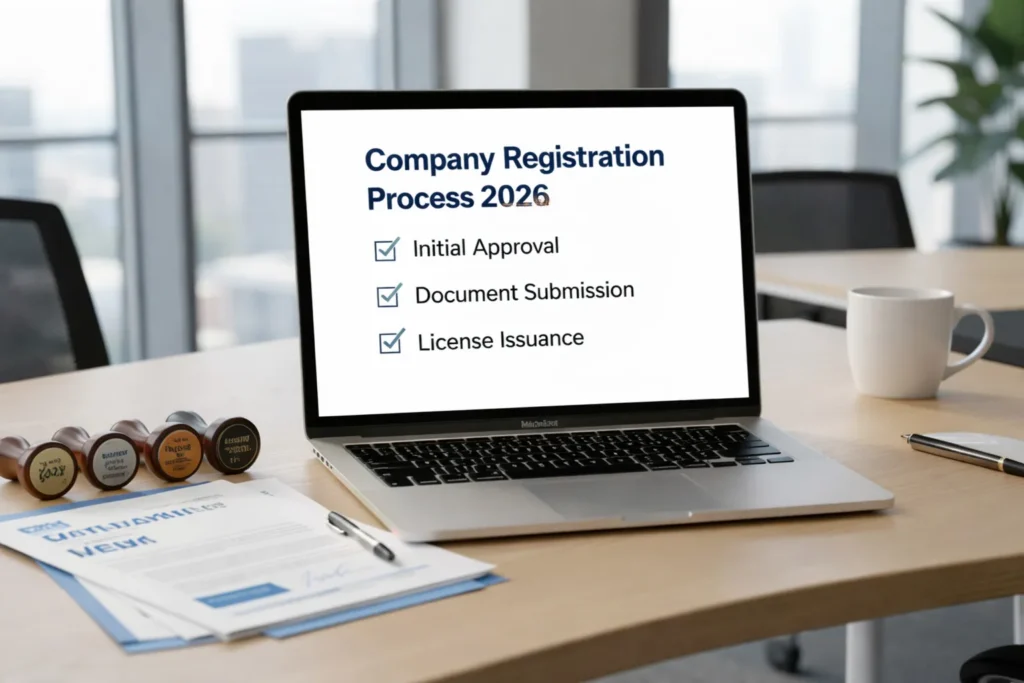
Setting up a business on the Dubai mainland involves a series of structured steps designed to ensure compliance and operational readiness. While the process has become more streamlined, understanding each stage is key to a smooth launch. Here’s a breakdown of what you can expect in 2026:
Business Plan and Legal Structure
Before anything else, you need a solid business plan. This document outlines your company’s objectives, market analysis, financial projections, and operational strategy. Alongside this, you’ll need to decide on the legal structure for your mainland company. Common options include a Sole Proprietorship, Civil Company, or a Limited Liability Company (LLC). The choice of legal structure often depends on the nature of your business, the number of partners involved, and your long-term goals. For most foreign investors, an LLC is a popular choice, offering limited liability protection.
Trade Name Registration and Initial Approval
Next, you’ll need to choose a unique trade name for your business. This name must comply with Dubai’s naming conventions and be available for registration. You will submit your proposed name along with details of your business activity to the Department of Economy and Tourism (DET) for approval. Once the name is approved, you’ll receive initial approval to proceed with the setup. This stage confirms that your business concept is permissible within the mainland jurisdiction.
Memorandum of Association (MOA) and Local Sponsor/Agent
For most mainland company structures, particularly LLCs with multiple partners, a Memorandum of Association (MOA) is required. This legal document details the company’s ownership structure, share distribution, business activities, and operational rules. It needs to be drafted carefully and then notarised. Depending on your business activity and ownership structure, you might also need to engage a local sponsor or agent. While 100% foreign ownership is now permitted for many activities, certain sectors may still require a local service agent. It’s important to clarify these requirements early on.
Office Space and Ejari Registration
A physical office space is a mandatory requirement for mainland companies. You will need to secure a commercial office space that meets the DET’s criteria. Once you have a lease agreement, you must register it with the Real Estate Regulatory Agency (RERA) through the Ejari system. The Ejari certificate is a crucial document that serves as proof of your physical address and is required for obtaining your trade license and visas.
Final Approvals and License Issuance
With all the preliminary steps completed, including the MOA notarization and Ejari registration, you can submit your complete application package to the DET for final approvals. This typically includes your trade name approval, initial approval, MOA, Ejari certificate, passport copies of shareholders and managers, and any other specific documents related to your business activity. Once all documents are verified and fees are paid, the DET will issue your official trade license. This license permits you to commence your business operations legally. Following license issuance, you can proceed with applying for visas for yourself and your employees, opening a corporate bank account, and registering for VAT and Corporate Tax if applicable. Engaging with professional business setup services can significantly streamline this process.
The journey to establishing a mainland business in Dubai is methodical. Each step builds upon the last, and attention to detail is paramount. While professional guidance is recommended, understanding the core requirements empowers you to make informed decisions throughout the setup.
Key Considerations for Mainland Companies
If you’re thinking about setting up a company on the mainland in Dubai, there are several things you’ll need to look at before getting started. These aren’t just boxes to tick, they’ll help determine how smoothly your business gets off the ground and keep you out of trouble down the road. Let’s break down the most important aspects of capital, visas, and taxes.
Capital Requirements
When setting up a company on the mainland, capital requirements are a frequent talking point. Here’s a quick comparison showing what to expect:
| Legal Structure | Minimum Capital Requirement (AED) |
|---|---|
| Limited Liability Co. | Varies; often 1 – 300,000 |
| Sole Establishment | No set minimum |
| Civil Company | No set minimum |
- Some activities, especially regulated ones (like finance), might have higher requirements.
- Although the law may no longer require putting capital in the bank for most activities, it’s best to budget for initial costs (licensing, registration, rent, etc.).
- Don’t assume all ventures are equal. Get advice if you’re uncertain about your activity type.
Visa and Immigration Procedures
You’ll need to plan for visas, not just for yourself, but for your employees and family if they’re relocating. Here’s what to know:
- Investor Visa: Owners usually get a 2- to 10-year residency visa, depending on investment and company structure.
- Employee Visas: The number you can sponsor is often tied to your office space and company activity.
- Dependent Visas: After your own visa, you can sponsor family members under certain rules.
- The general process for newcomers covers documents, medical checks, and Emirates ID registration.
List of common steps for visas:
- Obtain your trade license (the company must be registered first)
- Apply for an establishment card
- Submit residency and work visa applications
- Undergo medical exams and fingerprinting
- Receive Emirates ID
You might be surprised how many first-time business owners underestimate the time and cost of getting employee and family visas always check current government policies before making promises to new hires.
Taxation and Compliance
Mainland companies face a specific set of tax and compliance obligations:
- Corporate Tax: 9% on annual profits above AED 375,000. Under this, you’re exempt. This is one of the lowest business tax rates globally, and it’s a big reason people consider the mainland model.
- VAT: Most goods and services are charged a 5% Value Added Tax. Don’t forget VAT registration and regular filings if your revenue crosses the threshold.
- Other Taxes: No personal income tax, property tax, or vehicle tax for individuals or businesses.
- Reporting: Make sure to meet the UAE’s accounting, bookkeeping, and audit standards; filing errors can get costly fast.
Quick compliance reminders:
- Register for VAT and corporate tax at the right time (don’t wait until after you’re operational)
- Keep spotless documentation. Inspection requests aren’t uncommon
- Some sectors require additional government approvals or audits (e.g., healthcare, education).
A clear structure and early compliance planning help avoid problems like incorrect tax filings or missed deadlines. It’s worth spending extra effort at setup to avoid fines and interruptions.
Setting up a company on the mainland does require more steps and higher upfront costs compared to other options, but you get full access to the UAE market, easier government contracts, and no restrictions on your office location. If your business plan is focused on direct sales or broad access to the Emirates, the time and money invested are usually worthwhile. Abu Dhabi’s business environment also offers an exceptional framework for those considering expansion throughout the UAE. Find out how the International Financial Centre operates for comparison.
Common Challenges and How to Overcome Them
Setting up a business on the mainland in Dubai is exciting, but let’s be real, it’s not always a walk in the park. Many folks run into a few snags along the way, and it’s good to know what they are so you can be ready.
One big hurdle is just figuring out all the local rules and paperwork. Dubai’s regulations can seem a bit complex, especially if you’re new to the region. It’s easy to make a mistake with documentation, which can cause delays. Another common issue is finding the right office space that meets all the requirements. You can’t just grab any spot; it needs to be approved for business use, and getting that Ejari registration sorted can sometimes take longer than expected.
Here are some of the typical bumps in the road:
- Navigating Regulations: Understanding the specific laws for your business activity and ensuring full compliance can be tricky. It’s not always clear-cut, and what applies to one business might not apply to another.
- Approval Delays: Sometimes, getting the green light from various government departments takes more time than anticipated. This can throw off your launch schedule and impact your initial plans.
- Finding a Local Partner/Agent: For certain business types, you might need a local sponsor or agent. Finding a trustworthy and reliable partner who understands your vision can be a challenge.
- Capital Requirements: While some licenses have flexible capital needs, others require a significant investment upfront, which can be a barrier for startups.
- Understanding E-Invoicing: Starting July 2026, businesses with turnovers above AED 50 million will need to comply with e-invoicing regulations. This is a big change that requires early preparation to avoid disruptions.
The key to getting past these challenges is preparation and seeking the right kind of help. Don’t try to figure it all out alone. Getting advice from people who do this every day can save you a lot of headaches and time. It’s about being smart with your approach from the start.
To get around these issues, the best bet is often to work with a business setup service provider. They know the ins and outs of the system and can help you avoid common pitfalls. They can guide you through the legal requirements to start a business and make sure your paperwork is spot on. Plus, they often have good relationships with the authorities, which can speed things up. It’s like having a guide who knows all the shortcuts and avoids the traffic jams. This way, you can focus on what you do best, running your business, instead of getting bogged down in administrative tasks.
Facing hurdles when starting your business? Don’t let them stop you! Many entrepreneurs run into common problems, but there are smart ways to get past them. We’ve got tips and tricks to help you succeed. Ready to tackle these challenges head-on? Visit our website for expert advice and solutions to get your business moving forward!
Wrapping Up Your Dubai Mainland Venture
So, you’ve looked at setting up shop in Mainland Dubai for 2026. It’s a big step, for sure, with lots of moving parts. But honestly, the opportunities are pretty huge if you get it right. You can tap into the local market directly, which is a major plus. Just remember, things like getting the right licenses and understanding all the paperwork can be a bit of a maze. It’s not always straightforward, and sometimes you might hit a snag or two. That’s why getting some help from people who know the ropes really makes a difference. They can help smooth out the bumps and make sure you’re not wasting time or money. Setting up your business here is totally doable, and with the right approach, you’ll be on your way to making it work.
Why Choose Ripple Business Setup for Mainland Company Formation
Ripple Business Setup helps make mainland company formation simple, clear, and stress-free. Our team handles the full process, from selecting the right business activity to managing approvals, documentation, and licensing. We understand local regulations and guide you step by step, which helps avoid delays and costly mistakes. You also get practical advice on structuring your business for smooth operations and future growth.
To start your mainland company or get expert guidance, contact Ripple Business Setup at +971 50 593 8101, email info@ripplellc.ae, or WhatsApp +971 4 250 0833.
Frequently Asked Questions
What is a mainland company in Dubai?
A mainland company in Dubai is a business registered with the Dubai Department of Economy and Tourism (DET) that allows you to operate anywhere in the UAE, not just in special areas called free zones.
Do I need a local sponsor to start a mainland business in Dubai?
For most business activities, you do not need a local sponsor anymore. Many types of companies now allow 100% foreign ownership, except for a few special industries like defence or banking.
How long does it take to set up a mainland business in Dubai?
If you have all your documents ready, it usually takes about 1 to 2 weeks to finish the whole process and get your trade license.
What are the main costs involved in setting up a mainland company?
The main costs include trade license fees, office rent, legal paperwork, and visa expenses. In 2026, starting a basic company can cost between AED 25,000 and AED 60,000 for the first year.
Can I hire employees for my mainland company?
Yes, you can sponsor visas for employees and their families once your company is set up. The number of visas depends on your office space and business activity.
What taxes do mainland companies in Dubai pay?
Mainland companies pay a 9% corporate tax on profits over AED 375,000 and 5% VAT on most goods and services. There is no personal income tax in Dubai.
Disclaimer: This content is for general information only and does not constitute legal, tax, or business advice. Regulations and requirements may change. Always consult a qualified business setup professional before making decisions.