Preparing for a Year-End Audit is an essential part of maintaining accurate financial records and ensuring your business complies with accounting and regulatory requirements. A well-planned audit process helps identify errors, strengthens internal controls, improves financial reporting, and reduces delays during the audit.
What Is a Year-End Audit?
A Year-End Audit is a detailed examination of a company’s financial records at the end of a financial year. The audit verifies whether financial statements accurately reflect the company’s financial position and comply with applicable accounting standards.
A year-end audit typically includes reviewing:
- Balance Sheet
- Income Statement (Profit and Loss Statement)
- Cash Flow Statement
- General Ledger
- Supporting financial documents
- Internal controls
- Tax and compliance records
Internal Audit vs. External Audit
| Internal Audit | External Audit |
|---|---|
| Conducted by internal staff or consultants | Conducted by independent auditors |
| Focuses on improving business processes | Provides an independent opinion on financial statements |
| Can be performed throughout the year | Usually conducted after the financial year ends |
Why Proper Year-End Audit Preparation Matters
Preparing in advance makes the audit process faster and more accurate while reducing unnecessary questions from auditors.
Benefits include:
- Faster audit completion
- Accurate financial statements
- Better compliance with accounting standards
- Reduced risk of penalties
- Easier tax preparation
- Stronger internal controls
- Improved investor and stakeholder confidence
- Better financial decision-making
Businesses that maintain organized accounting records throughout the year usually experience fewer audit adjustments and lower audit costs.
Common Reasons Businesses Face Audit Issues
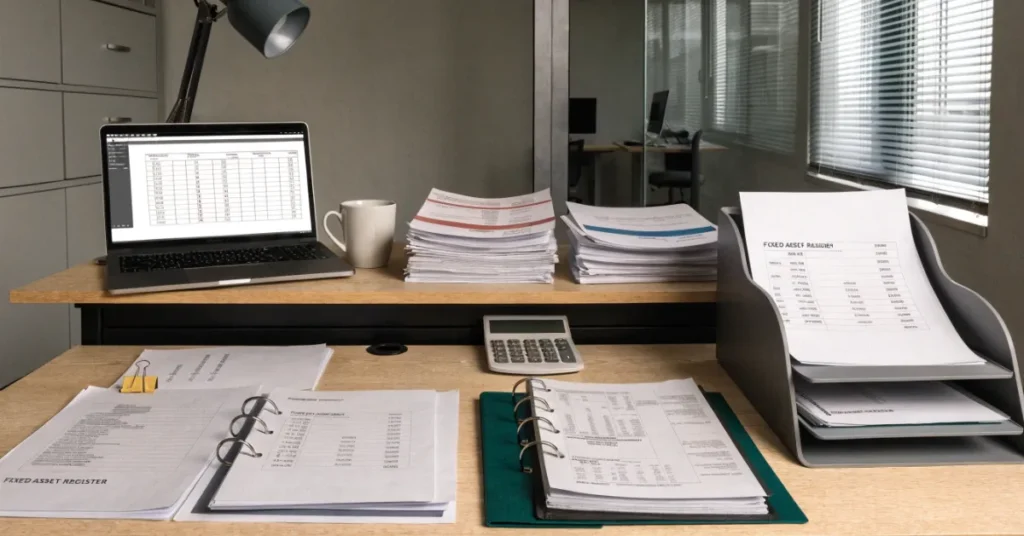
Many audit delays occur because financial records are incomplete or inaccurate. Identifying these issues early can save significant time during the audit.
Common problems include:
- Missing invoices or receipts
- Unreconciled bank accounts
- Incorrect journal entries
- Duplicate expense claims
- Incomplete payroll records
- Inventory discrepancies
- Missing fixed asset records
- Weak approval processes
- Incorrect tax calculations
- Missing supporting documents
- Outstanding customer or supplier balances
- Poor bookkeeping practices
Step-by-Step Year-End Audit Checklist
Step 1: Review Financial Statements
The first step in financial audit preparation is reviewing all financial statements to ensure they are complete and accurate.
Review the following:
- Balance Sheet
- Income Statement
- Cash Flow Statement
- Trial Balance
- General Ledger
Check for:
- Unusual balances
- Missing transactions
- Incorrect account classifications
- Duplicate entries
- Negative balances that require explanation
Any inconsistencies should be corrected before providing records to auditors.
Step 2: Reconcile Bank Accounts
Bank reconciliation ensures that accounting records match bank statements.
Compare:
- Bank statements
- Cash book
- General ledger balances
Confirm:
- Outstanding deposits
- Unpresented cheques
- Bank charges
- Interest income
- Direct debit transactions
- Electronic transfers
Resolve any differences immediately and retain reconciliation reports as audit evidence.
Step 3: Verify Accounts Receivable
Auditors review customer balances to confirm that reported revenue is accurate and collectible.
Review:
- Outstanding invoices
- Customer payment history
- Credit notes
- Bad debt provisions
- Long-overdue balances
Ensure that:
- Customer balances match accounting records.
- Revenue is recorded in the correct accounting period.
- Doubtful debts are properly identified.
Accurate receivable records improve the reliability of financial statements.
Step 4: Review Accounts Payable
Accounts payable should reflect all outstanding obligations owed to suppliers.
Verify:
- Supplier invoices
- Purchase orders
- Payment records
- Outstanding balances
- Credit notes
Check for:
- Duplicate supplier payments
- Missing invoices
- Unrecorded liabilities
- Incorrect expense classification
Recording all liabilities before year-end ensures complete and accurate financial reporting.
Step 5: Perform Inventory Verification
Inventory is often one of the largest business assets, making physical verification essential before the audit. Conduct a physical inventory count and compare it with accounting records.
Review:
- Quantity on hand
- Damaged inventory
- Obsolete stock
- Inventory valuation method
- Stock movement reports
Ensure inventory records accurately reflect:
- Purchases
- Sales
- Returns
- Write-offs
- Adjustments
Proper inventory verification reduces valuation errors and provides reliable audit evidence for financial reporting.
Step 6: Update the Fixed Asset Register
A complete and accurate fixed asset register helps auditors verify business assets and calculate depreciation correctly.
Review the following:
- Buildings
- Machinery
- Office equipment
- Computers and IT equipment
- Vehicles
- Furniture and fixtures
Verify:
- Purchase dates
- Purchase costs
- Depreciation methods
- Accumulated depreciation
- Asset disposals
- Newly acquired assets
Ensure every asset is supported by purchase invoices and ownership records.
Step 7: Review Payroll Records
Payroll records should accurately reflect employee payments and related obligations.
Review:
- Employee salary records
- Payroll summaries
- Bonus payments
- Overtime
- Leave balances
- End-of-service benefits (where applicable)
- Payroll tax and statutory deductions
Confirm that:
- Payroll expenses match the general ledger.
- Employee records are up to date.
- All payroll payments are supported by documentation.
Accurate payroll records reduce audit queries and improve compliance.
Step 8: Check Tax Compliance
Tax records should be complete and consistent with accounting records before the audit begins.
Review:
- VAT returns
- Corporate tax records
- Tax payment receipts
- Tax calculations
- Filing confirmations
- Tax adjustments
Verify that:
- Tax liabilities match financial statements.
- All required returns have been filed.
- Supporting documentation is available.
- Outstanding tax obligations are properly recorded.
Proper tax compliance minimizes the risk of audit adjustments and penalties.
Step 9: Organize Supporting Documents
Well-organized documentation allows auditors to verify transactions quickly.
Prepare the following documents:
- Financial statements
- General ledger
- Trial balance
- Bank statements
- Bank reconciliation reports
- Sales invoices
- Purchase invoices
- Expense receipts
- Contracts and agreements
- Loan documents
- Inventory reports
- Fixed asset register
- Payroll reports
- Tax filings
- Insurance policies
- Board meeting minutes (if applicable)
Store documents in clearly labeled folders, either digitally or physically, for easy access.
Step 10: Strengthen Internal Controls

Strong internal controls improve financial accuracy and reduce the risk of fraud.
Review controls related to:
- Approval of expenses
- Purchase authorization
- Payment approval
- Cash handling
- Access to accounting systems
- Inventory management
- Bank reconciliations
- Segregation of duties
Address any weaknesses before the audit starts.
Year-End Audit Documents Checklist
| Document | Required | Purpose |
|---|---|---|
| Financial Statements | ✓ | Verify financial performance |
| Trial Balance | ✓ | Confirm account balances |
| General Ledger | ✓ | Review accounting transactions |
| Bank Statements | ✓ | Verify cash balances |
| Bank Reconciliation Reports | ✓ | Match bank and accounting records |
| Accounts Receivable Report | ✓ | Confirm customer balances |
| Accounts Payable Report | ✓ | Verify supplier liabilities |
| Inventory Reports | ✓ | Validate inventory values |
| Fixed Asset Register | ✓ | Verify business assets |
| Payroll Records | ✓ | Confirm employee expenses |
| VAT Records | ✓ | Verify indirect tax compliance |
| Corporate Tax Records | ✓ | Confirm tax obligations |
| Loan Agreements | ✓ | Verify liabilities |
| Insurance Documents | ✓ | Support business coverage |
| Major Contracts | ✓ | Verify financial commitments |
Best Practices for a Smooth Year-End Audit
Following consistent accounting practices throughout the year makes audit preparation easier.
Best practices include:
- Maintain accurate bookkeeping throughout the year.
- Reconcile bank accounts every month.
- Record transactions promptly.
- Keep invoices and receipts organized.
- Review financial statements regularly.
- Monitor accounts receivable and payable.
- Perform periodic inventory counts.
- Update the fixed asset register after every purchase or disposal.
- Back up financial records securely.
- Use reliable accounting software.
- Conduct internal reviews before the external audit.
- Resolve accounting discrepancies immediately.
- Maintain complete tax records.
- Prepare audit documents before the auditor requests them.
- Communicate with auditors early to understand document requirements.
Businesses that follow these practices are generally better prepared for a faster, more efficient, and more accurate Year-End Audit.
Common Audit Questions Auditors Ask
Preparing answers to common audit questions can speed up the audit process and reduce follow-up requests.
Auditors may ask:
- Can you explain this transaction?
- Why does this account balance differ from last year?
- Are all revenues recorded in the correct accounting period?
- How do you value inventory?
- How is depreciation calculated?
- Can you provide supporting documents for this expense?
- Have all liabilities been recorded?
- How are bank reconciliations performed?
- What internal controls are in place to prevent errors?
- Have all tax returns been filed?
Providing clear documentation and explanations helps auditors complete their work more efficiently.
Technology That Makes Year-End Audits Easier
Modern accounting tools improve audit readiness by reducing manual work and increasing data accuracy.
Useful features include:
- Cloud-based accounting software
- Automated bank reconciliation
- Digital document management
- Electronic invoice storage
- Fixed asset tracking
- Inventory management
- Payroll automation
- Audit trail reporting
- Financial reporting dashboards
- Secure cloud backups
Using technology helps businesses maintain accurate records throughout the year and simplifies the audit process.
Mistakes to Avoid Before the Audit Starts
Avoid these common mistakes to reduce audit delays and unnecessary adjustments.
- Waiting until the last minute to prepare
- Failing to reconcile bank accounts
- Missing invoices or receipts
- Inaccurate inventory records
- Outdated fixed asset register
- Incorrect depreciation calculations
- Unrecorded liabilities
- Duplicate transactions
- Incomplete payroll records
- Missing tax documentation
- Poor document organization
- Ignoring unusual account balances
- Weak internal controls
- Delaying correction of accounting errors
Addressing these issues before the audit improves efficiency and reduces audit findings.
Need Professional Support for Your Year-End Audit?
Preparing for a Year-End Audit can be time-consuming, especially when managing daily business operations. Professional accounting support helps ensure your financial records are accurate, compliant, and audit-ready. Ripple Business Setup provides expert assistance with bookkeeping, financial reporting, audit preparation, VAT compliance, corporate tax services, and business accounting. Contact Ripple Business Setup at +971 50 593 8101, email info@ripplellc.ae, or WhatsApp +971 4 250 0833 to prepare your business for a smooth and efficient year-end audit.
FAQ
What is a Year-End Audit?
A Year-End Audit is a review of a company’s financial records and statements to confirm they are accurate, complete, and prepared according to applicable accounting standards.
How do I prepare for a Year-End Audit?
Prepare accurate financial statements, reconcile accounts, verify inventory, organize supporting documents, review tax records, update the fixed asset register, and ensure internal controls are functioning effectively.
What documents are required for a Year-End Audit?
Common documents include:
- Financial statements
- General ledger
- Trial balance
- Bank statements
- Bank reconciliation reports
- Inventory reports
- Fixed asset register
- Accounts receivable and payable reports
- Payroll records
- Tax filings
- Contracts
- Loan agreements
How long does a Year-End Audit take?
The duration depends on the size and complexity of the business. Well-prepared businesses generally complete the audit more quickly because required documents are readily available.
Why are bank reconciliations important during an audit?
Bank reconciliations confirm that accounting records match bank statements and help identify missing, duplicate, or incorrect transactions.
What are the most common audit findings?
Common findings include:
- Missing supporting documents
- Incorrect account balances
- Weak internal controls
- Inventory discrepancies
- Unrecorded liabilities
- Tax reporting errors
- Payroll inconsistencies
How can accounting software improve audit readiness?
Accounting software automates recordkeeping, tracks transactions, stores documents securely, generates financial reports, and provides a complete audit trail, making the audit process more efficient.
Final Thoughts
A successful Year-End Audit starts with accurate bookkeeping, organized financial records, and timely preparation. Reviewing financial statements, reconciling accounts, verifying inventory, updating asset records, maintaining tax compliance, and organizing supporting documents help reduce audit risks and improve reporting accuracy.
Disclaimer: This article is for general informational purposes only and should not be considered accounting, tax, legal, or financial advice. Consult a qualified accounting or audit professional for guidance specific to your business.