Dubai’s real estate market keeps evolving with new investor trends, changing regulations, and strong demand from global buyers. In 2026, the focus is shifting toward niche segments that offer higher returns, stable income, and long-term value.
Why Focus on Profitable Real Estate Niches in Dubai
Dubai is no longer just about buying luxury villas or flipping apartments. Serious investors now look for targeted niches that match real market demand and deliver consistent ROI over time. Niche investing reduces portfolio risk, improves rental yield, and aligns with Dubai’s fast-growing economic sectors, including tourism, remote work infrastructure, and digital businesses. The Dubai property investment landscape has matured significantly. Blanket approaches rarely outperform a well-researched, niche-specific strategy.
When you know which segment to enter, you also know where to buy, what to charge, and how to exit. That clarity is what separates profitable investors from those who simply hope their asset appreciates.
Key Trends Shaping Dubai Real Estate in 2026
Several forces are reshaping what investors should pay attention to this year:
- Rising demand for short-term rental properties driven by record tourist arrivals and major international events scheduled in the UAE
- Growth of remote work and digital nomads who prefer flexible, furnished accommodation over long-term leases
- Increase in foreign investors and residency programs like the Golden Visa, which directly stimulates property purchases
- Expansion of smart and sustainable communities that attract environmentally conscious buyers and command premium pricing
- Higher demand for affordable housing as the working-class and mid-income population grows across Dubai’s outer districts
Each of these UAE investment trends points to a specific niche. Understanding them helps you invest where real demand exists not where it existed five years ago.
1. Short-Term Rental Properties (Holiday Homes)

Short-term rentals remain one of the most profitable real estate niches in Dubai. With over 17 million tourists visiting the emirate annually, platforms like Airbnb and Booking.com continue to drive strong occupancy across well-located apartments.
Why This Niche Works
Compared to long-term leases, short-term rentals offer significantly higher income potential. Landlords control pricing dynamically peak season rates around events like the Dubai Shopping Festival or Formula E can be two to three times the standard nightly rate. Strong tourism growth year after year sustains this demand rather than making it seasonal.
Ideal Locations
The best-performing areas for holiday home Dubai investments are Downtown Dubai, Dubai Marina, and Palm Jumeirah. These locations offer proximity to attractions, high walkability scores, and strong brand recognition among international travelers.
ROI Potential
Investors in this niche commonly earn between 8 and 12 percent in annual returns, depending on occupancy rates and the quality of property management. For example, a well-managed one-bedroom apartment in Dubai Marina with 75 percent annual occupancy can net over AED 120,000 per year — well above what a standard long-term lease would generate. Short-term rental ROI in Dubai consistently outpaces comparable markets in Europe and Southeast Asia.
2. Affordable Housing and Mid-Income Rentals
Affordable housing is gaining serious traction due to the growing population of professionals, blue-collar workers, and small families making Dubai their long-term home. Many of these tenants are not looking for luxury they want clean, well-located, value-for-money properties on stable leases.
Why Demand is Rising
Dubai’s workforce population grows faster than the affordable supply in many areas. Budget-conscious tenants, nurses, teachers, junior executives, and logistics workers represent a massive and underserved rental segment. Because these tenants often sign two-year contracts, the rental stability for landlords is considerably higher than in the luxury or holiday home segment.
Best Areas to Invest
Jumeirah Village Circle (JVC), Dubai South, and International City are consistently among the highest-demand zones for affordable property Dubai. These areas offer strong metro connectivity, growing community facilities, and competitive price-per-square-foot ratios that keep entry costs manageable.
Investment Advantage
This niche offers predictable rental income with lower vacancy risk than premium segments. Conservative investors who prioritize cash flow over capital appreciation find affordable housing particularly well-suited to their goals. Rental demand in Dubai’s mid-income tier has shown resilience even during broader market corrections.
3. Luxury Waterfront Properties
Luxury properties remain a compelling niche particularly for investors focused on long-term wealth building rather than immediate rental income. High-net-worth individuals from Europe, Russia, India, and China continue to view Dubai as a premium lifestyle investment destination.
Key Drivers
Dubai’s tax-free environment remains one of the strongest arguments for high-end investment UAE. No capital gains tax, no inheritance tax, and no property tax make the mathematics straightforward for wealth preservation. Add global demand and an exclusive lifestyle appeal that few cities in the world can replicate, and the case becomes stronger.
Hotspots
Palm Jumeirah, Dubai Harbour, and Bluewaters Island lead the luxury waterfront property Dubai market. These locations offer not just prestige but also scarcity a finite number of premium units ensures that supply does not outpace demand.
ROI and Appreciation
Rental yields in the luxury segment tend to run between 5 and 7 percent, moderate by Dubai standards. However, capital appreciation is where this niche excels. Prime waterfront properties have seen value increases of 30 to 40 percent over the past three years in certain micro-locations. For investors with a five-to-ten-year horizon, luxury real estate Dubai offers a compelling combination of lifestyle value and asset appreciation.
4. Co-Living and Shared Housing Spaces
Co-living spaces are emerging as a modern, scalable solution for young professionals, freelancers, and digital nomads who want community, flexibility, and lower individual housing costs.
Why It’s Growing
The co-living model works because it delivers more value per square meter than traditional rentals. Tenants share communal spaces, kitchens, lounges, and workstations while maintaining private bedrooms. Cost-sharing benefits attract tenants who cannot justify a full apartment budget. Community lifestyle is a genuine selling point for people new to Dubai. Flexible leasing options appeal to those on project-based or freelance arrangements.
Target Audience
The primary tenants in co-living Dubai properties are expats in their first year in the city, remote workers on three-to-six-month engagements, and startup employees whose companies prefer to minimize relocation costs. This audience is growing rapidly thanks to UAE visa reforms and remote work permit programs.
Profit Potential
The financial case for co-living is straightforward. An investor who converts a three-bedroom apartment into a co-living unit and rents each room individually can generate 30 to 50 percent more gross income than renting the unit as a whole. Rental income strategies that maximize per-room yield, combined with professional management, make this one of the most innovative profitable real estate niches in Dubai today.
5. Commercial Real Estate for SMEs and Startups
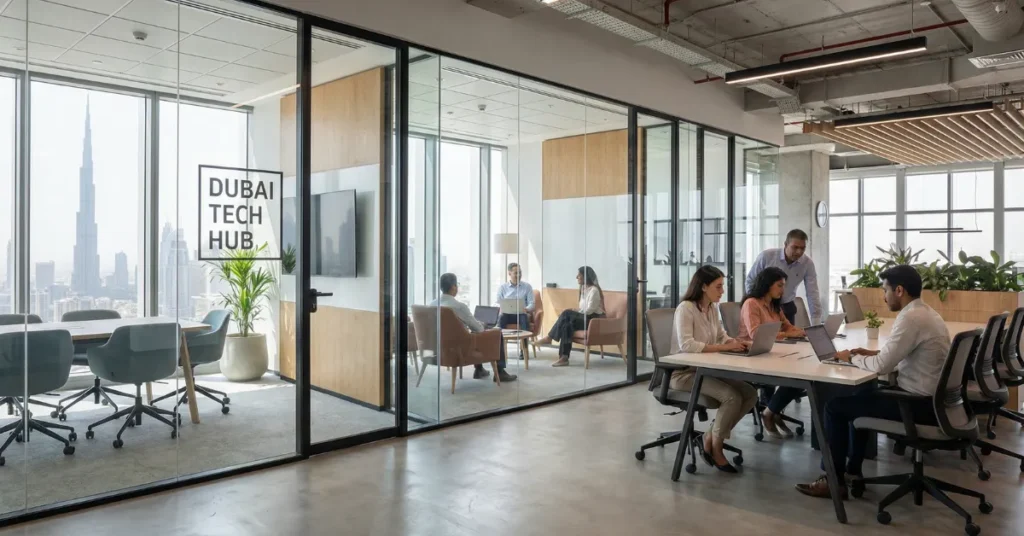
Dubai’s business-friendly environment and expanding free zone network are driving consistent demand for small office spaces, retail units, and co-working environments. As SME growth in Dubai accelerates, commercial property investment is becoming increasingly accessible to mid-range investors.
Growth Factors
The rise in startups and freelancers creates ongoing demand for flexible, right-sized office spaces rather than traditional large-floor-plate leases. Free zone expansion across areas like Dubai Silicon Oasis, DIFC, and Dubai South is pulling new businesses into the ecosystem and with them, demand for supporting commercial real estate.
Best Investment Options
The most accessible entry points in the commercial property Dubai segment include small office units in established free zones, retail shops in community retail strips, and co-working facilities catering to hybrid-work professionals.
ROI Insights
Commercial properties typically offer lease terms of two to five years, which improves cash flow predictability and reduces management overhead. Stable tenants with formal lease agreements and commercial accountability often make office space investment UAE more hands-off than residential alternatives. Yields in this segment commonly range from 7 to 10 percent annually.
How to Choose the Right Real Estate Niche in Dubai
- Define your investment budget clearly before shortlisting properties
- Decide between short-term income (holiday homes, co-living) and long-term stability (affordable housing, commercial)
- Analyze real location demand using RERA data and recent transaction records
- Understand legal requirements, including RERA licensing for short-term rentals and freehold area restrictions for foreign buyers
- Evaluate property management costs, which can range from 10 to 25 percent of gross rental income, depending on the niche
Common Mistakes to Avoid
- Skipping market research and relying on developer marketing materials alone
- Overestimating rental income without accounting for vacancy periods and seasonal dips
- Choosing the wrong location based on price rather than demand dynamics
- Ignoring service charges, which can significantly erode net yields in premium developments
- Poor property management, which directly impacts occupancy, tenant retention, and asset condition
Future Outlook for Profitable Real Estate Niches in Dubai
Dubai’s real estate market is expected to grow steadily through 2026 and beyond, supported by sustained population growth, record tourism numbers, and consistently investor-friendly government policies. Niche segments are positioned to outperform the broader market, especially those aligned with lifestyle shifts, digital work patterns, and the UAE’s economic diversification agenda.
Investors who identify emerging sub-markets early and back them with strong execution are consistently the ones who generate outsized returns.
Our Support with Ripple Business Setup for Real Estate Investment
We guide investors at every stage of entering Dubai’s real estate market. Our team helps with company formation, property investment structuring, and licensing requirements so you can operate smoothly and stay compliant. We also assist with choosing the right business activity, whether you want to manage holiday homes, start a real estate brokerage, or invest through a company structure. For complete support, contact Ripple Business Setup at +971 50 593 8101, email info@ripplellc.ae, or WhatsApp +971 4 250 0833.
FAQs
Which real estate niche is most profitable in Dubai?
Short-term rentals and affordable housing currently deliver the highest ROI for most investor profiles. Short-term rentals offer 8 to 12 percent yields; affordable housing offers lower but more stable returns with minimal vacancy risk.
Is Dubai real estate a good investment in 2026?
Yes, Dubai remains one of the top global property markets due to its tax-free structure, high rental yields, strong infrastructure, and transparent regulatory environment under RERA.
What is the average ROI in Dubai property?
Returns typically range from 6 to 12 percent annually, depending on the niche, location, and property management quality. Short-term rentals and co-living tend to sit at the higher end of that range.
Can foreigners invest in Dubai real estate?
Yes, Foreign nationals can purchase property in designated freehold areas with full ownership rights. Popular freehold zones include Dubai Marina, Downtown Dubai, Palm Jumeirah, and JVC.
Conclusion
Profitable real estate niches in Dubai are shifting toward targeted, demand-driven segments that reflect how people live, work, and travel today. Short-term rentals, affordable housing, co-living spaces, luxury waterfront properties, and commercial real estate for SMEs each offer distinct advantages — and each suits a different investor profile.
Disclaimer: This content is for informational purposes only and does not constitute financial or investment advice. Market conditions may change, so we recommend consulting with qualified professionals before making investment decisions.