

Starting a small trading business in the UAE can be an attractive option for entrepreneurs who want to sell physical products locally or online. However, having a Trading Licence UAE does not automatically mean you can sell every type of product. The products you can legally trade depend on the commercial activity stated on your licence, the licensing jurisdiction, and whether your products require additional regulatory approvals. Your sales channel also matters if you plan to sell through a website, marketplace, Amazon, Instagram, or another online platform.
Before purchasing inventory, it is important to understand what your licence permits, whether you need an ecommerce licence UAE, and how customs, VAT, payment gateways, and inventory management fit into your business model.
What Is a Trading Licence UAE?

A Trading Licence UAE allows a business to conduct approved commercial trading activities. The specific activity selected during company formation determines the type of products and commercial operations the business can undertake. For example, an entrepreneur planning to sell clothing should choose an activity that covers the intended products. Someone importing and selling electronics may need a different or more specific commercial activity and may also need to consider product compliance requirements.
The key point is simple: a trade licence is not a universal permission to sell every product.
The licensing authority, business jurisdiction, approved activity, product category, and applicable regulations all need to align with the actual business model.
What Does a Small Trading Licence Usually Cover?
Depending on the approved activity, a small trading company may deal in products such as:
- Clothing and fashion accessories
- Shoes, bags, and lifestyle products
- Household and home décor items
- Stationery and office supplies
- Gifts and general merchandise
- Selected electronics and accessories
- Mobile and computer accessories
- Selected beauty and personal-care products
- Toys and children’s products
- Other permitted consumer goods
The exact scope should always be confirmed against the activity stated on the licence before you begin selling.
What Can You Sell With a Small Trading Licence in the UAE?
A small trading licence can support many different product-based business models. The important consideration is whether your selected commercial activity matches the products you intend to sell.
For example, an entrepreneur may establish a small trading company to sell home accessories through a website and marketplace. Another entrepreneur may import mobile accessories and sell them through online channels.
In both cases, the entrepreneur should identify the products first and then select the appropriate business activity rather than choosing a generic licence and assuming it covers everything.
Common Product Categories for Small Trading Businesses
Some commonly suitable categories include:
- Fashion: clothing, scarves, bags, footwear, and accessories
- Home products: décor, storage products, kitchen accessories, and selected household goods
- Electronics accessories: cables, chargers, cases, and other permitted accessories
- Stationery: notebooks, office supplies, and school-related products
- Gifts: decorative items, gift products, and selected lifestyle merchandise
- Beauty products: certain cosmetics and personal-care products, subject to applicable requirements
- Toys: selected toys and children’s merchandise, subject to applicable standards
- General merchandise: products covered by the specific approved trading activity
The phrase “general trading” should also be used carefully. A broader activity may provide wider commercial scope, but regulated or restricted products can still require separate approvals.
Can You Sell Products Online With a Trading Licence?
Yes, a small trading company can build an online sales model, but the business must ensure that its licensing activities and online operations match the products being sold. This is where terms such as ecommerce licence UAE and online seller licence become relevant. Licensing structures differ between UAE jurisdictions, so entrepreneurs should not assume that every online business requires exactly the same licence.
You may sell through:
- Your own ecommerce website
- Online marketplaces
- Social media
- Other approved digital sales channels
The important distinction is that opening an online store does not replace the underlying business licensing requirement.
Ecommerce Licence UAE vs Traditional Trading Licence
An ecommerce-focused setup may be suitable for a business whose primary model involves digital sales, while another company may hold an appropriate trading activity and use its website or marketplace accounts as sales channels.
Before choosing between options, consider:
- What products will you sell?
- Will you import the products?
- Will you sell only within the UAE?
- Will you use Amazon or another marketplace?
- Will you operate your own website?
- Will you sell through Instagram or WhatsApp?
- Will you require a payment gateway?
- Will you need warehousing or inventory storage?
The right structure depends on the actual business model rather than simply whether the business has a website.
Can a Small Trading Company Sell on Amazon and Other Marketplaces?
Marketplace selling is one of the most common models for a small trading company in the UAE. An entrepreneur may purchase inventory from local suppliers or overseas manufacturers and sell products through Amazon or another marketplace. However, marketplace registration and product compliance are separate considerations from obtaining a business licence.
Amazon Seller Setup: What Should You Check First?
Before starting an Amazon seller setup, review the following:
- Confirm that your business activity covers the products.
- Check whether the products require special approval.
- Verify supplier invoices and product documentation.
- Understand import and customs requirements if you source internationally.
- Plan your inventory and fulfilment process.
- Review VAT obligations as sales increase.
- Arrange suitable banking and payment settlement arrangements.
- Check the marketplace’s own seller and product requirements.
This approach can prevent a common problem: creating a seller account first and discovering later that a particular product requires documentation or approvals that the business has not arranged.
Can You Sell Through Instagram and Social Media?
Social media can be an effective sales channel for small UAE businesses. A fashion seller, gift business, accessories store, or lifestyle brand may use Instagram to display products, communicate with customers, and direct buyers toward an ordering or payment process. However, an Instagram account does not itself replace a business licence. An Instagram business licence is therefore better understood in the context of the underlying commercial activity and the jurisdiction where the business is established. The company should have appropriate authorisation for the products and activities it conducts.
What About WhatsApp and Other Social Channels?
Small businesses may also receive customer enquiries and orders through WhatsApp or other social platforms.
Before accepting regular commercial orders, consider:
- Whether the business activity covers the products
- How customers will pay
- How invoices will be issued
- How deliveries will be handled
- How returns and refunds will be recorded
- How sales records will be maintained
A social-media presence can support a legitimate trading business, but it should operate as part of the wider compliant business structure.
What Products Cannot Be Sold Under a Basic Trading Activity?
Not every product fits within an ordinary trading activity. Certain categories can involve additional approvals, registration, certification, technical requirements, labelling rules, or other regulatory controls. These requirements can apply even when the company already has a valid trade licence.
Examples can include:
- Food and beverages
- Cosmetics
- Medical products and devices
- Pharmaceuticals
- Certain chemicals
- Tobacco-related products
- Other regulated or restricted goods
The safest approach is to follow a three-step check:
Licence activity → Regulatory approval → Product/import compliance
For example, a business may have a valid trading licence but still need additional product approvals before importing or selling a regulated item.
Does Your Trading Licence Cover Importing Products Into the UAE?
A trading business can source products internationally, but importing introduces another layer of requirements. Customs procedures, product classification, shipping documents, invoices, and applicable product controls can affect the import process. This matters particularly for entrepreneurs building an ecommerce business around imported inventory. A product may be commercially attractive but still create delays if the business has not checked its import and compliance requirements in advance.
What Should Small Businesses Check Before Importing?
Before ordering a large shipment, review:
- Product classification
- Supplier invoices
- Shipping documents
- Customs requirements
- Product-specific approvals
- Labelling requirements where applicable
- Storage arrangements
- Import and clearance procedures
A small business can reduce unnecessary costs by checking these requirements before placing a large inventory order.
VAT and Trading Licence UAE: What Small Sellers Should Know
A Trading Licence UAE and VAT registration are separate matters. Holding a trade licence does not automatically mean that the business must register for VAT immediately. For UAE-resident businesses, mandatory VAT registration generally applies when the value of taxable supplies and imports exceeds AED 375,000 over the previous 12 months or is expected to exceed that amount in the next 30 days. Voluntary registration may be available when the relevant taxable supplies, imports, or taxable expenses exceed AED 187,500, subject to the applicable rules.
Online sellers should therefore monitor their turnover rather than waiting until filing problems arise.
When Should a Small Trading Business Think About VAT?
A small trading business should:
- Track taxable sales from the beginning
- Monitor its turnover regularly
- Keep sales invoices and purchase records
- Record marketplace transactions
- Maintain supplier documentation
- Review imports and related VAT treatment
- Check registration requirements as the business grows
The Federal Tax Authority also lists a valid trade licence and supporting business documents among the information that may be required for VAT registration.
Payment Gateway, Inventory and Other Practical Requirements
Getting a licence is only the first part of operating a product business. A successful trading business also needs a practical system for accepting payments, managing inventory, recording purchases, processing orders, and handling returns.
Payment Gateway
If you operate an ecommerce website, a payment gateway can allow customers to pay electronically. Businesses should be prepared to provide appropriate company and banking information during the payment-provider onboarding process. The exact requirements depend on the provider and business model.
Inventory Management
Inventory becomes especially important when a small business sells through several channels. For example, a business selling 200 units through its website, Amazon, and Instagram needs to know how many units remain available after each sale.
Good inventory management helps you track:
- Product quantities
- SKU numbers
- Purchase costs
- Sales
- Returns
- Damaged stock
- Marketplace inventory
- Reorder levels
This can also make bookkeeping and VAT record-keeping easier.
Small Trading Licence UAE: Real-World Examples
Example 1 — Online Fashion Store
Suppose an entrepreneur wants to sell clothing and accessories through an ecommerce website and Instagram. The entrepreneur should first identify the products and select a suitable trading activity. The business can then plan its website, payment gateway, inventory, delivery process, and customer records.
If sales increase, the business should also monitor its VAT position.
Example 2 — Electronics Accessories Seller
Consider a small company importing phone cases, charging cables, and other accessories. In this case, the entrepreneur needs to consider both the commercial activity and the import process. Customs documentation, supplier invoices, product requirements, inventory storage, and marketplace rules can all affect the operation.
Example 3 — Beauty Product Seller
A beauty-products business requires additional caution. The entrepreneur should not assume that a general trading activity alone covers every cosmetic or personal-care product. Product-specific requirements may apply, so the business should verify the applicable approvals before importing or selling inventory.
How to Choose the Right Trading Activity for Your Products
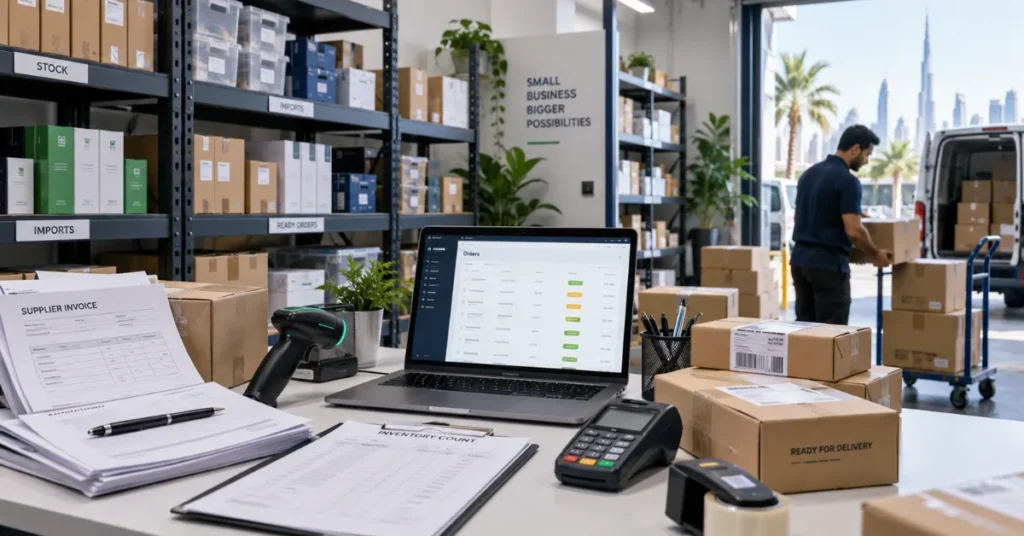
The best approach is to start with your products rather than starting with a licence package.
Step 1 — List Your Exact Products
Write down the products you plan to sell. Include the product type, brand, source country, expected sales channel, and whether you will import them.
Step 2 — Match Products to the Licence Activity
Check whether the intended commercial activity covers your products. Do not rely only on a general description such as “trading.” The actual activity selected during licensing matters.
Step 3 — Check Additional Approvals
If your products fall into a regulated category, identify the relevant approval requirements before buying inventory.
Step 4 — Plan Your Online Sales Channels
Decide whether you will sell through:
- Your website
- Amazon
- Other marketplaces
- Physical retail channels
Step 5 — Plan VAT, Customs and Inventory
Finally, consider the financial and operational side of the business. A strong setup should account for licensing, customs, VAT, inventory, payment collection, bookkeeping, and ongoing compliance together.
Common Mistakes Small Trading Businesses Should Avoid
Small businesses can face unnecessary costs when they focus only on obtaining the cheapest licence.
Avoid these common mistakes:
- Choosing a licence before identifying your products
- Assuming one trading activity covers every product
- Ignoring product-specific approvals
- Starting online sales without checking the applicable requirements
- Importing products without reviewing customs procedures
- Failing to track inventory
- Waiting too long to review VAT obligations
- Mixing personal and business financial records
- Selecting an activity that does not reflect the actual business model
The right licence should support the business you actually intend to operate.
Trading Licence UAE Checklist Before You Start Selling
Before launching your small trading business, check:
- ✅ Business activity matches your products
- ✅ Product restrictions have been reviewed
- ✅ Additional approvals have been identified
- ✅ Online selling requirements have been checked
- ✅ Marketplace requirements have been reviewed
- ✅ Customs procedures are understood if importing
- ✅ VAT position is being monitored
- ✅ Inventory records are ready
- ✅ Payment arrangements are planned
- ✅ Supplier invoices and sales records are maintained
This checklist can help you identify gaps before you spend heavily on stock or launch your online store.
How Ripple Business Setup Can Help With Your Trading Licence UAE
Choosing a suitable trading activity is an important step when starting a small product-based business in the UAE. At Ripple Business Setup, we can help you review your intended products, understand the relevant licensing options, and consider how your sales model fits with your setup. We can also guide you through documentation and practical business setup considerations so you can make an informed decision before launching.
Phone: +971 50 593 8101
Email: info@ripplellc.ae
WhatsApp: +971 4 250 0833
Website: www.ripplellc.ae
FAQ
What can I sell with a Trading Licence UAE?
You can sell products covered by your approved commercial activity. Common categories can include clothing, accessories, household goods, stationery, gifts, and selected consumer products. Regulated products may require additional approvals.
Can I sell products online with a UAE trading licence?
Yes, a suitably licensed business can operate online, provided its approved activity and applicable jurisdictional requirements support the intended products and sales model.
Can I sell on Amazon with a small trading company?
Yes, a small trading company can pursue marketplace selling, but it should first confirm that its business activity covers the products and then meet the marketplace’s seller, documentation, and product requirements.
Do I need an ecommerce licence UAE to sell online?
Not every online business follows the same licensing structure. Requirements can vary by jurisdiction and business model. The important point is to ensure that the licence and approved activity match the actual online business.
Can I sell products through Instagram in the UAE?
Instagram can be used as a sales and marketing channel, but the social-media account does not replace the underlying business licensing requirements. The business should be properly authorised for its commercial activity.
Can I import products with a trading licence?
Importing products involves customs and potentially product-specific requirements in addition to the trade licence. Businesses should check classification, documentation, approvals, and clearance procedures before importing.
Does a trading licence automatically mean I need VAT registration?
No. VAT registration is governed by UAE VAT rules and the applicable registration thresholds. For UAE-resident businesses, the current mandatory threshold is AED 375,000, while the voluntary threshold is AED 187,500, subject to the applicable rules.
What is the best licence for a small trading company?
There is no single licence that suits every small trading company. The appropriate option depends on your products, sales channels, location, import requirements, and other business needs. Start by identifying what you will sell and how you will sell it, then select the appropriate activity and structure.
Conclusion
A small trading business in the UAE can sell a wide range of products, but the right answer depends on the specific commercial activity, product category, jurisdiction, and applicable approvals. If you plan to sell online, your considerations go beyond the licence itself. You may also need to plan for marketplaces, payment gateways, inventory, customs, VAT, supplier documentation, and product compliance.
The best approach is to identify your products and business model first, then make sure your Trading Licence UAE and supporting requirements match what you actually intend to sell. This can help you avoid costly changes later and build a stronger foundation for your small trading company.
Disclaimer: This article provides general information about UAE trading licences and related business considerations. Licensing, product approvals, customs, and tax requirements can vary by activity and jurisdiction, so businesses should verify current requirements before proceeding.