

The UAE offers strong opportunities for businesses providing interior design, decoration, renovation and fit-out services. UAE interior design and fit-out company setup requires more than obtaining a general trade licence. The licence activity must match the services the business actually provides, while certain technical or project-related works may require additional approvals. The setup process also differs depending on whether you establish the company in mainland UAE or a free zone and whether you provide design consultancy only or carry out physical fit-out work.
What Is an Interior Design and Fit-Out Company in the UAE?
An interior design and fit-out company can provide services ranging from space planning and design concepts to the physical completion of commercial or residential interiors. The exact scope of work matters because interior design consultancy and fit-out contracting are not necessarily the same business activity. A company that only develops design concepts may have different licensing and professional requirements from a company that executes construction, modification or installation work.
Typical services can include:
- Interior space planning and design
- Interior design consultancy
- Interior decoration
- Furniture and finish selection
- Architectural and interior drawings
- Project coordination
- Office fit-outs
- Retail and showroom fit-outs
- Residential interior works
- Hospitality interior projects
- Renovation and modification works
- Joinery and installation, where separately permitted
Businesses should select activities according to their actual services rather than choosing a broad activity simply because it appears similar.
Interior Design vs Fit-Out Activities
The distinction between design and execution is important when planning an interior design company setup in the UAE.
| Activity | Typical Scope | Key Consideration |
|---|---|---|
| Interior Design Consultancy | Design concepts, space planning and design documentation | Professional and activity requirements may apply |
| Interior Decoration | Decorative finishes, furnishings and styling | Activity must match the services provided |
| Fit-Out Contracting | Physical installation, modifications and construction-related works | Additional contracting or technical requirements may apply |
| Design and Build | Design services combined with project execution | The company may need activities and approvals covering both areas |
For example, a business that prepares concepts and design drawings for a client may operate differently from a contractor that removes walls, changes electrical systems, installs partitions or carries out other physical modifications.
Dubai Municipality maintains specific requirements for certain engineering consultancy activities. Its published technical requirements, for example, identify Interior Design Engineering Services as an engineering consultancy activity and specify qualification and experience requirements for the relevant technical professional.
This is why entrepreneurs should confirm the exact activity and professional requirements with the relevant licensing and regulatory authority before starting operations.
Which Licence Is Required for an Interior Design Company in the UAE?
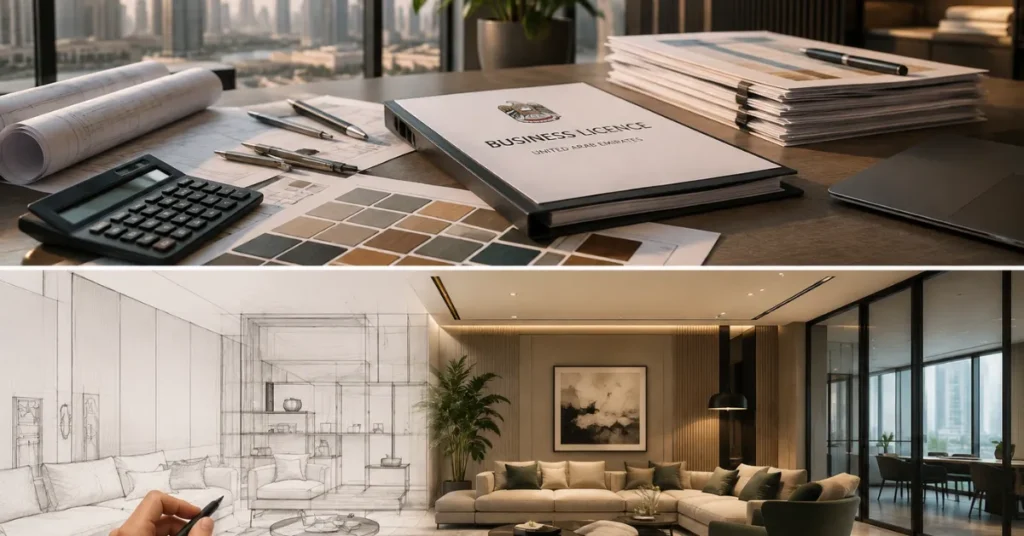
There is no single licence that automatically covers every type of interior design and fit-out service in the UAE. The appropriate licence depends on the company’s legal structure, emirate, business activity and the nature of the work it intends to perform.
For an interior design business in the UAE, the first step is to define whether the company will provide:
- Design consultancy only
- Interior decoration services
- Design and project management
- Fit-out execution
- Construction-related modifications
- Joinery or installation
- A combination of design and execution
The licensing authority then determines the appropriate activity and any additional requirements connected with that activity.
For mainland businesses, the UAE Government’s current business setup guidance requires investors to complete the applicable licensing steps, secure the required lease documentation and obtain approvals from other government entities where necessary. The required approvals depend on the nature of the business activity.
Interior Design Licence in Dubai
Businesses planning an interior design licence in Dubai should first identify the precise activity they intend to conduct. Where the activity falls within regulated engineering consultancy, Dubai Municipality’s requirements can include technical staff qualifications and professional experience. For example, its published requirements for Interior Design Engineering Services list a bachelor’s qualification in architecture or interior design engineering and five years of experience for the relevant engineer.
This does not mean that every business describing itself as an interior design company automatically falls under the same engineering consultancy requirements. The applicable requirements depend on the licensed activity and services offered.
A practical approach is to establish the following before applying:
- What type of design services will the company provide?
- Will it prepare technical or engineering drawings?
- Will it only advise clients or also execute works?
- Will it employ technical professionals?
- Will it undertake commercial, residential or hospitality projects?
- Will it perform construction-related modifications?
Answering these questions helps prevent a mismatch between the company’s licence and its actual operations.
Fit-Out Contractor Licence in Dubai
A fit-out company in Dubai needs to consider its execution activities separately from design consultancy. Fit-out work can involve construction-related modifications, partitions, ceilings, flooring, electrical systems, plumbing, HVAC, joinery and other installations. Depending on the work involved, the company may need an appropriate contract or other arrangement and may also require project-specific approvals.
Dubai Municipality currently provides services covering decorative works, building modifications, construction approvals and related activities. For example, its services include a self-permit route for certain decorative works carried out by building contracting and decor companies, subject to the applicable conditions. Therefore, a company should not assume that an interior design licence automatically authorises every type of fit-out or construction work.
The safest approach is to define the intended scope of work first and then confirm the required licence activities and technical approvals with the relevant authority.
Mainland vs Free Zone for an Interior Design & Fit-Out Business
Choosing between a mainland and free zone structure is an important decision for an interior design and fit-out company in the UAE. The right option depends on the business activity, target clients, project locations, and whether the company will perform work directly on-site across the UAE.
A mainland company can be suitable for businesses that want to serve clients and undertake projects within the local UAE market. Free zones can also provide attractive company formation options, but the ability to perform regulated or physical work outside the free zone depends on the activity, project and applicable UAE requirements.
| Factor | Mainland | Free Zone |
|---|---|---|
| Local UAE market | Generally suitable for direct local operations | May require additional arrangements for certain mainland activities |
| Business activities | Selected through the relevant mainland licensing authority | Depends on the selected free zone and permitted activities |
| Fit-out contracting | Subject to the correct activity and applicable approvals | Activity and mainland project requirements must be checked |
| Office requirements | Depend on the activity and licensing authority | Depend on the free zone package and activity |
| Foreign ownership | UAE rules generally allow full foreign ownership for many activities | Generally available, subject to free zone rules |
| Project work | Suitable where the company holds the required activity and approvals | Mainland project requirements may apply |
The UAE Government states that investors can establish mainland companies with full foreign ownership for many commercial activities, subject to applicable restrictions and strategic-impact activities.
For a fit-out business, the decision should therefore focus on more than licence price. Entrepreneurs should check whether the chosen structure allows them to carry out their intended work and obtain the project approvals required by clients, developers and government authorities.
Interior Design and Fit-Out Business Activities to Choose
Selecting the correct interior design business activity in the UAE is one of the most important parts of the setup process. The activity should accurately describe what the company will sell and perform. A company providing design consultancy should not automatically assume that the same activity covers physical construction or fit-out execution.
Depending on the proposed business model, activities may relate to:
- Interior design consultancy
- Interior design engineering services
- Interior decoration
- Fit-out or contracting services
- Project management
- Building maintenance-related services
- Joinery or furniture-related activities
- Installation services
The exact activity names and approval requirements vary between licensing authorities and emirates. Entrepreneurs should therefore verify the current activity description before submitting the licence application.
How to Choose the Right Business Activity
Use the following questions to identify the appropriate setup:
- Will the company only provide design services?
A consultancy-focused activity may be appropriate if the company does not execute physical works. - Will the company carry out fit-out work?
If employees or subcontractors will execute physical works, check whether a separate contracting or execution activity is required. - Will the company prepare technical drawings?
Engineering or regulated design work may trigger professional qualification and approval requirements. - Will the company modify electrical, plumbing or HVAC systems?
These works can involve additional technical or project-specific requirements. - Will the company manufacture or install joinery?
Manufacturing, workshop and installation activities may need to be considered separately. - Will the company work directly on mainland projects?
Confirm that the chosen structure, licence and approvals allow the proposed project work.
This activity-first approach reduces the risk of paying for a licence that does not adequately cover the company’s actual operations.
Municipality Approvals for Interior Design and Fit-Out Companies
Obtaining a business licence and obtaining approval for a specific fit-out project are two different matters. A company may have a valid trade or professional licence but still need project-specific approvals before carrying out certain works at a building, office, shop, villa or other property.
In Dubai, the applicable requirements depend on the type and scope of work. Dubai Municipality provides services relating to building permits, modifications, decorative works and other construction-related activities.
Depending on the project, requirements can involve:
- Building or modification approvals
- Approved drawings
- Decorative work permits
- Electrical work requirements
- Plumbing work requirements
- HVAC-related requirements
- Fire and life-safety requirements
- Civil Defence approvals where applicable
- Developer or building-management approval
- Inspection and completion requirements
Not every fit-out project requires every approval listed above. The requirements depend on the property, location, scope of work and relevant authority.
When Do Municipality Approvals Apply?
Municipality or other technical approvals may become relevant when the project involves:
- Changes to the internal layout
- Partition installation or removal
- Structural modifications
- Ceiling or flooring works
- Electrical modifications
- Plumbing changes
- HVAC modifications
- Fire-safety systems
- Commercial shop or office fit-outs
- Works that require a building or modification permit
For example, a simple decorative refresh may have different requirements from a retail fit-out involving new partitions, electrical systems, air-conditioning changes and fire-safety installations.
Businesses should also check whether the property owner, developer or building management has its own approval process. A government approval does not necessarily replace a building’s internal approval requirements.
Documents Required for UAE Interior Design & Fit-Out Company Setup
The documents required depend on the emirate, licensing authority, legal structure and selected activity. Common setup documents can include:
- Passport copies of shareholders or owners
- Emirates ID and UAE residency documents where applicable
- Proposed trade name
- Initial approval documentation
- Constitutional documents where applicable
- Office lease or tenancy documentation
- Professional qualification documents where required
- Technical staff documents for regulated activities
- Additional approvals or NOCs where required
- Corporate documents for corporate shareholders
For regulated design or engineering activities, technical staff qualifications and experience can form part of the approval process. Dubai Municipality’s published requirements demonstrate that certain engineering consultancy activities have specific technical staff criteria.
The exact document checklist should be confirmed with the relevant licensing and approval authority before submission because requirements can change according to the activity and project.
Step-by-Step UAE Interior Design & Fit-Out Company Setup Process
Once the business model and activities are clear, the setup process can follow a structured sequence.
1. Define Your Business Activities
Decide whether the company will provide interior design, consultancy, decoration, fit-out execution, project management, joinery or a combination of these services.
2. Choose Mainland or Free Zone
Select the jurisdiction based on your target market, activities, office requirements and intended project work.
3. Reserve the Trade Name
Choose a compliant trade name and complete the name reservation process with the relevant licensing authority.
4. Obtain Initial Approval
Submit the required documents and obtain initial approval before completing the remaining licensing requirements.
5. Secure Office Space
Arrange an office or other approved business premises according to the requirements of the licensing authority and selected activity.
6. Obtain External Approvals
If the selected activity or proposed operations require technical, professional or municipality approvals, complete them before beginning regulated work.
7. Receive the Business Licence
Complete the applicable licensing requirements and obtain the business licence.
8. Complete Immigration and Corporate Setup
Set up the relevant establishment and immigration files and complete employee or investor visa procedures where applicable.
9. Prepare for Project Operations
Before accepting projects, establish accounting procedures, contracts, supplier controls, insurance arrangements and tax compliance processes.
The exact sequence can vary depending on the emirate, authority, legal structure and business activity.
How Much Does It Cost to Set Up an Interior Design & Fit-Out Company in the UAE?
There is no single fixed interior design company setup cost in the UAE. The final cost depends on the emirate, licensing authority, activity, office arrangement, number of visas and additional technical approvals.
Typical cost categories include:
- Business licence fees
- Trade name and initial approval fees
- Office or tenancy costs
- External or technical approval fees
- Professional approval costs, where applicable
- Establishment and immigration costs
- Employee and investor visas
- Insurance
- Accounting and tax compliance
- Design software and business equipment
- Project-specific permits and approvals
A business should separate company formation costs from project operating costs. Buying tools, hiring site workers, purchasing materials or paying subcontractors can represent significant operating expenses, but they are not normally part of the basic licence fee.
What Affects Fit-Out Company Setup Costs?
Several factors can change the overall setup budget:
- Emirate and licensing authority
- Mainland or free zone structure
- Selected business activities
- Office size and location
- Number of employees and visas
- Professional qualification requirements
- Technical staff requirements
- External approvals
- Insurance requirements
- Whether the company performs design only or physical fit-out work
For this reason, businesses should obtain a cost estimate based on their actual activities and operating model instead of relying on a generic advertised package price.
UAE Tax and VAT Requirements for Interior Design & Fit-Out Businesses
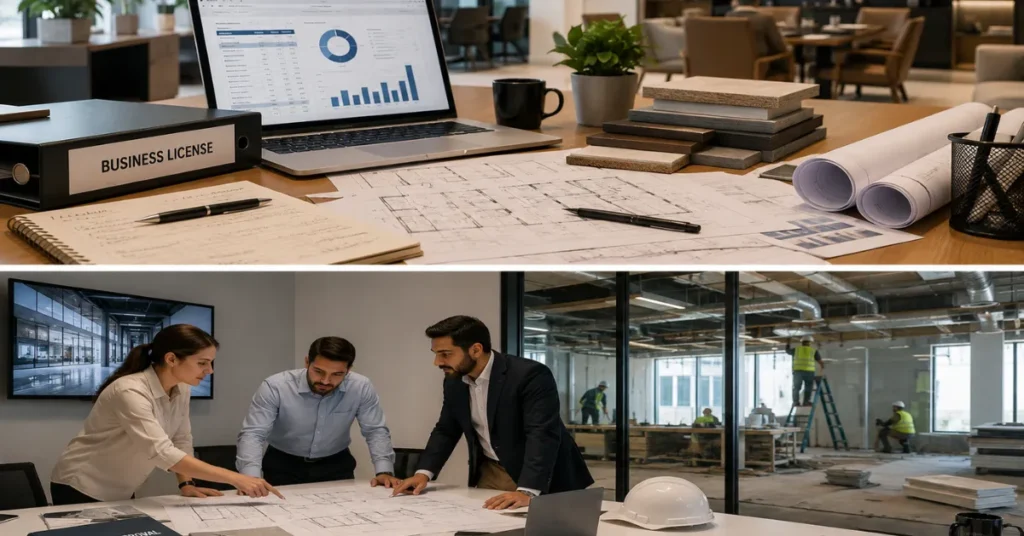
An interior design or fit-out company must assess its UAE tax obligations from the beginning. VAT and Corporate Tax are separate obligations and should not be treated as the same registration.
VAT Registration
For a UAE-resident business, VAT registration becomes mandatory when the value of taxable supplies and imports exceeds AED 375,000 over the previous 12 months or is expected to exceed that threshold within the next 30 days. A business may generally apply for voluntary VAT registration when its taxable supplies, imports or taxable expenses exceed AED 187,500, subject to the applicable rules. The Federal Tax Authority confirmed these thresholds on its current VAT registration guidance, updated in April 2026.
For a fit-out company, VAT records should cover items such as:
- Client invoices
- Advance payments
- Materials
- Subcontractor invoices
- Professional services
- Business expenses
- Credit notes
- VAT collected and recoverable VAT
The VAT treatment of a transaction should be reviewed based on the actual supply, contract and applicable UAE VAT rules.
UAE Corporate Tax
UAE Corporate Tax applies to businesses within the scope of the Corporate Tax Law. Taxable businesses must register with the Federal Tax Authority and meet the applicable filing and payment obligations. The FTA’s current Corporate Tax registration service states that taxable persons must register and obtain a Corporate Tax Registration Number. For an interior design or fit-out company, proper records are particularly important because the business may have substantial project costs, subcontractor expenses, materials, employee costs and customer balances.
Companies should assess their Corporate Tax position based on their legal form, taxable income, accounting records and applicable tax rules rather than assuming that a particular licence automatically determines their tax liability.
Accounting Challenges for UAE Fit-Out Companies
Fit-out businesses often manage several projects at the same time, which makes project-level accounting important.
Key accounting areas include:
- Project revenue
- Material costs
- Labour costs
- Subcontractor costs
- Retention amounts
- Customer advances
- Progress billing
- Variation orders
- Work in progress
- Accounts receivable
- Supplier payments
- Project profitability
A company may appear profitable at the overall business level while an individual project is losing money because of material price increases, additional labour, delays or unapproved variations.
Example: Tracking Profit on a Fit-Out Project
Consider a hypothetical Dubai office fit-out project with a contract value of AED 500,000.
The company estimates:
- Materials: AED 160,000
- Labour: AED 80,000
- Subcontractors: AED 100,000
- Other project costs: AED 40,000
Total estimated project costs would be AED 380,000, leaving an estimated gross project margin of AED 120,000 before other business-level expenses and applicable taxes.
If the company does not record additional variation work or rising material costs promptly, the actual margin can become much lower. Project accounting allows management to compare the original budget with actual costs and identify problems before they significantly affect cash flow.
Key Compliance Requirements After Company Formation
After receiving the licence, the company must continue meeting its regulatory, tax and financial obligations.
Important areas include:
- Licence renewal
- VAT registration and return filing where applicable
- Corporate Tax registration and filing
- Proper accounting records
- Employee and payroll compliance where applicable
- WPS requirements where applicable
- Insurance
- Project permits and approvals
- Client and subcontractor contracts
- Beneficial owner and corporate records
- Proper retention of financial documents
The business should maintain clear records from the first project rather than trying to reconstruct transactions later.
Common Mistakes When Starting an Interior Design & Fit-Out Company in UAE
New businesses can face avoidable problems when they focus only on obtaining the licence.
1. Choosing the Wrong Business Activity
A design consultancy activity may not automatically cover physical contracting or construction-related work.
2. Assuming a Design Licence Covers Fit-Out Work
The company should verify whether its licence covers the actual execution services it intends to provide.
3. Ignoring Project-Level Approvals
A company licence does not necessarily replace permits or approvals required for a particular project.
4. Underestimating Office and Staffing Requirements
Some regulated activities may have specific technical staff or premises requirements.
5. Mixing Project and Business Expenses
Separating project costs from general administrative expenses improves financial control.
6. Failing to Track Variation Orders
Additional client work should be documented, approved and recorded properly.
7. Delaying VAT or Corporate Tax Compliance
Businesses should monitor their tax obligations from the start rather than waiting until filing deadlines approach.
8. Starting Projects Before Required Approvals
The company should confirm the applicable approvals before beginning work at a client site.
9. Using Weak Client and Subcontractor Contracts
Contracts should clearly define scope, payment terms, variations, timelines, responsibilities and completion requirements.
10. Not Monitoring Project Profitability
Revenue alone does not show whether a fit-out project is profitable. Management should monitor actual costs against the project budget.
UAE Interior Design & Fit-Out Company Setup Example
Suppose an entrepreneur wants to establish a Dubai company that designs and executes office interiors.
The entrepreneur plans to provide:
- Interior concepts
- Space planning
- Design documentation
- Partition installation
- Ceiling and flooring works
- Electrical modifications
- Joinery installation
- Project management
This business has a broader scope than a design-only consultancy. The entrepreneur should therefore identify the appropriate design and execution activities before applying for the licence. The company should then determine which technical, municipality, building-management or other project approvals apply to its work.
Once operations begin, the company should separately track materials, labour, subcontractors, client advances, progress invoices and variation orders.
How to Choose the Right Setup Structure
The most suitable setup depends on what the company actually intends to do.
| Business Model | Main Setup Consideration |
|---|---|
| Interior design consultancy | Appropriate professional/design activity |
| Interior decoration | Activity-specific licensing requirements |
| Fit-out contractor | Contracting or execution activity and applicable approvals |
| Design and build | Design and execution requirements |
| Joinery and installation | Additional activity considerations |
| Commercial fit-out projects | Project-specific technical and authority approvals |
Businesses should confirm the current activity description and approval requirements with the relevant authority before committing to a setup structure.
How Ripple Business Setup Can Help With UAE Interior Design & Fit-Out Businesses
Ripple Business Setup helps UAE interior design and fit-out businesses manage their accounting, VAT and Corporate Tax compliance requirements. Our support can help businesses maintain accurate financial records while tracking project-related income and expenses.
Our services include:
- Bookkeeping and accounting
- VAT registration and return filing
- Corporate Tax compliance support
- Project accounting
- Financial reporting
- Expense and supplier record management
- Tax compliance reviews
- Financial record keeping
For project-based businesses, accurate accounting helps owners monitor project profitability, control costs and maintain reliable financial records.
Contact Ripple Business Setup:
- 📞: +971 50 593 8101
- 📧: info@ripplellc.ae
- 💬: +971 4 250 0833
FAQ
Do I need a licence to start an interior design company in the UAE?
Yes. A business needs an appropriate licence and business activity that matches the services it provides. Additional professional or technical requirements may apply to certain regulated activities.
What licence is required for an interior design company in Dubai?
The required activity depends on the services offered. A design consultancy, interior decoration business and fit-out contractor may have different activity and approval requirements.
Can an interior design company also provide fit-out services?
It may be possible, but the company must confirm that its licensed activities cover the intended execution work. Physical fit-out can also require project-specific approvals.
Do fit-out companies need Dubai Municipality approval?
Certain fit-out and modification projects can require Dubai Municipality or other authority approvals. The exact requirements depend on the type and scope of work and the property involved.
How much does it cost to start an interior design company in the UAE?
There is no universal cost. The total depends on the emirate, licence activity, office, visas, professional requirements and additional approvals.
Can a free zone company undertake fit-out projects in Dubai?
A free zone company should not assume that its free zone licence automatically permits every mainland fit-out activity. The company should verify the relevant licensing, contracting and project requirements before undertaking mainland work.
Is VAT registration required for an interior design company in UAE?
VAT registration is mandatory for a UAE-resident business when taxable supplies and imports exceed AED 375,000 over the relevant period or are expected to exceed that threshold within the next 30 days. Voluntary registration may be available above AED 187,500, subject to the applicable rules.
Does a fit-out company need to register for UAE Corporate Tax?
Businesses that fall within the scope of UAE Corporate Tax must register with the Federal Tax Authority and comply with the applicable tax obligations. The FTA’s current registration guidance confirms that taxable persons are required to register for Corporate Tax.
Disclaimer: This article provides general information about UAE interior design and fit-out company setup. Licensing activities, municipality approvals, tax requirements and other regulatory conditions can vary depending on the emirate, business activity, legal structure and project scope. Requirements may also change over time. Businesses should confirm the latest requirements with the relevant UAE authorities and obtain professional advice before making setup or compliance decisions.