Starting an online store in the UAE involves more than choosing products and creating a website. A practical UAE Online Seller Setup brings together the right business activity, licence, product sourcing, inventory, warehousing, payment gateway, shipping and returns process. Whether you plan to sell through your own online store, a marketplace or social media, you need to understand how each part of the operation connects. Your licence should match your business activity, while your stock and fulfilment model should match your expected order volume.
What Is a UAE Online Seller Setup?
A UAE Online Seller Setup is the process of establishing the legal and operational structure needed to sell products online.
It normally involves several connected decisions:
- Choosing the products you want to sell
- Selecting the appropriate business activity
- Obtaining the required licence and approvals
- Finding reliable suppliers
- Planning initial inventory
- Arranging warehousing or storage
- Setting up an online store or marketplace account
- Preparing a payment gateway
- Organising shipping and delivery
- Creating a returns process
- Maintaining financial and business records
The important point is that an online store is only one part of the business. Your stock, payments, fulfilment and compliance processes also need to work together.
Online Store vs Marketplace Selling
You can sell through your own website, an established marketplace, social media channels or a combination of these. An online store gives you greater control over the customer experience, product presentation and checkout process. Marketplace selling can provide access to an existing customer base but may involve platform-specific requirements, commissions or fulfilment arrangements.
Before choosing your channel, decide where your customers are and how you intend to fulfil their orders.
Do You Need an E-Commerce Licence to Sell Online in the UAE?
Yes, online businesses generally need the appropriate licence and approvals for their intended activity. The UAE Government states that e-commerce activities require an appropriate licence. The UAE’s e-commerce framework covers online transactions conducted through websites, applications, social media platforms and digital marketplaces.
The exact setup can vary depending on the emirate, business activity, product category and jurisdiction you choose.
What Does an E-Commerce Licence Generally Cover?
An e-commerce licence UAE setup can support businesses that sell goods or services through digital channels, subject to the activities and approvals attached to the licence.
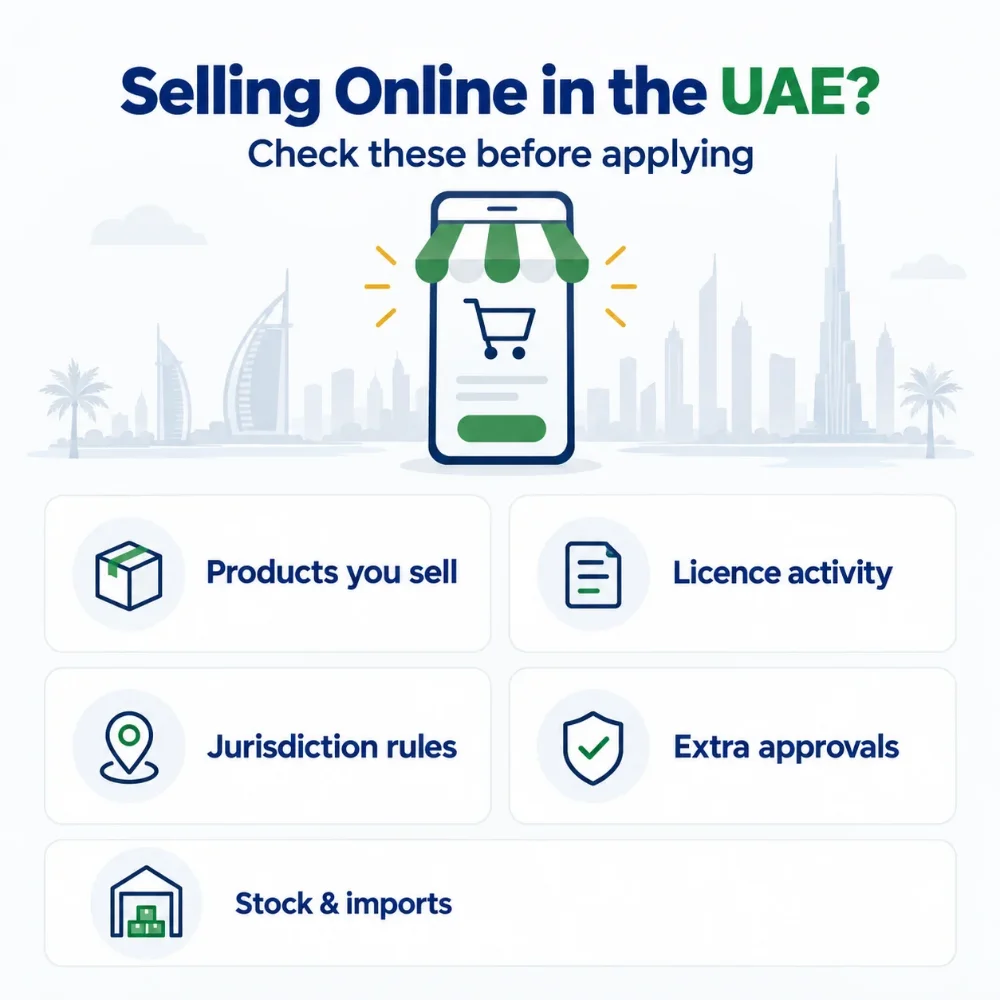
Before applying, check:
- The exact products you plan to sell
- The business activity listed on the licence
- Whether your chosen jurisdiction permits that activity
- Whether your products require additional approvals
- Whether you plan to import products
- Where your stock will be stored
- Whether you will sell locally, internationally or both
A business should not select a licence simply because it contains the word “e-commerce.” The activity should reflect what the business actually does.
Online Selling Licence UAE: What Should You Check?
When reviewing an online selling licence UAE option, consider the complete business model rather than only the initial licence cost.
Ask:
- Does the activity match your products?
- Can you operate through your intended sales channels?
- Are additional approvals required?
- Can you import or distribute the products?
- What premises or storage arrangements will you need?
- Will the setup support your planned expansion?
For example, a seller of ordinary consumer products may have different requirements from a business selling regulated, health-related or specialised products.
How to Choose Stock for Your UAE Online Business
Once the legal structure is clear, the next challenge is deciding what to sell and how much stock to purchase. New sellers often make the mistake of buying large quantities before testing demand. This can tie up cash and create storage problems if products sell slowly.
Product Sourcing for UAE Online Sellers
Your product sourcing strategy can involve:
- UAE wholesalers
- Local manufacturers
- International suppliers
- Distributors
- Private-label manufacturers
- Dropshipping suppliers
- Third-party fulfilment providers
Compare suppliers based on more than purchase price.
Consider:
- Product quality
- Minimum order quantity
- Supplier lead time
- Shipping costs
- Import requirements
- Packaging
- Payment terms
- Replacement policies
- Supplier reliability
A product that looks inexpensive at the supplier level may become less profitable after freight, customs-related costs, packaging, storage and delivery are included.
How Much Stock Should a New Online Seller Keep?
There is no single inventory quantity that works for every business. Your initial stock should reflect expected demand, supplier lead time, available cash, storage capacity and product characteristics. For example, a new seller testing several home accessories might start with smaller quantities across a wider product range rather than purchasing a large amount of one untested item.
This approach can make inventory management easier while giving the business real sales data before it commits more capital.
Inventory Management and Warehousing in the UAE
After purchasing stock, you need a system to know what you have, where it is and when to reorder it. Good inventory management helps prevent both stockouts and unnecessary overstocking.
Home, Office, Warehouse or Fulfilment Centre?
The appropriate storage model depends on your business size and products. A small seller may require limited storage initially, while a growing business may need dedicated warehousing or third-party fulfilment.
Consider:
- Product size
- Number of SKUs
- Daily order volume
- Storage conditions
- Security
- Packing requirements
- Delivery expectations
- Cost per order
Third-party fulfilment can also reduce the operational burden because a fulfilment provider may store products, pick orders, pack parcels and coordinate delivery.
Basic Inventory Management for New Sellers
At minimum, maintain records of:
- Opening stock
- Supplier purchases
- Sales
- Damaged products
- Returned products
- Replacements
- Closing stock
- Reorder levels
Do not treat returned products as automatically available for resale. Inspect them first and update your inventory records according to their actual condition.
Shipping and Delivery for UAE Online Sellers
Shipping can directly affect your selling price and profit margin. Before launching your store, decide how customers will receive their orders and who will manage fulfilment.
Choosing a Shipping Model
Common options include:
- Standard courier delivery
- Same-day delivery
- Next-day delivery
- Local delivery
- International shipping
- Third-party fulfilment
Your choice should reflect the products you sell and the expectations of your target customers.
A low-value product with expensive delivery may become difficult to sell profitably. For this reason, calculate the full fulfilment cost before finalising your pricing.
What Determines Your Shipping Cost?
Shipping and delivery costs can depend on:
- Parcel weight
- Parcel dimensions
- Delivery destination
- Delivery speed
- Number of parcels
- Packaging
- Return shipments
- International destination, where applicable
Build these costs into your financial planning rather than treating shipping as an afterthought.
What Should Your Shipping Policy Include?
A clear shipping policy should explain:
- Delivery locations
- Estimated delivery times
- Shipping charges
- Tracking arrangements
- Failed delivery procedures
- Damaged shipment procedures
- Return shipping arrangements
Clear information can also reduce customer confusion after an order is placed.
Returns, Refunds and Customer Orders
Returns are part of online retail, so they should be considered before your first sale. Your process should explain what happens when a customer receives an incorrect, damaged or unwanted product.
Create a Clear Returns Process
Define:
- Which products can be returned
- Return eligibility
- Return timeframes
- Product condition requirements
- Refund procedures
- Exchange procedures
- Return shipping responsibilities
UAE consumer-protection rules also apply to e-commerce transactions. Online sellers should provide accurate product information and operate transparently.
Track Returns in Your Inventory
A simple return workflow can look like this:
Order → Delivery → Return request → Product inspection → Refund or exchange → Inventory update
This prevents returned stock from disappearing from your records and helps you identify recurring product-quality or fulfilment issues.
Payment Gateway and Online Order Payments
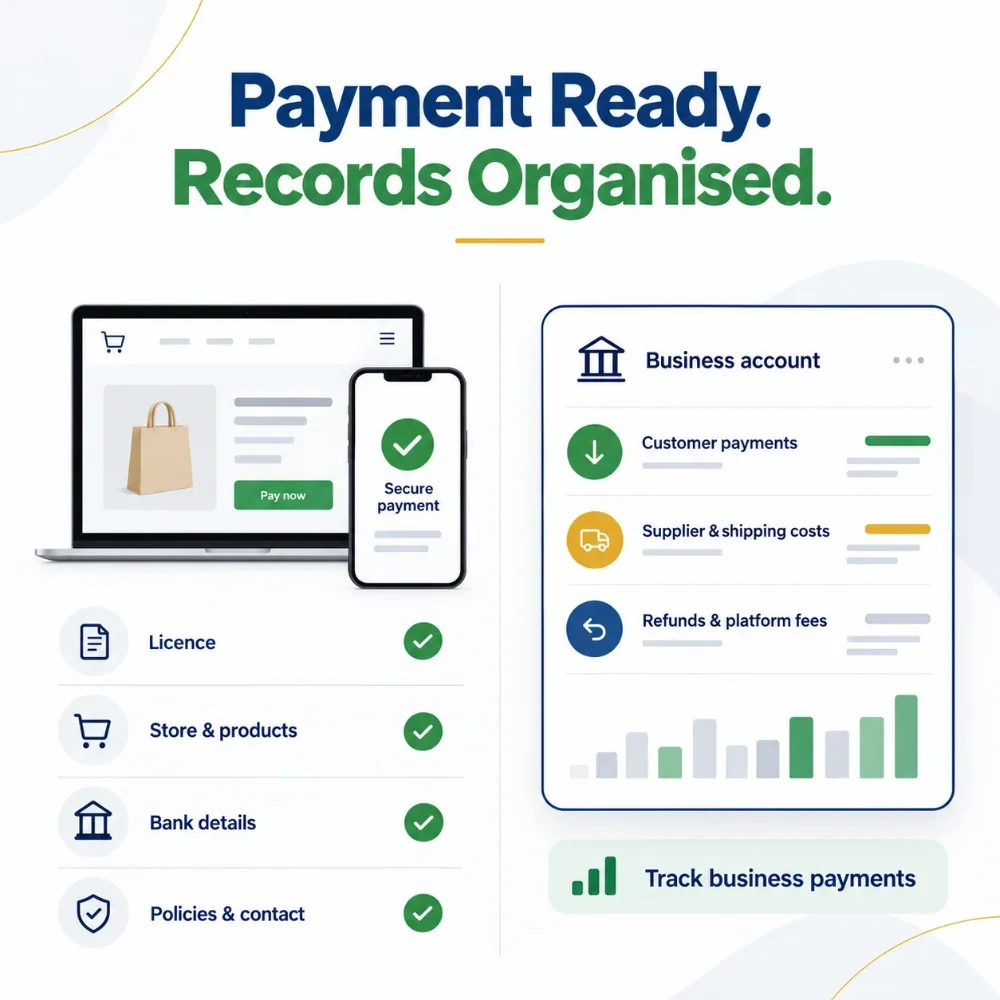
A payment gateway can allow customers to pay through your online checkout. Before applying, prepare the information and documents required by your selected payment provider.
What to Prepare Before Applying for a Payment Gateway
Depending on the provider, you may need information such as:
- Business licence
- Company details
- Website or store
- Product information
- Bank account details
- Refund policy
- Privacy policy
- Terms and conditions
- Contact information
Your website should also clearly explain what you sell and how customers can contact you.
Keep Business Payments Separate
Keep business income and expenses organised separately from personal spending.
Track:
- Customer payments
- Supplier payments
- Shipping expenses
- Packaging
- Refunds
- Platform charges
- Marketing costs
- Other operating expenses
Good records make it easier to understand your actual product margins and manage tax and accounting obligations.
UAE E-Commerce Business Setup: A Practical Step-by-Step Process
A structured approach can make the setup easier to manage.
Step 1 — Decide What You Will Sell
Start with the product category and target customer.
Ask:
- Who will buy the product?
- Where are those customers located?
- How frequently might they purchase?
- How much will delivery cost?
- Does the product require special approvals?
Step 2 — Select the Appropriate Business Activity and Licence
Review the intended activity before committing to stock or supplier contracts. The UAE Government notes that businesses conducting e-commerce activities need the appropriate licences and approvals.
Step 3 — Set Up Your Business and Banking
Complete the required company formation and licensing steps, then organise business banking and payment collection. Keep your legal and financial records organised from the beginning.
Step 4 — Source and Organise Stock
Select suppliers, negotiate suitable quantities and decide where you will store your inventory. Do not buy more stock than your cash flow and storage arrangement can comfortably support.
Step 5 — Set Up Your Store and Payment Gateway
Prepare your:
- Product pages
- Product descriptions
- Prices
- Checkout
- Payment options
- Shipping policy
- Returns policy
- Privacy information
- Customer contact details
Step 6 — Arrange Shipping and Returns
Choose a delivery provider and test the complete process.
Place a test order and check:
Payment → Order confirmation → Picking → Packing → Courier collection → Delivery → Customer communication
Step 7 — Launch and Monitor
After launch, track:
- Orders
- Stock levels
- Delivery times
- Returns
- Refunds
- Product margins
- Customer acquisition costs
- Slow-moving products
Your first few months should generate useful data for improving the business model.
How Much Does It Cost to Start an Online Business in the UAE?
There is no universal startup cost because the total depends on the business model.
Budget for categories such as:
- Business licence
- Government and setup fees
- Office or workspace requirements
- Product inventory
- Warehousing
- Website or online store
- Payment processing
- Packaging
- Shipping
- Returns
- Marketing
- Accounting and compliance
Why Your Business Model Changes the Startup Cost
A low-inventory seller may have relatively limited stock requirements but still needs to budget for licensing, store setup, payment processing and marketing. An own-inventory seller may need additional capital for stock, storage, packaging and fulfilment. A marketplace seller may also need to account for platform-related charges and fulfilment costs.
The most useful approach is therefore to prepare a business-specific budget instead of relying on one advertised setup figure.
Tax and Record-Keeping Considerations for Online Sellers
Online selling does not remove normal UAE tax and record-keeping considerations. For VAT, UAE-resident businesses generally become required to register when taxable supplies and imports exceed the mandatory threshold of AED 375,000 over the relevant 12-month period, or are expected to exceed it within the next 30 days. Voluntary registration is available from AED 187,500, subject to the applicable rules.
Corporate Tax obligations can also apply depending on the seller’s legal form and circumstances. The Federal Tax Authority requires taxable persons to register for Corporate Tax in accordance with the applicable legislation and registration rules.
Keep sales, purchases, expenses, inventory and payment records from the start rather than trying to reconstruct them later.
Common UAE Online Seller Setup Mistakes to Avoid
- Choosing a licence without checking the actual business activity
- Buying too much stock before testing demand
- Ignoring warehousing costs
- Calculating profit without including delivery expenses
- Forgetting return and replacement costs
- Mixing personal and business finances
- Launching before testing the payment process
- Failing to maintain inventory records
- Ignoring product-specific approval requirements
- Assuming a marketplace account replaces the need for proper business setup
UAE Online Seller Setup Checklist
Before Launch
- Choose your products
- Identify your target customers
- Confirm the appropriate business activity
- Select the required licence
- Check product-specific approvals
- Choose suppliers
- Plan initial stock
- Decide where products will be stored
- Set up your online store or marketplace account
- Prepare payment arrangements
- Select a shipping provider
- Create shipping and returns policies
- Organise business records
After Launch
- Track stock levels
- Monitor delivery performance
- Record returns and refunds
- Reconcile customer payments
- Review product margins
- Identify slow-moving products
- Reorder according to actual demand
- Review compliance and tax obligations
Example: A Small UAE Online Seller Setup
Consider an entrepreneur planning to sell home accessories online.
Instead of immediately purchasing a large quantity, the entrepreneur can first identify the products, target customers and expected order volumes.
The next stage is to review the appropriate business activity and licensing requirements. After that, the seller can select suppliers, purchase an initial quantity, arrange storage and prepare an online store.
The operating flow could then look like:
Product selection → Licence/activity check → Supplier → Initial stock → Storage → Online store → Payment gateway → Courier → Customer delivery → Returns → Inventory update
This approach connects the legal setup with the practical side of running the store.
FAQs
Do I need a licence to sell products online in the UAE?
Online sellers generally need the appropriate business licence and approvals for their intended activity. The exact requirements can vary according to the emirate, business activity, products and chosen jurisdiction.
Is an e-commerce licence required for marketplace selling?
Selling through a digital marketplace does not automatically remove the need to meet applicable licensing and regulatory requirements. Check that your business activity and licence support your intended selling model.
Can I store my online business stock at home?
This depends on the business structure, premises rules, product type and applicable requirements. Confirm the permitted storage arrangement before using residential space for commercial inventory.
How should I manage inventory for a small online store?
Start with a simple system that records purchases, sales, returns, damaged products and closing stock. Set reorder levels based on actual sales and supplier lead times.
How do UAE online sellers handle shipping?
Sellers can use courier services, local delivery providers or third-party fulfilment arrangements. The appropriate model depends on order volume, product characteristics, delivery locations and cost.
Do online sellers need a payment gateway?
If customers will pay through your online checkout, a payment gateway or another suitable digital payment arrangement may be required. Requirements vary between payment providers and business models.
What should I consider before starting an online business in the UAE?
Review the business activity, licence, product requirements, supplier, inventory, storage, payment method, shipping, returns, accounting and tax obligations before launching.
Final Takeaway
A successful online business needs more than a website and a product catalogue. Your UAE Online Seller Setup should connect the legal structure with stock, inventory management, payment collection, shipping and customer service. Start by confirming your business activity and licensing requirements. Then build a practical sourcing, inventory, fulfilment and returns process around the customers you intend to serve.
If you are planning to start an online business UAE, Ripple Business Setup can help you review your intended business activity, setup structure, documents, licensing considerations and related requirements before you proceed.
About Ripple Business Setup
At Ripple Business Setup, we help UAE businesses navigate company formation, government procedures, licensing, banking preparation and ongoing compliance requirements. We can also help review your planned activity, setup structure, documents and related requirements so you can make informed decisions before proceeding.
Phone: +971 50 593 8101
Email: info@ripplellc.ae
WhatsApp: +971 4 250 0833
Website: www.ripplellc.ae
Disclaimer: This article provides general information about UAE online business setup and should not be treated as legal, tax or regulatory advice. Licensing, product approvals and tax obligations can vary according to the business activity, emirate, jurisdiction and individual circumstances.