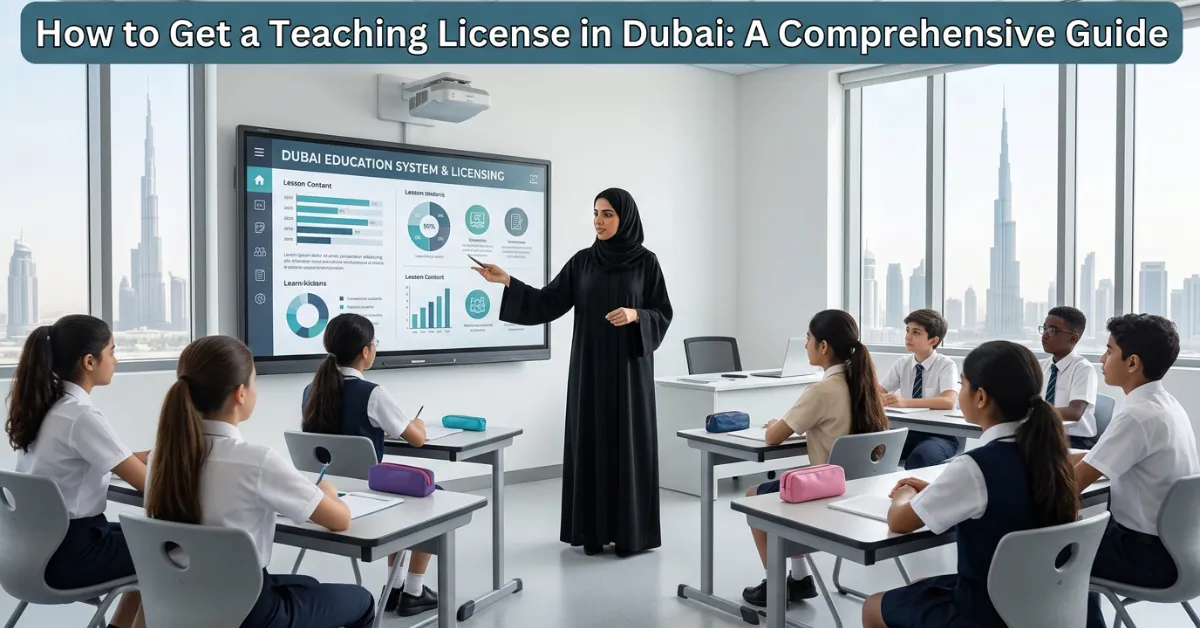
If you are a qualified teacher planning to work in Dubai, obtaining your teaching license in Dubai is not just a formality; it is a legal requirement. Whether you are a fresh graduate or an experienced educator relocating from abroad, the UAE has a structured licensing system designed to maintain high educational standards across all schools. This guide walks you through every step of the process, from eligibility checks to final approval, so you can focus on what you do best: teaching.
What is a Teaching License in Dubai?
A teaching license in Dubai is an official credential that authorises a qualified individual to teach in a licensed educational institution within the emirate. It is issued or recognised by regulatory bodies such as the Knowledge and Human Development Authority (KHDA) for Dubai, or the Ministry of Education (MOE) at the federal level through the Teacher Licensing System (TLS).
It is important to understand the distinction between a teaching qualification and a teaching license. A qualification such as a Bachelor of Education (B.Ed) or a Postgraduate Certificate in Education (PGCE) is what you earn from a university. A license, on the other hand, is what the UAE authorities issue after verifying that your qualifications, experience, and subject knowledge meet local standards. Teacher certification in Dubai follows this two-layer model, and both layers are essential before you can legally stand in front of a classroom.
KHDA teaching requirements apply specifically to private and international schools in Dubai, while the MOE governs public and federal institutions. Understanding which authority applies to your situation saves time and avoids unnecessary back-and-forth with the wrong department.
Who Needs a Teaching License in Dubai?
The UAE teaching license rules apply to a broad range of education professionals, including:
- School teachers working in private and international schools
- Early childhood educators at nurseries and kindergartens are regulated by KHDA
- Subject specialists, including those teaching languages, arts, or vocational subjects
- School leadership roles such as head of department, vice-principal, or principal
Even if you have 15 years of international teaching experience and a strong portfolio, you still need to meet UAE standards. The licensing process is not designed to question your competence it is designed to verify that your qualifications translate to the local educational context. Many teachers who move from the UK, US, Australia, or India find the process straightforward once they understand what is required. Qualifications to teach in Dubai must be formally recognised; experience alone does not substitute for proper licensing.
Key Authorities That Issue Teaching Licenses in Dubai
Three key bodies govern teacher licensing in the UAE, and each has a distinct role:
KHDA (Knowledge and Human Development Authority) oversees private schools, nurseries, and other educational institutions in Dubai. It sets standards, conducts inspections, and registers teaching staff. If you plan to work in a private or international school in Dubai, KHDA is your primary regulatory touchpoint.
MOE (Ministry of Education UAE) operates at the federal level and is responsible for teacher licensing across all emirates. For teachers working in MOE-regulated schools, or those pursuing a nationally recognised UAE teacher license, the MOE portal is the starting point.
TLS (Teacher Licensing System) is the digital platform through which the UAE Ministry of Education teacher license process runs. Teachers register, submit documents, schedule exams, and track their applications entirely through TLS UAE teaching system. Think of it as the single window for all teacher licensing interactions at the federal level.
Basic Requirements to Get a Teaching License in Dubai
Before starting your application, make sure you meet the eligibility criteria for teaching in Dubai. Here is what you generally need:
- A Bachelor’s degree in a relevant subject area (e.g. Mathematics, Science, English, Early Childhood Education)
- A recognised teaching qualification such as a B.Ed, PGCE, or equivalent
- Proof of English language proficiency (IELTS or equivalent), particularly for non-native English speakers
- Teaching experience typically one to two years, depending on the school type and role
- A clean background check or police clearance certificate from your home country
The teacher qualification requirements in the UAE do have some flexibility. For example, some international schools may accept equivalent teaching certifications from certain countries, and early years educators may follow a slightly different pathway than secondary school subject teachers. Always confirm specific requirements directly with KHDA or your prospective employer, as eligibility criteria for teaching in Dubai can vary based on curriculum type British, American, IB, or MOE.
Step-by-Step Process to Get a Teaching License in Dubai

Here is how to apply for a teaching license in Dubai, from start to finish:
Step 1 – Check Your Eligibility
Start by reviewing whether your academic qualifications and teaching certification align with UAE standards. Cross-check your degree subject against the subject you intend to teach. Mismatches, for example, a degree in History but teaching Geography, can cause delays or require additional documentation. At this stage, also confirm whether you need KHDA registration, MOE licensing, or both.
Step 2 – Register on the TLS System
Visit the MOE portal and create your account on the Teacher Licensing System (TLS). You will complete a personal profile, upload your documents, and select the relevant license category. The TLS system is entirely online, which means you can complete this step from anywhere in the world before you even arrive in the UAE.
Step 3 – Submit Required Documents
Upload all required documents through the TLS portal. Every document must be attested, that is, officially verified, before submission. The teacher documents Dubai checklist typically includes degree certificates, teaching qualification certificates, experience letters, a passport copy, and passport-size photographs. Incomplete submissions are a leading cause of delays, so double-check every item before you click submit.
Step 4 – Pass the Teacher Licensing Exams
The UAE teacher licensing exam has two components: a pedagogy test that assesses your teaching methods and educational theory knowledge, and a subject-specific test that evaluates your expertise in your chosen teaching subject. Both exams are conducted online through the TLS system. If you fail one component, you can retake it but this adds time to the process, so prepare thoroughly using available study guides and past papers.
Step 5 – Get Approval and License Issued
After passing the exams and completing document verification, the MOE or KHDA will review your application. If everything is in order, your teaching license will be issued and made available through the TLS portal. You can then share your license details with your employer, who will verify them before finalising your employment contract.
Documents Required for Teaching License in Dubai
Gather the following before starting your application:
- Passport copy (valid for at least six months)
- Academic certificates, degree and transcripts (attested)
- Teaching qualification certificates B.Ed, PGCE, or equivalent (attested)
- Experience letters from previous employers on official letterhead
- Police clearance certificate from your home country
- Passport-size photographs (recent, white background)
Document attestation UAE is a critical step that many applicants underestimate. All educational certificates must go through a specific attestation chain: verification by the issuing university, then the relevant national authority (e.g. UKVI in the UK, HEC in Pakistan), and finally by MOFA UAE (Ministry of Foreign Affairs). Skipping or shortcutting any step in this chain will result in your documents being rejected. Allow at least two to four weeks for full attestation, especially if you are based outside the UAE.
Cost of Getting a Teaching License in Dubai
The total teaching license cost in Dubai varies depending on your country of origin, the number of documents requiring attestation, and whether you need to retake any exams. Here is a general breakdown of UAE teacher certification fees:
| Fee Type | Estimated Range (AED) |
| TLS Registration Fee | Free – 200 |
| Pedagogy Exam Fee | 200 – 500 |
| Subject-Specific Exam Fee | 200 – 500 |
| Certificate Attestation (per doc) | 150 – 400 |
| Translation (if needed) | 100 – 300 |
These figures are estimates and subject to change. Always verify the latest fee schedule on the official TLS or KHDA portal before submitting your application.
How Long Does It Take to Get a Teaching License?
Teaching license processing time in Dubai typically ranges from 4 to 12 weeks, depending on several factors. When everything goes smoothly, documents are fully attested, exams are passed on the first attempt, and the application is complete, the process can be completed in around four to six weeks. Delays can push this closer to three months.
Key factors that affect the timeline include:
- Document verification and attestation timelines (varies by country of origin)
- Exam scheduling availability on the TLS portal
- Back-and-forth communications if documents are incomplete or incorrect
- Peak application periods (typically August–September before the school year begins)
Practical advice: start your application at least three months before your intended start date. Many teachers make the mistake of beginning the process after receiving a job offer, which can delay their employment start and, in some cases, cause employers to look for alternative candidates.
Common Challenges and How to Overcome Them
Many applicants encounter one or more of these teaching license problems UAE:
- The degree subject does not match the intended teaching subject. Resolve this by providing additional qualifications or a supplementary letter from the MOE
- Failing a licensing exam, use officially available preparation materials and consider hiring a subject tutor before retaking
- Document attestation delays start the process early, and use a professional attestation service if needed
- Lack of a formal teaching qualification, explore fast-track PGCE or equivalent programmes recognised by UAE authorities
The most common pitfall is attempting to rush the process without ensuring documents are fully compliant. Working with experienced professionals who are familiar with UAE document standards can significantly reduce errors and delays.
Can You Teach in Dubai Without a License?
Teaching without a license in Dubai is not permitted. Schools found employing unlicensed teachers risk regulatory penalties, while teachers working without proper authorisation can face contract termination, visa complications, and difficulties obtaining a license later. There are no legitimate long-term workarounds to this requirement.
Some schools may allow a temporary arrangement while your license application is in progress particularly if you are newly arrived and have submitted your application. However, this is at the school’s discretion and is not a legal exemption. Always clarify your employment status in writing with your employer, and ensure your application is submitted as early as possible.
Benefits of Having a Teaching License in Dubai

Beyond the legal requirement, a teaching license unlocks genuine career advantages:
- Legal employment: You can sign an official contract with any KHDA-regulated or MOE-approved school
- Better salary packages: Licensed teachers consistently command higher salaries than unlicensed candidates
- Career growth opportunities: Many leadership roles explicitly require a valid UAE teaching license
- Job security: Licensed status makes you a more competitive candidate in a competitive market
- Professional credibility: Your expertise is formally recognised by the UAE education system
Think of the teaching career in Dubai as compounding over time. Teachers who invest in proper licensing early in their UAE career tend to progress faster, earn more, and have greater stability than those who delay or try to navigate around the requirement.
Tips to Increase Your Chances of Approval
- Pursue internationally recognised teaching qualifications (PGCE, B.Ed) from accredited institutions, which are accepted smoothly by UAE authorities
- Prepare thoroughly for both the pedagogy and subject-specific licensing exams before scheduling them
- Start the MOFA attestation process for all documents well in advance. This step takes the most time
- Accumulate relevant teaching experience before applying; even a year of formal classroom experience strengthens your application
- Keep digital copies of all submitted documents; you may need to resubmit or reference them later
How We Support Your Teaching License in Dubai
Getting a Teaching License in Dubai can feel complex, especially with document attestation, exam requirements, and approvals from different authorities. We simplify the process by guiding you at every step. Our team helps with eligibility checks, document preparation, MOFA attestation, and registration on the UAE Teacher Licensing System. We also assist in avoiding common delays and errors, so you can focus on your teaching career. For professional support, contact Ripple Business Setup at +971 50 593 8101, email info@ripplellc.ae, or WhatsApp +971 4 250 0833.
FAQs
Is a teaching license mandatory in Dubai?
Yes, All teachers working in private and international schools in Dubai must hold a valid teaching license. Schools regulated by KHDA are required to ensure all teaching staff are properly licensed. Teaching without a license puts both the teacher and the school at regulatory risk.
Can I apply without a B.Ed or PGCE?
It depends on the licensing pathway and school type. Most routes require a formal teaching qualification. However, some international schools with particular curriculum models may accept candidates with strong subject degrees and significant classroom experience. Consult the specific requirements on the TLS portal or seek professional advice before assuming you qualify without a teaching qualification.
How long is the license valid?
UAE teaching licenses are generally valid for three years and must be renewed before expiry. Renewal typically requires evidence of continuing professional development and may involve additional checks.
Can foreign teachers apply?
Absolutely. The UAE actively recruits internationally trained teachers. Foreign teachers follow the same licensing pathway as UAE residents. The key difference is that documents issued abroad must go through the full MOFA UAE attestation process before they can be submitted through TLS.
What happens if I fail the exam?
You can retake the exam. The TLS system allows multiple attempts, though each retake typically incurs an additional fee and adds time to your overall application timeline. Use the official preparation resources available through the MOE portal to increase your chances of passing on the first attempt.
Conclusion
Getting a teaching license in Dubai is a well-defined process and absolutely achievable with the right preparation. You need the right qualifications, attested documents, and to pass two licensing exams through the TLS system. Yes, it takes time. But every step has a clear purpose, and the outcome, legal employment, professional recognition, and a rewarding career in one of the world’s most dynamic education markets, is well worth the effort.
Disclaimer: This content is for informational purposes only and does not constitute legal or professional advice. Requirements for obtaining a Teaching License in Dubai may change based on UAE regulations. Always consult official authorities or licensed consultants for the latest updates.