
Starting a Construction Materials Trading business in Dubai requires the right business activity, an approved licence, suitable workspace, and a clear plan for sourcing and selling products. Dubai Silicon Oasis (DSO) may be an option for entrepreneurs who want to establish a trading company in Dubai, but the right setup depends on the products they intend to trade and the customers they plan to serve. A DSO construction materials trading licence allows a company to conduct the trading activities specified on its approved licence, subject to applicable regulations. Before applying, business owners should confirm the relevant activity codes, registration requirements, total setup expenses, and any additional permissions needed for importing or distributing building materials.
What Is a DSO Construction Materials Trading Licence?
A construction materials trading licence authorises a company to trade the building supplies listed under its approved business activities. Depending on the activities approved by the licensing authority, the business may buy, sell, distribute, or arrange the import and export of construction-related products.
Dubai Silicon Oasis is part of the Dubai Integrated Economic Zones Authority (DIEZ) ecosystem. However, applicants should confirm the current licensing process and eligibility requirements with the relevant DSO licensing authority before submitting an application.
Products a construction materials trading company may wish to trade include:
- Cement, aggregates, and related building supplies
- Steel products and metal construction components
- Tiles, flooring, and sanitaryware
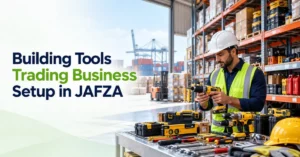
- Hardware, tools, and construction accessories
- Other building and finishing materials covered by the approved activity
The exact activity matters. A trading licence does not automatically authorise construction contracting, engineering consultancy, installation, or every type of regulated product trading.
Why Choose Dubai Silicon Oasis for Construction Materials Trading?
Dubai Silicon Oasis offers a business environment within Dubai’s wider commercial and technology ecosystem. It may suit entrepreneurs who need a Dubai base for coordinating suppliers, wholesale orders, business relationships, and international trade.
Before selecting DSO, consider how the location fits your operating model.
- Business connectivity: A Dubai presence can help you coordinate with contractors, distributors, suppliers, and corporate buyers.
- Workspace options: Check the office or workspace arrangements available for your chosen licence and whether they meet the authority’s requirements.
- Business structure: Confirm the permitted legal form, shareholder arrangements, and activities before registration.
- Trading requirements: Consider whether your business needs storage, a warehouse, transport arrangements, or third-party logistics services.
For example, a company sourcing tiles from overseas and selling them to UAE building contractors may need a different operational setup from a business that keeps large quantities of cement and steel in a warehouse.
The best location is therefore not necessarily the one with the lowest advertised licence fee. It is the one that fits your products, customers, logistics, and regulatory obligations.
What Construction Materials Trading Activities Can You Register in DSO?
Your registered activity should match the products and services you intend to offer. When applying for a Dubai Silicon Oasis trading licence, prepare a clear list of the goods you plan to buy and sell.
Potential product categories to discuss with the licensing authority include:
- Building and construction materials
- Construction hardware and tools
- Steel and metal building products
- Flooring, tiles, and sanitary products
- Building supplies for wholesale distribution
- Import and export of approved construction-related goods
These are examples of product groups to verify, not a confirmed list of DSO activity codes. The authority must confirm the exact activity name, code, and permitted scope.
Is a General Trading Licence Suitable?
A general trading activity may suit businesses that intend to trade multiple product categories, but its availability and permitted scope must be confirmed. Do not assume that general trading automatically covers every construction material or regulated product.
If you plan to provide installation, maintenance, construction, or engineering services alongside product sales, ask whether you need additional approved activities or separate permissions.
Getting this right before registration can help you avoid amendments, delays, and unexpected expenses later.
What Are the Requirements for a DSO Construction Materials Trading Licence?
The documents required for a DSO construction materials trading licence depend on the legal structure, ownership arrangement, business activity, and applicable approval process.
Applicants should prepare for the following requirements:
- Passport copies and identification documents for shareholders and managers, as requested.
- Proposed company name and selected business activity.
- Shareholder, director, and ownership details.
- Completed application forms and incorporation documents.
- Registered address or eligible workspace arrangement.
- Additional company documents for corporate shareholders, where applicable.
- External approvals or compliance documents if the selected products or activities require them.
The licensing authority may request further documents depending on the application.
It is also important to distinguish company registration documents from requirements that may arise later. A bank may request business plans, supplier agreements, invoices, proof of funds, and information about the expected movement of money. Customs authorities or product regulators may require separate registrations or supporting documents.
Preparing these requirements early can make the process more organised.
How to Get a Construction Materials Trading Licence in DSO
The process generally involves selecting the right activity, preparing the company structure, submitting the application, and completing the required registration formalities. Confirm the current sequence with the relevant authority because procedures may vary.
Step 1: Confirm Your Business Activity
List the products you intend to trade, your expected customers, and whether you will import, export, wholesale, or distribute goods. Ask the authority to confirm the appropriate activity code and any additional permissions.
Step 2: Choose the Company Structure
Confirm the permitted legal form and decide who will own and manage the company. Provide accurate shareholder and management details.
Step 3: Reserve Your Trade Name
Choose a company name that meets the applicable naming requirements. Submit it for approval through the relevant registration process.
Step 4: Submit the Application and Documents
Complete the application and provide the required identification, ownership, activity, and incorporation information. Respond to requests for clarification or additional documentation.
Step 5: Arrange the Required Workspace
Select an office or workspace option that meets the conditions of your chosen licence. If you need a warehouse for construction materials, confirm the relevant property, storage, and operational permissions separately.
Step 6: Obtain the Licence and Complete Post-Setup Tasks
After completing the required approvals and payments, obtain the licence and incorporation documents. Then assess whether you need immigration or visa services, a corporate bank account, customs registration, tax registration, or product-specific approvals.
A company should begin trading only when it has the required licence and any additional permissions applicable to its activities.
How Much Does a DSO Construction Materials Trading Licence Cost?
The total cost of a DSO construction materials trading licence depends on the current fee schedule and the company’s requirements. There is no single price that can reliably cover every business structure, workspace arrangement, and visa requirement.
Include these expenses when preparing your budget:
- Initial registration and licence fees
- Trade name or application charges, where applicable
- Office or workspace expenses
- Visa, establishment, and immigration-related charges, if required
- Additional approvals or customs-related expenses, where applicable
- Accounting, tax compliance, and other professional services
- Annual licence renewal and recurring business costs
How Can You Estimate Your Total Setup Budget?
Start by obtaining an itemised quotation for the intended business activity and legal structure. Then add the workspace, visa, and operational expenses relevant to your business.
For example, a business that purchases materials from overseas and ships them directly to customers may have different storage requirements from a wholesaler that keeps steel, tiles, or other bulky products in a warehouse.
Ask whether the quotation includes all mandatory registration charges, which services are optional, and which expenses recur annually.
Important: Verify current DSO fees directly with the relevant authority or an authorised adviser before relying on a quoted amount. Avoid making a financial decision based solely on an advertised starting price.
Can a Foreign Investor Own a Construction Materials Trading Company in DSO?
Foreign investors may be eligible to establish companies in Dubai free zones, subject to the applicable legal structure, activity rules, and registration conditions. Before proceeding, confirm the ownership requirements for your proposed DSO company, including shareholder documentation, management details, and any conditions attached to the selected activity. Company ownership and residence eligibility are separate matters. If you require UAE residence visas for yourself or your employees, check the applicable visa process, eligibility criteria, and available allocation.
Also remember that establishing a free zone company does not automatically grant unrestricted permission to carry out every business activity throughout the UAE. Mainland sales and regulated operations may require additional arrangements or approvals.
Import, Export, Customs, and Mainland Trading Considerations
Construction materials businesses often depend on international suppliers and local distribution networks. A licence is only one part of the process if your company plans to import goods, store materials, or sell to customers outside its free zone.
Before trading, check the following:
- Customs registration: Determine whether you need an importer or exporter code and which customs procedures apply to your goods.
- Product compliance: Verify whether the materials require conformity documents, technical certificates, permits, or other approvals.
- Shipping documentation: Prepare the invoices, packing lists, transport documents, and other records relevant to each shipment.
- Storage and logistics: Confirm that the chosen facility is suitable for the type and quantity of materials you intend to handle.
- Mainland sales: Check the applicable legal route for supplying mainland UAE customers, including any customs, distributor, permit, or mainland licensing requirements.
For example, a company importing building materials and selling them to a Dubai contractor should confirm the applicable customs and commercial arrangements before accepting orders.
Do not assume that a DSO free zone licence alone permits unrestricted mainland distribution. The correct route depends on the goods, transaction structure, and current regulations.
Tax and Compliance Obligations After Company Setup
A construction materials trading company must assess its UAE tax and ongoing compliance responsibilities after incorporation.
Corporate Tax
UAE Corporate Tax registration and filing obligations depend on the company’s legal status and applicable tax rules. Free zone companies are not automatically exempt from Corporate Tax. A Qualifying Free Zone Person must satisfy the relevant legal conditions to benefit from the applicable 0% rate on qualifying income; other taxable income may be subject to different treatment.
Refer to the Federal Tax Authority’s Corporate Tax registration service for official registration guidance.
Value Added Tax (VAT)
For UAE-resident businesses, mandatory VAT registration generally applies when the value of taxable supplies and imports exceeds ₨ 375,000 over the previous 12 months or is expected to exceed that threshold in the next 30 days. Voluntary registration may be available when the applicable threshold of ₨ 187,500 is met. The rules and calculations should be checked against the company’s circumstances.
See the Federal Tax Authority’s VAT registration guidance.
Other Ongoing Responsibilities
Keep accurate accounting records, maintain invoices and supplier documentation, renew the licence on time, and review any applicable customs, product, ownership-record, and regulatory obligations.
Tax treatment can depend on the transaction and the company’s status, so obtain advice based on the actual business model rather than assuming every free zone company follows the same rules.
Common Mistakes to Avoid When Applying for a DSO Trading Licence
Avoid these common errors when planning your construction materials business setup in Dubai:
- Choosing an unsuitable activity: Confirm the exact products and activity code before applying.
- Overlooking extra permissions: Trading does not automatically include installation, contracting, or engineering consultancy.
- Underestimating costs: Budget for workspace, renewal, visa requirements, and ongoing compliance—not just the initial licence.
- Ignoring product regulations: Check the requirements for the specific materials you intend to import or distribute.
- Assuming unrestricted mainland access: Verify the appropriate route for sales outside the free zone.
- Treating the licence as a bank guarantee: Banks conduct their own risk, identity, source-of-funds, and business-activity checks.
A clear business plan and accurate documentation can help you identify these issues before they disrupt operations.
How Ripple Business Setup Can Help With DSO Company Formation
Choosing the right licence requires more than completing an application. You need to match the registered activity to your products, understand the documentation requirements, and plan for the costs and permissions involved in operating the business. Ripple Business Setup can help you assess your proposed activities, review the company formation process, organise the required documents, and identify questions to resolve with the relevant licensing authority.
Planning a Construction Materials Trading business in Dubai? Contact Ripple Business Setup to discuss your proposed activities, company structure, workspace needs, and documentation before starting your application.
- Phone: +971 50 593 8101
- Email: info@ripplellc.ae
- WhatsApp: +971 4 250 0833
- Website: www.ripplellc.ae
Frequently Asked Questions
1. How much does a construction materials trading licence cost in DSO?
The cost depends on the approved activity, company structure, current registration fees, workspace, and visa requirements. Request an itemised quotation from the relevant licensing authority before finalising your budget.
2. What documents are required for a DSO trading licence?
Applicants generally need shareholder identification, ownership and management details, a proposed company name, business activity information, application forms, and any required workspace or incorporation documents. Additional requirements may apply.
3. Can a DSO company import construction materials into Dubai?
Potentially, subject to the company’s approved activities and applicable customs procedures. The business should confirm customs registration, import documentation, and any product-specific conformity requirements before shipping goods.
4. Can a DSO-licensed company sell building materials on the Dubai mainland?
The appropriate legal and commercial route must be confirmed for the goods and sales arrangement. A free zone licence alone should not be treated as automatic permission for unrestricted mainland trading.
5. Can foreign investors establish a construction materials trading company in DSO?
Foreign investors may be eligible, subject to the selected legal structure, activity requirements, ownership rules, and the authority’s registration conditions. Confirm the requirements for the specific application.
6. Does a construction materials trading licence cover installation services?
Not automatically. Installation, contracting, engineering, and technical consultancy may require additional approved activities or separate permissions. Confirm the scope with the licensing authority before offering these services.
Conclusion
Setting up a construction materials trading company in Dubai Silicon Oasis begins with choosing the right approved activity and understanding the requirements attached to it. Business owners should also plan for registration expenses, workspace, import and export procedures, mainland sales arrangements, and ongoing tax compliance.
Before applying for a DSO construction materials trading licence, verify the current activity codes, fees, and documentation requirements with the relevant authority. Careful preparation can help you choose a suitable structure and avoid preventable delays.
If you need support evaluating your options, Ripple Business Setup can help you organise your next steps and prepare for the company formation process.
Disclaimer: This article provides general information about construction materials trading company formation in Dubai and is not legal, tax, or regulatory advice. Licensing rules, activity approvals, fees, and procedures may change; confirm current requirements with the relevant authorities before making business decisions.