

Cash-flow forecasting is one of the most important financial management practices for any business. Whether you run a startup, a small business, or a large enterprise, understanding how money moves in and out of your organization helps you make informed decisions, avoid cash shortages, and plan for future growth.
Many profitable businesses still face financial difficulties because they fail to manage their cash flow effectively. Revenue may look strong on paper, but without proper cash-flow forecasting, companies can struggle to pay suppliers, employees, taxes, or operational expenses on time.
Modern businesses now use advanced cash-flow forecasting tools and techniques to improve financial visibility, reduce risk, and strengthen long-term planning. This guide explains the fundamentals of cash-flow forecasting, the best forecasting methods, and the tools that can help businesses maintain healthy finances.
What Is Cash-Flow Forecasting?
Cash-flow forecasting is the process of estimating future cash inflows and outflows over a specific period. It allows businesses to predict how much cash they will have available to meet financial obligations and support operational activities.
A cash-flow forecast provides a clear picture of:
- Expected revenue
- Customer payments
- Operational expenses
- Payroll obligations
- Tax liabilities
- Loan repayments
- Investment requirements
Unlike profit forecasts, cash-flow forecasts focus on actual cash movements rather than accounting profits.
Why Every Business Needs a Cash-Flow Forecast
Businesses use cash-flow forecasting to:
- Prevent unexpected cash shortages
- Improve financial decision-making
- Plan investments and expansion
- Manage working capital efficiently
- Monitor liquidity levels
- Support loan and funding applications
- Prepare for seasonal fluctuations
Organizations that maintain accurate cash-flow forecasts are generally better prepared to handle economic uncertainty and market changes.
Why Cash-Flow Forecasting Is Critical for Business Success
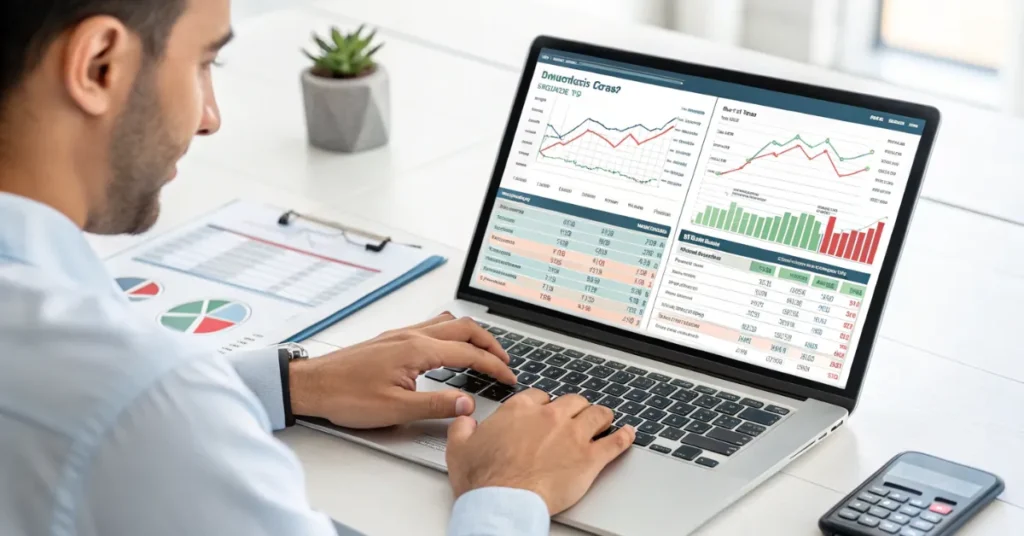
Cash flow is often described as the lifeblood of a business. Without sufficient cash, even profitable companies can encounter serious operational challenges.
Effective cash-flow forecasting helps businesses:
Improve Liquidity Management
Businesses can ensure sufficient cash is available to cover daily expenses and obligations.
Reduce Financial Risk
Forecasting identifies potential shortfalls before they become critical problems.
Support Strategic Planning
Management teams can make informed decisions about hiring, expansion, equipment purchases, and investments.
Strengthen Investor Confidence
Investors and lenders often review cash-flow forecasts to evaluate financial stability and growth potential.
Enhance Budgeting Accuracy
Forecasting provides valuable insights that improve budgeting and financial planning processes.
According to financial studies, poor cash-flow management remains one of the leading reasons small businesses experience financial distress. Businesses that regularly forecast cash flow can respond more quickly to challenges and opportunities.
Types of Cash-Flow Forecasting Methods
Different forecasting methods serve different business objectives. Selecting the right approach depends on business size, complexity, and planning requirements.
Short-Term Cash-Flow Forecasting
Short-term forecasts typically cover periods ranging from one week to three months.
Businesses use short-term forecasting to:
- Monitor daily cash balances
- Manage payroll requirements
- Schedule supplier payments
- Track customer collections
This method focuses heavily on operational cash management.
Medium-Term Cash-Flow Forecasting
Medium-term forecasts generally cover three months to one year.
Organizations use these forecasts to:
- Plan budgets
- Manage working capital
- Prepare for seasonal demand
- Evaluate growth initiatives
Long-Term Cash-Flow Forecasting
Long-term forecasting extends beyond one year and supports strategic planning.
Common uses include:
- Business expansion planning
- Capital investments
- Financing decisions
- Market entry strategies
- Infrastructure projects
Direct Cash-Flow Forecasting Method
The direct forecasting method estimates future cash flows by analyzing expected receipts and payments.
Advantages
- Highly accurate for short-term planning
- Provides detailed cash visibility
- Helps manage daily operations effectively
Limitations
- Time-consuming to maintain
- Requires detailed transaction data
- Less effective for long-term projections
Best Applications
- Small businesses
- Retail companies
- Service-based businesses
- Weekly cash management
Indirect Cash-Flow Forecasting Method
The indirect method begins with projected profits and adjusts for non-cash transactions and working capital changes.
Advantages
- Suitable for long-term planning
- Aligns with financial statements
- Supports strategic decision-making
Limitations
- Less precise for daily cash management
- Relies heavily on assumptions
Best Applications
- Corporate financial planning
- Investment analysis
- Business valuation
- Long-range forecasting
Key Components of an Accurate Cash-Flow Forecast
The accuracy of any forecast depends on the quality of the information included.
Cash Inflows
Cash inflows represent money entering the business.
Examples include:
- Product sales
- Service revenue
- Loan proceeds
- Investment income
- Asset sales
- Customer payments
Cash Outflows
Cash outflows represent money leaving the business.
Common examples include:
- Employee salaries
- Rent payments
- Utility expenses
- Inventory purchases
- Tax obligations
- Loan repayments
- Marketing expenses
Opening and Closing Cash Balance
Every forecast begins with the current cash position and calculates the expected closing balance after projected inflows and outflows.
Seasonal Business Variations
Many industries experience seasonal fluctuations.
Examples include:
- Retail businesses during holidays
- Tourism during peak travel seasons
- Construction during favorable weather periods
Accounting for these patterns improves forecast accuracy.
Step-by-Step Process to Create a Cash-Flow Forecast
Building an effective cash-flow forecast requires a structured approach.
Step 1: Gather Historical Financial Data
Review previous financial records to identify revenue trends, expense patterns, and seasonal fluctuations.
Historical data provides the foundation for reliable forecasting.
Step 2: Estimate Future Revenue
Forecast expected sales based on:
- Historical performance
- Market conditions
- Customer demand
- Sales pipeline activity
Businesses should use realistic assumptions rather than overly optimistic projections.
Step 3: Forecast Expenses
Estimate upcoming operational costs, including:
- Payroll
- Rent
- Utilities
- Marketing
- Inventory
- Taxes
Include both fixed and variable expenses.
Step 4: Identify Seasonal Trends
Recognize periods of increased or decreased demand.
Seasonal adjustments improve forecasting accuracy and help avoid cash shortages.
Step 5: Build Multiple Scenarios
Develop different forecasting scenarios:
- Best-case scenario
- Expected scenario
- Worst-case scenario
Scenario planning helps businesses prepare for uncertainty.
Step 6: Monitor and Update Regularly
Cash-flow forecasts should not remain static.
Review and update forecasts regularly based on:
- Actual performance
- Market changes
- Customer payment behavior
- New business opportunities
Regular updates ensure forecasts remain relevant and actionable.
Best Cash-Flow Forecasting Tools for Businesses
Technology has transformed the forecasting process. Modern tools automate calculations, improve accuracy, and provide real-time financial insights.
Microsoft Excel
Excel remains one of the most widely used forecasting tools.
Key benefits include:
- Flexibility
- Custom reporting
- Advanced formulas
- Scenario modeling
Excel works well for small and medium-sized businesses with straightforward forecasting needs.
Google Sheets
Google Sheets offers cloud-based collaboration and accessibility.
Advantages include:
- Real-time updates
- Team collaboration
- Easy sharing
- Cost-effectiveness
QuickBooks
QuickBooks integrates accounting data directly into forecasting processes.
Key features:
- Automated reporting
- Cash-flow projections
- Expense tracking
- Financial dashboards
Xero
Xero provides cloud accounting solutions with built-in forecasting capabilities.
Benefits include:
- Real-time financial visibility
- Bank integrations
- Budget management
- Forecasting reports
Float
Float specializes in cash-flow forecasting and scenario planning.
Features include:
- Visual forecasting
- Cash management dashboards
- Scenario analysis
- Integration with accounting platforms
Fathom and Advanced ERP-Based Forecasting Tools
Beyond basic accounting software, growing businesses often rely on advanced analytics platforms and ERP systems for deeper financial insights.
Fathom
Fathom is a powerful financial analysis and forecasting tool designed for performance tracking and strategic planning.
Key features include:
- Cash-flow visualization dashboards
- KPI tracking and benchmarking
- Custom financial reports
- Scenario forecasting
- Integration with Xero and QuickBooks
Fathom is especially useful for SMEs that want more than basic cash tracking and need deeper financial storytelling for stakeholders.
ERP-Based Forecasting Tools
Enterprise Resource Planning (ERP) systems like SAP, Oracle NetSuite, and Microsoft Dynamics provide advanced forecasting capabilities.
Benefits include:
- Real-time data integration across departments
- Automated cash-flow forecasting
- Centralized financial control
- Scalability for large organizations
- Multi-currency and multi-location support
ERP tools are ideal for medium to large enterprises managing complex financial structures.
Comparing Manual vs Automated Cash-Flow Forecasting
Businesses often start with manual forecasting and gradually move toward automation as they grow.
Manual Forecasting
Manual forecasting uses spreadsheets and human calculations.
Advantages:
- Low cost
- High customization
- Easy to start
Limitations:
- Time-consuming
- Higher risk of human error
- Difficult to scale
- Limited real-time insights
Automated Forecasting
Automated forecasting uses software tools and AI-based systems.
Advantages:
- High accuracy
- Real-time updates
- Faster reporting
- Data integration
- Scenario simulation
Limitations:
- Subscription costs
- Learning curve for new tools
Key Comparison Summary
- Accuracy: Automated > Manual
- Speed: Automated > Manual
- Cost: Manual < Automated
- Scalability: Automated > Manual
Automated forecasting is now the preferred approach for most growing businesses due to efficiency and accuracy improvements.
Advanced Cash-Flow Forecasting Techniques Used by Modern Businesses

Modern financial management goes beyond basic projections. Businesses now use advanced techniques to improve forecasting precision.
Scenario Planning
Scenario planning helps businesses prepare for different financial outcomes.
It includes:
- Best-case scenario
- Worst-case scenario
- Most likely scenario
This technique improves risk management and strategic decision-making.
Rolling Forecasts
Rolling forecasts continuously update financial predictions as new data becomes available.
Benefits:
- Always up-to-date forecasts
- Better responsiveness to market changes
- Improved financial agility
Sensitivity Analysis
This technique tests how changes in one variable affect overall cash flow.
Example:
- What happens if sales drop by 10%?
- What if supplier costs increase?
Driver-Based Forecasting
Driver-based forecasting focuses on key business drivers such as:
- Sales volume
- Pricing
- Customer acquisition rate
- Operational costs
This approach improves accuracy by linking forecasts to real business activity.
AI-Powered Cash-Flow Forecasting
Artificial intelligence is transforming financial planning.
AI tools can:
- Analyze historical patterns
- Predict cash shortages
- Identify risks early
- Improve forecast accuracy
Common Cash-Flow Forecasting Mistakes and How to Avoid Them
Many businesses make avoidable errors that reduce forecasting accuracy.
Overestimating Revenue
Businesses often assume optimistic sales growth, which leads to unrealistic forecasts.
Solution:
- Use historical data
- Apply conservative estimates
Ignoring Seasonal Trends
Failure to consider seasonal fluctuations can distort forecasts.
Solution:
- Analyze past seasonal patterns
- Adjust projections accordingly
Poor Receivables Management
Late customer payments affect cash availability.
Solution:
- Track accounts receivable closely
- Encourage timely payments
Not Updating Forecasts Regularly
Static forecasts quickly become outdated.
Solution:
- Update monthly or weekly
- Compare actual vs forecasted data
Ignoring Tax Obligations
Unexpected tax payments can disrupt cash flow.
Solution:
- Plan tax liabilities in advance
- Set aside reserves
Cash-Flow Forecast Example for a Small Business
A simple example helps understand practical application.
Monthly Cash-Flow Table (Example)
- Opening Cash Balance: AED10,000
- Cash Inflows: AED25,000
- Cash Outflows: AED20,000
- Net Cash Flow: AED5,000
- Closing Balance: AED15,000
Explanation
In this example, the business starts the month with AED 10,000 in available cash. During the month, it generates AED 25,000 in inflows from sales and other income sources, while total expenses amount to AED 20,000.
This results in a positive net cash flow of AED 5,000, improving the company’s liquidity position and increasing the closing balance to AED 15,000.
A positive cash-flow position like this indicates financial stability, while a negative result would signal the need for cost control, improved collections, or external financing.
Industry-Specific Cash-Flow Forecasting Considerations
Different industries require tailored forecasting approaches.
Retail Businesses
- High seasonal variation
- Inventory-heavy cash cycles
- Frequent sales fluctuations
Construction Companies
- Project-based cash flow
- Delayed client payments
- High upfront material costs
Manufacturing Businesses
- Raw material procurement cycles
- Production scheduling impacts cash flow
- Capital-intensive operations
E-Commerce Businesses
- Fast revenue cycles
- Marketing-driven demand changes
- Payment gateway delays
Service-Based Businesses
- Recurring income patterns
- Lower overhead costs
- Dependence on client contracts
How Cash-Flow Forecasting Supports Business Growth
Cash-flow forecasting is not only a financial control tool, but it is a growth enabler.
It supports:
- Expansion planning and scaling decisions
- Hiring and workforce management
- Equipment and asset investments
- Loan and funding approvals
- Investor confidence and valuation
Businesses with strong forecasting systems are more likely to make confident and timely strategic decisions.
Future Trends in Cash-Flow Forecasting
Financial forecasting is rapidly evolving due to technology advancements.
Artificial Intelligence Integration
AI improves accuracy by learning from historical financial behavior.
Real-Time Forecasting
Modern tools now offer live cash-flow updates based on transactions.
Cloud-Based Financial Systems
Cloud platforms enable remote access and collaboration.
Machine Learning Models
Machine learning enhances predictive accuracy over time.
Integrated Financial Ecosystems
ERP systems combine accounting, sales, and operations for unified forecasting.
Why Cash-Flow Forecasting Is Essential for Financial Stability
Cash-flow forecasting helps businesses stay financially stable, avoid liquidity issues, and plan confidently for future growth. It bridges the gap between financial planning and real-world execution, making it a critical part of modern business strategy.
Without accurate forecasting, even profitable businesses risk running into cash shortages that can disrupt operations and slow growth.
Partner with Ripple Business Setup for Financial Clarity
Accurate cash-flow forecasting requires expertise, tools, and consistent financial monitoring. Professional support can help businesses maintain better control over their finances and improve long-term decision-making.
Ripple Business Setup provides accounting, bookkeeping, financial planning, and business advisory services to help companies maintain strong financial health and improve forecasting accuracy.
For expert assistance, contact Ripple Business Setup at +971 50 593 8101, email info@ripplellc.ae, or WhatsApp +971 4 250 0833.
FAQ
What is cash-flow forecasting?
Cash-flow forecasting is the process of estimating future cash inflows and outflows to manage liquidity and financial planning.
What are the main types of forecasting methods?
The main methods are direct and indirect cash-flow forecasting.
How often should forecasts be updated?
Businesses should update forecasts weekly or monthly depending on transaction volume.
Which tool is best for small businesses?
Excel, Google Sheets, and QuickBooks are commonly used by small businesses.
Can AI improve forecasting accuracy?
Yes, AI improves predictions by analyzing patterns and identifying risks early.
Conclusion
Cash-flow forecasting is a vital financial practice that helps businesses maintain stability, plan ahead, and make informed decisions. By understanding cash inflows and outflows, applying the right forecasting methods, and using modern tools, businesses can significantly reduce financial uncertainty and improve operational control.
Disclaimer: This article is for informational purposes only and does not constitute financial, legal, or accounting advice. Businesses should consult qualified professionals before making financial decisions.