

Dubai’s food delivery scene has exploded in recent years, and the cloud kitchen model sits right at the center of that growth. If you are an entrepreneur looking to enter the UAE food industry without the heavy overhead of a dine-in restaurant, a cloud kitchen could be your smartest move in 2026. But before you fire up the stoves, you need to understand exactly what a cloud kitchen license costs in Dubai and how to get one legally. This guide breaks it all down, step by step.
What is a Cloud Kitchen License in Dubai?
A cloud kitchen, often called a ghost kitchen or virtual kitchen, is a delivery-only restaurant that operates without a physical dining space for customers. In Dubai’s food business ecosystem, this model has become increasingly popular because it dramatically reduces overhead while tapping into the city’s massive appetite for food delivery apps like Talabat, Deliveroo, and Noon Food.
A cloud kitchen license is the legal permission issued by Dubai’s regulatory authorities, typically the Department of Economy and Tourism (DET, formerly DED) or a relevant free zone, that allows you to prepare and sell food commercially from a dedicated kitchen facility. Unlike a standard restaurant license, it does not require a front-of-house setup, reducing both your space requirements and your startup cost considerably.
In 2026, this model continues to gain traction due to three core reasons: lower capital requirements, the freedom to test multiple food concepts from one kitchen, and high consumer demand driven by app-based ordering behavior.
Why Start a Cloud Kitchen in Dubai in 2026?
There has never been a better time to launch a delivery-based food brand in Dubai. Here is why entrepreneurs across the UAE are choosing this model:
- Growing food delivery market: Platforms like Talabat, Deliveroo, and Noon Food collectively serve millions of orders monthly across the UAE, giving your brand instant reach without expensive marketing.
- Lower startup cost: Compared to a traditional restaurant that can cost AED 500,000 or more to set up, a cloud kitchen can launch for a fraction of that investment.
- Flexible location options: You can operate from affordable industrial areas like Al Quoz or Dubai Investment Park, or use a shared kitchen space to cut costs further.
- High ROI potential with niche concepts: Brands that own a specific niche, such as keto meals, authentic regional cuisines, and gourmet burgers, tend to scale quickly on delivery platforms.
- 100% foreign ownership available: Free zone cloud kitchen licenses allow full foreign ownership, making this a highly attractive model for international entrepreneurs entering the UAE market.
Cost of Cloud Kitchen License in Dubai
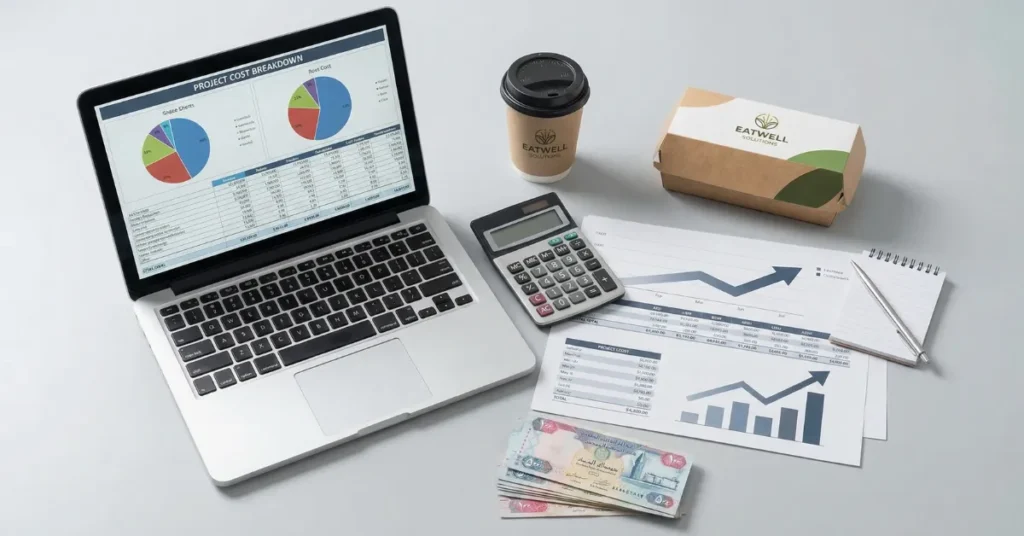
The total investment required to launch a cloud kitchen in Dubai depends on your location, kitchen setup, and staffing needs. Here is a realistic cost breakdown based on current 2026 market data:
| Cost Item | Estimated Cost (AED) | Notes |
| Trade License | 10,000 – 15,000 | DED or Free Zone |
| Kitchen Space Rental | 25,000 – 80,000/yr | Shared vs private |
| Municipality Approvals | 2,000 – 5,000 | Food safety & permits |
| Equipment & Setup | 20,000 – 100,000 | Depends on menu type |
| Staff Visa (per visa) | 3,000 – 7,000 | Per employee |
| Delivery Platform Fees | 15% – 35% | Commission per order |
| TOTAL ESTIMATED | AED 60,000 – 200,000+ | Varies by scale |
Trade License Cost
A trade license through the Department of Economy and Tourism (DET) or a free zone authority typically costs between AED 10,000 and AED 15,000 annually. Free zone licenses such as IFZA or Dubai CommerCity may vary slightly in pricing but often include bundled benefits like visa quotas and flexi-desk access.
Kitchen Space Rental
Renting kitchen space is usually your highest recurring cost. Shared commercial kitchens start from around AED 25,000 per year, while a private dedicated kitchen space in areas like Al Quoz or Deira can run up to AED 80,000 annually or more, depending on the size and facilities.
Food Safety and Municipality Approvals
Dubai Municipality requires all food businesses to obtain food safety approvals before operating. This process typically costs between AED 2,000 and AED 5,000, including inspections and permit fees.
Equipment and Setup Cost
Your kitchen equipment investment depends heavily on your menu. A simple concept focused on one or two food types can be equipped for AED 20,000, while a more complex multi-cuisine setup might require AED 100,000 or more in commercial-grade appliances.
Staff Visa and Labor Cost
Each employee visa processed through your license typically costs between AED 3,000 and AED 7,000. This includes medical tests, Emirates ID, and visa stamping fees. Factor this into your budget for every kitchen team member you plan to hire.
Delivery Platform Registration Fees
Registering on platforms like Talabat or Deliveroo is generally free upfront, but these platforms charge a commission of 15% to 35% per order. This is an ongoing operational cost you must account for in your menu pricing strategy.
Total Estimated Cost
When you add it all up, the total investment to start a cloud kitchen in Dubai typically falls between AED 60,000 on the lower end (shared kitchen, lean setup) and AED 200,000 or more for a private kitchen with full equipment and a small team. Planning your budget carefully against these figures is critical before you commit.
Types of Cloud Kitchen Licenses in Dubai
Not all cloud kitchen licenses in Dubai are the same. Depending on your goals, budget, and ownership preferences, you will likely choose one of the following:
- Mainland License (via DET): Allows you to operate anywhere in Dubai and sell directly to all UAE customers. Historically, it required a local Emirati sponsor, though recent reforms have expanded direct foreign ownership options for many business activities.
- Free Zone License (e.g., Dubai CommerCity, IFZA): Grants 100% foreign ownership and a faster setup process. Best suited for entrepreneurs who want complete control and may also supply to other free zone entities or export products.
- Shared Kitchen License: Some shared kitchen facilities operate under their own umbrella license, allowing smaller operators to work under that framework for a monthly fee. This is one of the lowest-cost entry points.
- Home-Based Kitchen License: Dubai permits home kitchen businesses under certain conditions, but these come with strict restrictions on the scale of operations, types of food, and delivery radius. Not suitable for scaling.
Step-by-Step Process to Get a Cloud Kitchen License
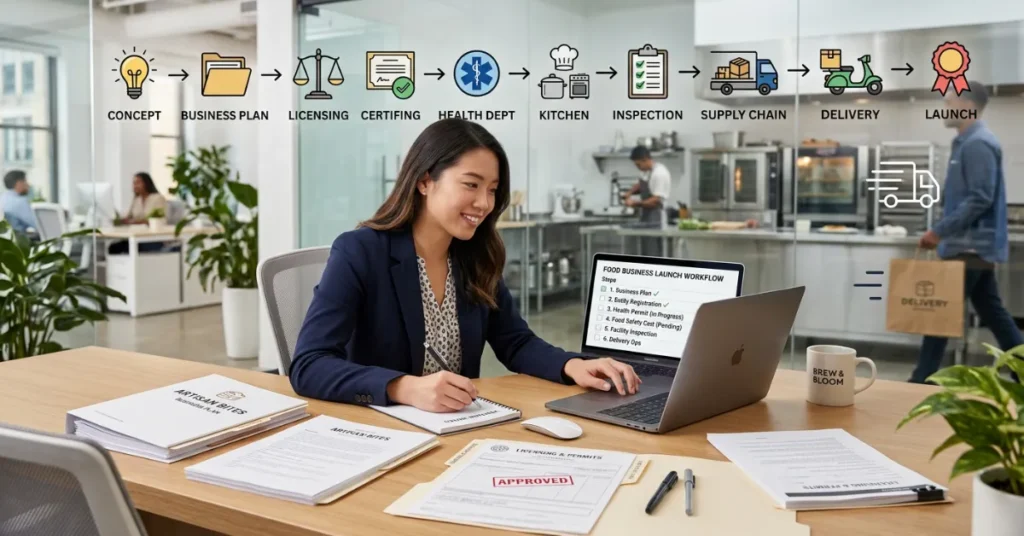
Getting your cloud kitchen license in Dubai involves several key stages. Following this sequence correctly saves time and avoids costly rejections:
- Choose your business activity: Specifically, ‘cloud kitchen’ or ‘food preparation and delivery’ as your trade activity.
- Select your jurisdiction: Decide between mainland (DET) or a free zone based on your ownership preference and target market.
- Reserve your trade name: Submit two to three name options; the name must comply with UAE naming regulations.
- Apply for initial approval: The relevant authority reviews your business plan and issues initial approval to proceed.
- Finalize your kitchen location: Your kitchen space must be pre-approved by Dubai Municipality before the license is finalized.
- Obtain food safety approval: The Dubai Municipality Food Safety Department inspects your kitchen and issues the food safety permit.
- Apply for your trade license: Submit all documents and pay the license fee to receive your official cloud kitchen license.
- Register on delivery platforms: Once licensed, submit your documents to Talabat, Deliveroo, or other platforms to go live.
The entire process typically takes three to eight weeks, depending on how quickly approvals move and whether your kitchen space passes the municipality inspection on the first visit.
Legal Requirements and Approvals
Before you can legally operate a cloud kitchen in Dubai, you must clear several regulatory checkpoints. Missing any one of these can delay your launch or result in fines:
- Dubai Municipality Food Safety Department approval is mandatory for all food preparation businesses in Dubai.
- Ejari (tenancy contract) a registered tenancy agreement for your kitchen space, required for license finalization.
- HACCP compliance, Hazard Analysis and Critical Control Points standards must be met to pass the food safety inspection.
- Every kitchen employee must hold a valid food handler health card issued by Dubai Municipality.
- Civil Defense approval is required if your kitchen uses certain equipment, like commercial gas systems or requires a fire safety sign-off on the premises.
Best Locations for Cloud Kitchens in Dubai
Location matters in a cloud kitchen business, but not for the same reasons as a dine-in restaurant. You need to think about rental affordability, proximity to dense residential and commercial areas, and logistics access for delivery drivers.
Al Quoz is one of the most popular choices for cloud kitchens in Dubai. It offers industrial-grade spaces at relatively affordable rents and sits within easy reach of several high-demand delivery zones. Many shared kitchen providers have set up facilities here specifically for delivery brands.
Business Bay gives you central access to one of Dubai’s busiest commercial and residential corridors. Rental costs are higher, but the delivery density can translate directly into more orders. If your brand targets office workers or high-income residents, this area makes strategic sense.
Dubai Investment Park offers some of the most competitive rental rates in Dubai, making it ideal for operators who want to keep overheads as low as possible. The tradeoff is a slightly longer delivery radius to reach central areas.
Deira, on the older side of Dubai, has one of the city’s highest population densities. The demand for affordable, quick food delivery is strong here, and rental costs remain reasonable compared to newer parts of the city.
Mainland vs Free Zone Cloud Kitchen License
Choosing between a mainland and a free zone license is one of the most important decisions you will make. Here is a side-by-side comparison to help you decide:
| Feature | Mainland (DED) | Free Zone |
| Ownership | Local sponsor needed (some exceptions) | 100% foreign ownership |
| Cost | AED 10,000 – 15,000 | AED 12,000 – 18,000 |
| Market Access | Full UAE market access | Primarily free zone + exports |
| Office Requirement | Physical address needed | Flexi-desk available |
| Setup Speed | 3 – 5 weeks | 1 – 3 weeks |
| Best For | Local delivery brands | International entrepreneurs |
For most cloud kitchen operators targeting local UAE customers, a mainland license provides the broadest market access. If you prioritize full foreign ownership and faster setup, a free zone license is worth the slight access limitations.
Hidden Costs to Consider Before Starting
Beyond the obvious license and setup fees, several costs tend to catch new cloud kitchen operators off guard. Plan for these before you launch:
- Delivery platform commissions: At 15% to 35% per order, these fees eat directly into your margin. Price your menu with this commission fully accounted for.
- Marketing and branding: Your cloud kitchen lives or dies by its online presence. Budget for professional photography, social media management, and paid promotions, especially in the first three months.
- Packaging costs: Branded, delivery-safe packaging is not cheap. High-quality packaging that keeps food fresh and presents your brand well can add AED 2 to AED 10 per order.
- Utility bills: Commercial kitchens consume significant electricity and water. Factor in monthly utilities, which can range from AED 1,500 to AED 5,000 or more, depending on your equipment and hours of operation.
- Maintenance and equipment upgrades: Commercial kitchen equipment breaks down. A maintenance budget of 5% to 10% of your equipment value per year is a reasonable safeguard.
Profit Potential and ROI of Cloud Kitchens in Dubai
Cloud kitchens in Dubai can generate profit margins of 10% to 30%, depending on how well you manage your food cost, delivery commissions, and overhead. That is a wide range, and where you land depends almost entirely on operational discipline.
Menu pricing is one of the most critical levers. You need to price dishes so that after the delivery platform takes its cut (up to 35%), you are still covering food costs, packaging, labor, and rent with enough left over to grow. A common mistake is pricing for in-restaurant margins, which simply does not work in a delivery-only model.
Consider a real-world example: a small gourmet burger brand in Dubai that launched from a shared kitchen in Al Quoz with an initial investment of around AED 80,000. By focusing on a tight menu of five items, optimizing for fast prep times, and running promotions on Talabat during peak hours, the owner reached a break-even point within seven months. By month twelve, monthly revenue exceeded AED 60,000, delivering a healthy return on investment. This kind of result is achievable but requires planning, consistency, and the right support.
Common Mistakes to Avoid
Many cloud kitchens in Dubai fail not because of a bad food concept but because of avoidable operational and strategic mistakes. Watch out for these:
- Choosing the wrong location: A kitchen in an area with poor delivery coverage or high competition on apps can doom your business before it starts. Research demand data on delivery platforms before signing any lease.
- Ignoring food safety compliance: Cutting corners on HACCP, staff health cards, or municipality inspections leads to fines and operational shutdowns. Build compliance into your launch plan, not as an afterthought.
- Poor menu planning: Too many items slow down your kitchen and inflate costs. A focused menu of eight to twelve well-optimized dishes almost always outperforms a sprawling menu of forty options.
- Over-dependence on one delivery platform: If Talabat changes its algorithm or commission structure, brands that rely on a single platform suffer immediately. Diversify across two or three platforms from the start.
- Weak branding: On a delivery app, your listing competes visually with hundreds of others. Professional food photography, a clear brand identity, and strong reviews are your marketing assets. Invest in them early.
How We Help You Set Up a Cloud Kitchen in Dubai
Setting up a cloud kitchen in Dubai involves multiple government touchpoints, compliance requirements, and operational decisions that can quickly become overwhelming, especially if you are doing it for the first time. That is where expert guidance makes a measurable difference.
Ripple Business Setup guides you through the full process, from selecting the right license type and jurisdiction to securing municipality approvals, registering on delivery platforms, and ensuring your kitchen meets every legal requirement before opening day. Our team has helped dozens of food entrepreneurs launch compliant, operational cloud kitchens across Dubai without the costly delays that come from navigating this process alone.
Contact Ripple Business Setup at +971 50 593 8101, email info@ripplellc.ae, or WhatsApp +971 4 250 0833 to get started. A quick conversation can save you weeks of back-and-forth with government departments.
FAQ
What is the cheapest way to start a cloud kitchen in Dubai?
The most affordable entry point is renting a berth in a shared commercial kitchen and obtaining your license through a free zone. This setup can bring your initial investment down to around AED 60,000 to AED 80,000, depending on your menu complexity and staffing needs.
Can I run a cloud kitchen from home in Dubai?
Yes, home-based food businesses are permitted in Dubai with specific approvals from the Dubai Municipality. However, home kitchen licenses come with restrictions on production scale, food types, and marketing. They are best suited for small, community-level operations rather than scalable delivery brands.
How long does it take to get a cloud kitchen license in Dubai?
The process typically takes three to eight weeks from the point of initial application, assuming your kitchen space passes the municipality inspection on the first attempt and all documents are in order. Working with a business setup consultant can help streamline this timeline.
Do I need a physical kitchen space to get a cloud kitchen license?
Yes. Dubai authorities require a physical, approved kitchen facility as part of the licensing process. The kitchen must pass a food safety inspection by the Dubai Municipality before your license is finalized. You cannot operate from an unapproved space.
Is a cloud kitchen profitable in Dubai?
Yes, cloud kitchens can be highly profitable in Dubai when managed well. Profit margins typically range from 10% to 30%. Success depends on menu pricing, delivery platform management, food cost control, and building a loyal customer base through consistent quality and strong branding.
Conclusion
Starting a cloud kitchen in Dubai in 2026 is one of the most accessible and financially sound ways to enter the UAE food industry. The licensing process is manageable, the market demand is real, and the cost structure, when planned correctly, allows for meaningful returns without the enormous overheads of a traditional restaurant.
Disclaimer: This article is for general informational purposes only and does not constitute legal, financial, or business advice. Costs, requirements, and processes for obtaining a cloud kitchen license in Dubai may vary based on government regulations, jurisdiction, and individual business circumstances. While every effort has been made to ensure accuracy, information may change over time. It is recommended to consult with a licensed business setup advisor or relevant UAE authorities before making any decisions.