If you run a business in the UAE or you are planning to set one up, you have almost certainly come across the term designated zones. But what exactly are they, and why do they matter so much in 2026?
Designated zones are specific geographic areas that the UAE government treats differently under UAE VAT law. Get them right, and your import‑export or logistics business can enjoy significant tax advantages. Get them wrong, and you could face unexpected VAT penalties that eat into your margins fast.
With the UAE’s trade infrastructure growing rapidly and its position as a global logistics hub strengthening every year, understanding designated zones is no longer optional for serious investors. This guide breaks everything down, including definitions, VAT rules, the updated 2026 list, and practical steps to make the most of them.
What are designated zones in the UAE?
Under UAE VAT law, a designated zone is a fenced and geographically defined area that is treated as being outside the UAE for VAT purposes but only when specific conditions are met. This distinction is crucial: the zone is physically inside the UAE, but from a VAT-treatment perspective, goods held inside it are not yet considered to have entered the UAE market.
Think of it like a holding area. A shipment can sit inside a designated zone, be stored, processed, or re-exported, all without triggering UAE VAT as long as it never crosses into mainland UAE for consumption or sale.
Important: This VAT treatment applies primarily to goods, not services. Services provided within or from a designated zone are generally subject to standard UAE VAT rules.
Why do designated zones exist in the UAE tax system
The UAE government did not create designated zones by accident. They are a deliberate part of the country’s broader economic strategy to attract foreign investment and position the UAE as a global trade and logistics powerhouse.
By creating areas where goods flow in and out without immediate VAT obligations, the government makes it far more attractive for international companies to store, re-export, and process goods using UAE infrastructure. This boosts supply chain efficiency, drives foreign direct investment, and keeps the UAE competitive with other major trade hubs like Singapore and Rotterdam.
Key features of designated zones in the UAE
- Physically fenced or clearly demarcated geographic area with controlled entry and exit points
- Customs controls are in place at all access points. Unauthorized movement of goods triggers VAT and customs duties
- Internal procedures must be followed for tracking goods stored, processed, or moved within the zone
- Goods can be stored, assembled, or processed without entering the UAE VAT system, provided they are not consumed locally
- The zone must be officially approved and listed by the UAE Cabinet
- Zone operators must maintain detailed inventory and customs records for audit purposes
List of designated zones in the UAE
The UAE Cabinet officially approves and updates the list of designated zones. Since the UAE VAT system launched in 2018, the list has been refined to reflect the country’s expanding logistics and manufacturing landscape. Below are the major designated zones as recognised in 2026.
Major designated zones by emirate
Dubai
- Jebel Ali Free Zone (JAFZA): One of the largest and most established zones globally
- Dubai Airport Free Zone (DAFZA): Ideal for air freight and high-value goods
- Dubai South Free Zone: Focused on aviation, logistics, and e-commerce
- Dubai World Central (DWC): Aviation and logistics hub adjacent to Al Maktoum Airport
Abu Dhabi
- Khalifa Industrial Zone (KIZAD): Large-scale industrial and manufacturing operations
- Abu Dhabi Ports Free Zone (KEZAD): Integrated port and logistics cluster
Sharjah
- Hamriyah Free Zone: Petroleum, chemicals, and heavy industry
Other emirates
- Ras Al Khaimah Economic Zone (RAKEZ)
- Fujairah Free Zone
- Ajman Free Zone
Always verify the current list on the UAE Federal Tax Authority (FTA) website before making business decisions. The Cabinet updates this list periodically.
VAT treatment in designated zones in the UAE
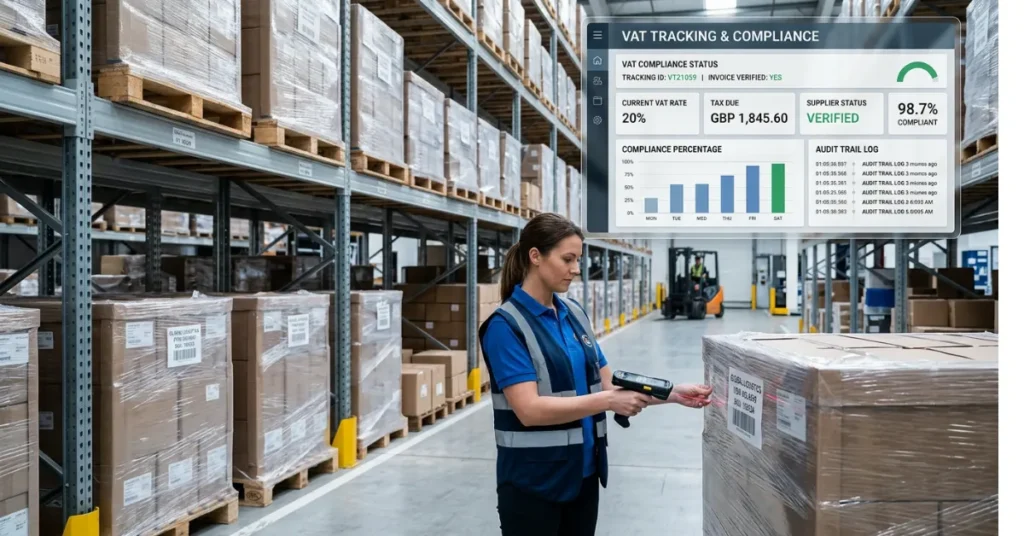
This is where many businesses either save significant money or make costly mistakes. VAT rules for designated zones depend entirely on what happens to the goods and where they go next.
The Federal Tax Authority sets out clear conditions under which VAT does and does not apply. Understanding these conditions is the foundation of any VAT compliance strategy for businesses operating in or through designated zones.
When VAT is not applicable
- Goods transferred between businesses within the same designated zone, provided they are not consumed
- Goods moved from one designated zone to another designated zone (with proper documentation)
- Goods exported directly outside the UAE from a designated zone
- Storage of goods that are not consumed within the zone
When VAT applies
- Goods released from the designated zone into the mainland UAE VAT become due at the point of release
- Goods consumed within the zone itself (e.g., used in production and not re-exported)
- Transactions that do not meet the FTA’s compliance conditions, such as missing documentation or improper goods tracking
- Services provided within designated zones, which are generally subject to UAE VAT at the standard 5% rate
Designated zones vs free zones in the UAE
This is one of the most common points of confusion among new investors and business owners. Not every free zone is a designated zone, and not every designated zone offers identical benefits. Here is how they compare:
| Feature | Free zones | Designated zones |
|---|---|---|
| Legal classification | Business licensing jurisdiction | VAT and customs classification |
| VAT treatment on goods | Standard UAE VAT rules apply | Goods treated as outside UAE for VAT (conditions apply) |
| Approval authority | Respective emirate or free zone authority | Not only a select list approved by the Cabinet |
| All free zones included? | Yes (100+ across UAE) | No only a select list approved by Cabinet |
| Primary benefit | 100% foreign ownership, no corporate tax (subject to rules) | VAT suspension on qualifying goods transactions |
A company can be registered in a free zone without being in a designated zone. Assuming otherwise is one of the most expensive mistakes businesses make when planning UAE tax strategy.
Benefits of operating in designated zones
- VAT deferral or suspension on goods cash flow advantage for import/export and trading companies
- Strategic location near major ports and airports, reducing logistics costs and transit times
- Customs duty on efficiency goods can be stored and re-exported without full duty liability
- World-class logistics infrastructure, including warehousing, cold storage, and multimodal transport links
- Cost savings for businesses dealing in high-volume, high-value goods such as electronics, machinery, and commodities
- Operational flexibility to process, assemble, or repackage goods before distribution
Compliance requirements for businesses
Operating in a designated zone does not exempt a business from its obligations under UAE VAT law; it simply changes how and when those obligations apply. To maintain the VAT benefits of a designated zone, businesses must stay strictly compliant with FTA requirements.
- VAT registration is mandatory if annual taxable turnover exceeds the AED 375,000 threshold, even for businesses in designated zones
- Detailed records of all goods entering, stored in, processed within, and leaving the zone must be maintained
- Customs documentation must accurately reflect the movement and status of goods at all times
- VAT returns must be filed on time, with proper disclosure of any mainland UAE transactions
- Non-compliance can result in penalties, back-payment of VAT with interest, and potential loss of designated zone VAT benefits
Example: how a business uses a designated zone

Consider a mid-sized electronics trading company based in Europe that ships consumer goods to markets across the Middle East, South Asia, and East Africa. Instead of routing shipments directly to each country, the company establishes a distribution hub inside Jebel Ali Free Zone (JAFZA) in Dubai.
Goods arrive at Jebel Ali port from the manufacturer in China. They enter JAFZA, a designated zone, and are stored, quality-checked, and repackaged into regional shipments. Because the goods remain within the designated zone and are re-exported to regional markets, no UAE VAT is triggered on the storage and re-export activity.
When a UAE mainland retailer places an order, only that portion of goods is released into the UAE market, and VAT is paid only on that transaction. The result: the company avoids paying and reclaiming VAT on the large volume of goods that pass through the UAE in transit, saving significant working capital and simplifying its regional tax position.
Common mistakes to avoid
- Assuming that all free zones are designated zones, they are not, and the VAT implications are very different
- Ignoring VAT obligations when goods are released into the mainland UAE, this is a taxable supply and must be reported correctly
- Poor or incomplete documentation for goods movements, the FTA expects a clear audit trail at all times
- Misinterpreting the services exemption, VAT on services generally applies even inside designated zones
- Failing to update records when the UAE Cabinet modifies the designated zones list
Who should consider setting up in a designated zone?
- Import/export businesses that regularly move goods through the UAE to regional or global markets
- Manufacturing and assembly companies that process raw materials before distribution
- Logistics and warehousing firms looking for cost-efficient UAE operations
- E-commerce businesses that fulfil orders across the Middle East from a central UAE hub
- Commodity traders dealing in oil, metals, chemicals, or foodstuffs in bulk
How to set up a business in a designated zone (2026)
- Choose the right zone: Match the zone to your business activity and target markets. JAFZA suits general trading and logistics; DAFZA is better for air cargo and high-value goods; KIZAD fits large-scale manufacturing.
- Select your business activity: Each zone has approved activity lists. Confirm your intended activity is permitted before applying.
- Apply for your trade licence: Submit your application through the zone authority along with required documents, including passport copies, business plan, and shareholder details.
- Register for VAT if required: If your taxable turnover exceeds AED 375,000, register with the Federal Tax Authority promptly. Even in a designated zone, late registration attracts penalties.
- Set up warehouse and logistics infrastructure: Work with the zone authority on lease agreements for warehousing or office space. Ensure your goods-tracking systems meet FTA audit requirements from day one.
How Our Team at Ripple Business Setup Supports Your Journey
We guide you through every step of setting up in Designated Zones in the UAE with a clear and practical approach. Our team helps you choose the right zone based on your business activity, manage licensing, and handle VAT registration with full compliance. We also support documentation, customs processes, and ongoing regulatory requirements so you can focus on operations without confusion. If you are planning to start or expand your business, contact Ripple Business Setup at +971 50 593 8101, email info@ripplellc.ae, or WhatsApp +971 4 250 0833 for direct assistance and expert advice.
FAQs
What is a designated zone in UAE VAT law?
A designated zone is a fenced geographic area approved by the UAE Cabinet and treated as outside the UAE for VAT purposes on qualifying goods transactions. Goods stored or re-exported from these zones can qualify for VAT suspension, subject to FTA conditions.
Are all free zones designated zones?
No, the UAE has over 100 free zones, but only a select number are officially approved as designated zones by the Cabinet. Always verify the current list with the Federal Tax Authority before making tax planning decisions.
Do businesses in designated zones pay VAT?
It depends on the transaction. Qualifying goods transactions within or between designated zones may be VAT-suspended. However, goods released into the mainland UAE, services provided in the zone, and non-compliant transactions are generally subject to UAE VAT at 5%.
Can services benefit from designated zone VAT rules?
Generally, no. The designated zone VAT treatment applies primarily to goods. Services supplied within or from a designated zone are typically subject to standard UAE VAT rules at 5%.
How can I check if a zone is officially designated?
The Federal Tax Authority (FTA) publishes and maintains the official list of UAE Cabinet-approved designated zones on its website at tax.gov.ae. This is the authoritative source to always cross-check against it directly.
Conclusion
Designated zones are one of the most powerful tools available to businesses operating in the UAE, but only when you understand exactly how they work. The VAT benefits are real, the logistics advantages are substantial, and the UAE’s continued investment in its trade infrastructure makes these zones increasingly attractive in 2026 and beyond.
Disclaimer: This content is for general informational purposes only and does not constitute legal or tax advice. Regulations in the UAE may change, and each business situation may differ. We recommend consulting with qualified advisors to ensure full compliance with current laws and requirements.