Accounting is no longer limited to recording past transactions and preparing financial statements. Modern businesses expect their accounting systems to provide real-time insights, identify potential risks, and help leaders make smarter decisions before challenges arise. This shift has made predictive analytics, big data, and accounting central to the future of financial management. Organizations of all sizes generate enormous amounts of financial and operational data every day. Sales records, customer payments, inventory movements, payroll information, tax records, and banking transactions all contribute to a growing pool of valuable information. When businesses combine this data with predictive analytics, they can identify trends, forecast outcomes, and improve financial planning with greater confidence.
What Is Predictive Analytics in Accounting?
Predictive analytics is the process of using historical financial data, statistical models, artificial intelligence (AI), and machine learning algorithms to forecast future financial outcomes. Instead of simply reporting what happened in the past, predictive accounting helps businesses understand what is likely to happen next. Traditional accounting focuses on recording transactions, preparing reports, and ensuring compliance. Predictive accounting goes a step further by identifying patterns, detecting anomalies, and estimating future business performance.
For example, if a company has experienced seasonal sales increases over the past five years, predictive analytics can estimate future sales based on those historical trends while also considering market conditions and customer behavior.
This approach enables finance teams to move beyond reactive decision-making and become strategic advisors within the organization.
How Predictive Analytics Works
Predictive analytics combines several technologies to generate reliable forecasts:
- Historical financial data
- Machine learning algorithms
- Statistical analysis
- Artificial intelligence
- Data visualization dashboards
- Business intelligence tools
These technologies analyze thousands or even millions of financial records to identify meaningful relationships and trends that humans may overlook.
Traditional Accounting vs Predictive Accounting
| Traditional Accounting | Predictive Accounting |
|---|---|
| Records past transactions | Predicts future financial outcomes |
| Historical reporting | Forward-looking analysis |
| Manual reviews | Automated data analysis |
| Monthly or quarterly reports | Real-time financial insights |
| Focuses on compliance | Supports strategic decision-making |
| Identifies existing issues | Anticipates potential risks |
As businesses increasingly rely on real-time financial intelligence, predictive accounting is becoming an essential component of modern finance.
Practical Examples of Predictive Analytics
Predictive analytics can support many daily accounting activities, including:
- Forecasting monthly cash flow
- Predicting customer payment delays
- Estimating future operating expenses
- Identifying potential fraud
- Planning annual budgets
- Forecasting tax liabilities
- Predicting inventory requirements
- Estimating future revenue growth
For example, a wholesale distributor can analyze historical customer payment behavior to identify which clients are most likely to pay late. The finance team can then take proactive steps, such as sending early payment reminders or adjusting credit terms, to reduce the risk of cash flow shortages.
What Is Big Data in Accounting?
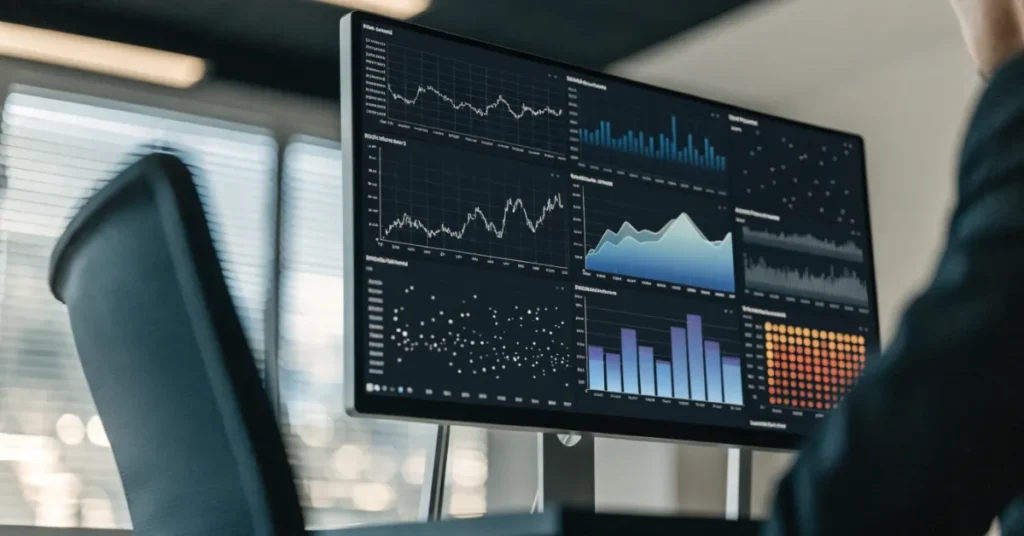
Big data refers to extremely large and complex datasets that traditional accounting systems cannot efficiently process or analyze. These datasets come from multiple sources and grow continuously as businesses conduct daily operations. Modern accounting is no longer limited to invoices and bank statements. Companies now generate data through digital payments, online sales, customer interactions, enterprise resource planning (ERP) systems, payroll software, cloud applications, and connected devices.
When accountants analyze this information effectively, they gain deeper insights into business performance, customer behavior, operational efficiency, and financial risks.
Rather than relying on a few financial reports each month, organizations can monitor thousands of financial indicators in real time.
Structured vs Unstructured Financial Data
Businesses collect different types of accounting information. Structured data follows a defined format and is easy to analyze.
Examples include:
- General ledger entries
- Trial balances
- Payroll records
- Sales invoices
- Tax records
- Bank transactions
Unstructured data lacks a fixed format but can still provide valuable business insights.
Examples include:
- Customer emails
- Contracts
- PDF invoices
- Images
- Audio files
- Social media feedback
- Supplier communications
Modern accounting software can combine both structured and unstructured data to provide a more complete financial picture.
The Five Characteristics of Big Data
Big data is commonly defined by five key characteristics.
Volume
Businesses generate massive amounts of financial information every day, making it difficult to manage using traditional accounting methods.
Velocity
Financial data is created continuously through online transactions, banking systems, payment gateways, and digital platforms. Businesses need systems that process information quickly.
Variety
Accounting data comes in many formats, including spreadsheets, invoices, receipts, databases, emails, PDFs, and cloud applications.
Veracity
Data quality matters. Accurate and reliable information is essential for making informed financial decisions and maintaining regulatory compliance.
Value
The ultimate goal of big data is to generate actionable business insights that improve profitability, reduce risks, and support better decision-making.
Common Sources of Big Data in Accounting
Modern finance teams collect information from many business systems, including:
- Enterprise Resource Planning (ERP) systems
- Accounting software
- Banking transactions
- Point-of-sale (POS) systems
- Customer Relationship Management (CRM) platforms
- Payroll software
- Cloud accounting applications
- E-commerce platforms
- Inventory management systems
- Supplier databases
- Tax management software
- Mobile payment platforms
- IoT-enabled business devices
Combining these data sources allows organizations to create a comprehensive view of their financial health and business operations.
How Predictive Analytics and Big Data Work Together
Predictive analytics relies on high-quality data, while big data provides the information needed to build accurate predictive models. Together, they help accountants identify trends, forecast future outcomes, and recommend data-driven actions. Without sufficient data, predictive analytics produces unreliable forecasts. Similarly, collecting large volumes of data without analyzing it provides little business value. Combining both technologies enables finance professionals to transform raw financial information into strategic business intelligence.
For example, an online retailer can combine customer purchase history, seasonal demand, inventory levels, supplier performance, and payment trends to predict future stock requirements and optimize purchasing decisions.
This integrated approach supports faster decision-making and reduces financial uncertainty.
The Predictive Accounting Process
Most predictive accounting systems follow a structured workflow.
- Collect financial data from multiple business systems.
- Clean and organize the data to improve accuracy.
- Analyze historical trends using machine learning and statistical models.
- Generate forecasts based on identified patterns.
- Recommend business actions through dashboards and reports.
- Continuously monitor results and improve predictive models.
Each step strengthens the reliability of financial forecasts and helps businesses respond proactively to changing market conditions.
Business Intelligence and Financial Analytics
Business intelligence tools convert complex accounting data into easy-to-understand dashboards, charts, and performance reports.
Finance leaders can monitor key metrics such as:
- Revenue growth
- Cash flow trends
- Profit margins
- Customer payment behavior
- Inventory turnover
- Expense patterns
- Budget performance
- Tax obligations
Instead of manually reviewing hundreds of spreadsheets, decision-makers receive real-time insights that support faster and more informed financial decisions.
Why Predictive Analytics Is the Future of Accounting
Predictive analytics is transforming the role of accountants from record keepers into strategic business advisors. Rather than focusing only on historical reports, finance professionals can help organizations prepare for future opportunities and challenges. As artificial intelligence, cloud accounting, and automation continue to advance, predictive accounting will become a standard feature in modern financial management.
Better Cash Flow Forecasting
Cash flow is one of the most important indicators of business health. Predictive analytics examines historical payment patterns, customer behavior, seasonal trends, and recurring expenses to forecast future cash flow with greater accuracy. Businesses can identify potential cash shortages early, plan financing needs, and maintain healthy working capital.
Faster Financial Decisions
Traditional reporting often delays decision-making because financial information becomes available only after transactions are processed. Predictive analytics delivers real-time insights, allowing business leaders to respond quickly to changing market conditions. Finance teams can evaluate different scenarios before making investment, hiring, or expansion decisions.
Early Fraud Detection
Machine learning models continuously monitor financial transactions and identify unusual activities that may indicate fraud or accounting errors. For example, if an employee submits duplicate expense claims or unusual payment requests appear outside normal business patterns, predictive systems can immediately flag these transactions for review. This proactive approach helps reduce financial losses and strengthens internal controls.
Improved Budget Planning
Predictive accounting analyzes historical spending patterns, expected revenue, inflation, and market conditions to create more realistic budgets. Instead of relying on assumptions, businesses use data-backed forecasts to allocate resources efficiently and improve financial performance.
Smarter Tax Planning
Predictive analytics helps estimate future tax liabilities by analyzing projected income, deductible expenses, and changing tax regulations. This enables businesses to prepare for tax obligations in advance and avoid unexpected financial pressure.
Better Risk Management
Businesses face financial risks from economic changes, supply chain disruptions, customer defaults, and market volatility. Predictive models identify potential risks early, giving organizations more time to develop mitigation strategies.
Accurate Revenue Forecasting
Revenue forecasting becomes more reliable when businesses analyze customer purchasing patterns, sales pipelines, historical performance, and market trends together. This improves strategic planning and supports sustainable business growth.
Improved Financial Reporting
Modern predictive accounting systems automate data collection, reduce manual errors, and generate dynamic financial reports that update in real time. Decision-makers gain faster access to accurate information, improving transparency and operational efficiency. As predictive analytics and big data continue to evolve, accounting will increasingly focus on forecasting, strategic planning, and intelligent decision-making rather than simply recording financial history.
Real-World Applications Across Industries
Predictive analytics and big data have become valuable tools across nearly every industry. Organizations use financial data not only to improve accounting accuracy but also to forecast demand, reduce costs, strengthen compliance, and support strategic planning. While the underlying technology remains the same, each industry applies predictive accounting differently based on its financial goals and operational challenges.
Retail Businesses
Retail companies process thousands of transactions every day through physical stores, e-commerce platforms, and mobile applications. This continuous flow of financial data allows predictive analytics to identify purchasing trends, forecast seasonal demand, and optimize inventory levels.
For example, a retailer can analyze previous holiday sales, customer preferences, and supplier lead times to determine how much inventory to purchase before peak shopping seasons. This reduces overstocking and stock shortages while improving cash flow.
Predictive analytics also helps retailers:
- Forecast sales revenue
- Monitor product profitability
- Optimize pricing strategies
- Predict customer returns
- Improve supplier management
Manufacturing Companies
Manufacturers rely on accurate financial forecasting to manage production costs, inventory, labor expenses, and supply chains. Predictive accounting combines operational and financial data to estimate future production costs and identify potential risks before they affect profitability.
Finance teams can use predictive models to:
- Forecast raw material costs
- Estimate equipment maintenance expenses
- Predict production demand
- Monitor inventory turnover
- Improve budgeting accuracy
This data-driven approach reduces waste and supports more efficient resource planning.
Healthcare Organizations
Healthcare providers manage complex financial operations involving patient billing, insurance claims, payroll, equipment purchases, and regulatory compliance. Predictive analytics helps healthcare finance teams forecast patient demand, estimate operational costs, and identify billing irregularities before they become larger financial issues.
Healthcare organizations also use predictive accounting to:
- Improve budget planning
- Reduce claim processing errors
- Forecast staffing requirements
- Detect fraudulent billing activities
- Manage cash flow more effectively
Banking and Financial Services
Banks and financial institutions have been early adopters of predictive analytics because they process enormous volumes of financial data every second.
Financial institutions use predictive accounting to:
- Assess credit risk
- Detect fraudulent transactions
- Forecast loan defaults
- Predict customer behavior
- Improve investment planning
- Strengthen regulatory compliance
Real-time financial monitoring enables banks to identify unusual activities within seconds, reducing financial losses and improving customer security.
E-commerce Businesses
Online businesses generate extensive customer and transaction data that supports advanced financial forecasting.
Predictive analytics helps e-commerce companies:
- Forecast product demand
- Predict customer purchasing behavior
- Estimate shipping costs
- Optimize inventory management
- Improve marketing return on investment
- Reduce abandoned cart losses
For example, an online retailer can predict which products will experience increased demand during promotional campaigns and adjust inventory accordingly.
Professional Service Firms
Accounting firms, consulting companies, legal practices, and marketing agencies also benefit from predictive analytics.
These organizations can forecast:
- Client revenue
- Resource utilization
- Project profitability
- Cash flow
- Employee workload
- Future business growth
Accurate forecasting allows professional service firms to improve pricing strategies, manage staffing efficiently, and increase profitability.
Technologies Powering Modern Accounting
The future of accounting depends on advanced technologies that automate repetitive tasks, improve data analysis, and deliver real-time financial insights. Together, these technologies enable accountants to focus on strategic planning rather than manual data entry.
Artificial Intelligence (AI)
Artificial intelligence enables accounting software to analyze large datasets, identify unusual transactions, automate repetitive processes, and generate intelligent financial recommendations.
AI supports many accounting functions, including:
- Invoice processing
- Expense categorization
- Financial forecasting
- Fraud detection
- Tax calculations
- Compliance monitoring
As AI continues to evolve, accountants will spend less time on manual work and more time interpreting financial insights.
Machine Learning
Machine learning is a branch of AI that continuously improves predictive models based on new financial data. Unlike traditional software that follows fixed rules, machine learning systems become more accurate as they process additional information.
Common accounting applications include:
- Revenue forecasting
- Cash flow prediction
- Customer payment analysis
- Credit risk assessment
- Budget forecasting
Cloud Accounting
Cloud accounting allows businesses to access financial information securely from any location with an internet connection. Cloud platforms support real-time collaboration between business owners, accountants, auditors, and financial advisors while automatically backing up financial data.
Benefits include:
- Real-time reporting
- Automatic software updates
- Improved security
- Reduced IT costs
- Easy scalability
- Remote accessibility
Business Intelligence Tools
Business intelligence (BI) platforms convert complex accounting data into interactive dashboards, charts, and performance reports. Rather than reviewing lengthy spreadsheets, finance teams can instantly visualize key business metrics.
Popular dashboard metrics include:
- Revenue growth
- Gross profit margin
- Cash flow
- Budget performance
- Accounts receivable
- Expense trends
- Tax obligations
These insights help business leaders make informed decisions faster.
Robotic Process Automation (RPA)
Robotic Process Automation uses software bots to perform repetitive accounting tasks without human intervention.
RPA can automate:
- Invoice entry
- Bank reconciliations
- Payroll processing
- Financial report generation
- Vendor payments
- Data migration
This reduces manual errors while allowing finance professionals to focus on higher-value activities.
Blockchain Technology
Blockchain creates secure, transparent, and tamper-resistant financial records.
Although still developing in many industries, blockchain has significant potential for accounting because it provides an immutable audit trail for financial transactions.
Potential applications include:
- Smart contracts
- Digital asset accounting
- Automated auditing
- Secure financial reporting
- Transaction verification
As blockchain adoption increases, accountants may benefit from improved transparency and reduced reconciliation work.
Predictive Analytics Use Cases Every Business Should Know
Businesses across industries use predictive analytics to improve financial planning and operational efficiency. These practical applications demonstrate how accounting is becoming increasingly proactive.
Cash Flow Forecasting
Predictive analytics evaluates historical income, customer payment patterns, seasonal trends, and recurring expenses to estimate future cash flow. This helps businesses avoid liquidity problems and plan investments with greater confidence.
Expense Prediction
Analyzing historical spending enables businesses to forecast operating expenses more accurately. Organizations can identify areas where costs are likely to increase and implement cost-control strategies before budgets are affected.
Revenue Forecasting
Predictive models estimate future sales by analyzing customer demand, historical revenue, market trends, and economic conditions. Accurate revenue forecasting supports strategic planning and investment decisions.
Budget Optimization
Businesses can create more realistic budgets by incorporating predictive insights rather than relying solely on previous financial periods. This improves resource allocation and financial performance.
Accounts Receivable Analysis
Predictive analytics identifies customers who are likely to make late payments, allowing finance teams to improve collection strategies and maintain healthier cash flow.
Customer Payment Prediction
By analyzing customer payment histories, businesses can estimate when invoices are likely to be paid and plan working capital requirements more effectively.
Inventory Forecasting
Inventory management improves when predictive models estimate future demand based on seasonal trends, historical sales, supplier lead times, and market conditions.
Payroll Forecasting
Organizations can forecast payroll expenses by considering workforce growth, salary adjustments, bonuses, overtime, and hiring plans. This supports better workforce planning and financial control.
Audit Risk Detection
Predictive analytics continuously monitors financial transactions to identify anomalies, duplicate payments, unauthorized transactions, and unusual accounting patterns. Early detection strengthens internal controls and reduces audit risks.
Tax Liability Forecasting
Businesses can estimate future tax obligations using projected revenue, expected expenses, deductible costs, and applicable tax regulations. This improves tax planning and reduces unexpected financial burdens.
Benefits of Big Data in Accounting
Big data has transformed accounting from a reporting function into a strategic business resource. Organizations that effectively manage financial data gain stronger visibility into operations and make better-informed decisions.
Better Financial Accuracy
Analyzing larger datasets reduces reliance on assumptions and improves the accuracy of financial forecasts, reports, and performance analysis.
Real-Time Reporting
Businesses no longer need to wait until the end of the month for financial reports. Real-time dashboards provide immediate access to updated financial information, enabling faster decision-making.
Improved Compliance
Big data helps organizations monitor financial transactions continuously, maintain accurate records, and prepare for audits more efficiently. Automated compliance checks also reduce the risk of regulatory violations.
Better Decision-Making
Data-driven insights enable leaders to evaluate multiple business scenarios before making strategic decisions. This reduces uncertainty and improves long-term planning.
Lower Operational Costs
Automation and predictive analytics minimize manual work, reduce processing errors, and streamline accounting operations. As a result, businesses can lower administrative costs while improving productivity.
Increased Productivity
Finance professionals spend less time collecting and organizing data because automated systems handle repetitive processes. This allows accountants to focus on financial analysis, advisory services, and business strategy.
Better Customer Insights
Combining financial data with customer behavior helps businesses understand purchasing patterns, payment habits, and profitability. These insights support stronger customer relationships and more targeted financial planning.
Improved Business Performance
Organizations that leverage predictive analytics and big data often experience improved budgeting, stronger cash flow management, enhanced profitability, and better overall financial performance.
Challenges Businesses Face When Adopting Predictive Analytics
Although predictive analytics offers significant advantages, successful implementation requires careful planning, quality data, and the right technology. Businesses should understand these challenges before beginning their digital transformation.
Poor Data Quality
Predictive models rely on accurate information. Incomplete, outdated, or inconsistent financial records reduce forecast reliability and can lead to poor business decisions. Maintaining clean, standardized data is essential.
Data Security Risks
Financial data contains sensitive information that must be protected from cyber threats and unauthorized access. Businesses should implement strong cybersecurity measures, encryption, and access controls to safeguard confidential records.
High Implementation Costs
Adopting predictive analytics may require investment in cloud infrastructure, advanced accounting software, employee training, and system integration. While the initial costs can be significant, many organizations achieve long-term savings through improved efficiency and better decision-making.
Lack of Skilled Professionals
Modern accounting requires professionals who understand financial analysis, data visualization, AI tools, and predictive modeling. Investing in continuous learning helps finance teams maximize the value of these technologies.
Legacy Accounting Systems
Older accounting systems often lack the flexibility needed to process large datasets or integrate with modern analytics platforms. Upgrading or integrating these systems can be a complex but necessary step.
Data Privacy Regulations
Organizations must comply with applicable data protection laws and financial reporting standards when collecting, storing, and analyzing financial information. Strong governance practices help reduce legal and compliance risks.
Employee Resistance
Digital transformation can introduce new workflows and technologies that employees may initially resist. Clear communication, training, and ongoing support encourage adoption and help teams adapt more effectively.
Best Practices for Successfully Implementing Predictive Analytics
Successful implementation begins with a clear strategy rather than simply purchasing new software. Businesses that focus on data quality, defined objectives, and continuous improvement are more likely to achieve measurable results.
Follow these best practices:
- Start with clean, accurate, and well-organized financial data.
- Define clear business objectives before selecting predictive analytics tools.
- Adopt cloud accounting platforms that support real-time data access and scalability.
- Train finance teams in data analysis, AI, and business intelligence technologies.
- Monitor data quality regularly and correct inconsistencies promptly.
- Review and refine predictive models as new financial information becomes available.
- Use interactive dashboards to track key performance indicators (KPIs) and support faster decision-making.
- Integrate ERP, CRM, payroll, and accounting systems to create a unified data environment.
- Establish strong cybersecurity measures and data governance policies to protect sensitive financial information.
- Measure the return on investment (ROI) of predictive analytics initiatives to ensure they continue delivering business value.
By following these practices, organizations can build a solid foundation for predictive accounting, improve financial accuracy, and make smarter, data-driven decisions that support sustainable growth.
Future Trends in Accounting You Should Watch
The accounting profession is entering a new era where automation, artificial intelligence, and predictive analytics will become standard business tools rather than optional technologies. Businesses that embrace these innovations early will be better positioned to improve financial performance, manage risks, and adapt to changing market conditions.
Autonomous Accounting
Autonomous accounting uses AI and automation to perform routine accounting tasks with minimal human involvement. Activities such as invoice processing, bank reconciliations, journal entries, and expense categorization can be completed automatically, allowing accountants to focus on financial strategy and advisory services.
AI Financial Assistants
AI-powered financial assistants are becoming increasingly sophisticated. These virtual assistants can answer financial questions, generate reports, identify unusual transactions, and provide recommendations based on real-time business data. As natural language processing continues to improve, business owners will be able to interact with accounting software using simple conversational commands.
Continuous Auditing
Traditional audits occur periodically, often after financial events have already taken place. Continuous auditing enables organizations to monitor financial transactions in real time, helping auditors detect anomalies, reduce compliance risks, and improve financial transparency throughout the year.
Real-Time Financial Reporting
Modern businesses need immediate access to financial information. Cloud accounting platforms and business intelligence tools now generate live dashboards that display updated financial data as transactions occur. Real-time reporting allows management to respond quickly to market changes, monitor cash flow, and make informed decisions without waiting for month-end reports.
ESG Data Reporting
Environmental, Social, and Governance (ESG) reporting is becoming an important aspect of corporate accountability. Investors, regulators, and customers increasingly expect businesses to disclose sustainability-related financial information. Accounting professionals will play a larger role in collecting, validating, and reporting ESG data alongside traditional financial statements.
Predictive Compliance
Regulatory compliance is becoming more proactive through predictive analytics. Instead of identifying compliance issues after they occur, businesses can use predictive models to anticipate potential risks and address them before they lead to penalties or regulatory action.
Hyperautomation
Hyperautomation combines artificial intelligence, robotic process automation (RPA), machine learning, and advanced analytics to automate end-to-end business processes. In accounting, hyperautomation can streamline invoice approvals, expense management, financial reporting, tax calculations, and compliance monitoring while reducing manual intervention.
Generative AI for Finance
Generative AI is transforming financial analysis by producing summaries, drafting reports, answering financial queries, and assisting with budgeting and forecasting. Rather than replacing accountants, generative AI enhances productivity by reducing repetitive tasks and accelerating financial analysis.
Digital CFO Services
Many small and medium-sized businesses now access strategic financial expertise through virtual or outsourced Chief Financial Officer (CFO) services. Digital CFOs use predictive analytics, financial dashboards, and business intelligence tools to help organizations improve profitability, optimize cash flow, and make informed strategic decisions without hiring a full-time executive.
Common Mistakes Businesses Make with Big Data

Implementing big data successfully requires more than investing in technology. Many organizations fail to achieve expected results because they overlook essential planning, governance, and data management practices.
Some of the most common mistakes include:
- Ignoring data quality: Inaccurate or incomplete financial data produces unreliable forecasts and poor business decisions.
- Collecting unnecessary data: Gathering excessive information without a clear purpose increases storage costs and complicates analysis.
- Lack of clear business objectives: Predictive analytics should solve specific business problems rather than simply generating reports.
- Overreliance on software: Technology supports decision-making, but experienced finance professionals must still interpret results and provide context.
- Weak cybersecurity measures: Sensitive financial information requires robust protection against cyber threats and unauthorized access.
- Insufficient employee training: Teams need ongoing education to understand predictive analytics tools and maximize their benefits.
- Failure to measure ROI: Businesses should regularly evaluate whether predictive analytics initiatives improve efficiency, profitability, and financial performance.
- Poor data governance: Without clear policies for managing financial data, organizations risk inconsistencies, compliance issues, and security vulnerabilities.
Avoiding these mistakes helps businesses gain the full value of predictive analytics while supporting long-term financial success.
Predictive Analytics vs Traditional Accounting
| Feature | Traditional Accounting | Predictive Analytics in Accounting |
|---|---|---|
| Primary Focus | Recording historical transactions | Forecasting future outcomes |
| Reporting Style | Periodic financial reports | Real-time insights and predictions |
| Decision Support | Based on past performance | Based on historical and current data trends |
| Data Analysis | Manual or basic reporting | AI-driven and automated analysis |
| Risk Management | Identifies issues after they occur | Predicts risks before they happen |
| Business Value | Compliance and recordkeeping | Strategic planning and decision-making |
Big Data vs Business Intelligence
| Big Data | Business Intelligence |
|---|---|
| Collects and stores massive amounts of information | Converts data into meaningful reports and dashboards |
| Includes structured and unstructured data | Primarily analyzes structured business data |
| Focuses on data collection and processing | Focuses on visualization and decision support |
| Supports predictive analytics and machine learning | Supports reporting and performance monitoring |
| Handles complex, high-volume datasets | Helps managers interpret financial performance |
Mini Case Study: Improving Financial Forecasting with Predictive Analytics
A growing wholesale distribution company struggled with unpredictable cash flow because many customers paid invoices late. Monthly budgeting was based on assumptions rather than reliable financial data. The company implemented predictive analytics by integrating its accounting software, customer payment records, and banking transactions into a cloud-based analytics platform.
Within six months, the finance team achieved several measurable improvements:
- More accurate cash flow forecasts
- Earlier identification of late-paying customers
- Reduced overdue receivables
- Improved working capital management
- Faster monthly financial reporting
- Better inventory purchasing decisions
This example demonstrates how predictive analytics helps businesses make proactive financial decisions instead of reacting to problems after they occur.
KPI Checklist for Measuring Predictive Analytics Success
Businesses should monitor key performance indicators (KPIs) to evaluate the effectiveness of predictive analytics initiatives.
Track the following metrics:
- Forecast accuracy
- Cash flow prediction accuracy
- Budget variance
- Accounts receivable collection period
- Revenue growth
- Operating profit margin
- Cost savings through automation
- Financial reporting time
- Audit findings
- Fraud detection rate
- Customer payment accuracy
- Inventory turnover
- Return on investment (ROI)
- Compliance performance
Monitoring these KPIs helps finance teams continuously improve predictive models and maximize business value.
How to Choose Predictive Accounting Software
Selecting the right accounting solution is an important step in digital transformation. Before making a decision, evaluate each platform using the following criteria:
- AI and machine learning capabilities
- Predictive forecasting features
- Real-time financial dashboards
- Cloud accessibility
- ERP and CRM integration
- Data security and encryption
- Regulatory compliance support
- Scalability for future business growth
- User-friendly interface
- Vendor support and regular software updates
- Custom reporting options
- Cost-effectiveness and return on investment
Choosing software that aligns with business objectives ensures long-term success and simplifies future expansion.
Myth vs Fact
| Myth | Fact |
|---|---|
| Predictive analytics is only for large corporations. | Businesses of all sizes can benefit from predictive insights. |
| AI will replace accountants completely. | AI automates routine work while accountants provide strategic expertise. |
| Big data guarantees accurate forecasts. | High-quality data and proper analysis are essential for reliable predictions. |
| Predictive analytics is too expensive for SMEs. | Many affordable cloud accounting solutions now include predictive features. |
| Traditional accounting will disappear. | Traditional accounting remains essential but is enhanced by predictive technologies. |
Why Choose Ripple Business?
Managing modern accounting requires more than accurate bookkeeping. Businesses need reliable financial insights, regulatory compliance, and strategic guidance to support sustainable growth. Ripple Business Setup provides professional accounting, bookkeeping, VAT, corporate tax, financial reporting, and advisory services tailored to businesses across the UAE. By combining industry expertise with modern accounting technology, the team helps businesses improve financial visibility, maintain compliance, and make informed decisions.
Contact Ripple Business Setup
- Website: https://ripplellc.ae/
- Email: info@ripplellc.ae
- Phone: +971 50 593 8101
- WhatsApp: +971 4 250 0833
FAQ
What is predictive analytics in accounting?
Predictive analytics in accounting uses historical financial data, statistical models, artificial intelligence, and machine learning to forecast future business outcomes. It helps organizations improve budgeting, cash flow forecasting, risk management, and financial decision-making by identifying trends before they impact the business.
How does big data improve accounting?
Big data allows accountants to analyze large volumes of financial information from multiple sources in real time. This improves reporting accuracy, strengthens compliance, detects fraud earlier, and provides valuable insights that support better business decisions.
Is predictive analytics suitable for small businesses?
Yes. Many cloud accounting platforms now offer affordable predictive analytics features designed for small and medium-sized businesses. These tools help improve cash flow management, budgeting, forecasting, and financial planning without requiring large technology investments.
What software supports predictive accounting?
Many modern accounting and business intelligence platforms include predictive capabilities. Businesses should choose software that offers AI-powered forecasting, cloud accessibility, automation, dashboard reporting, and integration with existing financial systems.
Can predictive analytics reduce accounting errors?
Yes. Automated data analysis reduces manual processing, identifies inconsistencies, detects duplicate transactions, and highlights unusual financial activity. This improves reporting accuracy while reducing the likelihood of human error.
How is AI different from predictive analytics?
Artificial intelligence is a broad technology that enables machines to perform tasks requiring human intelligence. Predictive analytics is a specific application that uses AI, machine learning, and statistical analysis to forecast future outcomes based on historical data.
Which industries benefit the most?
Retail, manufacturing, healthcare, banking, financial services, logistics, e-commerce, construction, hospitality, and professional service firms all benefit from predictive analytics because they rely heavily on accurate financial forecasting and operational planning.
Is predictive accounting expensive?
Implementation costs vary depending on business size and technology requirements. However, cloud-based accounting platforms have made predictive analytics more affordable, allowing many SMEs to access advanced forecasting capabilities with lower upfront investment.
Conclusion
The future of accounting is becoming increasingly intelligent, automated, and data-driven. Predictive analytics and big data are changing the way finance professionals analyze information, forecast business performance, and support strategic decision-making. Instead of relying solely on historical reports, organizations can now identify emerging trends, anticipate financial risks, and respond proactively to changing business conditions.
Disclaimer: This article is intended for general informational purposes only and should not be considered accounting, tax, legal, or financial advice. Regulations, accounting standards, and business requirements may vary depending on your jurisdiction and specific circumstances. Always consult a qualified accounting or financial professional before making important business or financial decisions.