


Recruiting employees in the UAE involves more than finding the right talent. Employers must also comply with labour regulations, immigration requirements, and onboarding procedures before a new employee can legally start work. Whether you are hiring for a mainland company or a free zone business, understanding the recruitment, visa, and work permit process helps reduce delays, avoid penalties, and ensure compliance with UAE employment laws.
Understanding Recruitment in the UAE
Recruitment in the UAE is the process of attracting, selecting, hiring, and onboarding qualified employees while complying with applicable labour and immigration regulations. Every employer must ensure that recruitment practices follow UAE employment laws and the requirements of the relevant government authorities. Unlike many countries where recruitment ends after an offer letter is accepted, hiring in the UAE continues through work permit approval, employment visa processing, and employee onboarding. These steps ensure that every employee has legal authorization to work and reside in the country.
Businesses hiring employees should also consider workforce planning, skill requirements, employment costs, and visa eligibility before beginning the recruitment process.
Why Recruitment Compliance Matters
Following the correct recruitment process offers several benefits:
- Ensures compliance with UAE labour regulations.
- Reduces the risk of penalties and administrative delays.
- Protects employer and employee rights.
- Supports faster visa and work permit approvals.
- Improves workforce planning and operational efficiency.
- Builds a positive employer reputation.
Companies that establish compliant recruitment procedures are generally better positioned to attract skilled professionals while minimizing legal and operational risks.
Hiring Local and International Employees
The UAE workforce consists of both UAE nationals and expatriate professionals. While the recruitment process follows similar principles, hiring international employees requires additional immigration procedures before employment begins.
For international recruitment, employers are typically responsible for:
- Applying for the employee’s work permit.
- Sponsoring the employment visa where required.
- Completing immigration formalities.
- Arranging mandatory medical examinations.
- Registering the employee for an Emirates ID.
- Completing the onboarding process.
Proper planning helps businesses reduce recruitment timelines and improve compliance throughout the hiring process.
Employer Responsibilities During Recruitment
Employers have several legal responsibilities when recruiting employees in the UAE.
These responsibilities include:
- Preparing clear job descriptions.
- Conducting fair recruitment practices.
- Issuing compliant job offers.
- Drafting employment contracts that meet UAE labour law requirements.
- Applying for required work permits.
- Completing visa sponsorship procedures.
- Maintaining employee records.
- Ensuring payroll compliance after onboarding.
Meeting these obligations creates a smooth hiring experience while reducing regulatory risks.
UAE Recruitment Process Step by Step

The UAE recruitment process follows a structured workflow designed to ensure legal compliance and efficient hiring. Although timelines may differ depending on the business activity and jurisdiction, the overall process remains similar for most employers.
Step 1: Workforce Planning
Recruitment begins with identifying business needs.
Employers should determine:
- Number of employees required.
- Job roles and responsibilities.
- Required qualifications.
- Salary budget.
- Employment type.
- Reporting structure.
Proper planning reduces unnecessary hiring costs and supports business growth.
Step 2: Job Advertisement
Once hiring requirements are finalized, companies advertise available positions using suitable recruitment channels.
Common recruitment sources include:
- Company websites
- Online job portals
- Professional networking platforms
- Recruitment agencies
- Employee referral programs
Clear job descriptions help attract qualified candidates while reducing unsuitable applications.
Step 3: Candidate Screening
Recruiters review applications to identify candidates who best match the required skills and experience.
Typical screening activities include:
- Resume evaluation
- Qualification verification
- Experience assessment
- Initial interviews
- Background screening (where applicable)
A structured screening process improves hiring quality and saves time during recruitment.
Step 4: Interviews and Candidate Selection
Selected candidates move through one or more interview stages.
These interviews may assess:
- Technical knowledge
- Professional experience
- Communication skills
- Cultural fit
- Problem-solving abilities
After completing interviews, employers select the most suitable candidate for the position.
Step 5: Job Offer
The employer issues a formal job offer outlining key employment terms, including:
- Job title
- Salary package
- Benefits
- Working hours
- Probation period
- Start date
- Employment conditions
Candidates review and accept the offer before the recruitment process moves to the documentation stage.
Step 6: Employment Contract
Following acceptance of the job offer, the employer prepares an employment contract that complies with UAE labour regulations.
The contract generally includes:
- Position details
- Salary
- Leave entitlements
- Notice period
- Working hours
- Employment duration
- Employer obligations
- Employee responsibilities
Both parties should review the contract carefully before signing.
Step 7: Work Permit Application
After the employment contract is completed, the employer applies for the employee’s work permit through the relevant authority. The work permit grants legal authorization for the employee to work in the UAE and is an essential requirement before employment begins.
Step 8: Employment Visa Processing
For expatriate employees, the next stage involves obtaining the employment visa.
This process typically includes:
- Entry permit (if applicable)
- Medical fitness examination
- Emirates ID application
- Residence visa issuance
Only after completing these requirements can the employee legally live and work in the UAE.
Step 9: Employee Onboarding
The final stage is onboarding.
Effective onboarding helps employees integrate into the business quickly and may include:
- Company orientation
- HR documentation
- Payroll registration
- IT system access
- Department introductions
- Workplace policies
- Compliance training
A structured onboarding program improves employee engagement and supports long-term retention.
Employment Visa vs Work Permit
Many employers use the terms work permit and employment visa interchangeably. However, they serve different legal purposes within the UAE employment system.
Understanding the difference helps employers complete the recruitment process correctly and avoid compliance issues.
What Is a Work Permit?
A work permit is an official authorization that allows an individual to legally work for a specific employer in the UAE. The work permit is generally obtained before employment begins and confirms that the employer has received approval to hire the employee. Without a valid work permit, an employee cannot legally perform work duties.
What Is an Employment Visa?
An employment visa allows a foreign employee to legally reside in the UAE while working for the sponsoring employer. After work permit approval, eligible expatriate employees complete the employment visa process, which typically includes immigration procedures, medical fitness testing, Emirates ID registration, and residence visa issuance.
Work Permit vs Employment Visa
| Work Permit | Employment Visa |
|---|---|
| Authorizes legal employment | Authorizes legal residence and employment |
| Obtained before employment begins | Issued after work permit approval and immigration procedures |
| Linked to employer approval | Linked to employee residency status |
| Required for lawful employment | Required for expatriates living and working in the UAE |
Why Both Are Important
Businesses recruiting international employees generally require both a work permit and an employment visa.
Together, these approvals help ensure:
- Legal employment.
- Compliance with UAE labour regulations.
- Compliance with immigration requirements.
- Protection of employer and employee rights.
- Smooth onboarding and payroll registration.
Understanding these differences helps businesses complete the recruitment process efficiently while avoiding unnecessary delays or compliance issues.
Documents Required for Work Permit & Employment Visa
Before an employee can legally work in the UAE, both the employer and the employee must provide specific documents. Preparing these documents in advance helps reduce processing delays and supports a smooth recruitment process.
Employer Documents
Employers typically need the following documents:
- Valid trade licence
- Establishment or company registration details
- Authorized signatory documents
- Job offer letter
- Signed employment contract
- Company immigration file details
- Relevant government approvals, where applicable
Employee Documents
Employees are generally required to submit:
- Valid passport with sufficient validity
- Passport-size photographs
- Signed job offer
- Signed employment contract
- Educational certificates (if required for the role)
- Professional licences or certifications (where applicable)
- Entry permit (for employees recruited from outside the UAE)
- Medical fitness certificate after examination
- Emirates ID application details
Why Accurate Documentation Matters
Incomplete or incorrect documentation can delay work permit approval, visa processing, and employee onboarding. Employers should verify all submitted information before starting the application process to minimize compliance issues.
Step-by-Step UAE Work Permit Application Process
A work permit gives an employee legal authorization to work for a specific employer in the UAE. Employers are responsible for applying through the appropriate government authority before the employee begins work.
Step 1: Issue the Job Offer
The recruitment process begins after the selected candidate accepts the job offer. The offer should clearly state:
- Position
- Salary
- Benefits
- Working hours
- Employment terms
Both parties should review and agree to the conditions before moving forward.
Step 2: Prepare the Employment Contract
The employer prepares an employment contract that complies with UAE labour regulations.
The contract normally includes:
- Job title
- Salary
- Leave entitlements
- Probation period
- Notice period
- Employment conditions
Step 3: Submit the Work Permit Application
The employer submits the work permit application with all required supporting documents.
The application is reviewed to confirm:
- Employer eligibility
- Employee eligibility
- Compliance with employment regulations
- Accuracy of submitted documents
Step 4: Receive Work Permit Approval
Once approved, the work permit authorizes the employee to work for the sponsoring employer under UAE labour regulations. The employee should not begin work until the required legal approvals have been completed.
Step 5: Continue with Immigration Procedures
After work permit approval, employers proceed with:
- Entry permit (where applicable)
- Medical fitness examination
- Emirates ID registration
- Residence visa process
These steps complete the employee’s legal employment and residency requirements.
Employment Visa Process in the UAE
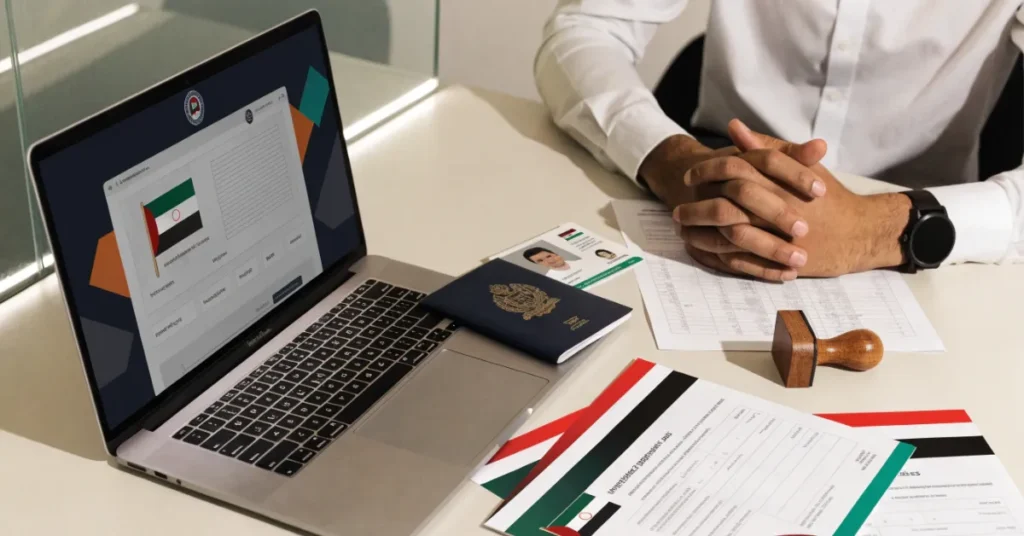
The employment visa allows eligible foreign employees to live and work legally in the UAE. It is completed after the work permit has been approved.
Entry Permit
For employees recruited from outside the UAE, an entry permit is generally issued before arrival. This allows the employee to enter the country for employment purposes.
Medical Fitness Examination
Employees complete a mandatory medical fitness test at an approved medical centre. The examination helps confirm eligibility for residence visa processing.
Emirates ID Registration
Employees register for an Emirates ID by completing biometric verification and submitting the required information. The Emirates ID is an official identification document used for various government and private services.
Residence Visa Issuance
Once the required procedures are completed, the residence visa is processed. The residence visa allows eligible expatriate employees to legally reside in the UAE while working for their sponsoring employer.
Final Employee Registration
After visa issuance, employers complete the remaining employment formalities before the employee officially starts work.
Employment Visa Checklist
- Job offer accepted
- Employment contract signed
- Work permit approved
- Entry permit completed (if applicable)
- Medical fitness examination passed
- Emirates ID registration completed
- Residence visa issued
- Employee ready for onboarding
Recruitment Rules for Mainland vs Free Zone Companies
Recruitment procedures can vary depending on whether the company operates on the UAE mainland or within a free zone. Understanding these differences helps employers follow the correct hiring process.
| Mainland Company | Free Zone Company |
|---|---|
| Follows mainland employment regulations | Follows the regulations of the relevant free zone authority |
| Recruitment procedures are managed through the applicable government authorities | Recruitment is managed through the relevant free zone authority |
| Employees are sponsored by the mainland employer | Employees are sponsored by the free zone company |
| Employment requirements follow applicable mainland regulations | Employment requirements follow free zone regulations |
| Business activities are governed by mainland licensing requirements | Business activities are governed by free zone licensing requirements |
Mainland Recruitment
Mainland businesses can recruit employees for operations throughout the UAE, provided they comply with applicable labour and immigration regulations.
Employers should ensure:
- Valid employment contracts
- Work permit approval
- Employment visa completion
- Payroll compliance
- Employee record maintenance
Free Zone Recruitment
Free zone companies recruit employees under the rules established by their respective free zone authorities.
Employers should understand the specific requirements relating to:
- Visa sponsorship
- Employee quotas
- Documentation
- Employment contracts
- Onboarding procedures
Following the applicable regulations helps businesses avoid unnecessary delays during recruitment.
UAE Labour Law Requirements Employers Must Follow
Recruitment is only one part of employer compliance. Businesses must also meet their responsibilities throughout the employment relationship.
Employment Contracts
Every employee should receive a legally compliant employment contract outlining the agreed terms and conditions of employment.
The contract should clearly define:
- Position
- Salary
- Working hours
- Leave entitlements
- Notice period
- Other employment conditions
Probation Period
Where applicable, the probation period should comply with UAE labour law requirements and be clearly stated in the employment contract. Both employers and employees should understand their rights and obligations during this period.
Employee Rights
Employers should respect employee rights throughout the employment relationship.
These include:
- Fair treatment
- Timely salary payment
- Annual leave
- Public holiday entitlements
- End-of-service benefits, where applicable
- Safe working environment
Wage Protection
Businesses should maintain accurate payroll records and comply with applicable salary payment requirements. Proper payroll management supports transparency and helps employers meet their legal obligations.
Working Hours and Leave
Employers should follow the applicable regulations regarding:
- Working hours
- Weekly rest days
- Annual leave
- Sick leave
- Public holidays
- Other statutory leave entitlements
Record Keeping
Maintaining organized employee records is an important compliance requirement.
Businesses should securely maintain records such as:
- Employment contracts
- Work permits
- Visa documents
- Payroll records
- Employee identification documents
- Leave records
Proper documentation supports future renewals, inspections, and employment administration.
Employee Onboarding Best Practices
A structured onboarding process helps new employees become productive more quickly while ensuring the business meets its legal and operational obligations. Effective onboarding also improves employee engagement and reduces compliance risks.
Employee Onboarding Checklist
- Complete all employment documentation.
- Verify work permit and employment visa status.
- Register the employee for payroll.
- Provide company policies and employee handbook.
- Arrange workplace orientation.
- Set up email and system access.
- Introduce reporting managers and team members.
- Explain workplace health and safety policies.
- Review leave policies and working hours.
- Conduct compliance and ethics training.
A well-organized onboarding process creates a positive employee experience and helps businesses maintain HR compliance.
Common Recruitment and Visa Mistakes Businesses Should Avoid
Many recruitment delays and compliance issues occur because employers overlook essential legal requirements. Avoiding these common mistakes helps ensure a smooth hiring process.
Common Mistakes
- Allowing employees to start work before obtaining the required work permit.
- Submitting incomplete or inaccurate visa documents.
- Using incorrect or outdated employment contracts.
- Delaying work permit or visa applications.
- Failing to verify employee qualifications where required.
- Missing document renewal deadlines.
- Maintaining incomplete employee records.
- Ignoring payroll compliance requirements.
- Failing to follow applicable labour regulations.
- Not providing proper employee onboarding.
Regular internal reviews of recruitment and HR procedures can help identify and correct compliance issues before they become costly.
Estimated Recruitment and Visa Timeline in the UAE
The overall recruitment timeline depends on the business activity, documentation, and government approvals. Preparing documents in advance can help speed up the process.
| Process | Estimated Timeline |
|---|---|
| Candidate selection | Varies by employer |
| Job offer acceptance | 1–3 days |
| Employment contract preparation | 1–3 days |
| Work permit application | Subject to approval |
| Entry permit (if applicable) | Subject to approval |
| Medical fitness examination | Usually completed after arrival |
| Emirates ID registration | After biometric appointment |
| Residence visa issuance | After completion of required procedures |
| Employee onboarding | Immediately after legal approvals |
Actual processing times may vary depending on the employer, jurisdiction, and government requirements.
Cost Factors for Recruitment, Work Permit & Employment Visa
The total cost of hiring an employee depends on several business and regulatory factors. Employers should budget for both recruitment and compliance-related expenses.
Common Cost Factors
- Government application fees
- Work permit processing fees
- Employment visa processing
- Medical fitness examination
- Emirates ID registration
- Health insurance requirements
- Document translation (if required)
- PRO or administrative support
- Recruitment agency fees (if used)
- Employee onboarding expenses
Costs vary depending on the emirate, company type, employee category, and applicable government regulations.
Real UAE Business Example
A Dubai-based technology company needed to hire an experienced software engineer from outside the UAE to support a growing client portfolio. The company first identified the role, conducted interviews, and issued a formal job offer. After the candidate accepted the offer, the employer prepared a compliant employment contract and submitted the required work permit application. Once the work permit was approved, the company completed the employee’s entry permit process, arranged the mandatory medical fitness examination, registered the employee for an Emirates ID, and finalized the residence visa.
Before the employee’s first working day, the HR team completed payroll registration, provided company policies, granted system access, and conducted an onboarding session.
By following the correct recruitment, visa, and onboarding procedures, the company avoided delays, maintained compliance with UAE employment regulations, and enabled the employee to begin work without legal or administrative issues.
Key Lessons
- Prepare documentation early.
- Follow the correct approval sequence.
- Complete work permit and visa procedures before employment begins.
- Maintain accurate employee records.
- Use a structured onboarding process.
Recruitment & Visa Compliance Checklist for Employers
Employers can use the following checklist to monitor compliance throughout the recruitment process.
Recruitment Checklist
- Workforce requirements identified.
- Candidate selected.
- Job offer accepted.
- Employment contract signed.
- Required documents collected.
- Work permit application submitted.
- Work permit approved.
- Entry permit completed (if applicable).
- Medical fitness examination completed.
- Emirates ID registration completed.
- Residence visa issued.
- Payroll registration completed.
- Employee records updated.
- Workplace orientation completed.
- Employee onboarding completed.
Using a standardized checklist helps reduce errors and improve recruitment efficiency.
Why Choose Ripple Business Setup for Recruitment, Visa & Work Permit Support?
Recruiting employees in the UAE involves more than selecting the right candidates. Businesses must also manage work permits, employment visas, labour documentation, and onboarding while complying with UAE regulations. Ripple Business Setup provides professional support to help companies complete these processes efficiently and remain compliant.
Our services include:
- Recruitment and HR advisory
- UAE employment visa assistance
- Work permit application support
- Company formation for mainland and free zone businesses
- PRO and government liaison services
- Payroll and HR compliance guidance
- Corporate Tax, VAT, and accounting services
- Business licensing and regulatory support
Whether you are hiring your first employee or expanding your workforce, Ripple Business Setup can help simplify the recruitment, visa, and onboarding process while ensuring your business meets UAE compliance requirements.
Contact Ripple Business Setup
- Phone: +971 50 593 8101
- WhatsApp: +971 4 250 0833
- Email: info@ripplellc.ae
- Website: https://ripplellc.ae
Frequently Asked Questions
How long does a UAE work permit take?
Processing times vary depending on the employer, documentation, and government approvals. Complete and accurate applications generally reduce delays.
Is a work permit different from an employment visa?
Yes. A work permit provides legal authorization to work, while an employment visa allows eligible foreign employees to legally reside and work in the UAE.
Who applies for the work permit?
The employer is responsible for submitting the work permit application on behalf of the employee.
Can an employee start working before receiving a work permit?
No. Employees should only begin work after the required legal approvals have been obtained.
What documents are required for a UAE employment visa?
Common documents include a valid passport, employment contract, passport photographs, medical fitness results, Emirates ID application, and supporting employer documents.
Do free zone companies follow different recruitment procedures?
Yes. Free zone companies follow the employment and immigration procedures established by their respective free zone authorities.
What happens if an employer fails to comply with UAE labour regulations?
Non-compliance may result in administrative penalties, delays in approvals, restrictions on future applications, or other legal consequences, depending on the nature of the violation.
Can businesses recruit employees from outside the UAE?
Yes. Employers can recruit international employees by completing the required recruitment, work permit, immigration, and employment visa procedures.
Conclusion
Recruitment in the UAE extends beyond selecting the right candidate. Employers must also complete work permit applications, employment visa procedures, employment contracts, and employee onboarding while complying with applicable labour and immigration regulations. Understanding the differences between a work permit and an employment visa, preparing accurate documentation, and following the correct recruitment workflow can help businesses avoid delays, reduce compliance risks, and create a positive employee experience.
Disclaimer: This article is provided for general informational purposes only and should not be considered legal, immigration, or employment advice. UAE labour, immigration, and visa regulations may change over time. Businesses should consult qualified legal or HR professionals or the relevant UAE authorities before making employment or compliance decisions.