Choosing the right business setup in Dubai can have a major impact on costs and long-term growth. Many entrepreneurs face the decision between a Mainland or Freezone company, each offering unique advantages depending on your business model, target market, and operational needs.
Understanding the differences is critical in 2026, as Dubai has updated license fees, visa rules, and office requirements. Making the wrong choice can lead to unnecessary expenses, so evaluating options carefully is essential.
Understanding Mainland vs Freezone in Dubai
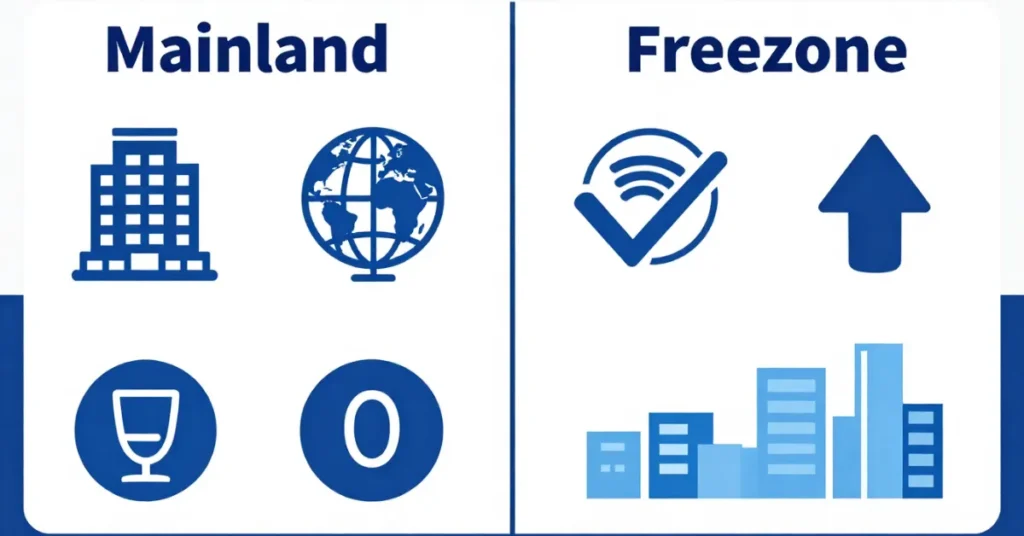
When setting up a business in Dubai, understanding Mainland vs Freezone structures is the first step.
- Mainland companies are registered with the Department of Economic Development (DED) and allow trading across the UAE market directly. They typically require a local sponsor for foreign investors, and office space is mandatory.
- Freezone companies offer 100% foreign ownership, tax incentives, and simplified setup procedures. However, Freezone businesses cannot trade directly in the UAE market without a local distributor.
Example: A small trading company targeting UAE clients might choose Mainland for direct access, whereas an e-commerce business selling internationally may save costs in a Freezone.
Key Differences at a Glance:
| Feature | Mainland | Freezone |
|---|---|---|
| Ownership | Requires UAE national sponsor | 100% foreign ownership |
| Market Access | UAE-wide | Restricted, requires local distributor |
| Office Requirements | Mandatory physical office | Flexi-desk or virtual office allowed |
| Licensing Fees | Higher than some Freezones | Often lower, depending on Freezone |
Tip 1: Compare License Costs Between Mainland and Freezone
License fees are a major cost component when choosing a setup. Mainland license fees are generally higher due to mandatory office rent, government charges, and sponsor fees. Freezones often have lower fees and optional packages for startups.
2026 estimated license fees:
| License Type | Mainland (DED) | Popular Freezones (e.g., DMCC, JAFZA) |
|---|---|---|
| Trade License | AED 15,000 – 25,000 | AED 10,000 – 15,000 |
| Renewal Fee | AED 10,000 – 15,000 | AED 7,000 – 12,000 |
| Optional Services | AED 5,000+ | AED 3,000+ |
Example: A Freezone export business can save up to 30% in licensing costs annually compared to a Mainland setup.
Cost-Saving Bullet Points:
- Initial registration fees vary by jurisdiction
- Annual license renewal can differ significantly
- Optional service charges may include VAT registration, audit, or trade permit
Tip 2: Optimize Office Space and Flexi-Desk Options
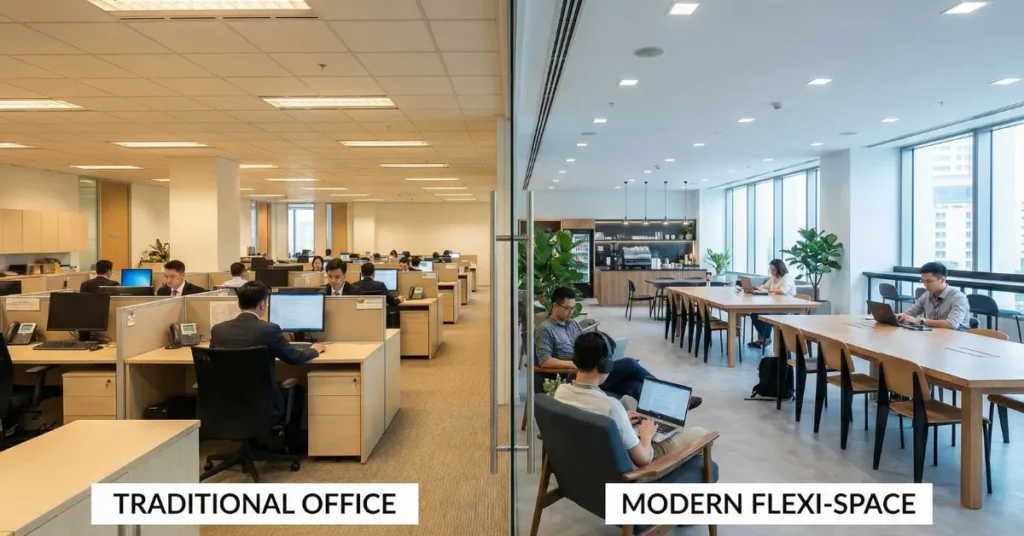
Office costs can eat into your budget if not planned carefully. Mainland companies are required to maintain a physical office, while Freezones often offer virtual offices or flexi-desks, reducing overhead.
Example: A small IT startup in Dubai saved 40% on operational costs by choosing a Freezone virtual office instead of a Mainland physical space.
Points to Consider:
- Flexi-desk options in Freezones reduce rent costs
- Mainland office requirements include utilities and maintenance fees
- Hidden costs may include service charges, internet, and electricity
Tip 3: Minimize Visa and Staff Costs
Employee and owner visas are another cost factor. Mainland companies often allow more visas based on office size, but require higher fees. Freezones provide visa quotas linked to your office package, which can be more cost-efficient for smaller teams.
Example: A Freezone-based consultancy hired two employees under a flexi-visa plan, saving over AED 25,000 annually compared to a Mainland setup with three employees.
Bullet Points:
- Owner visa vs employee visa costs vary by setup
- Family sponsorship is easier in some Freezones
- Renewal fees and government charges differ and should be calculated upfront
Tip 4: Leverage Tax and Corporate Benefits
Dubai’s tax framework has evolved, with corporate tax applying to businesses with profits above AED 375,000. Mainland companies pay corporate tax as applicable, while many Freezones still offer exemptions and tax incentives.
Example: A trading company in Jebel Ali Freezone continues to benefit from corporate tax exemptions, improving net profits and reinvestment potential.
Considerations:
- Corporate tax exemptions are available in most Freezones
- VAT registration is mandatory for qualifying businesses
- Profit repatriation is easier under Freezone structures
Practical Tips to Decide Between Mainland and Freezone
When deciding, evaluate:
- Business Model: Trading locally vs exporting internationally
- Cost Analysis: License, office, visa, and tax savings
- Future Growth: Expansion in UAE or abroad
- Operational Needs: Staff size, office requirements, flexibility
Example Comparison Table:
| Factor | Mainland | Freezone |
|---|---|---|
| Market Access | Direct UAE sales | Export-focused, requires distributor |
| Setup Cost | Higher upfront | Lower upfront |
| Visa Quota | Higher with larger office | Limited to package |
| Corporate Tax | Standard UAE tax rules | Exemptions in many Freezones |
Common Mistakes to Avoid When Comparing Mainland and Freezone
- Overlooking hidden charges such as utilities, service fees, or sponsor fees
- Ignoring long-term expansion plans beyond Dubai
- Not factoring visa and office costs into overall budget
- Failing to consult a UAE business setup advisor for tailored guidance
How Ripple Business Setup Can Help
Contact Ripple Business Setup at +971 50 593 8101, email info@ripplellc.ae, or WhatsApp +971 4 250 0833. Our team helps businesses choose the most cost-efficient structure based on 2026 regulations. We guide through licenses, visas, office options, and tax benefits to save money while ensuring full compliance with Dubai laws.
FAQ
Which is cheaper, Mainland or Freezone in Dubai?
Freezone setups are generally cheaper initially, especially for export-oriented businesses. Mainland companies may have higher license, office, and visa costs, but they allow direct access to UAE clients. A detailed cost comparison will depend on office size, license type, and number of visas.
Can I trade locally in a Freezone?
Direct UAE trading from a Freezone is restricted. Businesses must appoint a local distributor or partner to sell in the UAE market. Mainland companies do not have this limitation.
How many visas can I get in a Freezone company?
Visa quotas depend on your Freezone package and office size. Small Freezone setups usually allow 1-3 visas, while medium setups may offer 5-10 visas. Some Freezones provide flexi-packages for startups to save costs.
Is Mainland better for long-term expansion in UAE?
Pros:
- Direct access to UAE market
- Flexibility in business operations
- Easier to scale staff
Cons:
- Higher setup and operational costs
- Mandatory physical office
Disclaimer: Information provided is for general guidance on Dubai business setups. Licensing, visa rules, and fees may change. Professional consultation recommended.