
Dubai has become one of the leading global trade hubs for food products. The city’s strategic location, advanced logistics infrastructure, and growing population create strong opportunities for entrepreneurs looking to start a Foodstuff Trading Business. The UAE imports a significant portion of its food products, making food trading an essential sector of the economy.
A Foodstuff Trading Business allows companies to import, export, distribute, wholesale, and retail various food products across Dubai and the wider UAE market. With access to international suppliers and a business-friendly environment, Dubai offers an ideal platform for launching and expanding a food trading company.
What Is a Foodstuff Trading Business in Dubai?
A Foodstuff Trading Business involves the purchase, import, export, storage, distribution, and sale of food products. Businesses operating under this activity can source food products from local or international suppliers and distribute them throughout the UAE and GCC region.
Unlike food manufacturing companies, food trading businesses do not produce food products. Their primary role is managing the supply chain and ensuring food products reach retailers, wholesalers, restaurants, and consumers.
Products Allowed Under a Foodstuff Trading License
A Foodstuff Trading License generally covers:
- Packaged food products
- Beverages
- Frozen foods
- Dairy products
- Canned foods
- Organic food products
- Grains and pulses
- Spices and condiments
- Snacks and confectionery
Business owners should confirm their specific trading activities with the relevant licensing authority before applying.
Why Start a Foodstuff Trading Business in Dubai?
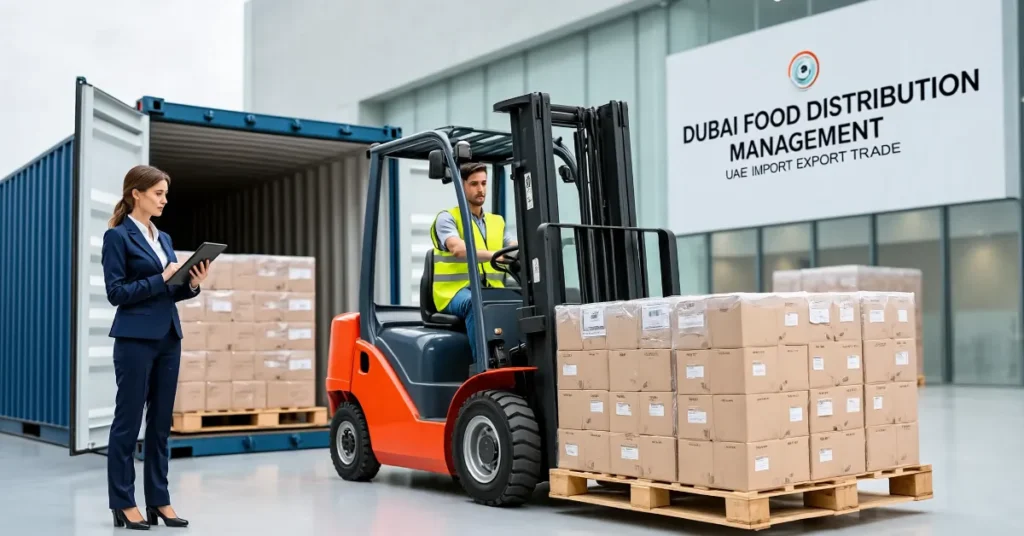
Dubai offers several advantages that make it one of the most attractive destinations for food trading companies.
Strategic Gateway for International Trade
Dubai connects major markets across Asia, Europe, and Africa. Its ports, airports, and logistics facilities enable businesses to import and distribute food products efficiently.
Growing Demand for Food Products
The UAE’s expanding population, tourism sector, hospitality industry, and retail market continue to drive demand for food products. This creates ongoing opportunities for food traders.
Access to Global Suppliers
Food traders in Dubai can source products from various countries and establish relationships with international manufacturers and distributors.
Business-Friendly Environment
The UAE government supports business growth through streamlined licensing procedures, modern infrastructure, and investor-friendly regulations.
Tax Advantages
Businesses operating in Dubai benefit from several advantages, including:
- No personal income tax
- Competitive corporate tax framework
- Access to double taxation agreements with many countries
Benefits of Starting a Foodstuff Trading Business in Dubai
Starting a Food Trading Company UAE provides access to a large and growing market. Businesses can serve supermarkets, grocery stores, hotels, restaurants, catering companies, and online consumers.
Key benefits include:
- 100% foreign ownership in eligible structures
- Access to GCC markets
- Advanced logistics infrastructure
- Strong consumer demand
- Modern warehousing facilities
- Multiple business setup options
- Opportunities for expansion
- E-commerce growth potential
These advantages make Dubai a preferred location for entrepreneurs seeking long-term growth in the food sector.
Types of Foodstuff Trading Licenses in Dubai
Selecting the correct license structure is important because it determines where and how your business can operate.
Mainland Foodstuff Trading License
A mainland license allows businesses to trade directly within the UAE market. Companies can work with government entities, retailers, restaurants, and distributors across the country. This option is suitable for businesses planning to establish a strong local presence and serve customers throughout the UAE.
Free Zone Foodstuff Trading License
Free zone licenses offer benefits such as simplified company formation procedures and strategic locations near ports and logistics facilities. This structure is often preferred by companies focused on international trade, import, export, and regional distribution.
Import and Export Food Trading License
Businesses involved in bringing food products into the UAE or exporting them to international markets may require activities covering import and export operations. This structure supports international sourcing and cross-border distribution.
Wholesale Food Trading License
Wholesale food traders purchase products in bulk and supply supermarkets, retailers, hotels, restaurants, and distributors. This model focuses on large-volume transactions and supply chain management.
Retail Food Trading License
Retail food traders sell products directly to consumers through physical stores, supermarkets, specialty shops, or online platforms. This option suits businesses targeting end users rather than wholesale buyers.
Which License Is Best for Your Business?
The right license depends on your business objectives. Companies focused on UAE sales often choose mainland structures, while businesses involved primarily in international trade may prefer free zone options. Wholesale distributors and retail sellers should ensure their selected activities align with their operating model before applying for a license.
Step-by-Step Guide to Start a Foodstuff Trading Business in Dubai
Setting up a Foodstuff Trading Business in Dubai involves several regulatory and operational steps. Following the correct process helps ensure compliance and avoids delays during company formation.
Step 1: Select Business Activities
Begin by identifying the specific food trading activities your company will conduct. Your selected activities should accurately reflect your business model, whether it involves importing, exporting, wholesale distribution, retail sales, or a combination of these services.
Step 2: Choose Mainland or Free Zone
The next step is selecting the appropriate jurisdiction. Mainland companies can trade directly within the UAE market, while free zone companies often benefit from strategic locations and simplified setup procedures. The right choice depends on your target customers and expansion plans.
Step 3: Reserve a Trade Name
Choose a trade name that complies with UAE naming regulations. The selected name should be unique, relevant to your business activity, and approved by the licensing authority.
Step 4: Obtain Initial Approval
Initial approval confirms that the authorities have no objection to establishing your business. This approval allows you to proceed with the remaining registration requirements.
Step 5: Secure Office or Warehouse Space
Food trading businesses may require office facilities, warehouses, or storage units depending on their operations. The premises should comply with applicable regulations and licensing requirements.
Step 6: Apply for a Foodstuff Trading License
Submit the required application forms and supporting documents to the relevant authority. Once approved, your Foodstuff Trading License will be issued, allowing your business to operate legally.
Step 7: Register with Dubai Municipality
Food products traded within Dubai must comply with food safety regulations. Businesses may need to complete relevant registrations and approvals through Dubai Municipality before importing or distributing certain products.
Step 8: Complete Import and Export Registration
If your company plans to import or export food products, additional customs and trade registrations may be required. These registrations facilitate international trade activities.
Step 9: Open a Corporate Bank Account
A corporate bank account is essential for managing business transactions, supplier payments, and operational expenses. Banks may request company documents and shareholder information during the account opening process.
Step 10: Launch Business Operations
Once all approvals and registrations are complete, the company can begin sourcing products, establishing supplier relationships, and serving customers across the UAE and other markets.
Documents Required for a Foodstuff Trading License in Dubai
The documentation process is generally straightforward when applicants prepare all required paperwork in advance.
Required Documents for Individual Shareholders
Applicants typically need:
- Passport copy
- Visa copy (if applicable)
- Passport-size photograph
- Emirates ID copy (if available)
- License application form
Required Documents for Corporate Shareholders
Corporate investors may be required to provide:
- Certificate of incorporation
- Memorandum of Association
- Board resolution
- Shareholder documents
- Company registration records
Additional documents may be requested depending on the business structure and licensing authority.
Foodstuff Trading License Cost in Dubai
The cost of obtaining a Foodstuff Trading License in Dubai varies based on several factors. There is no single fixed cost because each business has different operational requirements.
Businesses should consider licensing fees, office expenses, visa allocations, and regulatory approvals when planning their budget.
Factors Affecting the Cost
Several factors influence the overall setup cost:
- Mainland or free zone jurisdiction
- Number of shareholders
- Office or warehouse requirements
- Number of visas required
- Government fees
- Additional approvals and registrations
Estimated Business Setup Expenses
| Expense Category | Purpose |
|---|---|
| License Fees | Business registration |
| Trade Name Registration | Name reservation |
| Office Costs | Office or warehouse rental |
| Visa Costs | Investor and employee visas |
| Municipality Fees | Regulatory approvals |
| Banking Costs | Corporate account setup requirements |
Before proceeding, investors should obtain updated quotations from the relevant authority or business setup consultant to determine accurate costs.
Dubai Municipality Requirements for Foodstuff Trading Companies

Food safety compliance plays an important role in the success of any Foodstuff Trading Business. Dubai Municipality regulates food products to ensure they meet safety and quality standards before reaching consumers.
Food Safety Compliance Standards
Businesses must follow food safety regulations relating to storage, transportation, handling, and distribution. Compliance helps protect consumers and maintain product quality throughout the supply chain.
Product Registration Procedures
Certain food products may require registration before they can be imported or sold in the UAE market. Businesses should verify registration requirements before placing orders with suppliers.
Food Labeling Requirements
Food labels must contain accurate information about the product. This may include ingredient details, nutritional information, expiry dates, country of origin, and other mandatory information required by UAE regulations.
Storage and Warehouse Regulations
Food products must be stored under suitable conditions to maintain quality and safety. Warehouses should meet applicable standards relating to hygiene, temperature control, and inventory management.
Common Compliance Mistakes to Avoid
Businesses can reduce operational risks by avoiding common mistakes such as:
- Incomplete product registrations
- Incorrect food labeling
- Poor storage practices
- Failure to maintain compliance records
- Delayed renewal of approvals and licenses
Proper compliance management helps businesses avoid penalties and operational disruptions.
Food Import Regulations for Foodstuff Trading Businesses in Dubai
Many Foodstuff Trading Businesses rely on imported products. Understanding import requirements helps ensure smooth customs clearance and regulatory compliance.
Food Product Approval Process
Before importing food products, businesses should verify whether the products require approval or registration. This process helps ensure compliance with UAE food safety regulations.
Customs Clearance Procedures
Imported food shipments must pass through customs clearance procedures. Businesses should ensure that all documents are accurate and complete to avoid delays.
Health and Safety Requirements
Food products entering the UAE must comply with health and safety standards. Authorities may inspect products to confirm compliance before allowing distribution within the market.
Product Labeling Compliance
Imported food products must meet UAE labeling requirements. Labels should provide clear and accurate information for consumers and regulatory authorities.
Required Import Documentation
Businesses commonly require the following documents when importing food products:
- Commercial invoice
- Packing list
- Certificate of origin
- Health certificate
- Bill of lading
- Customs-related documents as required
Maintaining accurate documentation helps streamline import procedures and supports efficient supply chain operations.
Best Locations for a Foodstuff Trading Business in Dubai
Choosing the right location can significantly impact the success of a Foodstuff Trading Business. The ideal location depends on your target market, warehousing requirements, and import-export activities.
Dubai Mainland
Dubai Mainland is suitable for businesses that want direct access to customers throughout the UAE. Companies can work with supermarkets, restaurants, hotels, government entities, and retail outlets without restrictions.
Jebel Ali Free Zone (JAFZA)
JAFZA is one of the most popular locations for food trading businesses involved in international trade. Its proximity to Jebel Ali Port provides efficient access to global shipping routes and logistics services.
Dubai South
Dubai South offers excellent connectivity through air, sea, and land transportation networks. It is a preferred location for businesses involved in import, export, and regional distribution.
Dubai CommerCity
Dubai CommerCity is designed for businesses focused on e-commerce operations. Food traders planning to sell products online can benefit from its digital infrastructure and logistics support.
Meydan Free Zone
Meydan Free Zone provides flexible business setup solutions and is suitable for entrepreneurs looking for a streamlined company formation process.
IFZA Dubai
IFZA is a popular option for investors seeking cost-effective business setup solutions while maintaining access to Dubai’s commercial market.
Challenges of Running a Foodstuff Trading Business and How to Overcome Them
Like any business, food trading comes with operational challenges. Understanding these challenges in advance helps companies develop effective strategies.
Regulatory Compliance Challenges
Food traders must comply with food safety regulations, licensing requirements, and product registration procedures. Regular compliance reviews help businesses avoid penalties and delays.
Inventory and Shelf-Life Management
Many food products have limited shelf lives. Proper inventory management systems help reduce waste and maintain product quality.
Supplier Reliability Issues
Working with reliable suppliers is essential for maintaining consistent product availability. Businesses should conduct supplier evaluations and establish clear supply agreements.
Logistics and Transportation Costs
Transportation expenses can affect profitability. Businesses can manage costs by optimizing delivery routes and building relationships with reliable logistics providers.
Market Competition
Dubai’s food sector is highly competitive. Companies can differentiate themselves through product quality, competitive pricing, and excellent customer service.
Practical Solutions for Sustainable Growth
Businesses can strengthen operations by:
- Implementing inventory management software
- Conducting supplier audits
- Maintaining compliance documentation
- Establishing quality control procedures
- Monitoring market trends regularly
How to Grow a Foodstuff Trading Business in Dubai
Growth opportunities are available for businesses that focus on expanding their customer base and product portfolio.
Expand into Wholesale Distribution
Supplying supermarkets, grocery stores, and distributors can increase sales volume and strengthen market presence.
Supply Hotels, Restaurants, and Cafés
Dubai’s hospitality industry creates continuous demand for food products. Building relationships with hotels and restaurants can generate long-term contracts.
Enter the E-Commerce Market
Online food sales continue to grow across the UAE. E-commerce platforms provide additional sales channels and access to a broader customer base.
Build Partnerships Across GCC Countries
Food traders can expand beyond the UAE by establishing distribution partnerships in neighboring GCC markets.
Launch Private Label Products
Developing private label products can improve brand recognition and create additional revenue opportunities.
Foodstuff Trading Business Success Story in Dubai
A small food trading company entered the Dubai market by importing packaged food products from international suppliers. Initially, the company focused on supplying a limited number of retail stores.
After establishing strong supplier relationships, the business expanded its product range and secured contracts with supermarkets and hospitality businesses. The company invested in efficient warehousing, inventory management systems, and regulatory compliance procedures.
Over time, the business expanded distribution across the GCC region and introduced private label products. By maintaining product quality, ensuring compliance, and building strong customer relationships, the company achieved sustainable growth and increased market share.
This example demonstrates the importance of planning, compliance, and operational efficiency when building a successful Foodstuff Trading Business.
Common Mistakes to Avoid When Starting a Foodstuff Trading Business
Many startups face avoidable challenges due to poor planning or lack of regulatory knowledge.
Common mistakes include:
- Selecting the wrong license type
- Ignoring municipality requirements
- Failing to register products when required
- Choosing unreliable suppliers
- Underestimating logistics expenses
- Poor inventory management
- Inadequate market research
- Non-compliant food labeling
Avoiding these mistakes can help businesses reduce risks and improve operational efficiency.
Why Dubai Continues to Lead the UAE Food Trading Sector
Dubai remains one of the most attractive locations for food trading businesses because of its strong infrastructure, international connectivity, and growing consumer market. The city offers world-class ports, airports, logistics facilities, and warehousing solutions. Businesses also benefit from access to international suppliers and customers across multiple regions.
As the UAE population and tourism sector continue to grow, demand for food products is expected to remain strong. This creates long-term opportunities for food traders looking to establish and expand their operations.
Why Choose Ripple Business Setup for Your Foodstuff Trading Business in Dubai?
Setting up a Foodstuff Trading Business in Dubai involves selecting the right business activity, obtaining the necessary approvals, and ensuring compliance with UAE regulations. Ripple Business Setup provides professional assistance throughout the company formation process, helping entrepreneurs establish their businesses efficiently and confidently. From trade license applications and trade name registration to visa processing and corporate bank account support, our team offers end-to-end guidance tailored to your business needs. To start your Foodstuff Trading Business in Dubai, contact Ripple Business Setup at +971 50 593 8101, email info@ripplellc.ae, or WhatsApp +971 4 250 0833 for expert assistance.
FAQ
Can foreigners own a Foodstuff Trading Business in Dubai?
Yes. Foreign investors can own food trading businesses in Dubai, subject to applicable licensing regulations and business structures.
How much does a Foodstuff Trading License cost in Dubai?
The cost varies depending on factors such as jurisdiction, office requirements, visa allocations, and additional approvals.
Is Dubai Municipality approval required?
Certain food trading activities and products may require approvals, registrations, or compliance procedures through Dubai Municipality.
Can I import food products from overseas?
Yes, Licensed food trading businesses can import food products provided they comply with UAE regulations and import requirements.
Which is better for food trading, Mainland or Free Zone?
The best option depends on your business objectives. Mainland companies can trade directly within the UAE market, while free zones are often preferred for international trade activities.
How long does the setup process take?
The timeline varies depending on the chosen jurisdiction, licensing authority, and approval requirements.
Do I need warehouse facilities?
Warehouse requirements depend on the nature of your operations and the products being traded.
Can I sell food products online in the UAE?
Yes. Food trading businesses can sell products online, provided they obtain the necessary approvals and comply with applicable regulations.
Disclaimer: The information provided in this article is for general informational purposes only. Business setup requirements, licensing regulations, government fees, and compliance obligations may change over time. Investors should verify current requirements with the relevant UAE authorities or seek professional advice before making business decisions.