Planning your financial future in the UAE is about more than just saving and investing; it is also about making sure the right people receive what you have worked for. Will registration in the UAE is one of the most important steps any resident, expatriate, or property owner can take to protect their assets and family. Yet many people either delay it, misunderstand the process, or are simply unaware that UAE courts apply local inheritance laws by default when no registered will exists. This guide walks you through everything you need to know, clearly and without legal jargon.
What is Will Registration in the UAE?
Will registration in the UAE is the formal legal process of submitting a written document, your will, to an authorized government or judicial body, which then officially records it and gives it legal standing in UAE courts. Once registered, your will serves as a binding instruction for how your assets should be distributed after your death.
In many countries, a handwritten or witnessed will carries automatic legal weight. The UAE is different. Without a properly registered will, UAE inheritance law applies to your estate regardless of your nationality or religion. By default, courts follow Sharia law principles to determine who inherits your property, your bank accounts, and even custody of your minor children. For many expatriate families, this outcome can be drastically different from what they intended.
Estate planning in the UAE is therefore not just a paperwork exercise it is an active decision to take control of outcomes that would otherwise be decided for you.
Why Will Registration in the UAE is Important

The consequences of not having a registered will can be significant and, in some cases, irreversible. Here is why this matters:
- Protects your assets and ensures they go to the people you choose, not those determined by default inheritance rules
- Avoids automatic application of Sharia law, which may distribute assets in ways that differ from your wishes, particularly relevant for non-Muslim expatriates
- Ensures guardianship for your minor children is established clearly, preventing legal uncertainty during an already difficult time
- Reduces legal disputes between surviving family members by providing a clear, court-recognized record of your intentions
- Prevents asset freezing, which commonly occurs in UAE accounts and properties when a resident dies without a will, sometimes leaving families without access to funds for months
Real-Life Scenario
Consider a British couple living in Dubai with two children. The husband passed away unexpectedly without a registered will. Under UAE law, the estate does not automatically transfer to the wife. Instead, the court distributes assets according to Sharia principles, which may allocate a share to his parents, siblings, or other family members. His wife and children could find themselves contesting an estate they expected to inherit entirely. A registered will, drafted with professional guidance, would have prevented this entirely.
Who Needs Will Registration in the UAE?
Almost every resident with assets, family, or dependents in the UAE should consider registering a will. This is especially true for:
- For expatriates living in the UAE, the default inheritance rules here are particularly likely to conflict with expectations formed in their home countries
- Business owners who hold company shares or are partners in a UAE-registered entity, without a will, business succession becomes legally complex and can disrupt operations
- Property investors, whether residing in the UAE or owning assets from abroad, who want to ensure their properties pass to designated heirs without court delays
- Parents with minor children who need to formally designate a legal guardian in case both parents pass away simultaneously
Even if your estate is modest, the absence of a registered will can still result in frozen accounts, family disputes, and prolonged legal proceedings. Estate planning for expats in the UAE is not only for the wealthy, it is for anyone who cares about what happens to their family.
Types of Wills You Can Register in the UAE
There is no single universal will registration system in the UAE. Different authorities handle different types of wills, and choosing the right one depends on your religion, nationality, and the nature of your assets.
DIFC Wills
The DIFC Wills Service Centre, operated within the Dubai International Financial Centre, is the most popular option for non-Muslim expatriates. DIFC wills are drafted and registered in English and are recognized across Dubai and Ras Al Khaimah. They operate under a common-law framework, which means they function more similarly to wills in Western jurisdictions. A DIFC will can cover real estate, bank accounts, company shares, and guardianship of minor children.
ADJD Wills (Abu Dhabi Judicial Department)
The Abu Dhabi Judicial Department offers will registration for both Muslim and non-Muslim residents. ADJD wills provide broader geographical coverage across the UAE and are particularly useful for those with assets spread across multiple emirates. These wills are typically drafted in Arabic, and a certified translation may be required for non-Arabic speakers.
Dubai Courts Wills
Dubai Courts handle Arabic-language wills and are commonly used by Muslim residents and mixed-faith families. These wills operate within the UAE civil and Islamic legal framework and are an established option for those who prefer the traditional court-based route or require Arabic documentation.
Free Zone Wills
Some UAE free zones offer their own will registration services, particularly relevant to business owners holding shares or assets within those free zones. These are typically used alongside a broader DIFC or ADJD will and are not a standalone estate planning solution.
Quick Comparison of Will Types
| Will Type | Jurisdiction | Language | Approx. Cost | Best For |
| DIFC Wills | Dubai, RAK | English | AED 4,000–10,000 | Non-Muslim expats |
| ADJD Wills | Wider UAE | Arabic | AED 2,000–6,000 | All residents |
| Dubai Courts | Dubai | Arabic | AED 1,500–4,000 | Muslims/mixed families |
| Free Zone Wills | Specific zones | English/Arabic | Varies | Business owners |
Note: Costs shown are approximate and exclude lawyer drafting fees. Always confirm current fees directly with the relevant authority.
Step-by-Step Process of Will Registration in the UAE
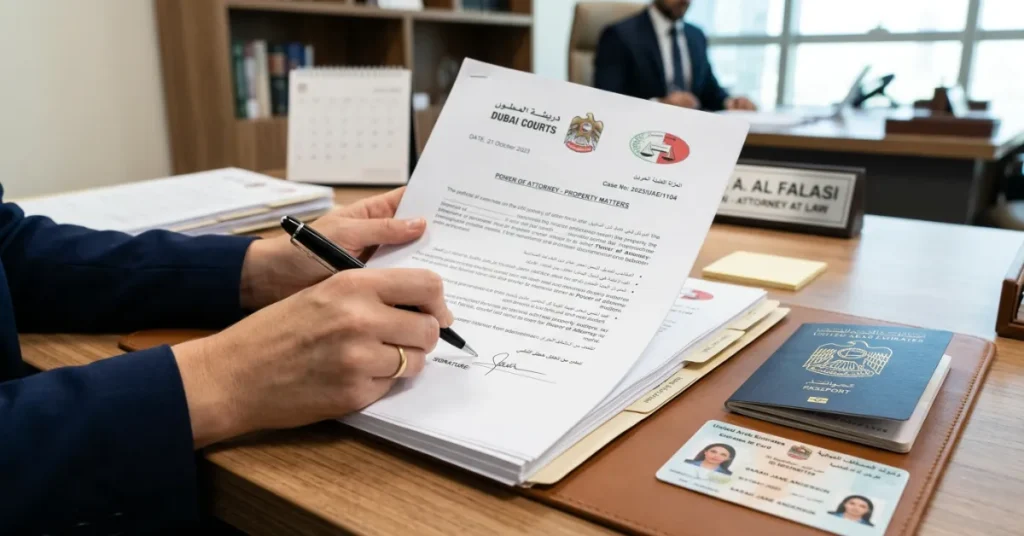
The UAE will registration process in the UAE is straightforward when you know what to expect. Follow these steps to move from intention to a legally registered document:
- Decide which type of will you need based on your religion, nationality, and the location of your assets. Non-Muslim expats in Dubai generally start with a DIFC will.
- List all your assets and beneficiaries clearly. This includes UAE property, bank accounts, investments, business interests, vehicles, and personal belongings of significant value.
- Draft the will, ideally with the help of a qualified legal professional experienced in UAE inheritance law. A poorly structured will can be rejected or contested.
- Choose the registering authority DIFC Wills Service Centre, ADJD, or Dubai Courts based on your will type and location.
- Book an appointment with the chosen authority. Most have online booking systems, and wait times are typically one to two weeks.
- Sign the will in front of the registrar or notary at the appointed time. Both you and your witnesses must be present.
- Pay the applicable registration fees. These vary by authority and will be complex.
- Receive your official registration certificate and keep both digital and physical copies in a secure location accessible to your executor or next of kin.
Documents Required for Will Registration
Having your documents ready before your appointment prevents unnecessary delays. You will generally need:
- Valid passport copy (all pages with stamps, for expatriates)
- Emirates ID front and back
- Full details of your assets, including property title deeds, bank account references, vehicle registration, and company documents
- Details of all beneficiaries, including full legal names, passport numbers, and contact information
- Guardianship details if you have minor children including the proposed guardian’s personal details
- Details of your appointed executor, the person responsible for carrying out the will
Tip: Keep both digital scans and physical originals of all documents. Naming your files clearly (e.g., passport_john_smith.pdf) saves significant time when you arrive for your appointment.
Cost of Will Registration in the UAE (2026)
The cost of will registration in the UAE depends on the type of will, the authority you choose, and whether you engage a lawyer for drafting. Here is a general breakdown for 2026:
- DIFC Wills: Registration fees typically range from AED 4,000 to AED 10,000 depending on the number of sections (e.g., property, guardianship, financial accounts). Lawyer drafting fees are additional and can add AED 3,000 to AED 8,000.
- ADJD Wills: Abu Dhabi Judicial Department fees are generally lower, ranging from AED 2,000 to AED 6,000, with similar additional costs for legal drafting.
- Dubai Courts Wills: Often the most affordable option, with registration fees starting from AED 1,500 to AED 4,000 for standard wills.
Beyond the initial registration, there are important hidden costs to consider. If your circumstances change, such as a new child, a new property, a divorce, or a significant change in financial assets, you will need to update or re-execute your will. DIFC amendments carry fees of approximately AED 500 to AED 2,000 per change. Periodic review by a legal professional also adds to the long-term cost of maintaining an up-to-date estate plan. Some residents also choose to register their will in multiple jurisdictions, which multiplies the fees accordingly.
Key Legal Considerations You Should Know
Before registering your will, it is important to understand the legal environment it will operate in. Several factors can affect whether your will is valid and enforceable:
- Sharia law default: For both Muslim and non-Muslim residents, UAE inheritance law defaults to Sharia principles in the absence of a registered will. Even for non-Muslims, courts in the UAE have historically applied local inheritance rules unless a registered will explicitly states otherwise. DIFC wills are specifically designed to counteract this by establishing English common-law jurisdiction over your estate.
- Guardianship of children: The UAE does not automatically grant guardianship to a surviving parent in all circumstances, particularly for expatriates. Naming a legal guardian in your will is essential if you have minor children, and the guardian should ideally be willing and able to take on that responsibility.
- Multi-country assets: If you own property or hold accounts in other countries, a UAE alone may not govern those assets. You may need a corresponding will in each relevant jurisdiction. Cross-border estates require specialist legal advice to avoid contradictions between different countries’ legal systems.
- Business ownership: Company shares in UAE-registered entities are subject to specific rules around transfer of ownership. Without a properly structured will and in some cases, a shareholder agreement, business succession can become highly contentious.
Expert Insight: Why Wills Get Rejected
Wills are most commonly rejected in UAE courts when they contain ambiguous language, are not witnessed correctly, fail to align with the requirements of the chosen jurisdiction, or attempt to override rules that cannot legally be overridden (such as certain Sharia inheritance entitlements for Muslim residents). A trained legal professional familiar with UAE estate planning standards can prevent these issues from arising.
Common Mistakes to Avoid in Will Registration
- Not updating the will after major life changes: A will written before a second marriage, additional children, or the sale of a property may no longer reflect your actual wishes. Review your will at least every two to three years or after any significant life event.
- Choosing the wrong jurisdiction: Registering a will with Dubai Courts when your assets are across multiple emirates, or overlooking the DIFC option as a non-Muslim, can limit the effectiveness of your will significantly.
- Ignoring the guardianship clause: Many expatriates focus on asset distribution and forget to formally appoint a guardian for minor children. This clause can be the most consequential part of the entire document.
- DIY drafting without legal review: Online will templates do not account for UAE-specific legal requirements. A document that seems complete may still contain technical errors that lead to rejection or ambiguity when it matters most.
- Failing to inform your executor: The most carefully prepared will is useless if your executor does not know it exists or cannot locate it when needed.
How Long Does Will Registration Take?
The timeline for completing a UAE will registration typically breaks down as follows: Legal drafting with a professional takes two to five business days for a standard will. Booking an appointment with your chosen authority usually means a wait of one to two weeks, depending on availability. The actual registration appointment is generally completed on the same day, with the official certificate issued immediately or within a few days. In total, most residents can complete the entire process within two to four weeks from start to finish, assuming all documents are prepared in advance.
Can You Update or Cancel a Registered Will?
Yes, a registered will in the UAE can be updated, amended, or revoked entirely. Life changes, and your legal documents should keep pace with them. You can amend specific clauses (for example, updating a beneficiary’s details or adding a new asset) by returning to the same registering authority and paying the applicable amendment fee. Alternatively, you can revoke the entire will and register a new one. When you do this, always ensure the previous will is formally cancelled with the authority that holds it to avoid any contradiction between documents.
Occasions that should prompt a review of your will include marriage, divorce, the birth or adoption of a child, significant changes in your assets, the death of a named beneficiary or executor, or a move between emirates that affects jurisdiction. The cost of an amendment is almost always far less than the cost of legal proceedings caused by an outdated document.
Will Registration in the UAE for Business Owners
Business owners in the UAE face unique estate planning challenges that standard consumer guidance does not always address. If you own shares in a UAE mainland company, a free zone entity, or a holding structure, those shares form part of your estate and are subject to the same inheritance rules as your personal assets.
- Company shares: Without a will, your shares may be frozen pending court proceedings, effectively paralyzing the business. A well-drafted will specifies who inherits your shares and can include instructions to allow the business to continue operating during the transition period.
- Protection for partners and stakeholders: Co-founders and business partners should consider both a registered will and a shareholder agreement. Together, these documents ensure that ownership transitions do not destabilize the company or force an unwanted sale.
- Smooth business succession: UAE free zone regulations may include specific rules about who can hold shares in a licensed entity. Your will should be drafted with these regulations in mind to avoid a situation where your named beneficiary is legally unable to take over your shareholding.
How Our Experts Simplify Will Registration in the UAE
Registering a will in the UAE can feel complex, especially with different authorities, legal rules, and documentation requirements. Our team at Ripple Business Setup makes this process simple and clear. We guide clients at every stage, from choosing the right type of will to final registration. Our experts understand UAE inheritance laws and help ensure that your assets, family interests, and guardianship wishes are properly protected.
We support both individuals and business owners by preparing legally compliant wills, reducing risks of disputes, and saving time. Our approach focuses on accuracy, transparency, and quick execution so you can complete the process without stress.
Contact Ripple Business Setup at +971 50 593 8101, email info@ripplellc.ae, or WhatsApp +971 4 250 0833 to get professional support for will registration in the UAE.
FAQs
Is will registration mandatory in UAE?
No, it is not legally mandatory. However, without a registered will, UAE courts apply Sharia law by default to asset distribution which may not reflect your wishes.
Can Muslims register a will in UAE?
Yes. Muslims can register wills through Dubai Courts or the ADJD. These wills typically operate within Sharia principles but can address guardianship and specific asset instructions.
What happens without a will?
Assets are distributed under UAE inheritance law, which defaults to Sharia principles for everyone, including non-Muslims. This can create lengthy legal delays and outcomes that differ from your intentions.
Can I include overseas assets?
DIFC wills can cover UAE-based assets. For overseas assets, you generally need a separate will in the relevant jurisdiction. Always consult a lawyer for cross-border estates.
Do I need a lawyer to register a will?
Assets are distributed under UAE inheritance law, which defaults to Sharia principles for everyone, including non-Muslims. This can create lengthy legal delays and outcomes that differ from your intentions.
Conclusion
Will registration in the UAE is one of the most valuable and overlooked steps in financial planning for residents, expatriates, and property owners. It is not about expecting the worst, it is about ensuring that the people you care about are protected and that your assets go exactly where you want them to go, on your terms.
The UAE offers clear, accessible will registration frameworks through the DIFC, ADJD, and Dubai Courts, each suited to different needs and circumstances. The process is manageable, the costs are reasonable relative to the protection they provide, and the peace of mind that comes from having a legally registered will is immeasurable.
Disclaimer: This content is for general informational purposes only and does not constitute legal advice. Laws and regulations in the UAE may change, and individual circumstances can vary. It is recommended to consult with a qualified legal professional or advisor before making any decisions related to will registration in the UAE.