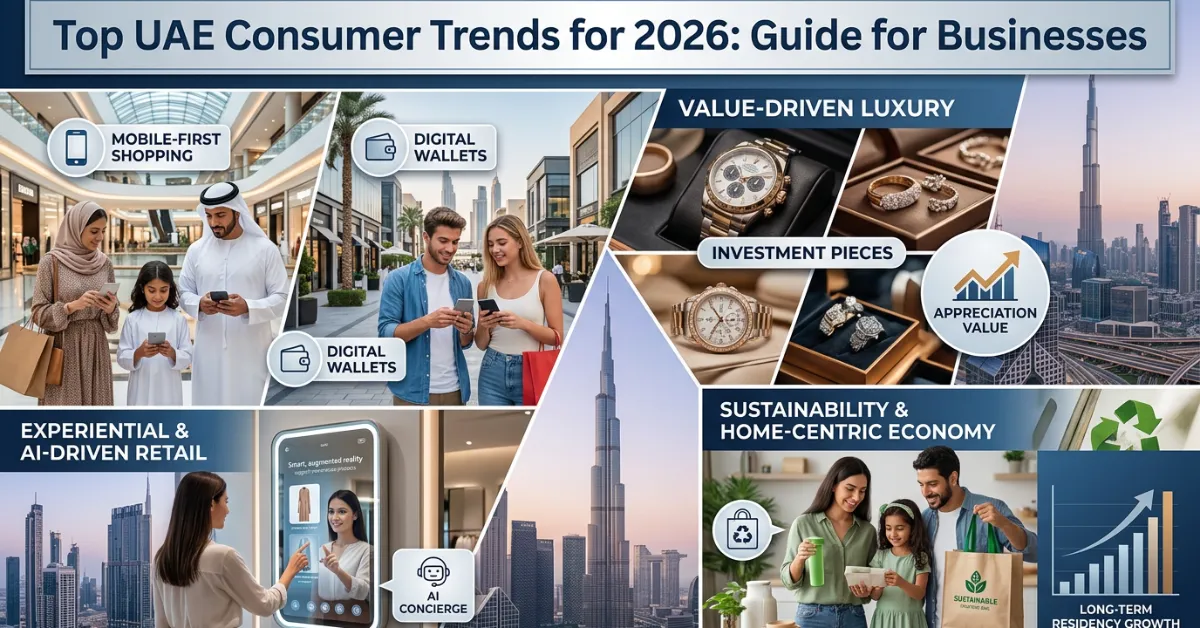
The UAE is not standing still. With a population exceeding 10 million, one of the highest smartphone penetration rates in the world, and a consumer base shaped by over 200 nationalities, the country’s market is evolving faster than ever. For businesses, whether established or newly entering the UAE, understanding the latest UAE consumer trends is not optional. It is the difference between growing and getting left behind.
In 2026, several powerful shifts are redefining how people in the UAE discover, evaluate, and buy. Digital lifestyles, sustainability consciousness, health priorities, and a strong appetite for meaningful experiences are all reshaping consumer expectations.
Understanding UAE Consumer Behaviour in 2026
The UAE consumer of 2026 is confident, connected, and discerning. Approximately 82% of the population falls within the 15–64 working-age bracket, a digitally active demographic that drives consistent spending across multiple categories. The country’s expat majority brings diverse preferences into a single marketplace, while its high per capita income sustains strong discretionary spending even in uncertain global conditions.
What has fundamentally shifted is the reason behind purchases. UAE consumers increasingly seek experiences over things, values over vanity, and convenience without compromise. They are digital-first by default: comparing prices on apps, reading reviews on social platforms, and expecting seamless omnichannel journeys. Businesses that understand this mindset will find opportunities everywhere. Those who don’t will find the competition brutal.
Rise of Digital and Mobile Commerce in the UAE
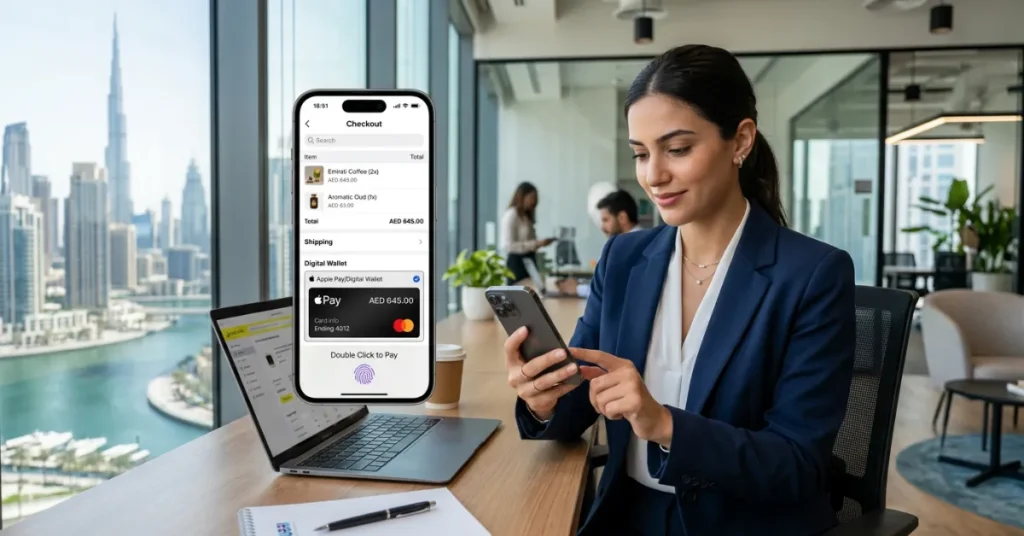
E-commerce is one of the clearest expressions of how UAE consumer behaviour has changed. The UAE eCommerce market is expected to grow to US$8.55 billion by 2030, with fashion holding the largest product category share and consumer electronics close behind. These are not abstract numbers; they reflect millions of daily purchase decisions happening on smartphones rather than in stores.
Mobile retail sales in the UAE are expected to grow at a 15.6% compound annual growth rate, reaching $4.6 billion by 2026, with more than one-third of consumers making weekly purchases online via their smartphones, a rate higher than the global average.
Key developments driving this shift include:
- Platform dominance: Noon and Amazon UAE are the primary e-commerce destinations, though cross-border e-commerce has also grown sharply, with 58% of online purchases in the UAE coming from overseas vendors who offer competitive pricing and reliable delivery.
- Digital wallets and BNPL: Digital wallets jumped from 41% usage in 2020 to 53% in 2024, and flexible buy-now-pay-later options like Tabby and Tamara are boosting conversion rates and average basket values.
- Social commerce: TikTok and Instagram have become genuine shopping destinations. UAE consumers discover products through short-form video, move to social proof via comments and reviews, then convert often without ever leaving the app.
For businesses, the message is clear: your digital presence needs to be fast, mobile-optimised, and socially integrated. A desktop-first website is no longer enough.
Preference for Sustainable and Ethical Consumption
Sustainability is becoming a purchasing criterion, not just a marketing angle. Research shows that 83% of UAE residents are more likely to choose providers who champion environmentally responsible practices. This is a remarkable figure and one that businesses selling to UAE consumers can no longer afford to ignore.
UAE consumers are paying attention to packaging, carbon footprints, and brand values in ways they simply did not five years ago. Major supermarket chains are expanding eco-conscious product lines. Local brands like The Giving Movement have built loyal followings by anchoring their identity in sustainability. Luxury automotive brands are also adapting, with electric performance cars from Bentley and Rolls-Royce gaining traction among younger and environmentally conscious buyers.
This shift transcends any specific income segment. From premium shoppers choosing ethical luxury to everyday consumers opting for products with minimal packaging, sustainable consumption is now a cross-market trend. Businesses that can credibly demonstrate environmental responsibility backed by data, not just slogans, will build stronger brand equity in 2026.
Health, Wellness, and Lifestyle Trends
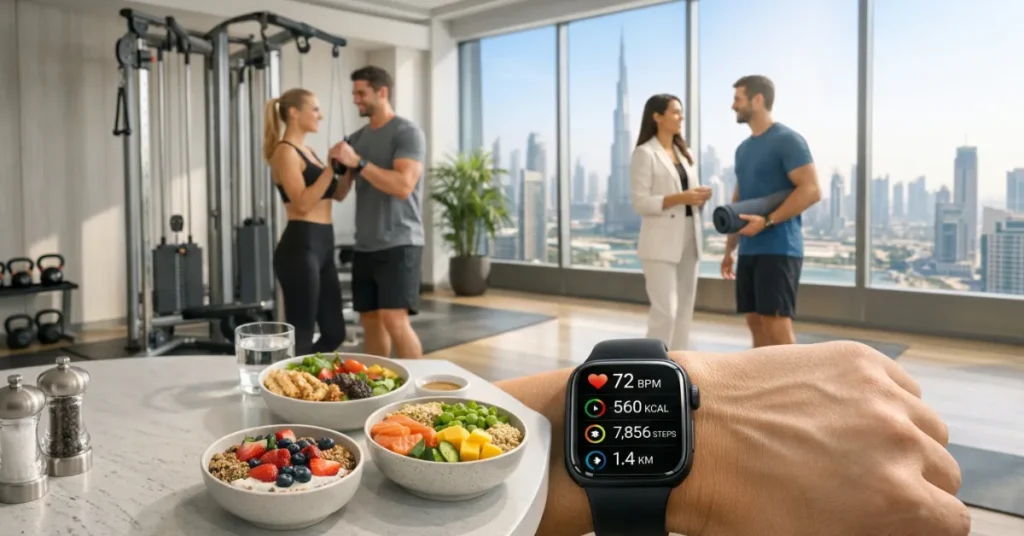
The UAE wellness economy is thriving. It is now valued at approximately $40.8 billion according to the Global Wellness Institute, and consumer demand in this space spans everything from food choices to fitness formats to mental health services.
Key trends defining health and wellness consumption in the UAE right now:
- Health-conscious eating: A 2024 Statista survey found that 72% of UAE respondents aged 18 to 64 actively try to eat healthily. Plant-based options, organic groceries, and functional foods are seeing consistent growth.
- Social fitness: Boutique fitness studios, padel courts, and community wellness concepts are booming. Brands like Peaq and SIRO’s fitness zone have strategically integrated social areas and F&B into their wellness centres, reflecting the blending of health, community, and lifestyle.
- Wearables and wellness tech: Smartwatches and health-tracking apps have moved from novelty to necessity. UAE consumers want real-time data on their wellbeing and are willing to pay for tools that deliver it.
- Mental wellness: Services addressing stress, sleep, and emotional health are growing in visibility and consumer acceptance.
For businesses in food, retail, fitness, or tech, this is one of the most accessible and high-growth segments in the UAE today.
Luxury and Experiential Spending Remains Strong
Despite global economic headwinds, luxury spending in the UAE is holding firm and evolving. Euromonitor International projects a robust 9% growth rate for the UAE luxury market between 2025 and 2030, positioning the country among the world’s top growth engines for luxury goods and experiences.
But the definition of luxury has changed. The UAE’s transformation from a high-end shopping destination to an epicentre of immersive luxury experiences reflects a wider evolution where consumers now prize emotional connection, exclusivity, and cultural engagement over mere ownership.
Luxury brands are responding with exclusive events, limited-edition collections, and personalised services that create memorable encounters beyond transactions. Dubai shopping festivals, exclusive F&B pop-ups, and branded wellness experiences are all expressions of this shift. Between January and November 2025, UAE hotel guest volumes reached approximately 29.1 million, reflecting demand diversification across leisure, wellness, and long-stay segments, all of which feed directly into the experiential economy.
For businesses in hospitality, food and beverage, travel, or retail, the opportunity lies in designing experiences that create stories worth sharing, not just products worth buying.
Influence of Social Media and Influencer Marketing
UAE consumers are among the most socially active in the world. The UAE has 10.7 million active social media users engaging daily with brands, and for a large portion of them, social media is where purchasing decisions begin.
TikTok, Instagram, and YouTube drive discovery across almost every consumer category: fashion, food, beauty, electronics, and travel. Influencer marketing in the UAE is not just a brand awareness tool; it is a direct sales channel. When the right creator reviews a product, it moves.
The key shift in 2026 is authenticity. UAE consumers are sophisticated enough to recognise performative endorsements. They respond to creators who genuinely use and believe in what they promote. Businesses that invest in long-term influencer partnerships rather than one-off paid posts will see stronger returns. User-generated content and real customer testimonials are equally powerful.
Personalisation and Data-Driven Shopping Experiences
UAE consumers expect you to know them. AI-driven product recommendations, personalised promotions, and tailored loyalty rewards are now baseline expectations rather than competitive advantages.
Retailers using CRM platforms and first-party data are seeing meaningful improvements in conversion rates and customer retention. In 2026, UAE consumer journeys are rapid and multi-touch. The brands that win build connected customer journeys across social discovery, search validation, and purchase action.
Specific strategies delivering results include:
- App-based personalisation: Targeted push notifications and personalised product feeds based on browsing history.
- Loyalty program customisation: Rewards structured around individual spending patterns rather than generic tiers.
- AI chat and virtual assistance: Tools that handle customer queries, provide product guidance, and reduce drop-off before purchase.
The businesses pulling ahead are those treating data not as a compliance burden, but as a relationship tool.
Opportunities for Businesses in 2026
The UAE market in 2026 presents real, actionable opportunities for businesses willing to move with its consumers rather than behind them.
Digital retail still has gaps, particularly in niche product categories, Arabic-language content, and hyper-local delivery experiences. Sustainable product lines remain underdeveloped relative to consumer demand. The Gen Z segment, now entering peak purchasing age, wants brands that stand for something. Expat communities representing dozens of nationalities are actively seeking familiar products and culturally resonant brands.
The businesses best positioned to grow are those combining an online-offline (phygital) presence, anchoring their brand in genuine values, and investing in personalised, mobile-first customer experiences. If you are considering entering the UAE market or scaling within it, this is the right moment; the consumer appetite is strong, and the infrastructure supports ambitious growth.
If you need guidance on UAE market entry, business licensing, or positioning within the evolving consumer landscape, Ripple Business Setup can help you navigate the process with confidence.
Key Takeaways for UAE Businesses
- Consumers demand digital convenience, mobile-first, frictionless, and fast.
- Sustainability actively influences purchasing decisions across income levels.
- Health, wellness, and lifestyle products represent one of the fastest-growing consumer segments.
- Luxury spending is shifting toward experiences, not just products designed for memory, not just margin.
- Personalisation and social proof are no longer optional; they are the foundation of customer trust.
- Social media is a direct sales channel, not just an awareness platform.
Contact Ripple Business Setup for Market Insights
Understanding UAE consumer trends is one thing, but building a business strategy around them is another. Ripple Business Setup provides expert guidance on UAE market entry, business setup, and growth strategy tailored to today’s evolving consumer landscape.
📞 Call: +971 50 593 8101 📧 Email: info@ripplellc.ae 💬 WhatsApp: +971 4 250 0833
FAQ
Q: What are the top UAE consumer trends in 2026?
The top trends include digital and mobile commerce growth, sustainable and ethical consumption, health and wellness spending, luxury experiential purchases, social media-driven discovery, and demand for personalised shopping experiences.
Q: How is digital commerce changing consumer behaviour in the UAE?
UAE consumers increasingly shop via mobile apps, use digital wallets, and discover products through social platforms, creating rapid, multi-touch purchase journeys that businesses must support with seamless omnichannel strategies.
Q: Why is sustainability important for UAE consumers?
Sustainability is now a purchasing criterion. Over 83% of UAE residents prefer brands that demonstrate environmental responsibility, making eco-friendly practices essential for brand credibility.
Q: How can businesses adapt to UAE lifestyle and wellness trends?
By offering health-conscious product options, integrating wellness into brand experiences, and recognising that UAE consumers increasingly value physical and mental wellbeing as part of their lifestyle identity.
Q: How can companies leverage social media influence in the UAE?
By building authentic, long-term creator partnerships, investing in user-generated content, and designing social-native purchase paths through platforms like TikTok and Instagram, where UAE consumers already spend significant time.
Disclaimer: Information provided is for business guidance only and should not be considered legal or financial advice.