

Wealth planning in the Middle East has changed significantly over the last decade. High-net-worth individuals, family offices, and global investors are no longer just looking for tax efficiency; they want legal structures that protect assets across generations, maintain privacy, and hold up under international scrutiny. A UAE foundation delivers all of that in one elegant package.
If you are considering how to set up a UAE foundation, you are not alone. Demand has grown steadily since both the Abu Dhabi Global Market (ADGM) and the Dubai International Financial Centre (DIFC) introduced their respective foundation frameworks. These two free zones offer world-class governance, English common law protections, and a business environment that is increasingly attractive to international wealth structurers.
What Is a UAE Foundation?
A UAE foundation is a legal entity that sits somewhere between a trust and a company. Like a company, it has its own legal personality, it can own assets, enter into contracts, and exist independently of its founder. Like a trust, it separates ownership from benefit, meaning the founder places assets into the foundation without retaining direct legal ownership.
This hybrid structure is what makes it so versatile for private wealth management, succession planning, and asset protection across the UAE foundation structure.
Key features of a UAE foundation include:
- No shareholders, no equity is issued
- Managed by a foundation council (similar to a board of directors)
- A guardian can be appointed to oversee the council’s decisions
- Assets are legally owned by the foundation, not the founder
- Commonly used for family wealth, private assets, and charitable purposes
When people explore a foundation vs a trust UAE comparison, the key distinction is legal identity. A trust is not a separate legal entity the trustee holds assets on behalf of beneficiaries. A private foundation UAE, on the other hand, is its own legal person, which makes it easier to interact with banks, regulators, and third parties directly.
Why Set Up a UAE Foundation in 2026?
The UAE has transformed itself into one of the world’s leading wealth management hubs, and 2026 is arguably the best time yet to take advantage of that positioning. Here is why demand for UAE foundations continues to rise:
- 100% foreign ownership: No local partner or sponsor required within ADGM or DIFC
- Strong asset protection laws: Assets transferred into a properly structured foundation are shielded from personal creditors of the founder
- Confidentiality and privacy: Foundation details are not publicly registered in the same way as company registers are
- Succession planning for families: The foundation’s charter can specify exactly how assets are distributed across generations
- Tax efficiency: Aligned with the UAE’s corporate tax framework, with potential exemptions for qualifying structures
- International recognition: ADGM and DIFC are globally respected jurisdictions with agreements and recognition across major financial centres
The UAE sits at the crossroads of Asia, Africa, and Europe. It has signed double tax treaties with over 130 countries, built a sophisticated financial services ecosystem, and created regulatory environments that genuinely understand the needs of international wealth holders. For a family business owner in South Asia, an investor with assets spread across multiple continents, or a philanthropist looking to formalise charitable giving, the UAE foundation framework covers all of these scenarios effectively.
Key Differences Between ADGM and DIFC Foundations
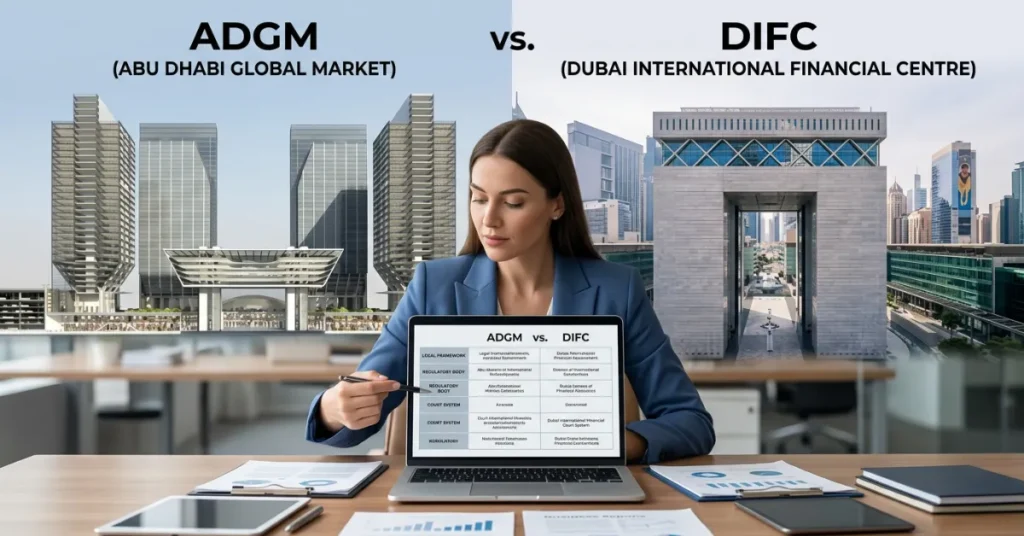
Both ADGM and DIFC use English common law, offer high levels of flexibility, and provide strong privacy protections. However, there are practical differences worth understanding when you are deciding between an ADGM vs DIFC foundation.
| Feature | ADGM Foundation | DIFC Foundation |
|---|---|---|
| Regulator | Financial Services Regulatory Authority (FSRA) | DIFC Authority |
| Legal system | English Common Law | English Common Law |
| Location | Abu Dhabi | Dubai |
| Setup cost | Moderate | Slightly higher |
| Flexibility | High | High |
| Privacy | Strong | Strong |
| Best suited for | Families seeking cost-effective wealth structuring | Investors leveraging Dubai’s global connectivity |
Choosing the best jurisdiction for a UAE foundation often comes down to where you do most of your business, which ecosystem your advisors are based in, and whether Abu Dhabi or Dubai is your primary base of operations. Both frameworks are robust the decision is rarely wrong, as long as your charter and governance documents are properly drafted.
Types of UAE Foundations You Can Set Up
Not all UAE foundations serve the same purpose. The type you choose should align with your goals from day one, because the foundation’s charter, once registered, defines its scope.
- Private family foundation: The most common type, used to hold family assets and define succession rules across generations
- Charitable foundation: Established for philanthropic purposes, donating to causes or funding long-term social projects
- Corporate holding foundation: Used to hold shares in operating companies, providing an additional layer of asset separation
- Special-purpose foundation: Designed around a very specific purpose, such as holding intellectual property or a single asset class
A family business owner approaching retirement would typically establish a private family foundation to ensure a smooth handover of wealth. A tech entrepreneur with significant IP might prefer a special-purpose foundation to hold and license those assets. The right structure depends entirely on what you are trying to achieve, and getting that definition right at the start saves considerable legal cost later.
Step-by-Step Process to Set Up a UAE Foundation

The UAE foundation setup process is more structured than many people expect. Following the correct sequence helps avoid delays and costly redrafting. Here is the standard process for both ADGM and DIFC:
- Define purpose and structure: Clarify the foundation’s purpose, beneficiaries, and governance model before touching any paperwork.
- Choose your jurisdiction: Decide between ADGM and DIFC based on your geography, advisors, and cost preferences.
- Select a foundation name: The name must be unique and comply with the naming conventions of the chosen free zone.
- Draft the charter and bylaws: This is the most critical step. The charter defines purpose, governance, and distribution rules. Poor drafting here is the most common cause of disputes later.
- Appoint council members and a guardian: The foundation council manages day-to-day operations. The guardian (optional but advisable) oversees the council and protects the founder’s original intent.
- Submit application to the authority: File with the ADGM Registration Authority or DIFC Registrar of Companies, along with all required documents.
- Pay registration fees: Fees vary by jurisdiction and the complexity of the structure.
- Open a corporate bank account: Once registered, the foundation needs a bank account to operate. This step can take additional weeks and requires robust KYC documentation.
This is how to register a foundation in the UAE process typically takes between two and six weeks from initial submission to full registration, assuming all documents are in order.
Documents Required to Set Up a UAE Foundation
Gathering documentation in advance is the single best way to accelerate your application. Both ADGM and DIFC require the following as a baseline:
- Certified passport copies of all founders and council members
- Proof of residential address (utility bills, bank statements, usually dated within 3 months)
- A statement of purpose or business plan outlining the foundation’s objectives
- KYC (Know Your Customer) documentation, including source of wealth and source of funds declarations
- Draft charter and bylaws, prepared by a qualified legal advisor
- Details of beneficiaries (where applicable)
Compliance and due diligence requirements have tightened across both jurisdictions as the UAE works to align with international AML (anti-money laundering) and FATF standards. This is not something to approach lightly. Thorough documentation from the outset protects both the founder and the foundation’s long-term standing.
Cost of Setting Up a UAE Foundation in 2026
The UAE foundation cost varies depending on jurisdiction, structure complexity, and whether you engage a specialist advisor. Below are indicative ranges for 2026:
- ADGM Foundation: Approximately USD 5,000 – 10,000 for initial registration fees (government fees only)
- DIFC Foundation: Approximately USD 8,000 – 15,000 for initial registration fees
- Annual renewal fees: Typically USD 2,000 – 5,000, depending on the jurisdiction and any regulatory reporting requirements
- Legal and consultancy fees: USD 5,000 – 20,000+, depending on the complexity of the charter and advisory scope
These are indicative figures. ADGM foundation fees and DIFC setup costs are updated periodically by their respective authorities, so always confirm current rates at the time of application. The total all-in cost for a straightforward foundation structure typically falls between USD 15,000 and 35,000 in the first year.
UAE Foundation vs Trust vs Company
If you are comparing structures, the differences in legal identity, control, and use case matter significantly:
| Feature | Foundation | Trust | Company |
|---|---|---|---|
| Legal entity | Yes | No | Yes |
| Ownership structure | No shareholders | Trustee holds assets | Shareholders |
| Primary use | Wealth structuring & succession | Estate planning | Business operations |
| Regulatory oversight | Free zone authority | Governed by deed | Companies registrar |
| Confidentiality | High | High | Moderate (public register) |
For business operations, a company remains the most practical structure. For estate planning where legal title matters less, a trust may be simpler. But for families and individuals who want a self-contained wealth vehicle, one that holds assets, distributes benefits, and survives the founder, a foundation is typically the most comprehensive solution.
Taxation of UAE Foundations
The UAE introduced a 9% corporate tax in 2023, applicable to businesses earning above AED 375,000 annually. Understanding how this affects a UAE foundation is important for proper structuring.
Qualifying foundations used purely for non-commercial wealth preservation holding passive investments, real estate, or other personal assets may be exempt from corporate tax under the UAE’s Qualifying Investment Fund or similar provisions. However, if the foundation engages in active business or earns commercial income, the 9% rate may apply to that portion of income.
The UAE foundation tax position depends heavily on how the foundation’s activities are structured. There is no personal income tax in the UAE, and no capital gains tax on most assets, which means the foundation framework, when structured correctly, remains highly tax-efficient for international wealth holders. Always engage a qualified UAE tax advisor to confirm the specific tax treatment for your structure.
Common Mistakes to Avoid
Most foundation setup problems are avoidable with proper planning. These are the errors that advisors see most frequently:
- Choosing the wrong jurisdiction selecting ADGM or DIFC based on familiarity rather than strategic fit
- Poorly drafted charter, vague distribution rules and succession provisions create family disputes down the line
- Ignoring compliance requirements, failing to file annual reports or maintaining KYC records can lead to deregistration
- Not appointing a guardian without a guardian, the council can drift from the founder’s original intent over time
- Weak succession planning within the foundation itself. What happens when council members retire or pass away? Plan for governance continuity from day one
How Long Does It Take to Set Up a UAE Foundation?
For a well-prepared applicant with all documentation ready, the registration process typically takes two to six weeks from initial submission to receiving the foundation certificate. ADGM and DIFC both have efficient digital registration systems, and experienced advisors can often expedite the review process by submitting clean, complete applications from the outset.
Delays most commonly arise from incomplete KYC documentation, charter provisions that need clarification from the authority, or banking onboarding, which runs on its own timeline separate from the registration itself. Allow four to eight weeks for the full process, including bank account opening.
Who Should Set Up a UAE Foundation?
A UAE foundation is not the right structure for everyone, but it is an exceptionally useful tool for specific profiles:
- High-net-worth individuals with significant assets in multiple jurisdictions
- Family business owners planning the transfer of wealth to the next generation
- Family offices managing complex, multi-generational wealth
- Investors with global assets who want a single, well-governed holding structure
- Philanthropists looking to formalise charitable activities with proper governance
How We Help You Set Up a UAE Foundation
Set Up a UAE Foundation with Ripple Business Setup
Setting up a UAE foundation in ADGM or DIFC can feel complex, especially when dealing with legal structures, documentation, and compliance requirements. Working with experienced consultants helps you avoid delays and costly mistakes. Ripple Business Setup offers end-to-end support, from choosing the right jurisdiction to drafting your foundation charter and completing registration. Their team understands UAE regulations and helps structure your foundation for asset protection, succession planning, and long-term stability. To get started, contact Ripple Business Setup at +971 50 593 8101, email info@ripplellc.ae, or WhatsApp +971 4 250 0833 for personalized guidance.
FAQs
What is the minimum cost to set up a UAE foundation?
The total cost, including government registration fees, legal drafting, and advisory services, typically starts around USD 15,000. ADGM foundations tend to be slightly more cost-effective than DIFC at the entry level, with government fees in the USD 5,000–10,000 range.
Can foreigners set up a UAE foundation?
Yes. Both ADGM and DIFC allow 100% foreign ownership of foundations. There is no requirement for a UAE national as a sponsor, partner, or council member. This is one of the key advantages of the free zone foundation model.
Is a UAE foundation tax-free?
Not automatically. The UAE introduced 9% corporate tax in 2023. Foundations used purely for passive wealth preservation may qualify for exemptions, but those earning active commercial income may fall within the tax net. Always seek specific tax advice for your structure.
What is the difference between ADGM and DIFC foundations?
Both operate under English common law and offer similar flexibility and privacy. ADGM is based in Abu Dhabi and tends to have slightly lower setup costs; DIFC is based in Dubai and offers deeper connectivity to Dubai’s international business community. The choice depends on your location, advisors, and strategic priorities.
Do I need a local sponsor to set up a UAE foundation?
No. UAE foundations established within ADGM or DIFC free zones do not require a local UAE sponsor. The free zone framework provides 100% foreign ownership rights.
Conclusion
A UAE foundation offers a genuinely powerful combination of asset protection, privacy, succession planning, and international legitimacy. ADGM and DIFC have both built frameworks that meet global governance standards while remaining practical and cost-effective for individuals and families at various wealth levels.
Disclaimer: This content is for general informational purposes only and does not constitute legal, financial, or business advice. Regulations and costs related to UAE foundation setup may change. It is recommended to consult with qualified professionals or business setup advisors for advice tailored to your specific situation.