The UAE automotive industry continues to grow due to rising vehicle ownership, logistics expansion, and increasing transport activity. This growth creates strong opportunities for entrepreneurs planning to start a tire trading business UAE. Tires are always in demand for passenger vehicles, commercial fleets, taxis, transport companies, and garages.
A Tire Trading License allows businesses to legally import, distribute, store, and sell tires in the UAE. Investors choose this sector because of the UAE’s strong trading infrastructure, tax advantages, and access to GCC markets. Businesses can operate through mainland or free zone jurisdictions depending on their target market and operational goals.
What Is a Tire Trading License in UAE?
A Tire Trading License is a commercial license that permits businesses to trade tires and related automotive products legally in the UAE. The license may cover retail sales, wholesale distribution, import/export activities, and tire supply services.
Businesses can also include related automotive products depending on approved activities.
Allowed Activities
- Tire retail sales
- Tire wholesale trading
- Tire import/export
- Wheel and rim trading
- Tire fitting accessories sales
- Commercial fleet tire supply
The Department of Economy and Tourism (DET) or relevant free zone authority issues the license. Import businesses may also require customs registration and import codes.
Why Start a Tire Trading Business in UAE?
The UAE has a large automotive market with continuous demand for replacement tires. Commercial vehicles, delivery fleets, taxis, and private car owners regularly require tire replacement services.
Dubai also serves as a major trading hub connecting Asia, Africa, and GCC countries. This makes the UAE suitable for tire import and distribution businesses.
Benefits of Tire Trading Business
- High product demand
- Recurring customer purchases
- Import and export opportunities
- B2B and B2C revenue models
- Growing logistics sector
- Access to GCC markets
The rise of online automotive shopping also supports tire retail businesses offering digital booking and delivery services.
Types of Tire Trading Licenses in UAE
Mainland Tire Trading License
A mainland license allows businesses to trade directly across the UAE market. Companies can open retail stores, supply commercial clients, and work with government contracts. This option suits businesses targeting local customers and fleet operators.
Free Zone Tire Trading License
A free zone license works well for import/export businesses and international distribution operations. Many free zones provide warehouse solutions and lower startup packages. However, direct mainland trading may require additional approvals or distributors.
E-commerce Tire Trading License
This option supports online tire sales through websites and marketplaces. Businesses may combine online sales with warehouses and delivery operations.
Mainland vs Free Zone Comparison
| Feature | Mainland | Free Zone |
|---|---|---|
| UAE Market Access | Full | Limited |
| Import/Export | Yes | Yes |
| Office Requirement | Required | Flexible |
| Government Contracts | Allowed | Limited |
Legal Requirements for Tire Trading License UAE
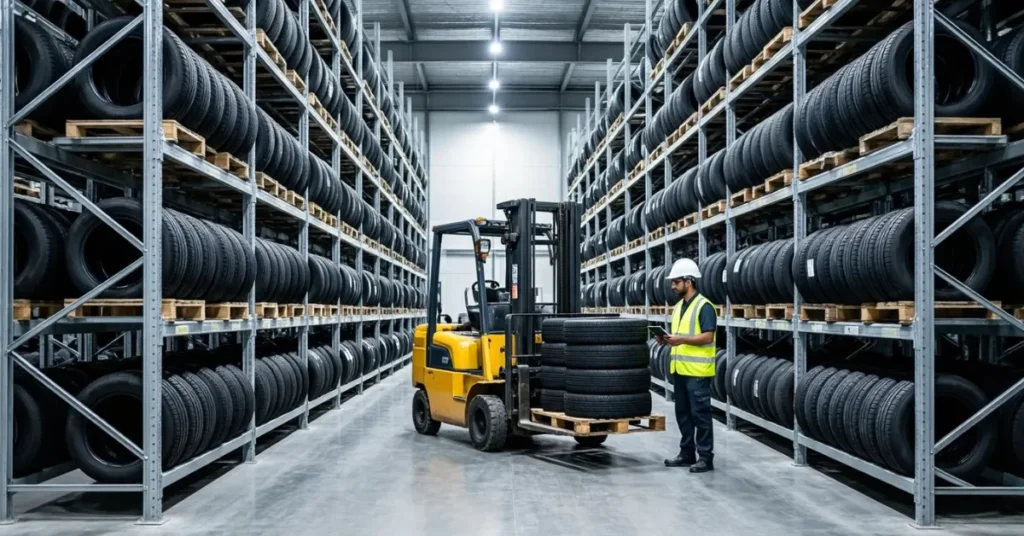
Businesses must complete several legal steps before starting operations. The process usually includes trade name registration, initial approvals, tenancy agreements, and commercial activity selection. Companies involved in imports may also require customs registration and warehouse approvals.
Required Documents
- Passport copies
- Visa copies
- Emirates ID
- Trade name certificate
- Tenancy contract
- Memorandum of Association (MOA)
- Business activity details
Compliance Requirements
- Product quality standards
- Municipality approvals
- Warehouse safety compliance
- Customs registration for imports
Step-by-Step Process to Get a Tire Trading License
Step 1 – Choose Business Jurisdiction
Select mainland or free zone setup depending on business goals and market access requirements.
Step 2 – Select Tire Trading Activity
Choose approved commercial activities related to tire trading, wholesale, retail, or import/export.
Step 3 – Reserve Trade Name
Register a business name according to UAE naming regulations.
Step 4 – Obtain Initial Approval
Submit shareholder and business documents for approval from the relevant authority.
Step 5 – Lease Office or Warehouse
Secure office space, showroom, or warehouse facilities based on business activity.
Step 6 – Submit License Documents
Provide tenancy contracts, legal forms, approvals, and shareholder documents.
Step 7 – Receive Trade License
After fee payment and verification, the authority issues the Tire Trading License.
Tire Trading License Cost in UAE
The total setup cost depends on the business jurisdiction, office size, warehouse requirements, and visa allocations.
Estimated Costs
| Expense | Estimated Cost |
|---|---|
| Trade Name Registration | AED 600–1,000 |
| Initial Approval | AED 1,000–2,000 |
| License Fee | AED 8,000–15,000 |
| Office/Warehouse | AED 10,000+ |
| Visa Costs | AED 3,000–5,000 |
Additional expenses may include:
- Customs duty
- Shipping charges
- Insurance
- Employee visas
- Warehouse storage costs
Best Locations for Tire Trading Business in UAE
Dubai
Dubai offers strong opportunities due to its automotive markets, logistics infrastructure, and transport industry.
Popular areas include:
- Al Quoz
- Ras Al Khor
- Dragon Mart
Sharjah
Sharjah provides lower warehouse rental costs and industrial trading zones suitable for wholesale operations.
Abu Dhabi
Abu Dhabi supports commercial fleet businesses and transport-related contracts.
Challenges in Tire Trading Business UAE

The market remains competitive due to the large number of local and international suppliers. Businesses may also face import cost fluctuations and storage management challenges.
Counterfeit products can also affect business reputation and compliance.
Solutions
- Work with reliable suppliers
- Focus on quality products
- Maintain proper storage conditions
- Use digital marketing
- Target fleet contracts
Tips to Grow a Tire Trading Company in UAE
Businesses can improve growth by building strong supplier relationships and offering reliable customer service.
Growth Strategies
- Partner with garages
- Target transport companies
- Offer mobile tire replacement
- Create online booking systems
- Use local SEO and Google Business Profile
- Offer fleet maintenance packages
Customer trust and fast service help improve long-term business performance.
Mainland vs Free Zone – Which Is Better?
Mainland licenses work better for direct UAE sales and retail operations. Free zones suit import/export businesses and international trading activities.
Choose Mainland If:
- You target UAE customers
- You need retail stores
- You supply fleets and garages
Choose Free Zone If:
- You focus on exports
- You need lower startup costs
- You operate online businesses
Common Mistakes to Avoid
Many businesses delay approvals because of incorrect activity selection or incomplete documentation.
Common Mistakes
- Choosing wrong business activity
- Ignoring warehouse approvals
- Underestimating setup costs
- Missing customs registration
- Selecting poor business location
- Working with unverified suppliers
Proper planning helps reduce delays and operational risks.
How Ripple Business Setup Can Help
Ripple Business Setup assists businesses with Tire Trading License registration in mainland and free zones across the UAE. Their services include trade license approvals, visa processing, warehouse guidance, banking assistance, and compliance support.
Contact Ripple Business Setup at +971 50 593 8101, email info@ripplellc.ae, or WhatsApp +971 4 250 0833 for assistance with your UAE tire trading business setup.
Conclusion
A Tire Trading License allows businesses to enter the growing UAE automotive sector legally and efficiently. The UAE offers strong opportunities for retail, wholesale, import, and distribution operations due to increasing vehicle demand and regional trade access.
Understanding the legal process, setup costs, approvals, and compliance requirements helps businesses avoid delays and operate smoothly in the UAE market.
Disclaimer: The information provided in this article is for general guidance only. License costs, approvals, and business requirements may vary depending on the Emirate, business activity, and government regulations. Always confirm updated requirements with the relevant UAE authority or business setup consultant before making decisions.