

Introduction
Starting a business in the UAE is a practical choice for many entrepreneurs because the process is structured and business-friendly. A UAE Trading License is the legal approval required to trade goods, such as buying, selling, importing, or exporting, within the country or internationally. It is one of the most common license types for startups and small businesses entering the UAE market.
Understanding the right license early helps you avoid delays, extra costs, and legal issues. In this guide, you will learn the main trading license types, how each one works, and how to choose the right option based on your business plan.
What is a UAE Trading License?
A UAE Trading License is an official permit issued by government authorities that allows a business to legally carry out trading activities. It is required for any company involved in the commercial buying and selling of goods. This license is issued by different authorities depending on the business location. Mainland licenses are issued by the Department of Economic Development, while free zone licenses are issued by individual free zone authorities.
A trading license typically covers activities such as importing goods, exporting products, wholesale distribution, retail operations, and general trading. It ensures that the business operates legally under UAE commercial regulations and meets compliance requirements.
Main Types of UAE Trading License
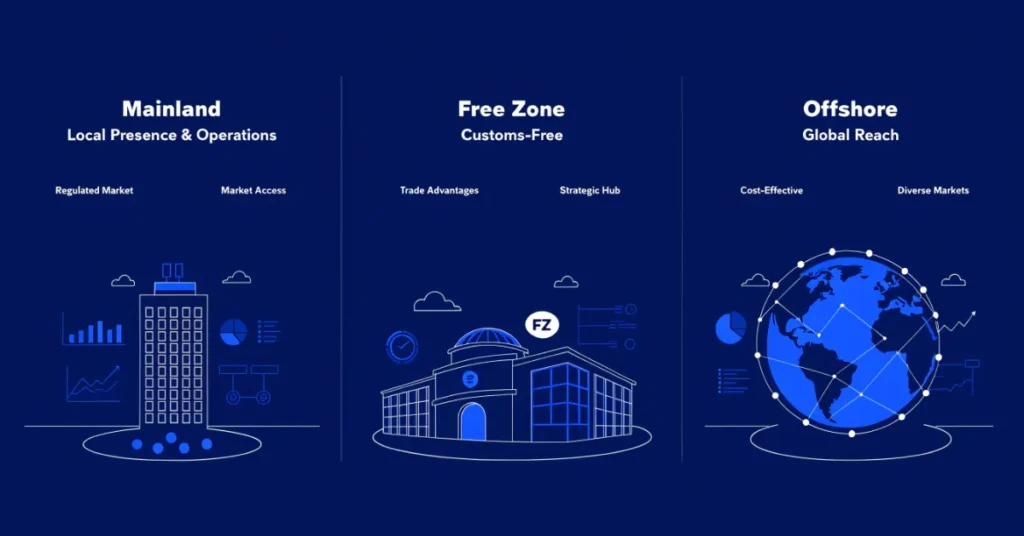
The UAE offers several trading license options tailored to different business models, ownership structures, and market goals. Choosing the right one depends on whether you want to trade locally within the UAE, operate internationally, or benefit from tax-efficient zones. Below is a deeper breakdown of the three main types:
1. Mainland Trading License
A Mainland license allows businesses to operate anywhere within the UAE and directly engage with the local market without restrictions. It is issued by the Department of Economic Development (DED) of the respective emirate. Businesses with a Mainland license can trade freely across the UAE, work with government entities, and open physical offices in prime locations. Recent reforms allow 100% foreign ownership in many sectors, making it more attractive for international investors.
However, Mainland companies may have higher setup and operational costs compared to Free Zones, including office space requirements and regulatory approvals. This option is ideal for businesses targeting the UAE market, retail operations, or service providers needing flexibility.
2. Free Zone Trading License
Free Zone licenses are issued by specific economic zones designed to attract foreign investment. These zones offer benefits like 100% foreign ownership, full profit repatriation, and tax advantages. Businesses operating under a Free Zone license typically trade within the zone or internationally. To sell directly in the UAE mainland market, they usually need a local distributor or additional permissions.
Free Zones are known for simplified setup processes, lower startup costs, and industry-specific ecosystems (e.g., tech, media, logistics). They are ideal for startups, e-commerce businesses, consultants, and international traders who don’t require direct access to the local UAE market.
3. Offshore Trading License
An Offshore license is designed for businesses that operate outside the UAE but want to benefit from its favorable tax environment and global reputation. These companies cannot conduct business within the UAE market or have a physical office there. Offshore companies are commonly used for international trade, asset protection, holding investments, and managing global business operations. They offer high levels of privacy, minimal reporting requirements, and cost efficiency.
This license type is best suited for entrepreneurs looking to run international businesses remotely, hold assets, or optimize tax structures without needing a physical presence in the UAE.
Activities Allowed Under UAE Trading License
A UAE trading license covers a wide range of commercial activities. It is important to choose the correct activity at the time of registration.
- Import and export of goods
- Wholesale trading operations
- Retail business activities
- E-commerce and online selling
- Product distribution services
- General trading activities across multiple categories
Step-by-Step Process to Get a UAE Trading License

The process of obtaining a UAE trading license follows a structured approval system.
- Select your business activity
- Choose a jurisdiction between the mainland or free zone
- Register a trade name with the authorities
- Apply for initial approval
- Prepare required documents
- Arrange office space if required
- Submit the final application
- Pay government fees and receive license approval
Each step must be completed carefully to avoid delays in approval.
Documents Required for UAE Trading License
To apply for a trading license in the UAE, basic documents are required for verification and approval.
- A passport copy of the business owner or partners
- Passport-sized photographs
- Visa copy if applicable
- Initial approval certificate
- Completed application form
- Business plan if requested by authority
UAE Trading License Cost Factors
The cost of a UAE Trading License is not fixed. It depends on several business and administrative factors that influence the final price. The main cost factors include jurisdiction type, office requirements, and the number of visas required for employees.
Key cost factors:
- Choice between mainland and free zone setup
- Number of employee visas needed
- Office rent or flexi desk package
- Type of business activity selected
- Government and approval fees
Businesses with larger operations or physical office needs usually have higher setup costs.
Mainland vs Free Zone Trading License Comparison
| Feature | Mainland | An optional flexi desk available |
|---|---|---|
| Market access | Full UAE market | Limited UAE market |
| Ownership | Up to 100% in many cases | 100% foreign ownership |
| Office requirement | Required | More budget-friendly options |
| Cost structure | Can be higher | More budget friendly options |
| Business scope | Wide and flexible | Restricted to free zone rules |
This comparison helps beginners understand which structure fits their business goals better.
Common Mistakes Beginners Make
Many new investors make avoidable mistakes when applying for a UAE trading license.
- Choosing a license without matching business activity
- Ignoring future expansion plans
- Not reviewing free zone restrictions properly
- Underestimating total setup and renewal costs
- Selecting a jurisdiction without market understanding
Why Choose Ripple Business Setup for UAE Trading License?
Starting a business in the UAE can feel complex, especially for beginners. That’s where Ripple Business Setup simplifies the entire process. From selecting the right trading license, Mainland, Free Zone, or Offshore, to handling documentation, approvals, and legal compliance, their expert team ensures a smooth and hassle-free setup experience. Whether you are a startup, investor, or expanding business, they provide tailored solutions based on your goals and budget.
Contact Ripple Business Setup today for expert guidance and a FREE consultation at +971 50 593 8101, email info@ripplellc.ae, or WhatsApp +971 4 250 0833 to get started on your UAE business journey.
FAQs
What is the validity of a UAE Trading License?
It is usually valid for one year and must be renewed annually.
Can I do online business with a trading license?
Yes, many UAE trading licenses allow e-commerce activities depending on the selected business activity.
Do I need an office in the UAE?
It depends on the setup. Mainland companies usually need office space, while free zones offer flexible desk options.
Can foreigners own 100% of a UAE business?
Yes, full ownership is allowed in most free zones and many mainland activities under current UAE regulations.
Conclusion
A UAE Trading License is the foundation of starting a trading business in the country. Each option, mainland, free zone, or offshore, serves a different purpose based on business goals, budget, and target market. Understanding these differences helps entrepreneurs make better decisions and build a stable business structure from the start.
Disclaimer: This content is for informational purposes only and does not constitute legal or business advice. Regulations and requirements in the UAE may change, so it is recommended to consult with a professional business setup advisor before making any decisions.