The UAE has become one of the most attractive hubs for investors looking to structure their businesses efficiently. Among various business models, holding companies are gaining significant attention due to their ability to optimize taxes, manage assets, and support international investments. With the introduction of corporate tax in 2023 and updates in 2026, holding companies in the UAE are uniquely positioned to benefit from exemptions and reliefs, making them a practical choice for long-term investors.
Understanding UAE Holding Companies
A UAE holding company is a legal entity created primarily to hold shares or ownership in other companies, assets, or investments. Unlike regular operational businesses, holding companies focus on strategic asset management and corporate structuring rather than day-to-day commercial operations.
Key benefits of UAE holding companies include:
- Asset protection: Safeguard company assets and intellectual property under a separate legal entity.
- Dividend management: Streamline receipt of dividends from subsidiaries with potential tax exemptions.
- International structuring: Enable global investment strategies through UAE-compliant frameworks.
Under the 2026 Corporate Tax Law, holding companies enjoy specific exemptions and compliance pathways that distinguish them from regular UAE businesses. Investors can leverage these rules when structuring their portfolios.
2026 Corporate Tax Updates Affecting Holding Companies
UAE corporate tax updates in 2026 continue to favor holding companies, offering significant opportunities for tax planning and optimization. Businesses should be aware of the following key provisions:
Key rules for holding companies in 2026:
- Dividend income from qualifying UAE and foreign subsidiaries may be fully exempt.
- No withholding tax applies to domestic or international transfers between related entities.
- Reduced tax rates may apply to foreign-sourced income that meets substance requirements.
- Holding companies must maintain proper documentation and compliance to claim exemptions.
These updates make UAE holding companies a central tool for investors seeking efficient corporate tax planning and global structuring.
Strategy 1: Leverage Dividend Exemptions
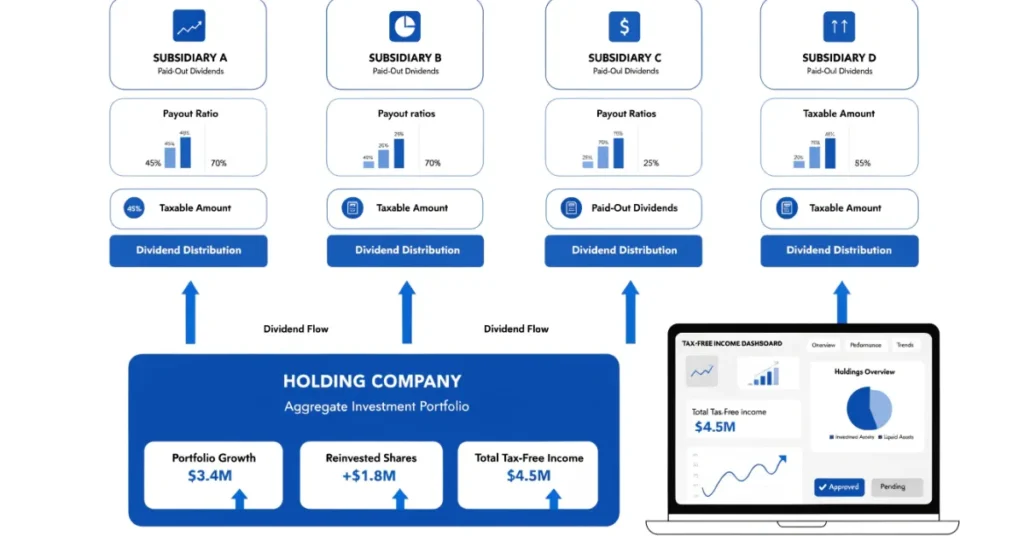
One of the most effective ways to reduce tax liability is through dividend exemptions. Holding companies can receive dividends from subsidiaries without paying corporate tax, provided they meet eligibility criteria under the 2026 regulations.
Example: A UAE holding company owns three subsidiaries operating in different sectors. Each subsidiary distributes profits as dividends to the holding company. If structured correctly, these dividends may be fully exempt from corporate tax, allowing the holding company to reinvest or distribute funds efficiently.
To qualify:
- Subsidiaries must meet the minimum ownership threshold (usually 5%).
- Dividends should be received from UAE-registered or qualifying foreign companies.
- Proper documentation must be maintained to comply with tax authorities.
Strategy 2: Use International Holding Structures
Investors can enhance tax efficiency by combining UAE holding companies with international or offshore structures. This approach allows access to global markets while benefiting from UAE’s favorable corporate tax regime.
Case Study: A UAE investor sets up a holding company in Dubai Free Zone and establishes subsidiaries in Europe and Asia. Profits repatriated to the UAE holding company can enjoy dividend exemptions and reduced foreign tax exposure, while remaining compliant with UAE Economic Substance Regulations.
This strategy provides both asset protection and tax optimization, particularly for investors with diversified international portfolios.
Strategy 3: Optimize Intercompany Loans and Transfers
Intercompany arrangements are another powerful tool to reduce taxable income. Properly structured loans and capital transfers can minimize tax liabilities while maintaining liquidity.
Key arrangements include:
- Loan agreements between subsidiaries with formal documentation.
- Using capital contributions instead of dividends for internal funding.
- Profit repatriation strategies that align with UAE corporate tax exemptions.
Example: A holding company lends capital to a subsidiary for expansion. The interest or repayment terms are structured to optimize tax while keeping funds within the corporate group. This approach ensures compliance while reducing overall tax exposure.
Strategy 4: Leverage Asset Protection & Estate Planning

Holding companies can centralize ownership of valuable assets such as real estate, intellectual property, and investment portfolios. This provides both tax efficiency and long-term protection.
Benefits include:
- Protecting assets from operational risks of subsidiaries.
- Facilitating inheritance and succession planning under UAE-specific laws.
- Structuring investments to maximize tax exemptions while remaining compliant.
For example, a family-owned UAE holding company may consolidate real estate and intellectual property holdings. Dividends from operational subsidiaries can flow to the holding company tax-free, while the entity ensures smooth succession planning.
Steps to Set Up a UAE Holding Company in 2026
Setting up a holding company requires careful planning and adherence to UAE regulations. Key steps include:
Step-by-step setup:
- Choose between Free Zone vs. Mainland holding license based on business needs.
- Register the company with the relevant UAE authorities (e.g., DED or Free Zone Authority).
- Open corporate bank accounts and ensure ongoing compliance with corporate tax requirements.
- Maintain proper documentation to claim dividend exemptions and other reliefs.
Common Mistakes to Avoid
Avoid these pitfalls to maximize benefits:
- Mixing personal and corporate finances.
- Failing to meet reporting deadlines under UAE corporate tax regulations.
- Choosing inappropriate jurisdictions for subsidiaries affects tax exemptions.
Ripple Business Setup for UAE Holding Companies
For investors looking to establish a UAE holding company efficiently, Ripple Business Setup provides expert guidance on licensing, corporate structure, and compliance. Our team ensures smooth registration, proper documentation for corporate tax compliance, and strategic advice to optimize tax-saving opportunities in 2026. Contact Ripple Business Setup at +971 50 593 8101, email info@ripplellc.ae, or WhatsApp +971 4 250 0833 for tailored assistance in forming a UAE holding company.
Frequently Asked Questions
Q1: What qualifies a company as a UAE holding company?
A holding company primarily owns shares in subsidiaries or assets and does not engage in regular commercial activities.
Q2: Are dividends from UAE subsidiaries fully tax-free in 2026?
Yes, dividends from qualifying subsidiaries are exempt if the eligibility criteria under the corporate tax law are met.
Q3: Can a holding company own international assets and still benefit from UAE tax rules?
Yes, provided the international subsidiaries meet substance requirements, and proper documentation is maintained.
Q4: How long does it take to set up a holding company in Dubai or Abu Dhabi?
Typically 2-6 weeks, depending on licensing authority and business structure.
Q5: Are there any reporting requirements under UAE corporate tax law for holding companies?
Yes, annual filings and compliance with dividend exemption documentation are mandatory.
Conclusion
UAE holding companies offer strategic advantages for investors seeking tax efficiency, asset protection, and international expansion. By leveraging dividend exemptions, international structures, intercompany arrangements, and asset protection, investors can optimize their corporate tax planning in 2026.
Disclaimer: This information is for general guidance and educational purposes. Consult a licensed professional for personalized legal or financial advice.