Construction accounting is more complex than standard business accounting because every project has its own budget, timeline, workforce, and expenses. Unlike businesses that sell products or recurring services, construction and project-based businesses must manage fluctuating costs, progress payments, subcontractors, and changing project scopes. Without an organized accounting system, even profitable projects can suffer from cash flow problems and reduced margins.
What Is Construction Accounting?
Construction accounting is a specialized accounting system designed for businesses that manage multiple projects over different timelines. Unlike traditional accounting, which focuses on overall company income and expenses, construction accounting tracks the financial performance of each individual project. Every construction project has its own costs, contracts, deadlines, and billing schedules. As a result, contractors must record project-specific expenses such as labor, materials, equipment rentals, subcontractor payments, permits, and overhead costs separately. This detailed approach allows businesses to measure the profitability of each project rather than relying solely on company-wide financial statements.
Construction accounting also supports project planning, budgeting, tax compliance, and cash flow management by providing accurate financial data throughout the project lifecycle.
How Construction Accounting Differs from Traditional Accounting
Although both systems follow the same accounting principles, construction accounting includes additional processes tailored to project-based work.
| Traditional Accounting | Construction Accounting |
|---|---|
| Focuses on overall business performance | Focuses on individual project profitability |
| Records recurring business transactions | Tracks unique costs for every project |
| Monthly or annual revenue cycles | Revenue depends on project milestones |
| Standard invoicing | Progress billing and milestone payments |
| Simple expense tracking | Detailed job costing and cost allocation |
| Fixed operational costs | Variable labor, equipment, and material costs |
Because construction projects often last several months or years, businesses need continuous financial monitoring rather than waiting until a project is complete.
Why Accurate Construction Bookkeeping Matters
Proper construction bookkeeping provides much more than organized financial records. It helps business owners:
- Monitor project profitability in real time.
- Control labor and material costs.
- Improve budgeting accuracy.
- Track subcontractor expenses.
- Maintain healthy cash flow.
- Simplify tax preparation.
- Produce reliable financial reports.
- Make informed business decisions.
Without accurate bookkeeping, unexpected cost overruns and delayed payments can quickly reduce profit margins.
Why Project-Based Businesses Need Specialized Accounting
Unlike retail stores or service businesses, project-based businesses manage multiple contracts simultaneously. Each project has different financial requirements, making specialized accounting essential for maintaining profitability. A construction company may complete residential buildings, commercial developments, infrastructure projects, and renovation contracts at the same time. Every project has separate budgets, labor requirements, equipment usage, and client payment schedules. Tracking all these moving parts through standard accounting methods often leads to reporting errors and poor financial visibility.
Specialized project accounting helps businesses monitor every stage of a project, from estimating costs to recording final profits.
Multiple Projects Require Separate Financial Tracking
Construction businesses rarely depend on a single source of revenue. Managing several projects at once creates complex financial data that must be organized carefully.
Proper accounting allows businesses to:
- Allocate expenses to the correct project.
- Compare actual costs with budgets.
- Measure profitability for each contract.
- Identify underperforming projects early.
- Produce accurate financial reports.
Without project-level tracking, it becomes difficult to understand which projects generate profits and which require corrective action.
Labor Costs Constantly Change
Labor is often one of the largest expenses in construction. Employee wages, overtime, subcontractor payments, and temporary staffing vary throughout a project.
Construction accounting helps businesses:
- Track labor hours.
- Allocate payroll expenses correctly.
- Monitor overtime costs.
- Calculate labor productivity.
- Control workforce expenses.
Accurate labor tracking improves budgeting and prevents unexpected payroll overruns.
Material Prices Frequently Fluctuate
Construction material costs can change rapidly due to market conditions, supply chain disruptions, or seasonal demand. Steel, cement, timber, electrical supplies, and finishing materials often experience price increases during long-term projects.
Specialized accounting enables businesses to:
- Monitor purchasing costs.
- Compare estimated and actual expenses.
- Identify supplier pricing trends.
- Reduce material waste.
- Protect project profit margins.
Cash Flow Is More Difficult to Manage
Construction companies often pay workers and suppliers before receiving payments from clients. Delayed invoices or slow approvals can create temporary cash shortages even when projects remain profitable.
Proper construction financial management helps businesses:
- Forecast incoming cash.
- Schedule supplier payments.
- Monitor accounts receivable.
- Reduce payment delays.
- Maintain working capital.
Healthy cash flow ensures projects continue without unnecessary financial interruptions.
Revenue Is Recognized Differently
Many construction projects span several accounting periods. Revenue cannot always be recorded when contracts are signed.
Instead, businesses often use:
- Percentage of completion method.
- Completed contract method.
- Progress billing schedules.
Selecting the appropriate accounting method improves financial accuracy and supports compliance with accounting standards.
Key Features of Construction Accounting
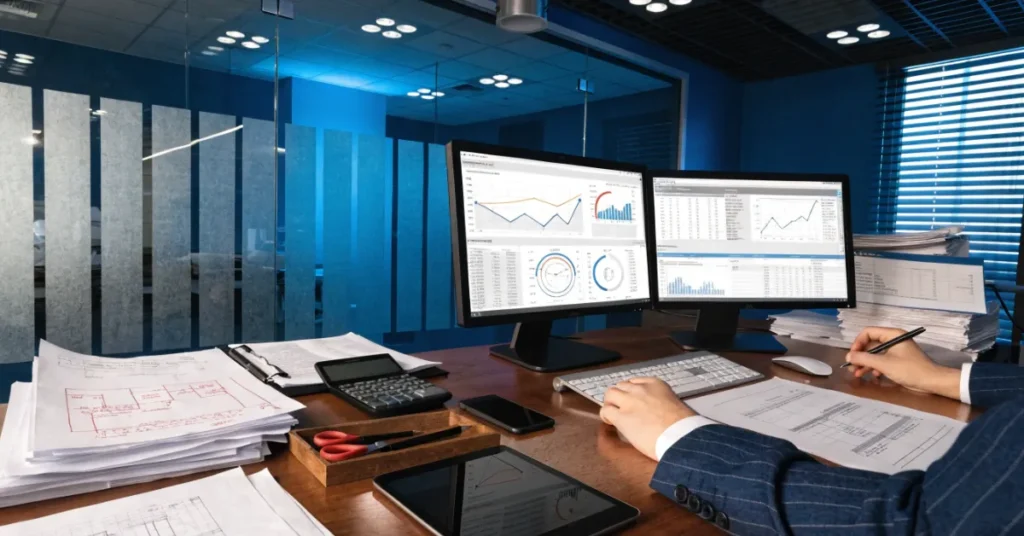
Construction accounting includes several specialized processes that help businesses monitor project costs, improve budgeting, and increase profitability.
Job Costing
Job costing is one of the most important elements of construction accounting. It records every expense related to a specific project, allowing business owners to understand exactly how much each contract costs.
Typical job costs include:
- Direct labor wages.
- Building materials.
- Equipment purchases and rentals.
- Fuel and transportation.
- Subcontractor invoices.
- Site supervision.
- Insurance costs.
- Administrative overhead.
By tracking these expenses individually, businesses can compare estimated costs with actual spending and quickly identify budget variances.
Benefits of Job Costing
- Improves project budgeting.
- Tracks project profitability.
- Identifies unnecessary spending.
- Supports accurate client billing.
- Enhances financial reporting.
- Increases overall cost control.
Progress Billing
Unlike businesses that issue invoices after completing work, construction companies typically use progress billing. Clients pay according to project milestones or the percentage of work completed.
For example:
| Project Stage | Percentage Completed | Invoice Amount |
|---|---|---|
| Foundation completed | 20% | 20% of contract value |
| Structural work finished | 45% | Additional 25% |
| Roofing completed | 70% | Additional 25% |
| Project completed | 100% | Remaining balance |
Progress billing provides a steady cash flow throughout the project while reducing financial pressure on both contractors and clients.
Advantages of Progress Billing
- Improves cash flow.
- Reduces payment delays.
- Supports ongoing project expenses.
- Lowers financial risk.
- Provides transparent billing for clients.
Revenue Recognition
Revenue recognition determines when construction companies record income from a project. Choosing the correct method ensures financial statements accurately reflect business performance.
The two most common approaches are:
Percentage of Completion Method
Revenue is recognized as work progresses. This method is commonly used for long-term construction projects because it reflects ongoing project performance.
Benefits include:
- More accurate financial reporting.
- Better profit forecasting.
- Improved investor confidence.
- Consistent income recognition.
Completed Contract Method
Revenue is recognized only after the entire project is finished.
This method is often suitable for:
- Short-term projects.
- Small construction businesses.
- Contracts with uncertain completion timelines.
Business owners should consult accounting professionals to determine the most appropriate method based on project complexity and applicable financial reporting requirements.
Retention Accounting
Many construction contracts include retention, also called retainage. Clients withhold a percentage of each payment until the project is completed and approved. This protects the client by ensuring the contractor resolves any outstanding defects or incomplete work before receiving the final payment.
For example, if a contract is worth $500,000 and the client retains 10%, the contractor receives $450,000 during the project, while the remaining $50,000 is paid after successful completion and final inspection.
Proper retention accounting allows businesses to:
- Record retained amounts accurately.
- Forecast future cash inflows.
- Maintain precise accounts receivable records.
- Avoid overstating available cash.
- Improve financial reporting accuracy.
Managing retention effectively helps construction businesses maintain realistic cash flow expectations and ensures that financial statements reflect the true status of project payments.
Common Accounting Challenges for Construction Companies
Construction companies operate in a fast-changing environment where project costs, timelines, and client requirements can shift quickly. Without a reliable construction accounting system, these challenges can reduce profitability and disrupt business operations. Identifying these issues early helps contractors improve financial control and make informed decisions.
1. Poor Cash Flow Management
Cash flow is one of the biggest concerns for project-based businesses. Contractors often pay for labor, equipment, and materials before receiving payments from clients. Delayed invoices or slow approvals can create temporary cash shortages, making it difficult to fund ongoing projects.
To improve cash flow:
- Prepare regular cash flow forecasts.
- Invoice clients promptly after milestones.
- Follow up on overdue payments.
- Negotiate favorable supplier payment terms.
- Maintain an emergency cash reserve.
2. Delayed Client Payments
Late payments can affect payroll, supplier relationships, and project schedules. Many construction contracts involve progress billing, meaning payment delays can quickly impact daily operations.
Reduce payment delays by:
- Sending clear and accurate invoices.
- Including payment terms in every contract.
- Tracking outstanding receivables weekly.
- Communicating regularly with clients.
- Using automated payment reminders.
3. Cost Overruns
Unexpected increases in labor, material prices, or equipment expenses can push projects beyond budget. Without regular cost tracking, businesses may not identify overspending until it is too late.
Common causes include:
- Material price increases.
- Design modifications.
- Inefficient labor management.
- Poor project planning.
- Equipment breakdowns.
Monitoring actual costs against the original budget helps businesses respond quickly and protect profit margins.
4. Scope Changes
Construction projects often evolve after work begins. Additional client requests, design updates, or unforeseen site conditions can increase costs and extend timelines.
Every scope change should be:
- Documented in writing.
- Approved by the client.
- Priced accurately.
- Recorded in the accounting system.
Tracking change orders prevents revenue loss and ensures all additional work is billed correctly.
5. Payroll Complexity
Construction payroll can be difficult to manage because employees may work on multiple projects, different job sites, or varying pay rates.
Businesses should:
- Record employee hours accurately.
- Allocate payroll to each project.
- Monitor overtime costs.
- Track subcontractor payments separately.
Accurate payroll supports reliable job costing and financial reporting.
6. Equipment Depreciation
Heavy machinery and construction equipment represent significant investments. Businesses must record depreciation to reflect the gradual reduction in asset value over time.
Proper equipment accounting helps:
- Estimate operating costs.
- Plan equipment replacement.
- Calculate project expenses accurately.
- Improve budgeting decisions.
7. Managing Multiple Subcontractors
Construction companies often hire electricians, plumbers, painters, engineers, and other specialists. Tracking subcontractor contracts, invoices, and payments can become challenging without organized bookkeeping.
Maintain detailed records of:
- Contracts.
- Payment schedules.
- Tax documentation.
- Project allocations.
- Performance reports.
8. Compliance and Tax Requirements
Construction businesses must comply with accounting standards, tax regulations, payroll obligations, and contract requirements. Poor recordkeeping increases the risk of errors, penalties, and audit issues.
Maintaining accurate financial records throughout the year simplifies compliance and supports timely reporting.
Essential Financial Reports Every Construction Business Should Monitor
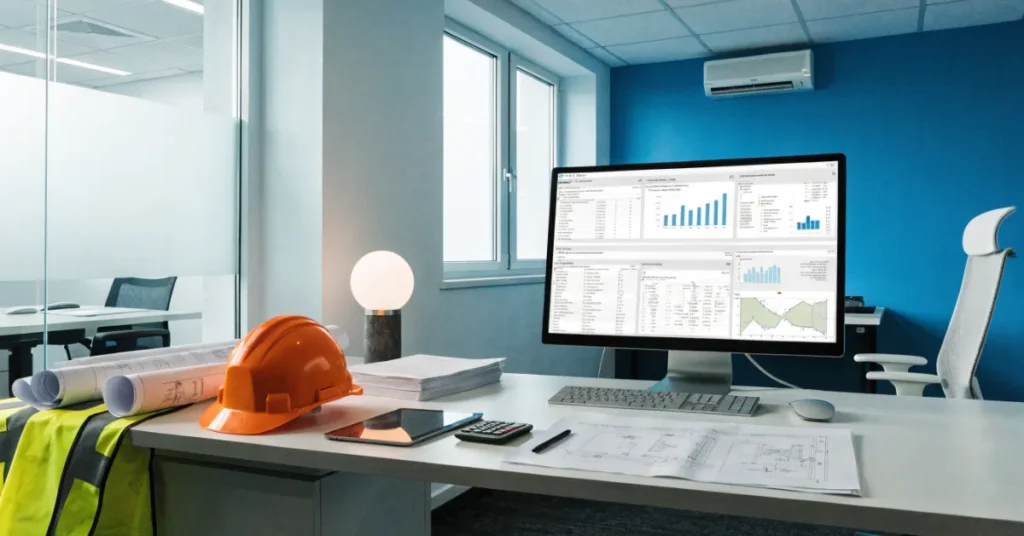
Financial reports provide valuable insights into project performance and overall business health. Reviewing these reports regularly helps construction businesses identify issues early and improve decision-making.
Profit and Loss Report by Project
Instead of reviewing only company-wide profits, construction businesses should analyze profitability for each project individually.
A project-specific Profit and Loss report shows:
- Project revenue.
- Labor expenses.
- Material costs.
- Equipment expenses.
- Gross profit.
- Net profit.
This report helps identify the most profitable projects and those requiring cost control.
Balance Sheet
The Balance Sheet provides a snapshot of the company’s financial position.
It includes:
- Assets.
- Liabilities.
- Owner’s equity.
Reviewing the balance sheet regularly helps business owners evaluate financial stability and long-term growth.
Cash Flow Statement
The Cash Flow Statement tracks money entering and leaving the business.
It helps businesses:
- Monitor available cash.
- Plan future expenses.
- Identify cash shortages.
- Support investment decisions.
Healthy cash flow is essential for completing projects on schedule.
Work in Progress (WIP) Report
A Work in Progress (WIP) Report compares:
- Project costs incurred.
- Revenue earned.
- Percentage completed.
- Amount billed.
- Remaining contract value.
This report helps contractors identify projects that are underbilled or overbilled and supports accurate revenue recognition.
Job Cost Report
The Job Cost Report compares estimated costs with actual spending.
Typical categories include:
- Labor.
- Materials.
- Equipment.
- Subcontractors.
- Overhead.
Regular review improves budgeting accuracy and project profitability.
Budget vs. Actual Report
This report compares planned expenses with actual costs.
Benefits include:
- Identifying overspending.
- Monitoring project efficiency.
- Improving future estimates.
- Strengthening cost control.
Accounts Receivable Aging Report
This report categorizes unpaid invoices based on how long they have been outstanding.
Typical categories include:
- Current.
- 30 days.
- 60 days.
- 90+ days.
Regular monitoring helps businesses collect payments faster and improve cash flow.
Best Accounting Methods for Project-Based Businesses
Selecting the right accounting method is essential for producing accurate financial reports and managing project profitability. The appropriate method depends on project size, duration, and reporting requirements.
| Accounting Method | Advantages | Limitations | Best For |
|---|---|---|---|
| Cash Accounting | Simple, easy to maintain, ideal for small businesses | Does not reflect outstanding invoices or future obligations | Small contractors with straightforward operations |
| Accrual Accounting | Provides a complete financial picture, improves reporting accuracy | More complex and requires detailed bookkeeping | Growing construction companies |
| Percentage of Completion Method | Matches revenue with project progress, improves financial forecasting | Requires accurate cost estimates and ongoing monitoring | Long-term construction projects |
| Completed Contract Method | Simple revenue recognition until project completion | Delays revenue reporting and profit recognition | Short-term or smaller contracts |
Cash Accounting
Cash accounting records transactions only when money is received or paid. It is simple to manage and works well for businesses with fewer projects and uncomplicated financial activities.
Accrual Accounting
Accrual accounting records income and expenses when they are earned or incurred, regardless of when cash changes hands. This method provides a more accurate view of financial performance and supports long-term planning.
Percentage of Completion Method
This method recognizes revenue based on the percentage of work completed during a project. It is widely used for large construction contracts because it reflects project performance over time.
Completed Contract Method
Revenue and expenses are recognized only after the project is finished. While this method simplifies accounting, it may delay the recognition of profits and does not provide ongoing insight into project performance.
Best Practices for Construction Accounting
Following proven accounting practices helps construction businesses improve efficiency, control costs, and reduce financial risk.
1. Create Separate Records for Every Project
Maintain individual budgets, expenses, invoices, and financial reports for each project. Separate tracking improves profitability analysis and supports better decision-making.
2. Record Expenses Daily
Update accounting records every day to avoid missing transactions and ensure financial information remains accurate.
3. Automate Bookkeeping
Cloud-based accounting software can automate invoicing, bank reconciliation, payroll processing, expense tracking, and financial reporting, saving time and reducing manual errors.
4. Monitor Cash Flow Weekly
Review cash inflows and outflows every week to ensure sufficient funds are available for payroll, suppliers, and project expenses.
5. Reconcile Accounts Monthly
Compare accounting records with bank statements regularly to identify discrepancies and maintain accurate financial data.
6. Review Project Profitability Frequently
Analyze project performance throughout the project lifecycle rather than waiting until completion. Early reviews allow businesses to address cost overruns before they impact overall profitability.
7. Forecast Future Costs
Update budgets as projects progress by considering labor requirements, material prices, equipment costs, and market conditions.
8. Maintain Complete Documentation
Keep organized records of contracts, invoices, receipts, purchase orders, payroll records, and change orders. Proper documentation supports audits, tax compliance, and dispute resolution.
9. Invest in Cloud Accounting Software
Cloud-based solutions provide secure access to financial information from any location, making collaboration easier for project managers, accountants, and business owners.
10. Work with Experienced Construction Accountants
Professional accountants understand industry-specific challenges and can provide guidance on tax planning, compliance, financial reporting, and project profitability.
Construction Accounting Software Features to Look For
Choosing the right accounting software can improve efficiency, reduce manual work, and provide better financial visibility. When evaluating solutions, prioritize features that support the unique needs of project-based businesses.
Look for software that includes:
- Job costing to track labor, materials, equipment, and overhead by project.
- Project budgeting to compare estimated and actual costs.
- Progress billing for milestone-based invoicing.
- Payroll management for employees and subcontractors.
- Inventory management to monitor construction materials and supplies.
- Equipment tracking to allocate machinery costs accurately.
- Change order management to record project modifications.
- Bank reconciliation to maintain accurate financial records.
- Financial reporting dashboards with real-time insights.
- Multi-project management for businesses handling several contracts simultaneously.
- Cloud access for secure collaboration from any location.
- Mobile compatibility to update project information directly from job sites.
Investing in software with these capabilities helps contractors improve productivity, enhance financial accuracy, and make data-driven business decisions.
Mistakes Construction Businesses Should Avoid
Even profitable construction companies can face financial challenges if accounting processes are not managed properly. Avoiding these common mistakes can improve project profitability, strengthen cash flow, and support sustainable business growth.
Mixing Business and Personal Expenses
Combining personal and business transactions makes bookkeeping more difficult and can lead to inaccurate financial reports. Maintain separate business bank accounts and credit cards to keep records organized and simplify tax preparation.
Ignoring Project Budgets
A project budget serves as a financial roadmap. Failing to compare actual costs with the budget can result in overspending and reduced profit margins. Review budgets regularly and update forecasts whenever project conditions change.
Delaying Bookkeeping
Postponing expense recording or invoice processing increases the risk of missing transactions and financial errors. Update accounting records consistently to maintain accurate and up-to-date financial information.
Not Tracking Change Orders
Construction projects often experience changes in design, materials, or project scope. If change orders are not documented and billed correctly, businesses may complete additional work without receiving payment.
Poor Payroll Management
Incorrect payroll records can affect job costing, employee payments, and compliance. Track employee hours carefully, allocate labor costs to the correct projects, and maintain complete payroll documentation.
Incorrect Tax Calculations
Construction businesses often deal with complex tax obligations. Errors in tax reporting may result in penalties or compliance issues. Regularly review tax records and maintain accurate supporting documents.
Failing to Review Project Profitability
Waiting until a project is complete to analyze profitability limits opportunities to correct financial issues. Monitor project performance throughout the project lifecycle to identify problems early.
Weak Document Management
Missing contracts, invoices, purchase orders, or receipts can delay payments and create compliance challenges. Store financial documents securely using digital document management systems whenever possible.
Example of Construction Accounting in Practice
Consider a medium-sized construction company managing three commercial projects simultaneously. Although the business generated steady revenue, management struggled with delayed payments, increasing material costs, and inconsistent profit margins. Expenses were recorded at the company level rather than being assigned to individual projects, making it difficult to determine which contracts were truly profitable.
To improve financial control, the company implemented a structured construction accounting system. Each project received its own budget, job cost report, and progress billing schedule. Labor hours, material purchases, subcontractor invoices, and equipment expenses were allocated to the appropriate projects using job costing.
Management also introduced weekly cash flow reviews and monthly Work in Progress (WIP) reports. These reports highlighted cost overruns early, allowing project managers to negotiate with suppliers, control unnecessary expenses, and adjust project schedules before profitability was affected.
Within several months, the company achieved measurable improvements:
- More accurate project budgets.
- Better visibility into labor and material costs.
- Faster client invoicing through progress billing.
- Improved cash flow management.
- Higher project profitability.
- Reliable financial reports for management decisions.
This example demonstrates how effective construction accounting provides greater financial transparency and enables business owners to make proactive decisions throughout every stage of a project.
How Professional Construction Accounting Services Can Help
Managing construction finances requires time, expertise, and industry knowledge. Professional construction accounting services help businesses maintain accurate financial records while allowing owners and project managers to focus on delivering successful projects.
Experienced accounting professionals can assist with:
- Construction bookkeeping and transaction recording.
- Job costing and project cost allocation.
- Payroll processing and labor cost tracking.
- Progress billing and invoice management.
- Work in Progress (WIP) reporting.
- Cash flow forecasting and budgeting.
- Financial statement preparation.
- Tax planning and regulatory compliance.
- Accounts payable and receivable management.
- Business performance analysis and financial planning.
Outsourcing accounting services can also improve reporting accuracy, reduce administrative workload, and provide valuable financial insights that support business growth.
FAQ
What makes construction accounting different from regular accounting?
Construction accounting focuses on tracking the financial performance of individual projects rather than only the overall business. It includes specialized processes such as job costing, progress billing, retention accounting, and project-specific financial reporting.
Why is job costing important in construction?
Job costing helps businesses allocate labor, materials, equipment, subcontractor expenses, and overhead to each project. This allows contractors to measure profitability accurately, control costs, and improve future project estimates.
Which accounting method is best for contractors?
The most suitable accounting method depends on the size and duration of projects. Small contractors may prefer cash accounting, while larger or long-term projects often benefit from accrual accounting or the percentage of completion method because they provide more accurate financial reporting.
How often should construction companies review project costs?
Project costs should be reviewed regularly, ideally every week or month. Frequent monitoring helps identify budget variances, manage cash flow, and resolve financial issues before they affect project profitability.
What reports are most important for project-based businesses?
Essential reports include the Profit and Loss Report by Project, Balance Sheet, Cash Flow Statement, Work in Progress (WIP) Report, Job Cost Report, Budget vs. Actual Report, and Accounts Receivable Aging Report.
Can small construction businesses use cloud accounting software?
Yes. Cloud accounting software is suitable for businesses of all sizes. It automates bookkeeping tasks, improves collaboration, provides real-time financial data, and supports multi-project management from any location.
How does progress billing improve cash flow?
Progress billing allows contractors to invoice clients as project milestones are completed instead of waiting until the end of the project. This provides a steady flow of income to cover labor, materials, and other project expenses.
What are the most common bookkeeping mistakes in construction businesses?
Common mistakes include mixing personal and business expenses, delaying bookkeeping, failing to track change orders, ignoring project budgets, inaccurate payroll allocation, poor document management, and not reviewing project profitability regularly.
Conclusion
Construction accounting is more than recording financial transactions it is a strategic approach to managing project costs, monitoring profitability, and maintaining healthy cash flow. Because every construction project has unique budgets, timelines, and resource requirements, businesses need an accounting system that provides accurate, project-specific financial insights.
Disclaimer: The information provided in this article is for general educational and informational purposes only and should not be considered professional accounting, tax, financial, or legal advice. While every effort has been made to ensure the accuracy of the content at the time of publication, accounting standards, tax regulations, and business requirements may change over time. Businesses should consult a qualified accountant, tax advisor, or financial professional before making decisions based on the information in this article.